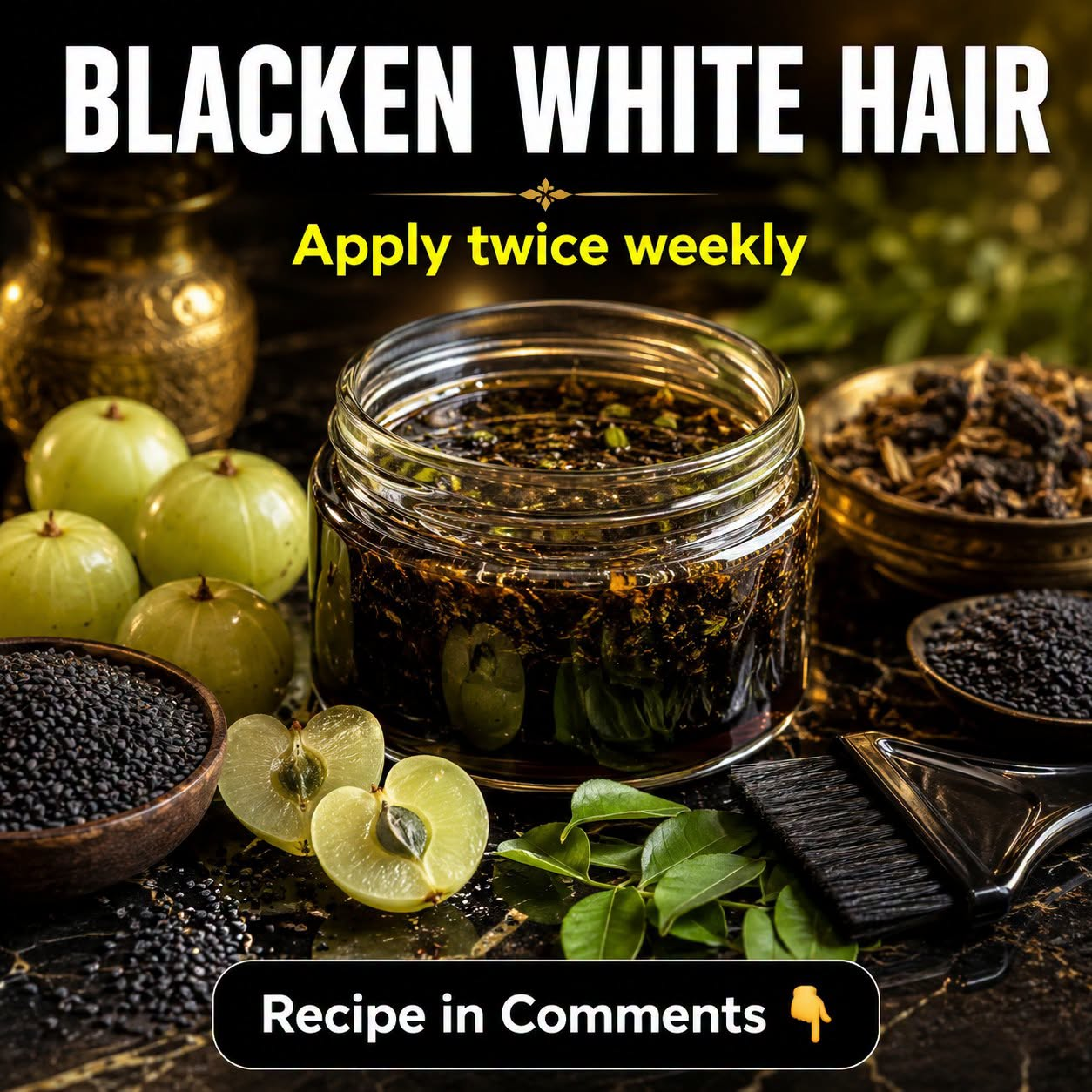
White or grey hair develops when pigment-producing cells in the hair follicle stop supplying enough melanin to the growing hair shaft. Genetics and natural ageing are the most common causes, although early greying may sometimes be associated with smoking, thyroid disorders, oxidative stress or deficiencies involving vitamin B12, folate, iron and other nutrients. Once a strand has grown without pigment, kitchen ingredients cannot permanently restart melanin production inside it. Current reviews confirm that no reliable medical or natural treatment can consistently repigment ordinary age-related grey hair. Natural plant dyes can, however, coat white strands and create a convincing dark-brown or black appearance while gentle oils help preserve softness and shine. (PubMed)
The amla, curry-leaf and black-seed oil pictured online is traditionally used for hair care, but it has not been clinically proven to turn established white strands black. Applying such oil twice weekly may condition dry hair, yet any apparent darkening is usually caused by oil coating, lighting or staining rather than restored pigment. The remedies below therefore focus on scientifically understood plant colourants, especially pure henna and indigo, while clearly separating cosmetic coverage from true biological reversal.
Remedy 1: Two-Step Henna and Indigo Treatment for Normal Scalp
Ingredients and Their Scientific Working
- Pure henna powder – 50 grams: Henna contains lawsone, a reddish-orange plant pigment that attaches to keratin in the hair shaft. This creates a durable base to which indigo can adhere more effectively.
- Pure indigo powder – 50 grams: Indigo supplies blue-toned pigments. When applied over henna-coloured hair, the blue combines visually with henna’s orange-red tone to create dark brown or near-black coverage.
- Amla powder – 1 tablespoon: Amla contains tannins and natural acids that may soften henna’s bright copper tone. It is traditionally used in herbal colour blends, although it has not been proven to reactivate pigment cells.
- Pure aloe vera gel – 1 tablespoon: Aloe improves the paste’s spreadability and may reduce the dry feeling caused by plant powders.
- Warm water – approximately 150 millilitres for each paste: Water releases the colouring compounds and helps distribute them evenly.
- Coconut oil – ½ teaspoon for the hair ends after rinsing: Coconut oil can penetrate the hair fibre and has been shown to reduce protein loss from damaged and undamaged hair. (PubMed)
Procedure
Mix henna, amla and enough warm water to form a smooth yogurt-like paste. Cover it and allow it to rest for four to six hours. Apply it to clean, dry hair from roots to ends while wearing gloves. Leave it on for 60 to 90 minutes and rinse thoroughly.
Immediately prepare a fresh indigo paste with warm water. Apply it over the henna-treated hair, leave it for 45 to 60 minutes and rinse with water. Avoid shampoo for approximately 24 hours while the colour oxidises and deepens.
How Often to Apply
Repeat every three to four weeks as the roots grow. Do not apply twice weekly because frequent plant-dye use can make some hair types feel dry or coated.
Initial Results
White strands may look dark brown immediately and deepen toward brown-black over the next 24 to 48 hours. The treatment colours existing strands but does not change the biological cause of greying.
Remedy 2: Amla, Hibiscus and Herbal Colour Blend for Combination Scalp
Ingredients and Their Scientific Working
- Pure henna powder – 3 tablespoons: Provides the lawsone base needed for lasting plant colour.
- Pure indigo powder – 4 tablespoons: Deepens the henna tone and produces a dark-brown finish.
- Amla powder – 1 tablespoon: Adds tannins and helps reduce an excessively red result.
- Dried hibiscus powder – 1 tablespoon: Hibiscus contributes plant pigments and improves the richness of the colour blend.
- Finely ground coffee – 1 teaspoon: Coffee may create a temporary brown surface stain, but it is not strong enough to colour white hair permanently by itself.
- Aloe vera gel – 1 tablespoon: Adds lightweight moisture without making an oily T-zone excessively greasy.
- Warm water – as required: Forms a spreadable paste.
A small human study examining herbal colour preparations found that blends containing henna, amla, coffee, hibiscus and other botanicals could colour grey hair. However, these ingredients should be understood as natural colourants rather than treatments that restore follicular melanin. (PubMed)
Procedure
Prepare the henna, amla, hibiscus and coffee paste first and let it rest for four hours. Just before application, mix the indigo separately with water and combine both pastes.
Apply a thin layer over oilier scalp areas and a slightly fuller layer over dry lengths. Leave it on for 60 minutes, rinse thoroughly and apply a tiny amount of coconut oil only to dry ends.
How Often to Apply
Use once every three weeks for the first two applications. After achieving the preferred shade, repeat only when grey roots become visible.
Initial Results
A soft dark-brown colour should appear after rinsing. It may become noticeably deeper during the following two days.
Remedy 3: Low-Oil Indigo-Rich Blend for Oily Scalp
Ingredients and Their Scientific Working
- Pure henna powder – 2 tablespoons: Creates the warm pigment foundation needed for indigo.
- Pure indigo powder – 5 tablespoons: A higher indigo proportion helps produce a cooler and darker result.
- Amla powder – 1 tablespoon: Helps moderate red-orange undertones.
- Strong cooled black tea – 2 tablespoons: Tea contains tannins that may add a mild temporary stain. It is supportive rather than a proven permanent dye.
- Aloe vera gel – 2 teaspoons: Provides water-based slip without adding heavy oils.
- Warm water – as needed: Activates and spreads the powders.
Procedure
Mix henna and amla with water and leave the paste covered for four hours. Prepare the indigo immediately before use, then combine it with the henna paste, tea and aloe.
Apply to freshly shampooed, completely dry hair. Concentrate on white roots without aggressively rubbing the scalp. Leave it for 45 to 60 minutes and rinse until the water runs clear.
How Often to Apply
Use every three to four weeks. Between colouring sessions, wash the scalp regularly with a gentle cleanser because excessive oil and product build-up can make natural colour appear dull.
Initial Results
The hair may initially appear dark brown with a slight greenish cast in bright light. This temporary tone generally settles and darkens within 24 to 48 hours as indigo oxidises.
Remedy 4: Coconut-Conditioned Henna and Indigo Treatment for Dry Hair
Ingredients and Their Scientific Working
- Virgin coconut oil – 1 tablespoon: Used before colouring, coconut oil helps reduce hair protein loss and protects fragile lengths.
- Pure henna powder – 3 tablespoons: Coats white hair with a warm, durable pigment.
- Pure indigo powder – 4 tablespoons: Converts the warm henna result into a deeper brown-black tone.
- Amla powder – 1 tablespoon: Helps cool the final colour and supplies antioxidant plant compounds.
- Aloe vera gel – 1 tablespoon: Reduces friction during application.
- Warm water – as required: Forms both colouring pastes.
- Honey – ½ teaspoon: Acts as a humectant in the henna mixture, although it does not colour grey hair.
Procedure
The evening before colouring, massage coconut oil into the hair lengths, not heavily into the scalp. Shampoo it out completely the next morning.
Prepare the henna, amla, aloe, honey and water paste and leave it covered for four hours. Apply for 60 minutes and rinse. Prepare fresh indigo paste, apply for another 45 minutes and rinse thoroughly.
How Often to Apply
Colour every four weeks. Apply coconut oil once or twice weekly between sessions, but avoid applying heavy oil immediately before dyeing because residue may reduce colour uptake.
Initial Results
White hair may become deep brown over one to two days. Dry strands should also feel smoother after the post-colour wash, although the plant powders may temporarily make hair feel firm.
Remedy 5: Patch-Tested Gentle Colour Method for Sensitive Scalp
Ingredients and Their Scientific Working
- Pure henna powder – 2 tablespoons: Provides initial reddish-brown coverage and is the main bonding colourant.
- Pure indigo powder – 2 tablespoons: Darkens the henna base, but even natural indigo can occasionally cause contact dermatitis.
- Amla powder – 1 teaspoon: Softens the warm tone without requiring synthetic darkeners.
- Pure aloe vera gel – 1 tablespoon: Makes the paste easier to spread with less pulling.
- Distilled or cooled boiled water – as required: Reduces unnecessary contaminants in the mixture.
- Colloidal oatmeal – 1 teaspoon for a separate after-rinse: Oat compounds can soothe dryness and support the scalp barrier.
“Natural” does not automatically mean allergy-free. Published reports document allergic reactions to henna, indigo and even black tea, while recent testing has found undeclared para-phenylenediamine in some products sold as natural henna. (PubMed)
Procedure
Patch-test each powder separately 48 hours before use. Also test the finished blend on a hidden strand. When applying, avoid scratching, massaging or colouring an already inflamed scalp.
Mix the henna, amla, aloe and water. Leave it for four hours, then add freshly mixed indigo. Apply for only 30 to 40 minutes during the first treatment. Rinse carefully. Prepare a thin oatmeal-and-water rinse, pour it over the scalp and rinse again.
How Often to Apply
Use no more than once monthly. Anyone with eczema, previous hair-dye allergy, open sores, severe dandruff or scalp swelling should avoid home colouring and consult a dermatologist.
Initial Results
A medium-to-dark brown tone may develop within two days. Stop treatment immediately if burning, facial swelling, blistering or intense itching occurs.
Final Tips for Naturally Darker-Looking Hair
Purchase powders with complete ingredient labels. Avoid products advertised as instant “black henna,” especially those that do not disclose their contents. Para-phenylenediamine is often added to create rapid black colour and can cause serious allergic reactions. Always wear gloves, protect the hairline and perform a patch test before every colouring session. (U.S. Food and Drug Administration)
Do not apply onion juice, lemon juice, baking soda or concentrated essential oils to a sensitive scalp. Keep bowls, brushes and towels clean, prepare each paste fresh and discard leftovers. Visible cosmetic darkening normally develops within one to three days, but new grey growth will still emerge from the follicle.
Diet Plan to Support Normal Hair Pigmentation
Diet cannot reliably recolour established white hair, but correcting a genuine deficiency may help prevent further premature greying in some people.
Breakfast: Eat eggs, unsweetened yogurt or fortified cereal with a vitamin-C-rich fruit. Eggs and dairy supply protein and vitamin B12.
Lunch: Include lentils, chickpeas, fish, chicken or lean meat with leafy vegetables and whole-grain bread or rice. Vitamin C from tomatoes, peppers or citrus fruit helps the body absorb plant-based iron.
Evening snack: Choose almonds, pumpkin seeds, walnuts or roasted chickpeas instead of highly processed snacks.
Dinner: Include beans, fish, eggs or lean meat with mixed vegetables. Foods such as sesame seeds, cashews, legumes and mushrooms provide copper, but excessive copper supplements should never be taken without medical advice.
Studies have found associations between premature greying and low ferritin, vitamin B12, folate, calcium or other micronutrients, but association does not prove that supplements will reverse grey hair. Blood testing should guide treatment rather than self-prescribing high doses. (PubMed)
Continue the balanced diet for at least eight to twelve weeks and use natural colour only when root coverage is needed. See a doctor or dermatologist if greying begins suddenly, starts unusually early, progresses rapidly or occurs with fatigue, hair loss, weight change, numbness, pale skin or menstrual problems. Appropriate investigations may include a complete blood count, ferritin, vitamin B12, folate, vitamin D and thyroid testing.
References for the above remedy
- Poonia K, Bhalla M. Premature Graying of Hair: A Comprehensive Review and Recent Insights.
https://pubmed.ncbi.nlm.nih.gov/39359282/ - Yale K, Juhasz M, Atanaskova Mesinkovska N. Medication-Induced Repigmentation of Gray Hair: A Systematic Review.
https://pubmed.ncbi.nlm.nih.gov/32021854/ - Recent Advancements in Natural Plant Colorants Used for Hair Dye Applications: A Review.
https://pmc.ncbi.nlm.nih.gov/articles/PMC9692289/ - Singh V, Ali M, Upadhyay S. Study of Colouring Effect of Herbal Hair Formulations on Graying Hair.
https://pubmed.ncbi.nlm.nih.gov/26130937/ - Rele AS, Mohile RB. Effect of Mineral Oil, Sunflower Oil and Coconut Oil on Prevention of Hair Damage.
https://pubmed.ncbi.nlm.nih.gov/12715094/ - U.S. Food and Drug Administration. Hair Dyes.
https://www.fda.gov/cosmetics/cosmetic-products/hair-dyes - U.S. Food and Drug Administration. Temporary Tattoos, Henna/Mehndi and Black Henna Fact Sheet.
https://www.fda.gov/cosmetics/cosmetic-products/temporary-tattoos-hennamehndi-and-black-henna-fact-sheet - Quantification of Lawsone and p-Phenylenediamine in Natural Henna Products for Hair Colouring.
https://pubmed.ncbi.nlm.nih.gov/39756814/ - Daulatabad D, et al. Premature Graying of Hair: Risk Factors, Comorbid Conditions, Pharmacotherapy and Reversal.
https://pubmed.ncbi.nlm.nih.gov/32654282/ - A Demographic and Biochemical Profile of Patients with Premature Graying of Hair: A Case-Control Study.
https://pubmed.ncbi.nlm.nih.gov/41981836/