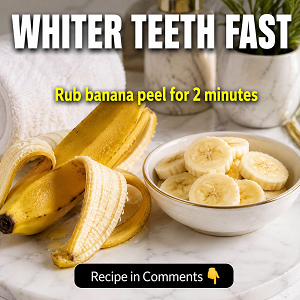
Yellow or stained teeth can affect the appearance of a smile and make some people feel less confident. Tea, coffee, tobacco, dark-colored foods, aging, plaque and certain medicines can all change tooth color. The image suggests rubbing banana peel on the teeth for two minutes, but this popular method is not supported by reliable clinical evidence. In laboratory research, banana peel did not produce meaningful tooth whitening, and another study found that commonly promoted natural agents were far less effective than peroxide-based bleaching. Banana peel should therefore not be presented as a fast or proven whitening remedy. (PubMed)
Teeth cannot be treated like skin. Enamel does not grow back after it has been worn away, so rubbing acidic fruit, charcoal, salt or harsh powders over it can create permanent damage. The following routines focus on safer, evidence-supported ways to remove surface stains, prevent new discoloration and protect enamel. They will not make crowns, fillings, veneers or implants lighter because whitening treatments affect natural teeth only. (Ada Foundation)
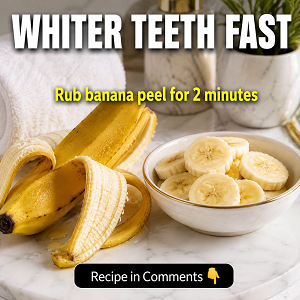
Why Banana Peel Does Not Whiten Teeth Fast
Banana peel contains plant compounds, minerals and antioxidants, but the presence of nutrients does not mean that those substances can penetrate enamel and break down stain molecules. In a controlled laboratory study comparing banana peel, turmeric, charcoal, conventional toothpaste and carbamide peroxide, the popular natural agents did not provide effective dental bleaching. Banana peel also produced changes in enamel surface properties, which means frequent rubbing should not automatically be assumed harmless. (PubMed)
The research that actually supports tooth bleaching mainly involves hydrogen peroxide or carbamide peroxide in standardized dental formulations. Whitening toothpastes work differently: they mainly polish away external stains rather than changing the internal color of the tooth. (Cochrane)
Remedy 1: Baking-Soda Toothpaste Routine for Healthy Teeth
What You Need
- A pea-sized amount of fluoride toothpaste containing sodium bicarbonate
- One soft-bristled toothbrush
- Clean water for rinsing the brush
- Dental floss or another interdental cleaner
- A clean tongue scraper, used gently
Scientific Working of the Ingredients
Sodium bicarbonate, commonly called baking soda, acts as a relatively mild polishing agent when incorporated into a professionally formulated toothpaste. A scientific review concluded that baking-soda dentifrices can remove external stains effectively while generally having lower abrasivity than many harsher stain-removing substances. Research supports formulated baking-soda toothpaste more strongly than brushing repeatedly with loose kitchen powder. (ScienceDirect)
Fluoride is important because it helps replace minerals lost during acid attacks and makes enamel more resistant to decay. Floss removes plaque between teeth, where a toothbrush cannot clean effectively. (CDC)
Procedure
Place a pea-sized amount of the toothpaste on a soft brush. Brush gently for two minutes, covering the front, back and chewing surfaces without pressing aggressively. Spit out the toothpaste and avoid forceful rinsing with a large amount of water. Clean between the teeth once daily.
How Often to Apply
Brush twice daily for at least four weeks. Do not add lemon juice, vinegar, charcoal or salt to the toothpaste.
Initial Results
Teeth may feel cleaner within one to three days. Light surface deposits may begin to look less noticeable after one to two weeks. Baking soda removes external stains but cannot bleach deep discoloration.
Remedy 2: Tea and Coffee Stain-Prevention Routine
What You Need
- One glass of plain water
- One straw for suitable cold drinks
- One piece of sugar-free chewing gum
- A small serving of cheese or unsweetened yogurt
- A soft toothbrush
- Fluoride stain-removing toothpaste
Scientific Working of the Routine
Water helps wash away pigments and acids after tea, coffee or other staining drinks. Sugar-free gum stimulates saliva, which helps neutralize acids and clear food particles. Calcium-rich foods such as milk, cheese and unsweetened yogurt can assist acid neutralization and support remineralization. A straw positioned behind the front teeth may reduce direct contact between certain cold beverages and visible tooth surfaces. (Ada Foundation)
This routine does not bleach teeth immediately. Its purpose is to reduce repeated stain exposure so that daily brushing can gradually improve the appearance of superficial discoloration.
Procedure
Drink staining beverages with meals rather than sipping them continuously. Rinse the mouth with water immediately afterward. When the drink is acidic, wait approximately one hour before brushing because acid temporarily softens the enamel surface. Chew sugar-free gum for about 20 minutes when brushing is not possible.
How Often to Apply
Follow the routine every time you consume tea, coffee, cola or another strongly colored drink. Continue for at least four to eight weeks.
Initial Results
The mouth may feel fresher immediately, and fewer new stains may accumulate after several days. Existing brown or yellow deposits usually require longer-term brushing or professional cleaning.
Remedy 3: Gentle Brightening Routine for Sensitive Teeth
What You Need
- A soft or extra-soft toothbrush
- Fluoride toothpaste designed for sensitivity
- Lukewarm water
- Dental floss
- A clean drinking glass
- A dentist-approved whitening plan, when suitable
Scientific Working of the Routine
Sensitive teeth may have exposed dentin, enamel erosion, decay, cracks or receding gums. Applying banana peel, acidic fruit, peroxide mixtures or abrasive powders without identifying the cause can increase discomfort. Standard bleaching can also produce temporary sensitivity, particularly when stronger concentrations or longer exposure times are used. (Ada Foundation)
Fluoride supports remineralization, while a soft brush reduces unnecessary mechanical wear. Sensitivity toothpaste may contain clinically tested agents that reduce nerve response or block pathways leading into the dentin.
Procedure
Brush gently with lukewarm rather than very cold water. Avoid scrubbing the gumline. Floss carefully once daily. Do not begin any whitening treatment until cavities, cracks, gum recession and active inflammation have been ruled out.
How Often to Apply
Follow this routine twice daily for two to four weeks. Arrange a dental examination if sensitivity persists, affects one particular tooth or causes pain during biting.
Initial Results
Reduced irritation may begin within several days, although some sensitivity toothpastes require two to four weeks of regular use. A visible whitening result should not be expected within one to three days.
Remedy 4: Dry-Mouth Stain-Control Routine
What You Need
- Regular servings of plain water
- Sugar-free gum containing xylitol
- Fresh cucumber or another low-sugar crunchy vegetable
- Fluoride toothpaste
- A soft toothbrush
- Dental floss
Scientific Working of the Routine
Saliva naturally washes the teeth, dilutes acids and supports remineralization. A dry mouth allows plaque, pigments and food debris to remain on tooth surfaces for longer. Drinking water and chewing sugar-free gum can improve moisture and salivary flow. However, persistent dry mouth may be related to medication, dehydration or a medical condition and should not be ignored. (CDC)
Xylitol gum does not directly bleach enamel. Its value comes from stimulating saliva and helping create a less favorable environment for acid-producing plaque bacteria.
Procedure
Sip water regularly throughout the day. Chew sugar-free gum for approximately 20 minutes after meals when appropriate. Brush twice daily and clean between the teeth once daily. Avoid alcohol-containing homemade rinses because they may worsen dryness.
How Often to Apply
Continue daily for at least four weeks. Discuss persistent dry mouth with a dentist or doctor.
Initial Results
The mouth may feel more comfortable within one to three days. Plaque accumulation and new surface staining may gradually decrease, but deep yellowing will remain unchanged.
Remedy 5: Dentist-Guided Whitening for Deep Discoloration
What Is Needed
- A dental examination
- Professional cleaning when plaque or tartar is present
- A dentist-selected peroxide formulation
- A properly fitted whitening tray when prescribed
- A gum-protection method
- A sensitivity-management plan
Scientific Working of Peroxide Whitening
Hydrogen peroxide and carbamide peroxide whiten teeth by oxidizing colored molecules within dental tissues. This changes tooth color rather than simply polishing external stains. A Cochrane review found that chemical home-bleaching agents whitened teeth better than placebo over short periods, although evidence was insufficient to identify one universally superior method or concentration. Sensitivity and gum irritation were the most common side effects. (Cochrane)
A dentist should first check for cavities, leaking fillings, gum disease and cracked teeth. A fitted tray also limits unnecessary contact between bleaching gel and the gums. Dental organizations consider dentist-provided treatment the safest approach, particularly for people with sensitivity or existing restorations. (nhs.uk)
Procedure
Follow the dentist’s exact instructions regarding the amount of gel, application time and total treatment period. Do not increase the treatment time to obtain faster results. Stop and contact the dentist if severe sensitivity, gum burning or persistent white patches develop.
How Often to Apply
Treatment commonly continues for several days or weeks depending on the formulation. Use only according to professional instructions.
Initial Results
Some peroxide systems can begin changing tooth color within several applications, while full results may take two to six weeks. Results vary according to the type and depth of discoloration.
Final Tips for Whiter and Healthier Teeth
Do not rub banana peel, lemon, orange peel, strawberry, vinegar, charcoal, salt or turmeric repeatedly over the enamel. Acidic ingredients can dissolve tooth minerals, while abrasive powders can roughen or wear the surface. Enamel loss is irreversible and may make teeth appear more yellow when the darker dentin underneath becomes more visible. (Ada Foundation)
Brush twice daily with fluoride toothpaste, floss every day and replace a worn toothbrush. Clean the tongue gently and arrange regular dental examinations. A professional cleaning may be the most appropriate first step when discoloration comes from plaque or hardened tartar.
Realistic improvements in the first two to three days include a cleaner mouth, fresher breath and reduced new stain exposure. Noticeable surface-stain removal usually requires several weeks. Deep stains, age-related yellowing and discoloration caused by medication, trauma or tooth development need professional assessment.
Tooth-Friendly Diet Plan
Breakfast
Choose eggs, unsweetened yogurt, oats or whole-grain toast. Add a banana as food rather than using its peel on the teeth. Drink water after tea or coffee.
Lunch
Eat chicken, fish, lentils or beans with vegetables and whole grains. Include a calcium-rich option such as plain yogurt when suitable.
Snack
Choose cheese, nuts, cucumber, carrots or another low-sugar food. Avoid repeatedly sipping sweetened drinks between meals.
Dinner
Select lean protein, vegetables and a moderate portion of rice or whole-grain bread. Rinse with water after tomato-based, spicy or acidic meals.
Daily Drinks
Use plain water as the main drink. Limit frequent cola, energy drinks, sweetened juice and prolonged tea or coffee sipping. When an acidic beverage is consumed, rinse with water and wait before brushing.
Continue the stain-prevention routine for four to eight weeks. Consult a dentist if discoloration persists, one tooth suddenly becomes dark, the gums bleed, teeth are painful, there are visible white or brown patches, or sensitivity continues. A dark single tooth can indicate previous trauma or internal damage and should not be treated with a kitchen remedy.
References for the above remedy
- American Dental Association. Whitening: evidence, treatment options and DIY whitening concerns.
https://www.ada.org/resources/ada-library/oral-health-topics/whitening - Maciel CRO, et al. Whitening efficacy of popular natural products on dental enamel.
https://pubmed.ncbi.nlm.nih.gov/35766717/ - Abidia RF, et al. In vitro comparison of natural tooth-whitening remedies and professional whitening systems.
https://pubmed.ncbi.nlm.nih.gov/36942206/ - Li Y. Stain removal and whitening by baking soda dentifrice: a review of literature.
https://www.sciencedirect.com/science/article/pii/S0002817717308115 - American Dental Association. Dental erosion: causes, prevention and management.
https://www.ada.org/resources/ada-library/oral-health-topics/dental-erosion - Centers for Disease Control and Prevention. About fluoride and enamel protection.
https://www.cdc.gov/oral-health/prevention/about-fluoride.html - Centers for Disease Control and Prevention. Oral health tips for adults.
https://www.cdc.gov/oral-health/prevention/oral-health-tips-for-adults.html - Cochrane Oral Health. Home-based chemical bleaching of teeth in adults.
https://www.cochrane.org/evidence/CD006202_home-based-chemical-bleaching-teeth-adults - NHS. Teeth whitening: suitability, safety and side effects.
https://www.nhs.uk/tests-and-treatments/teeth-whitening/ - Effect of whitening dentifrice on tooth-surface discoloration: systematic review and meta-analysis.
https://pmc.ncbi.nlm.nih.gov/articles/PMC12010553/