
Grey or white hair can affect confidence, particularly when it appears earlier than expected. Hair loses its natural colour when follicles produce less melanin, the pigment responsible for brown, black, blonde and red shades. Genetics and ageing are the main causes, although smoking, stress, thyroid disorders and certain nutritional deficiencies may contribute to premature greying. Home remedies cannot reliably restart melanin production or permanently reverse age-related grey hair. However, plant-based colourants such as pure henna and indigo can coat the hair shaft and temporarily blend grey strands with natural-looking brown, auburn or near-black shades. (PubMed)
Henna contains lawsone, a natural orange-red pigment that binds to hair keratin. Indigo deposits blue pigment over this warm base; together, the two colours create brown, dark brown or black tones. The supporting ingredients below mainly improve consistency, conditioning or tone—they should not be described as treatments that restore natural pigment. Always use clearly labelled, single-ingredient powders and avoid products marketed as “black henna,” which may contain the strong allergen para-phenylenediamine, or PPD. (PubMed)
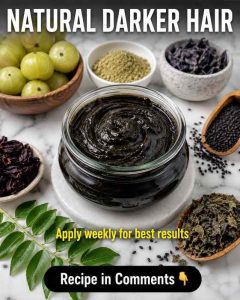
Remedy 1: Henna-Indigo Soft Brown Mask for Normal Hair
Ingredients and Their Scientific Working
Pure henna powder: 4 tablespoons. Its lawsone pigment attaches to keratin and gives grey hair a copper or reddish foundation.
Pure indigo powder: 2 tablespoons. Indigo’s blue pigment combines visually with henna’s warm tone to produce medium or dark brown.
Amla powder: 1 tablespoon. Amla may cool the brightness of henna and produce a less orange-looking result. Evidence for reversing grey hair is lacking.
Strong black tea: ½ cup. Tea contains tannins that can add a temporary deeper surface tone, although it is much weaker than henna or indigo.
Pure aloe vera gel: 1 tablespoon. Aloe improves spreadability and may reduce the dry feeling sometimes experienced after herbal colouring.
Warm water: As required. Water releases and distributes the plant pigments through the paste.
Procedure
Mix henna, amla and black tea into a smooth yogurt-like paste. Cover and leave it for two to four hours. In a separate bowl, mix the indigo powder with warm water immediately before application. Combine both pastes, apply to clean, slightly damp hair from roots to ends and cover with a shower cap. Leave for 60 to 90 minutes, then rinse thoroughly with water.
How Often to Apply
Apply once every three to four weeks. Do not repeat it within the next three to five days because the shade continues developing after rinsing.
Initial Results
Grey strands should appear copper-brown or medium brown on the first day. The colour usually becomes deeper and less bright during the following 24 to 48 hours.
Remedy 2: Two-Step Henna and Indigo Method for Combination Hair
This method suits people with an oily scalp but comparatively dry lengths and gives stronger grey coverage than mixing both powders together.
Ingredients and Their Scientific Working
Pure henna powder: 5 tablespoons. Henna supplies the orange-red base needed for indigo to create a natural dark shade.
Amla powder: 1 tablespoon. It modifies the warmth of the henna result but does not restore follicular melanin.
Strong black tea: ½ cup. Tea helps prepare a workable paste and contributes mild tannin staining.
Pure indigo powder: 5 tablespoons. Indigo forms the second colour layer and changes the henna base from orange-red to deep brown or near-black.
Warm water: Approximately ¾ cup. It activates and distributes both powdered colourants.
Coconut oil: 1 teaspoon for the ends after colouring. Coconut oil can penetrate the hair shaft and has been shown to reduce protein loss from damaged and undamaged hair. (PubMed)
Procedure
Prepare henna, amla and tea as a thick paste and let it rest for two to four hours. Apply it to clean hair for 60 to 90 minutes, then rinse. Mix fresh indigo powder with warm water and apply it immediately over the henna-coloured hair. Leave it for 45 to 90 minutes before rinsing again. Apply a few drops of coconut oil to dry ends the following day.
How Often to Apply
Use the complete treatment once every four weeks. Root-only applications can be performed when new grey growth becomes visible.
Initial Results
The first step produces a warm copper shade. After the indigo step, it develops into dark brown or soft black over one to three days. Indigo should not be used by itself on white hair because its blue pigment may create an uneven blue-green tone.
Remedy 3: Herbal Coffee Colour Pack for Oily Hair
Ingredients and Their Scientific Working
Pure henna powder: 4 tablespoons. Henna provides the main colour-binding pigment.
Pure indigo powder: 3 tablespoons. Indigo deepens henna from copper to brown.
Coffee powder: 1 tablespoon. Coffee can provide mild temporary staining, but it is not strong enough to cover grey hair alone.
Hibiscus powder: 1 tablespoon. Hibiscus adds burgundy warmth and helps create a richer-looking botanical colour blend.
Amla powder: 1 tablespoon. Amla can help soften excessive orange tones.
Warm water: ¾ cup or as required. It turns the ingredients into an even, spreadable paste.
A human volunteer study evaluating herbal colour formulations found useful colouring results from combinations containing henna, coffee, amla, hibiscus and other botanical dyes. However, the study assessed blended formulations, so the strongest established colourant in this mask remains henna. (PubMed)
Procedure
Brew the coffee in warm water and allow it to cool. Mix it with henna, amla and hibiscus, then leave the paste covered for two hours. Prepare the indigo separately immediately before use and combine it with the first paste. Apply to clean hair, focusing first on resistant grey roots. Leave for 60 to 75 minutes and rinse thoroughly.
How Often to Apply
Apply once every three to four weeks. An oil-free formula is suitable for greasy hair, but it is not a medical treatment for excessive scalp oil.
Initial Results
Grey hair may look chestnut or medium brown after rinsing. The final tone normally settles within 48 hours. Coffee rinses between treatments may temporarily refresh warmth but will not permanently colour new growth.
Remedy 4: Conditioning Dark-Brown Treatment for Dry Hair
Ingredients and Their Scientific Working
Pure henna powder: 3 tablespoons. It gives grey fibres a lasting warm base.
Pure indigo powder: 2 tablespoons. It darkens the warm base to brown.
Pure aloe vera gel: 2 tablespoons. Aloe-containing preparations have demonstrated skin-hydrating effects, although scalp-specific evidence is limited. (PubMed)
Finely milled colloidal oatmeal: 1 teaspoon. Colloidal oatmeal supports the skin barrier and has shown benefits for dryness and irritation in clinical studies.
Amla powder: 1 teaspoon. It helps moderate the warmth of the mixture.
Warm water: Approximately ½ cup.
Coconut oil: ½ teaspoon after colouring. Used sparingly on the ends, it helps reduce friction and protein loss.
Procedure
Combine henna, amla, oatmeal, aloe and enough water to create a creamy paste. Leave it covered for two hours. Mix indigo separately with water and add it immediately before application. Apply to clean hair for 60 minutes, rinse and avoid shampoo for approximately 24 hours. The next day, smooth a very small amount of coconut oil over dry ends.
How Often to Apply
Use once every four weeks. Between applications, moisturise the lengths rather than repeating the dye weekly.
Initial Results
Hair may feel fuller because plant colourants coat the fibres. Grey strands should look warm brown immediately and deepen over the next one to two days. Stop using the mixture if it increases breakage or makes already brittle hair unusually stiff.
Remedy 5: Gentle Henna Gloss for a Sensitive Scalp
Sensitive scalps need fewer active ingredients. This remedy produces auburn or warm light-brown coverage rather than black hair.
Ingredients and Their Scientific Working
Pure henna powder: 2 tablespoons. Henna gives white strands a warm copper-brown stain.
Amla powder: 1 teaspoon. It slightly reduces the vivid orange appearance.
Pure aloe vera gel: 1 tablespoon. Aloe adds moisture and improves slip.
Colloidal oatmeal: 1 teaspoon. Oat compounds can support irritated or dry skin, although they cannot prevent a true dye allergy. (PubMed)
Distilled water: Approximately ⅓ cup. Distilled water reduces unnecessary impurities and creates a smooth paste.
Procedure
First, perform a patch test behind the ear and a strand test at least 48 hours before colouring. When no reaction develops, combine all ingredients and let the mixture rest for two hours. Apply a thin layer to the grey areas for 30 to 45 minutes, then rinse immediately and thoroughly.
How Often to Apply
Use no more than once every four weeks. Do not apply it to broken, inflamed, scratched or sunburned skin.
Initial Results
White strands should become golden copper or auburn on the first day and slightly darker within 48 hours. Burning, facial swelling, blistering, breathing difficulty or intense itching requires immediate removal and medical attention.
Final Tips for Darkening Hair Safely
Always perform a patch test before every new batch because even natural indigo and henna can occasionally cause allergic contact dermatitis. Wear gloves, protect clothing and keep the paste away from the eyes, eyebrows and eyelashes. Do not colour an irritated scalp or apply dye soon after bleaching, relaxing or perming. The FDA recommends following label directions, timing applications carefully and rinsing the scalp thoroughly. (U.S. Food and Drug Administration)
Buy powders that list only Lawsonia inermis for henna and Indigofera tinctoria for indigo. “Instant black henna” is not the same as a pure henna-and-indigo routine. Laboratory analyses have found undeclared PPD in some products sold as natural henna, so an incomplete ingredient label is a reason not to use the product. (PubMed)
Visible colouring begins after the first application, but the final shade may take two to three days to oxidise. These masks camouflage grey hair; they do not cure premature greying.
Diet Plan to Support Normal Hair Pigmentation
Begin the day with eggs, plain yogurt, milk or fortified cereal for protein and vitamin B12. At lunch, include lentils, beans, chicken, fish or lean meat with green vegetables and a whole grain. For snacks, choose fruit, pumpkin seeds, sesame seeds or a small portion of nuts. Dinner can include fish, eggs, chickpeas or paneer with vegetables.
Iron-rich foods include meat, lentils, beans and leafy vegetables. Vitamin B12 comes mainly from animal foods and fortified products. Nuts, seeds, legumes and seafood provide copper, while eggs, fish and fortified foods contribute vitamin D. Pair plant-based iron foods with vitamin-C-rich vegetables or fruit.
Continue a balanced diet for at least eight to twelve weeks, but do not take high-dose iron, copper, vitamin B12 or vitamin D supplements without testing and medical guidance. Premature greying has been associated in some studies with low ferritin, vitamin B12, vitamin D, calcium or copper, but these associations do not prove that supplements will reverse every case. (PubMed)
See a doctor or dermatologist when greying begins suddenly, progresses rapidly, starts unusually early, appears in patches, or occurs with hair loss, tiredness, weight changes, numbness, menstrual changes or skin depigmentation. A clinician may check for nutritional deficiencies, thyroid disease, autoimmune conditions or other underlying causes.
References for the above remedy
- American Academy of Dermatology. “What Causes Gray Hair, and Can I Stop It?”
https://www.aad.org/public/everyday-care/hair-scalp-care/hair/gray-hair-causes - Poonia, K. and Bhalla, M. “Premature Graying of Hair: A Comprehensive Review and Recent Insights.”
https://pubmed.ncbi.nlm.nih.gov/39359282/ - Triwongwaranat, D. et al. “A Review of the Etiologies, Clinical Characteristics, and Treatment of Canities.”
https://pubmed.ncbi.nlm.nih.gov/30768676/ - Pal, R.S. et al. “Study of Colouring Effect of Herbal Hair Formulations on Graying Hair.”
https://pubmed.ncbi.nlm.nih.gov/26130937/ - Sienkiewicz-Szłapka, E. et al. “Quantification of Lawsone and PPD in Natural Henna Products for Hair Colouring.”
https://pubmed.ncbi.nlm.nih.gov/39756814/ - Rele, A.S. and Mohile, R.B. “Effect of Mineral Oil, Sunflower Oil and Coconut Oil on Prevention of Hair Damage.”
https://pubmed.ncbi.nlm.nih.gov/12715094/ - U.S. Food and Drug Administration. “Hair Dyes.”
https://www.fda.gov/cosmetics/cosmetic-products/hair-dyes - U.S. Food and Drug Administration. “Temporary Tattoos, Henna/Mehndi, and Black Henna.”
https://www.fda.gov/cosmetics/cosmetic-products/temporary-tattoos-hennamehndi-and-black-henna-fact-sheet - Trüeb, R.M. et al. “Premature Graying of Hair: Risk Factors, Comorbid Conditions, Pharmacotherapy and Reversal.”
https://pubmed.ncbi.nlm.nih.gov/32654282/ - Kumar, L. et al. “A Demographic and Biochemical Profile of Patients With Premature Graying of Hair.”
https://pubmed.ncbi.nlm.nih.gov/41981836/