
Stretch marks, medically called striae distensae, are a form of dermal scarring that appears when skin expands or contracts quickly during pregnancy, puberty, rapid weight change or muscle growth. New marks may look red, pink, purple or dark brown, while older marks usually become pale, silvery and slightly indented. They commonly affect confidence, but they are harmless in most cases. Stretch marks are permanent structural changes, so no coffee scrub, oil or homemade mask can erase them completely. Consistent skincare may improve dryness, roughness, itching and contrast, making the marks less noticeable over time. Early stretch marks generally respond better than older white marks. (American Academy of Dermatology)
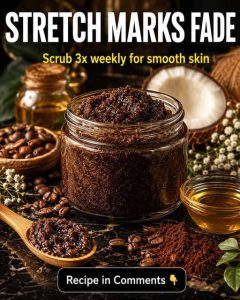
The coffee-and-coconut scrub shown in the image is not a clinically established stretch-mark treatment. Major scientific reviews do not identify coffee grounds as an effective therapy, and aggressive scrubbing can irritate the skin without rebuilding damaged collagen or elastin. Research suggests that centella-containing formulations, hyaluronic acid and regular massage may offer limited benefits, especially for early marks or prevention. However, evidence remains mixed, and no homemade preparation has been proven to eliminate stretch marks. (PubMed)
Remedy 1: Centella and Hyaluronic Hydration Gel for Normal Skin
Ingredients and Scientific Benefits
- Pure aloe vera gel – 1 tablespoon: Supplies water and creates a soothing, spreadable base.
- Hyaluronic acid gel – 1 teaspoon: Binds water in the outer skin layers, temporarily improving plumpness and texture.
- Cosmetic-grade centella extract – ¼ teaspoon: Contains triterpenes associated with collagen-related activity and improved skin resilience.
- Rosehip oil – ½ teaspoon: Provides essential fatty acids that soften dry, rough skin.
- Colloidal oatmeal – 1 teaspoon: Supports the protective skin barrier and reduces moisture loss.
- Vegetable glycerin – 2 drops: Acts as a humectant that attracts water to the skin.
Scientific Working of the Remedy
Hyaluronic acid occurs naturally in human skin and helps retain water. The American Academy of Dermatology reports that applying hyaluronic acid to early stretch marks made them less noticeable in clinical research. Centella has shown some promise in formulations designed to reduce stretch-mark development, although the evidence relates to standardized creams rather than homemade mixtures. Rosehip oil, oatmeal, aloe and glycerin mainly improve hydration and surface softness rather than repairing the deeper scar. (American Academy of Dermatology)
Procedure
Mix the oatmeal with aloe gel until smooth. Add the hyaluronic gel, centella extract, rosehip oil and glycerin. Apply a thin layer over clean stretch marks. Massage gently with flat fingertips for three to five minutes, without pinching or aggressively rubbing the skin. Leave it on for 20 minutes, then rinse or remove the excess with a damp cloth.
How Often to Apply
Apply once daily for the first five days. Continue five days per week for at least 8–12 weeks.
Initial Results
Within one to three days, the area may feel softer, smoother and less dry. Actual fading or narrowing of stretch marks should not be expected within this period.
Remedy 2: Green Tea and Centella Lotion for Combination Skin
Ingredients and Scientific Benefits
- Cooled green tea – 1 tablespoon: Supplies antioxidant catechins that help protect against oxidative stress.
- Aloe vera gel – 1 tablespoon: Provides lightweight moisture without a heavy oily layer.
- Hyaluronic acid gel – 1 teaspoon: Improves water retention and temporary skin plumpness.
- Centella extract – ¼ teaspoon: Provides triterpene compounds studied in stretch-mark preparations.
- Colloidal oatmeal – ½ teaspoon: Supports the barrier and thickens the lotion.
- Sunflower-seed oil – ¼ teaspoon: Adds a light, linoleic-acid-rich emollient for drier areas.
Scientific Working of the Remedy
Combination skin may have oily areas alongside dry, tight patches. Green tea and aloe create a lightweight base, while a small amount of sunflower oil softens dry areas without producing an excessively greasy finish. Hyaluronic acid supports hydration, and centella is included because formulations containing centella have produced some preventive benefit in pregnancy-related studies. These ingredients cannot reconnect broken dermal fibres, but better hydration may reduce the contrast and rough texture of stretch marks. (PubMed)
Procedure
Mix the cooled tea with oatmeal and wait for one minute. Add the aloe, hyaluronic gel, centella extract and sunflower oil. Stir immediately before use because the oil may naturally separate. Apply a light layer and massage for five minutes. Leave it on for another 10 minutes before rinsing.
How Often to Apply
Use on alternate days for the first five days. Continue three or four times weekly for 8–12 weeks.
Initial Results
Dry patches may feel more comfortable within two or three days, while oily areas should remain relatively light. Pigment and indentation changes require much longer.
Remedy 3: Aloe, Cucumber and Hyaluronic Gel for Oily Skin
Ingredients and Scientific Benefits
- Aloe vera gel – 1 tablespoon: Provides non-greasy hydration.
- Fresh cucumber juice – 1 tablespoon: Adds water and a cooling effect.
- Hyaluronic acid gel – 1 teaspoon: Helps retain moisture without using rich oils.
- Cooled green tea – 1 teaspoon: Supplies antioxidant polyphenols.
- Centella extract – ⅛ teaspoon: Adds a small quantity of the best-supported botanical used in stretch-mark preparations.
- Colloidal oatmeal – ½ teaspoon: Improves consistency and reduces moisture loss.
Scientific Working of the Remedy
Oily skin can still be dehydrated, particularly after frequent washing or exposure to harsh cleansers. This oil-free gel uses hyaluronic acid to hold water at the surface while aloe, cucumber and green tea provide a lightweight base. Centella is not a guaranteed treatment, but systematic reviews identify centella-containing preparations among the few topical options with some preventive evidence. The gel may make the skin look smoother without blocking the area with a heavy balm. (PubMed)
Procedure
Combine the cucumber juice and oatmeal. Add the aloe, hyaluronic gel, green tea and centella. Spread a thin layer over the affected area. Massage gently for two minutes and leave the gel on for 15 minutes. Rinse and pat the skin dry.
How Often to Apply
Apply once daily for three to five days. Continue four times weekly for eight weeks when well tolerated.
Initial Results
The skin may feel cooler and better hydrated after the first application. Within three days, roughness may appear reduced, but existing stretch marks will remain visible.
Remedy 4: Rosehip, Shea and Centella Massage Blend for Dry Skin
Ingredients and Scientific Benefits
- Unrefined shea butter – 1 teaspoon: Forms an emollient layer that reduces dryness.
- Rosehip oil – ½ teaspoon: Provides linoleic and alpha-linolenic fatty acids.
- Sunflower-seed oil – ½ teaspoon: Supports the skin barrier and improves softness.
- Aloe vera gel – 1 teaspoon: Adds water-based hydration.
- Hyaluronic acid gel – 1 teaspoon: Temporarily plumps dehydrated surface skin.
- Centella extract – ¼ teaspoon: Supplies triterpenes used in studied stretch-mark formulations.
Scientific Working of the Remedy
A randomized trial examined a formulated cream containing rosehip oil, centella triterpenes, vitamin E and another active ingredient. It did not significantly reduce the overall incidence of pregnancy stretch marks, but it was associated with lower severity in certain groups. This does not prove that rosehip oil alone fades stretch marks. In this blend, shea, rosehip and sunflower oils function mainly as emollients, while centella and hyaluronic acid are the ingredients with more direct, although still limited, stretch-mark evidence. (PubMed)
Procedure
Warm the shea butter between clean fingers until soft. Mix in the rosehip and sunflower oils. Add the aloe, hyaluronic gel and centella immediately before application. Massage the blend over slightly damp skin for five minutes. Leave it on overnight when comfortable, or rinse after 30 minutes.
How Often to Apply
Apply daily for five days. Continue once daily for 8–12 weeks, preferably after bathing.
Initial Results
Very dry skin may feel softer after one application. Flakiness and tightness may improve within two or three days, but deeper white stretch marks generally require professional treatment for meaningful change.
Remedy 5: Oat, Aloe and Hyaluronic Mask for Sensitive Skin
Ingredients and Scientific Benefits
- Colloidal oatmeal – 1 tablespoon: Supports barrier function and helps relieve dryness.
- Aloe vera gel – 1 teaspoon: Supplies mild, water-based hydration.
- Hyaluronic acid gel – 1 teaspoon: Holds water at the surface and improves temporary smoothness.
- Cool boiled or distilled water – 1 tablespoon: Creates a simple fragrance-free base.
- Vegetable glycerin – 2 drops: Reduces dehydration by attracting moisture.
- Sunflower-seed oil – 2 drops: Provides minimal emollient support without a heavy coating.
Scientific Working of the Remedy
Sensitive skin is more likely to react to coffee grounds, citrus juice, essential oils and vigorous exfoliation. This mask focuses on barrier support rather than aggressive “fading.” Hyaluronic acid may help early stretch marks appear less visible, while oatmeal, aloe, glycerin and sunflower oil address dryness and irritation. Avoiding repeated inflammation is important because irritation can make marks look redder or darker. (American Academy of Dermatology)
Procedure
Combine the oatmeal and water and let the mixture stand for two minutes. Add the aloe, hyaluronic gel, glycerin and sunflower oil. Patch-test it on a small area for 24–48 hours. When no reaction occurs, apply a thin layer for 10 minutes and rinse without rubbing.
How Often to Apply
Use once and monitor the area for two days. If comfortable, apply twice during the following three to five days, followed by two applications weekly.
Initial Results
Dryness, itching and tightness may begin improving within one to three days. Stop using the mask if it causes burning, swelling, hives or persistent redness.
Final Tips for Making Stretch Marks Less Noticeable
Do not scrub stretch marks three times weekly with coffee, salt or sugar. Abrasive particles only exfoliate the outermost skin cells, while stretch marks involve deeper dermal tissue. Scrubbing cannot rebuild the disrupted collagen network and may cause irritation.
Apply the selected remedy while the marks are still new and coloured, as early marks generally respond better than mature white marks. Massage gently rather than applying heavy pressure. One study found fewer pregnancy-related stretch marks when almond oil was combined with a 15-minute massage, while the oil alone did not provide the same benefit. Because that study used bitter almond oil, which is not suitable for casual household use, a safer bland moisturizer can be used for massage instead. (PubMed)
Keep homemade mixtures fresh, use clean utensils and prepare only enough for one application. Patch-test every ingredient and avoid essential oils, raw lemon juice and unregulated herbal powders. During pregnancy or breastfeeding, discuss any concentrated botanical extract with a doctor or midwife.
Surface softness may improve within two or three days. Realistic changes in colour or texture generally require at least 8–12 weeks, and complete removal is unlikely. Dermatologist-performed procedures such as microneedling, radiofrequency and selected lasers generally have stronger evidence than home remedies. (PubMed)
Diet Plan to Support Skin Structure
Breakfast: Eat eggs, plain yogurt, lentils or tofu with guava, kiwi, berries or another vitamin-C-rich fruit.
Lunch: Choose fish, chicken, beans or chickpeas with colourful vegetables and whole grains.
Snack: Have almonds, walnuts, pumpkin seeds or fresh fruit instead of sugary drinks.
Dinner: Include a protein source with leafy vegetables, tomatoes, bell peppers and a moderate serving of brown rice, oats or wholegrain bread.
Vitamin C supports normal collagen synthesis, while sufficient dietary protein provides amino acids used throughout the body. However, food cannot selectively erase stretch marks, and collagen drinks should not be treated as a cure. (PubMed)
Continue the appropriate home routine for 8–12 weeks. See a dermatologist when the marks remain distressing or when you want stronger treatment. Consult a doctor promptly if wide purple stretch marks appear suddenly without pregnancy or major weight change, particularly with easy bruising, muscle weakness or prolonged corticosteroid use, because an underlying medical or medication-related cause may need assessment. (nhs.uk)
References for the above remedy
- American Academy of Dermatology. Stretch Marks: Why They Appear and How to Get Rid of Them.
https://www.aad.org/public/cosmetic/scars-stretch-marks/stretch-marks-why-appear - Ud-Din S, McGeorge D, Bayat A. Topical Management of Striae Distensae: Prevention and Therapy of Striae Rubrae and Albae.
https://pubmed.ncbi.nlm.nih.gov/26486318/ - Hague A, Bayat A. Therapeutic Targets in the Management of Striae Distensae: A Systematic Review.
https://pubmed.ncbi.nlm.nih.gov/28551068/ - García Hernández JA, et al. Use of a Specific Anti-Stretch Mark Cream for Preventing or Reducing Striae Gravidarum.
https://pubmed.ncbi.nlm.nih.gov/23237514/ - Young GL, Jewell D. Creams for Preventing Stretch Marks in Pregnancy.
https://pubmed.ncbi.nlm.nih.gov/10796111/ - Korgavkar K, Wang F. Stretch Marks During Pregnancy: A Review of Topical Prevention.
https://pubmed.ncbi.nlm.nih.gov/25255817/ - Timur Taşhan S, Kafkasli A. The Effect of Bitter Almond Oil and Massaging on Striae Gravidarum.
https://pubmed.ncbi.nlm.nih.gov/22594386/ - Martin-Gorgojo A, et al. Stretch Marks: Systematic Review of Its Therapeutic Approach.
https://pubmed.ncbi.nlm.nih.gov/41386441/ - Zhu CK, et al. A Systematic Review on Treatment Outcomes of Striae.
https://pubmed.ncbi.nlm.nih.gov/38452322/ - Pullar JM, Carr AC, Vissers MCM. The Roles of Vitamin C in Skin Health.
https://pubmed.ncbi.nlm.nih.gov/28805671/