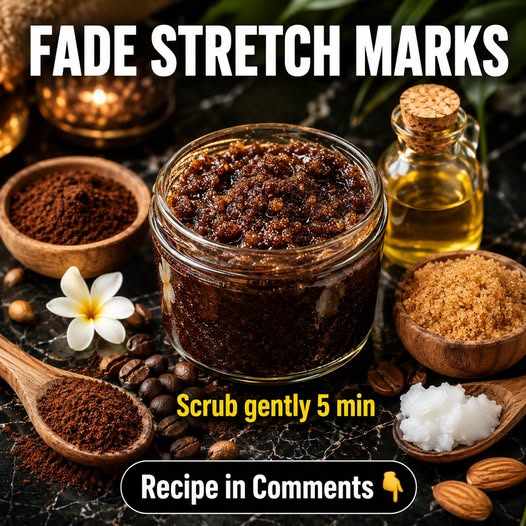
Stretch marks, medically called striae, develop when the skin stretches faster than the deeper dermal tissue can adapt. They commonly appear during pregnancy, puberty, rapid weight change or muscle growth. New stretch marks may look red, purple or dark brown, while older marks often become pale, silvery and slightly indented. Although they are harmless, they can affect confidence, especially when they appear on the abdomen, thighs, hips, breasts or upper arms.
Natural skincare can improve hydration, softness, itching and the overall appearance of early stretch marks, but no home remedy can completely erase them. Stretch marks are a type of permanent scar, and established white marks are harder to treat than newer coloured marks. Dermatology evidence suggests that Centella asiatica and hyaluronic acid may help make early marks less noticeable, while daily massage and moisturisation can improve texture. Popular remedies such as coffee scrubs, cocoa butter, olive oil and vitamin E have not consistently faded stretch marks in clinical studies. (American Academy of Dermatology)
The following remedies use gentle, evidence-informed ingredients. The exact homemade mixtures have not been clinically tested as complete formulas, so results should remain realistic.
Remedy 1: Centella and Hyaluronic Gel for Normal Skin
Ingredients and Their Scientific Benefits
- Plain Centella asiatica gel – 1 teaspoon: Centella contains triterpenes that may support collagen-related repair and improve the appearance of early stretch marks.
- Plain 1% hyaluronic acid gel – 1 teaspoon: Hyaluronic acid attracts water to the skin and may make early stretch marks look softer and less prominent.
- Pure aloe vera gel – 1 tablespoon: Aloe provides lightweight hydration and may calm mild dryness or itching.
- Vegetable glycerin – ¼ teaspoon: Glycerin is a humectant that increases water in the upper skin layer.
- Rosehip seed oil – ½ teaspoon: Rosehip oil supplies essential fatty acids and supports the skin’s protective lipid layer.
Procedure
Mix all the ingredients in a clean bowl until smooth. Apply a thin layer over the stretch marks and massage gently for two to three minutes. Leave it on for at least 30 minutes. It may be left overnight when it causes no irritation. Prepare a fresh mixture for each application.
How the Remedy May Work
A clinical study found improvement in early red stretch marks from a formulated cream containing Centella asiatica and hyaluronic acid. Another controlled study showed that a combination of hyaluronic acid, glycerin and Centella improved hydration and reduced water loss from the skin. These findings support the ingredients, but they do not prove that every homemade mixture will produce the same result. (PubMed)
How Often to Apply
Apply once daily for the first five days. When well tolerated, continue once or twice daily for 8–12 weeks.
Initial Results
Within one to three days, the skin may feel smoother and less dry. Noticeable fading should not be expected within three days; changes in colour or texture generally require several weeks.
Remedy 2: Oat and Centella Lotion for Combination Skin
Ingredients and Their Scientific Benefits
- Pure aloe vera gel – 1 tablespoon: Hydrates dry patches without leaving a heavy oily layer.
- Plain Centella asiatica gel – 1 teaspoon: Provides the most relevant plant-based ingredient for supporting early stretch-mark care.
- Finely ground colloidal oatmeal – 1 teaspoon: Oat compounds help soothe irritation and strengthen the outer skin barrier.
- Vegetable glycerin – ⅛ teaspoon: Helps dry areas hold moisture without requiring a thick oil.
- Cold-pressed sunflower seed oil – 3 drops: Linoleic-acid-rich sunflower oil helps reduce moisture loss and is lighter than many heavier oils.
Procedure
Combine the aloe, Centella and glycerin. Stir in the oatmeal, followed by three drops of sunflower oil. Apply mainly to dry or tight areas while using only a very thin layer on oilier areas. Massage gently and leave on for 20–30 minutes before rinsing, or leave on when the mixture feels comfortable.
How the Remedy May Work
Colloidal oatmeal has demonstrated benefits for skin hydration, pH and barrier function in controlled studies. Sunflower seed oil has also been shown to preserve skin-barrier integrity and improve hydration, whereas olive oil may weaken the barrier in some people. These ingredients mainly improve surface comfort and texture rather than repairing the deeper dermal tears that form stretch marks. (PubMed)
How Often to Apply
Use once daily for at least five days, then continue for 8–12 weeks when no irritation develops.
Initial Results
The dry areas may feel calmer and more flexible within two to three days. Early marks may gradually appear less rough with consistent use.
Remedy 3: Lightweight Hydration Gel for Oily Skin
Ingredients and Their Scientific Benefits
- Pure aloe vera gel – 1 tablespoon: Provides water-based hydration with minimal greasiness.
- Plain 1% hyaluronic acid gel – 1 teaspoon: Temporarily plumps the upper skin layer by retaining water.
- Plain Centella asiatica gel – 1 teaspoon: May support the appearance of newer red or purple stretch marks.
- Colloidal oatmeal – ½ teaspoon: Reduces roughness and supports barrier recovery.
- Vegetable glycerin – ⅛ teaspoon: Improves hydration when used in a low amount.
Procedure
Blend the ingredients into a smooth gel. Apply a thin layer after bathing, when the skin is slightly damp. Massage for two minutes without scrubbing. Leave the gel on and allow it to absorb.
How the Remedy May Work
Hyaluronic acid and glycerin attract moisture, while Centella provides the ingredient with the strongest natural topical evidence for early stretch marks. The oil-free texture is more comfortable for oily or acne-prone body skin. Aloe may increase surface hydration, although evidence does not show that aloe alone can remove stretch marks. (PubMed)
How Often to Apply
Apply once or twice daily for five days and continue for at least 8–12 weeks if comfortable.
Initial Results
The treated skin may feel softer within one to three days. Significant fading is unlikely during the first week.
Remedy 4: Shea, Sunflower and Rosehip Balm for Dry Skin
Ingredients and Their Scientific Benefits
- Unrefined shea butter – 1 teaspoon: Forms an emollient layer that reduces dryness and improves flexibility.
- Cold-pressed sunflower seed oil – 1 teaspoon: Supports the lipid barrier and helps retain moisture.
- Rosehip seed oil – ½ teaspoon: Supplies fatty acids that improve softness and surface texture.
- Pure aloe vera gel – 1 teaspoon: Adds water-based hydration beneath the oils.
- Vegetable glycerin – ¼ teaspoon: Draws moisture into the outer skin layer.
Procedure
Soften the shea butter between clean fingers. Whisk it with sunflower and rosehip oils. Add aloe and glycerin slowly, mixing until creamy. Apply immediately because this homemade mixture contains no preservative. Massage gently for three to five minutes.
How the Remedy May Work
The oils and shea butter limit moisture loss, while glycerin and aloe increase water content in the outer skin. A randomized pregnancy study involving a formulated cream containing rosehip oil, Centella and other ingredients reported reduced severity in some groups, but the study does not establish rosehip oil as an effective treatment by itself. (PubMed)
How Often to Apply
Apply nightly for the first five days. Continue once or twice daily for 8–12 weeks.
Initial Results
Dryness, tightness and roughness may improve within two or three days. Older white stretch marks will require much longer and may not respond visibly to topical home care.
Remedy 5: Minimal Oatmeal Soother for Sensitive Skin
Ingredients and Their Scientific Benefits
- Colloidal oatmeal – 1 tablespoon: Supports the skin barrier and helps calm dryness and itching.
- Cooled boiled water – 1 tablespoon: Creates a gentle, fragrance-free base.
- Pure aloe vera gel – 1 teaspoon: May provide soothing hydration, although some people can be allergic to it.
- Vegetable glycerin – ⅛ teaspoon: Improves moisture retention without abrasive exfoliation.
- Cold-pressed sunflower seed oil – 3 drops: Seals in moisture while remaining relatively lightweight.
Procedure
Mix the oatmeal and water into a soft paste. Add aloe, glycerin and sunflower oil. Apply without rubbing and leave for 15 minutes. Rinse with lukewarm water and pat dry. Replace the aloe with additional cooled water if aloe causes stinging.
How the Remedy May Work
Oatmeal and glycerin are supported mainly for barrier repair and hydration rather than direct stretch-mark removal. Better hydration can make marks look temporarily smoother and reduce discomfort. Avoid coffee grounds, sugar, lemon juice, baking soda and essential oils because abrasion or irritation can make sensitive skin more inflamed.
How Often to Apply
Use once daily for three to five days. When tolerated, continue once daily for 8–12 weeks.
Initial Results
Itching and surface dryness may decrease in one to three days. Colour changes require several weeks and cannot be guaranteed.
Final Tips for Better Results
Apply remedies after bathing while the skin is slightly damp. Use gentle circular massage instead of vigorous scrubbing. Keep bowls, spoons and hands clean, and prepare water-containing mixtures fresh because they can grow microorganisms without preservatives.
Perform a patch test on a small area for 24–48 hours. Stop immediately if you develop burning, swelling, a rash or persistent itching. Avoid applying remedies over broken, infected or freshly shaved skin.
Maintain a stable weight where medically appropriate, sleep seven to nine hours, stay adequately hydrated and avoid unprescribed steroid creams. Surface softness may improve within two or three days, but meaningful changes in stretch-mark appearance generally take 8–12 weeks or longer. Early red or purple stretch marks usually respond better than old white marks.
Diet Plan to Support Healthy Skin
Diet cannot erase stretch marks, but balanced nutrition supports normal collagen production and skin repair.
Breakfast: Eggs, plain yoghurt or lentils for protein, together with oranges, guava, berries or another vitamin-C-rich fruit.
Mid-morning: A small handful of almonds, walnuts or pumpkin seeds.
Lunch: Chicken, fish, beans or chickpeas with whole grains and vegetables such as bell peppers, spinach, tomatoes or broccoli.
Evening snack: Fruit, unsweetened yoghurt or roasted chickpeas.
Dinner: A moderate serving of protein with vegetables and brown rice, whole-wheat bread or another whole grain.
Include protein daily because skin structure contains protein-based collagen and elastin. Vitamin C supports normal collagen formation, while zinc-containing foods such as meat, beans, seeds and dairy contribute to tissue repair. Omega-3 sources such as fish, walnuts and flaxseed may support general skin health. Drink according to thirst and local weather rather than forcing excessive water.
Continue the home-care routine and balanced diet for at least 8–12 weeks. Consult a dermatologist if the marks continue to spread, become painful, appear suddenly without pregnancy or weight change, or remain a major concern. Medical assessment is particularly important when stretch marks occur with muscle weakness, easy bruising, prolonged steroid use or other unexplained symptoms. Pregnant or breastfeeding individuals should consult a doctor before using concentrated botanical extracts or medicated treatments.
References for the above remedy
- American Academy of Dermatology Association. “Stretch marks: Why they appear and how to get rid of them.”
https://www.aad.org/public/cosmetic/scars-stretch-marks/stretch-marks-why-appear - Draelos ZD, et al. “Evaluation of an onion extract, Centella asiatica, and hyaluronic acid cream in the appearance of striae rubra.”
https://pubmed.ncbi.nlm.nih.gov/20527138/ - Brennan M, et al. “Topical preparations for preventing stretch marks in pregnancy.” Cochrane Review.
https://pubmed.ncbi.nlm.nih.gov/23152199/ - García Hernández JA, et al. “Use of a specific anti-stretch mark cream for preventing or reducing the severity of striae gravidarum.”
https://pubmed.ncbi.nlm.nih.gov/23237514/ - Milani M, Sparavigna A. “The 24-hour skin hydration and barrier-function effects of hyaluronic acid, glycerin and Centella asiatica.”
https://pubmed.ncbi.nlm.nih.gov/28860834/ - Capone K, et al. “Effects of colloidal oatmeal topical cream on skin microbiome and skin-barrier properties.”
https://pubmed.ncbi.nlm.nih.gov/32484623/ - Danby SG, et al. “Effect of olive and sunflower seed oil on the adult skin barrier.”
https://pubmed.ncbi.nlm.nih.gov/22995032/ - Dal’Belo SE, et al. “Moisturizing effect of cosmetic formulations containing Aloe vera extract.”
https://pubmed.ncbi.nlm.nih.gov/17026654/ - Martin-Gorgojo A, et al. “Stretch Marks: Systematic Review of Its Therapeutic Approach.”
https://pubmed.ncbi.nlm.nih.gov/41386441/