
Dandruff causes visible flakes, itching and scalp discomfort that can affect confidence, especially when flakes collect on dark hair or clothing. It is not simply a hygiene problem. An oily scalp, irritation from hair products, infrequent or overly harsh washing, and inflammatory conditions such as seborrheic dermatitis can all contribute. Mild dandruff can often be managed at home, but recurring redness, greasy yellow scales or severe itching may need medical treatment. (American Academy of Dermatology)
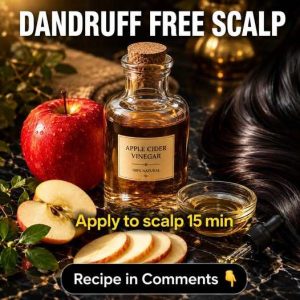
The uploaded image recommends apple cider vinegar, but good clinical research has not established it as an effective dandruff treatment. Even diluted apple cider vinegar failed to improve the skin barrier in one study and irritated most participants, while undiluted vinegar has caused chemical burns. It is therefore safer not to use vinegar on an inflamed, scratched or sensitive scalp. (PubMed)
The following remedies instead use ingredients with human research for dandruff, seborrheic dermatitis, itching or scalp-barrier support. The complete homemade mixtures have not been tested as finished formulas, so they should be considered supportive remedies rather than guaranteed cures.
Remedy 1: Honey, Aloe and Coconut Mask for a Normal Scalp
Ingredients
- Raw honey: 1 tablespoon
- Pure aloe vera gel: 1 tablespoon
- Coconut oil: 1 teaspoon
- Finely ground colloidal oatmeal: 1 teaspoon
- Warm boiled water: 1 teaspoon
- Tea tree essential oil: 1 drop
Scientific Working of Each Ingredient
Honey has been directly studied in people with chronic dandruff and seborrheic dermatitis. In a small clinical study, diluted honey used regularly reduced itching and scaling, although participants left the treatment on considerably longer than a typical home mask.
Aloe vera has soothing and hydrating properties. A randomized placebo-controlled trial involving adults with seborrheic dermatitis found that an aloe-containing emulsion improved scaling and itching. Coconut oil may support scalp hydration and influence the balance of scalp microorganisms; a 16-week study involving women with and without dandruff found measurable microbiome and scalp changes after controlled coconut-oil use. (PubMed)
Colloidal oatmeal supports a damaged skin barrier and may reduce dryness and discomfort. Tea tree oil has antifungal activity, but the concentration tested for dandruff was a professionally formulated 5% shampoo. One drop is used here to reduce the risk of irritation, so this homemade dilution should not be expected to produce the same results as the clinical formulation. (PubMed)
Procedure
Mix the honey with warm water until it loosens. Add aloe vera, oatmeal and coconut oil. Stir in one drop of tea tree oil. Part the hair and apply a thin layer directly to the scalp. Leave it on for 15 to 20 minutes, rinse thoroughly and wash with a gentle shampoo.
How Often to Apply
Apply twice during the first five days. If there is no burning or increased itching, continue twice weekly for four weeks.
Initial Results
The scalp may feel softer and less tight within one to three days. A visible reduction in flakes is more likely to take one to four weeks.
Remedy 2: Tea Tree and Aloe Gel for a Combination Scalp
A combination scalp is oily around the crown or hairline but dry and uncomfortable in other areas.
Ingredients
- Aloe vera gel: 2 tablespoons
- Raw honey: ½ teaspoon
- Jojoba oil: ½ teaspoon
- Coconut oil: ¼ teaspoon
- Boiled and cooled water: 1 teaspoon
- Tea tree essential oil: 1 drop
Scientific Working of Each Ingredient
Tea tree oil is one of the better-studied natural dandruff ingredients. In a randomized trial of 126 participants, a 5% tea tree shampoo improved overall dandruff severity by approximately 41% after four weeks, compared with about 11% for the placebo formula. It also improved itching and greasiness. (PubMed)
Aloe and diluted honey support dry sections and may reduce discomfort. Jojoba oil functions mainly as a lightweight emollient that reduces roughness without heavily coating the hair. Coconut oil is restricted to a very small amount because it may help dry areas but can feel heavy on an oily crown.
Procedure
Combine the aloe, honey and water. Stir in the jojoba and coconut oils, followed by the tea tree oil. Apply a very thin amount to oily sections and a slightly thicker amount to dry areas. Leave it on for 15 minutes, then rinse and shampoo the scalp.
How Often to Apply
Use on days one, three and five. Continue once or twice weekly if the scalp remains comfortable.
Initial Results
Dry areas may feel calmer after the first application. Greasiness and visible scaling generally require several weeks of consistent care.
Remedy 3: Lemongrass Scalp Treatment for an Oily Scalp
Ingredients
- Aloe vera gel: 2 tablespoons
- Strong cooled green tea: 1 tablespoon
- Raw honey: ½ teaspoon
- Jojoba oil: ½ teaspoon
- Lemongrass essential oil: 1 drop
Scientific Working of Each Ingredient
Lemongrass oil has specific human evidence for dandruff. In a randomized, double-blind trial, formulated hair tonics containing 5%, 10% or 15% lemongrass oil significantly reduced dandruff after seven and fourteen days. The 10% formulation showed the greatest reduction. Those concentrations were prepared under controlled conditions and may irritate when copied at home, so this remedy uses only one drop. (PubMed)
Green tea provides antioxidant compounds and creates a lightweight base for an oily scalp. Aloe supplies water-based hydration, while a small quantity of honey reduces tightness. Jojoba oil helps dilute the essential oil and makes the mixture easier to distribute.
Procedure
Combine the aloe, cooled tea and honey. Add the jojoba oil and one drop of lemongrass oil. Mix immediately before applying because a homemade treatment does not contain an emulsifier. Massage gently over the scalp without scratching. Leave it on for 10 minutes and shampoo thoroughly.
How Often to Apply
Apply twice during the first five days. Continue two times weekly for two to four weeks.
Initial Results
The scalp may feel fresher after one or two applications. Research on lemongrass showed measurable dandruff improvement from around day seven rather than overnight.
Remedy 4: Coconut, Honey and Oat Mask for a Dry Scalp
Ingredients
- Coconut oil: 2 teaspoons
- Aloe vera gel: 1 tablespoon
- Raw honey: 1 teaspoon
- Colloidal oatmeal: 1 teaspoon
- Sunflower seed oil: ½ teaspoon
- Warm water: 1 teaspoon
Scientific Working of Each Ingredient
A dry, flaky scalp does not always mean dandruff. Cold weather, frequent shampooing, hot water and irritating hair treatments can damage the barrier and create loose white flakes. Coconut oil can reduce water loss and support the scalp environment, while honey and aloe provide humectant and soothing effects. (PubMed Central (PMC))
Colloidal oatmeal has evidence for improving hydration and barrier properties in irritated skin. Sunflower seed oil is rich in linoleic acid; controlled research found that it preserved skin-barrier integrity and improved hydration. These ingredients primarily treat dryness and irritation rather than directly eliminating yeast-associated dandruff. (PubMed)
Procedure
Warm the coconut oil between the hands. Mix it with the aloe, honey, oatmeal, sunflower oil and water. Apply the treatment directly to dry areas of the scalp. Leave it on for 20 minutes and wash thoroughly. Avoid leaving heavy oil on the scalp overnight because buildup can make some cases of seborrheic dermatitis feel worse.
How Often to Apply
Apply twice weekly for three to four weeks. Reduce to once weekly after dryness improves.
Initial Results
Tightness and loose dry flakes may appear reduced within one to three days. Persistent greasy or inflamed scales are unlikely to respond to moisturising alone.
Remedy 5: Oat and Aloe Compress for a Sensitive Scalp
Ingredients
- Finely ground colloidal oatmeal: 1 tablespoon
- Pure aloe vera gel: 1 tablespoon
- Boiled and cooled water: 2 tablespoons
- Sunflower seed oil: ¼ teaspoon
- Raw honey: ¼ teaspoon
Scientific Working of Each Ingredient
A sensitive scalp should not be treated with essential oils, lemon juice, baking soda or apple cider vinegar. Colloidal oatmeal supports moisture retention and barrier recovery, while aloe may soothe scaling and itching. Sunflower oil supplies a small amount of barrier-supporting lipid. Honey is used sparingly because it has clinical evidence for seborrheic dermatitis but can cause reactions in people with pollen, bee-product or honey allergies. (PubMed)
Procedure
Mix the oatmeal with water and allow it to soften for five minutes. Add aloe, sunflower oil and honey. Patch-test the mixture behind the ear for 24 hours. If no reaction develops, soak a clean soft cloth in the mixture and press it against the scalp for five to eight minutes. Do not rub or scrape the flakes. Rinse with cool or lukewarm water.
How Often to Apply
Use once during the first three days. If tolerated, repeat on day five and then once weekly.
Initial Results
Mild dryness or irritation may feel calmer within two or three days. Stop immediately if itching, redness, swelling or burning increases.
Final Tips for Keeping the Scalp Dandruff-Free
Wash according to your scalp and hair type. Fine, straight or oily hair may need washing daily or every other day, while curly or tightly coiled hair may need less frequent washing. When using a dandruff shampoo, apply it to the scalp rather than the lengths and allow it to remain for the time stated in its instructions. Dermatologists commonly recommend ingredients such as ketoconazole, selenium sulfide, zinc pyrithione, salicylic acid or sulfur when ordinary washing and home care are insufficient. (American Academy of Dermatology)
Avoid scratching, picking or lifting scales with fingernails. Wash combs, brushes, pillowcases and towels regularly. Rinse shampoo completely, limit fragranced scalp products and avoid applying several essential oils together.
Comfort and hydration may improve within two to three days, but meaningful control of flaking normally requires two to four weeks. Dandruff and seborrheic dermatitis can also return, making occasional maintenance treatment necessary.
Diet Plan to Support Scalp Health
Diet cannot replace topical dandruff treatment, and there is no single food that kills scalp yeast. However, an observational study involving more than 4,000 adults associated higher fruit intake with less seborrheic dermatitis. A Western-style dietary pattern was associated with greater prevalence in women, but this research shows association rather than proof that diet directly caused or cured the condition. (PubMed)
Breakfast: Oats, eggs or unsweetened yogurt with berries, guava, orange, apple or another fresh fruit.
Lunch: Lentils, beans, chicken or fish with vegetables and brown rice or whole-grain bread.
Snack: Fresh fruit with a small portion of nuts, pumpkin seeds or roasted chickpeas.
Dinner: Fish, eggs, tofu, beans or lean meat with cooked vegetables and a whole-grain carbohydrate.
Daily habits: Reduce frequent sugary drinks, fried fast food and heavily processed snacks. Drink according to thirst, obtain adequate sleep and manage stress, as stress may contribute to seborrheic dermatitis flare-ups.
Continue the chosen home remedy for three to four weeks if it does not cause irritation. See a doctor or dermatologist if the problem persists, repeatedly returns or becomes severe. Medical assessment is particularly important for thick crusts, intense redness, pain, pus, bleeding, patchy hair loss, broken hairs, fever or flakes spreading to the eyebrows, ears, face or chest. These symptoms can indicate seborrheic dermatitis, psoriasis, eczema, contact allergy or a fungal scalp infection rather than ordinary dandruff. (American Academy of Dermatology)
References for the above remedy
- American Academy of Dermatology. How to Treat Dandruff.
https://www.aad.org/public/everyday-care/hair-scalp-care/scalp/treat-dandruff - American Academy of Dermatology. Seborrheic Dermatitis: Diagnosis and Treatment.
https://www.aad.org/public/diseases/a-z/seborrheic-dermatitis-treatment - Satchell AC, et al. Treatment of Dandruff with 5% Tea Tree Oil Shampoo.
https://pubmed.ncbi.nlm.nih.gov/12451368/ - Al-Waili NS. Therapeutic and Prophylactic Effects of Crude Honey on Chronic Seborrheic Dermatitis and Dandruff.
https://pubmed.ncbi.nlm.nih.gov/11485891/ - Vardy DA, et al. A Double-Blind, Placebo-Controlled Trial of an Aloe Vera Emulsion in Seborrheic Dermatitis.
https://www.tandfonline.com/doi/abs/10.3109/09546639909055904 - Chaisripipat W, et al. Anti-Dandruff Hair Tonic Containing Lemongrass Oil.
https://pubmed.ncbi.nlm.nih.gov/26566122/ - Saxena R, et al. Longitudinal Study of the Scalp Microbiome and Coconut Oil.
https://pmc.ncbi.nlm.nih.gov/articles/PMC8012655/ - Capone K, et al. Effects of Colloidal Oatmeal on Skin Microbiome and Barrier Properties.
https://pubmed.ncbi.nlm.nih.gov/32484623/ - Luu LA, et al. Apple Cider Vinegar Soaks Do Not Improve Skin-Barrier Integrity.
https://onlinelibrary.wiley.com/doi/10.1111/pde.13888 - Sanders MGH, et al. Association Between Diet and Seborrheic Dermatitis.
https://pubmed.ncbi.nlm.nih.gov/30130619/