
Dark circles and puffiness can make the face appear tired even after a full night’s sleep, affecting confidence and the overall freshness of the complexion. However, the under-eye area can look dark for several different reasons, including visible blood vessels beneath thin skin, excess pigmentation, allergies and repeated rubbing, fluid retention, genetics, ageing or shadows created by tear-trough hollows. Because the cause varies, no single homemade remedy can permanently remove every type of dark circle. Natural treatments are most useful for temporarily reducing puffiness, improving hydration and making dry under-eye skin look smoother and brighter. (PubMed)
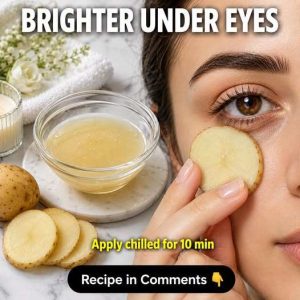
The raw-potato treatment shown in the image is popular online, but convincing human clinical trials proving that potato slices lighten dark circles are lacking. A chilled potato slice may temporarily reduce puffiness mainly because it acts as a cold compress—not because potato has been proven to remove pigmentation. The evidence-based remedies below therefore focus on cooling, caffeine, hydration and barrier support rather than promising instant pigment removal.
What Results Can You Realistically Expect?
Cold compresses can temporarily narrow superficial blood vessels and reduce fluid-related swelling. Caffeine-containing tea may also briefly improve the appearance of vascular darkness and puffiness. Aloe vera, glycerin, colloidal oatmeal and sunflower seed oil do not bleach the skin; instead, they improve hydration and barrier comfort, which can make dull, creased under-eye skin reflect light more evenly. (Mayo Clinic)
Apply all remedies along the orbital bone, leaving a small gap beneath the lower eyelashes. Never place homemade mixtures inside the eye, on the waterline or over irritated eyelids.
Remedy 1: Chilled Black Tea and Cucumber Compress for Normal Skin
Scientific Working of Each Ingredient
Black tea naturally contains caffeine and antioxidant polyphenols. Topical caffeine is included among nature-derived ingredients studied for periorbital darkness and may temporarily reduce the visibility of vascular puffiness. Chilled cucumber provides water and cooling, while aloe vera and glycerin improve surface hydration. Finely milled colloidal oatmeal supports the protective skin barrier and helps reduce dryness-related roughness. (PubMed)
Ingredients
- 2 tablespoons strong, cooled black tea: provides caffeine and antioxidants
- 2 tablespoons strained cucumber juice: supplies cooling hydration
- 1 teaspoon pure aloe vera gel: moisturizes and provides gentle slip
- ⅛ teaspoon vegetable glycerin: attracts water into the outer skin layer
- ½ teaspoon finely ground colloidal oatmeal: supports the skin barrier
Procedure
Brew plain black tea without herbs, flavouring or sugar. Allow it to cool completely and refrigerate it for 15 minutes. Mix the tea with strained cucumber juice, aloe gel, glycerin and oatmeal.
Soak two clean cotton pads in the mixture and squeeze out excess liquid. Close your eyes and place the pads beneath them for eight to ten minutes. Do not rub the skin. Remove the pads and rinse gently with cool water.
How Often to Apply
Apply once daily for five days. After that, continue three times weekly for four weeks.
Initial Results
Within one to three days, mild morning puffiness may decrease and the skin may look more hydrated. Brown pigmentation, genetic darkness and tear-trough shadows will not disappear within this period.
Remedy 2: Green Tea Dual-Zone Treatment for Combination Skin
Scientific Working of Each Ingredient
Combination skin may be slightly oily near the nose but dry around the outer corners. Green tea provides caffeine and polyphenols without adding oil. Aloe and glycerin hydrate the full under-eye area, while oatmeal comforts dry patches. Sunflower seed oil contains barrier-supporting lipids and can be reserved for the driest outer area instead of applying it close to the nose. Research indicates that sunflower seed oil can preserve barrier integrity and improve hydration more effectively than some heavier kitchen oils. (PubMed)
Ingredients
- 2 tablespoons strong, cooled green tea: provides lightweight caffeine care
- 1 tablespoon cool boiled water: dilutes the treatment
- 1 teaspoon aloe vera gel: adds water-based hydration
- ½ teaspoon colloidal oatmeal: helps soothe dry sections
- ⅛ teaspoon glycerin: reduces dehydration
- ⅛ teaspoon sunflower seed oil: conditions dry outer corners
Procedure
Mix the green tea, water, aloe, oatmeal and glycerin. Apply a very thin layer beneath both eyes with a clean fingertip.
Place the sunflower seed oil only on the dry outer corners. Do not apply it near the inner corners or directly below the lashes. Leave the treatment on for eight minutes and rinse thoroughly.
How Often to Apply
Use on alternate days for the first five days. Continue three times weekly when the skin remains comfortable.
Initial Results
The outer under-eye area may feel less tight after one or two applications. Puffiness may temporarily improve, while true pigment changes would require longer-term treatment directed at the underlying cause.
Remedy 3: Oil-Free Tea and Aloe Cooling Pads for Oily Skin
Scientific Working of Each Ingredient
An oily complexion can still have dehydrated under-eye skin. This remedy avoids oils while combining the caffeine present in black and green tea with the cooling effect of cucumber. Aloe and a very small amount of glycerin retain water without creating a greasy finish. Oatmeal is used sparingly to reduce surface roughness without forming a heavy mask. Caffeine may help vascular-looking circles temporarily, but it cannot correct hollows, genetics or deep melanin by itself. (PubMed)
Ingredients
- 1 tablespoon cooled black tea: supplies caffeine and tea polyphenols
- 1 tablespoon cooled green tea: provides additional antioxidants
- 1 tablespoon strained cucumber juice: cools the under-eye area
- 1 teaspoon aloe vera gel: gives oil-free hydration
- ⅛ teaspoon glycerin: helps retain moisture
- ¼ teaspoon colloidal oatmeal: supports smoother texture
Procedure
Combine all ingredients and stir until no dry oatmeal remains. Refrigerate the mixture for ten minutes, but do not freeze it.
Dip two clean cotton pads into the liquid. Apply them under closed eyes for seven to ten minutes. Remove the pads and rinse gently. Avoid massaging or scrubbing because friction can worsen post-inflammatory pigmentation.
How Often to Apply
Apply once daily for three days, followed by every other day for three to four weeks.
Initial Results
The area may appear less swollen and more refreshed within one to three days. Oiliness around the face may remain unchanged because this compress is designed for the delicate under-eye skin rather than the entire complexion.
Remedy 4: Aloe, Oat and Sunflower Moisture Veil for Dry Skin
Scientific Working of Each Ingredient
Dryness makes fine lines and shadows appear more noticeable. Aloe vera contributes water, glycerin acts as a humectant, and oatmeal helps strengthen the outer barrier. Sunflower seed oil reduces moisture loss and softens flaky skin. A small quantity of chilled black tea provides caffeine without making the formula overly watery. These ingredients improve the appearance of dehydration but do not rebuild lost under-eye volume. (PubMed)
Ingredients
- 1 tablespoon pure aloe vera gel: supplies soothing hydration
- 1 teaspoon colloidal oatmeal: reduces rough, dry texture
- ¼ teaspoon vegetable glycerin: draws water into the skin
- ¼ teaspoon sunflower seed oil: reduces moisture loss
- 1 tablespoon cooled black tea: provides caffeine and antioxidants
- 1 teaspoon strained cucumber juice: offers gentle cooling
Procedure
Blend the aloe, oatmeal and glycerin. Add the black tea and cucumber juice gradually, followed by the sunflower oil. Stir until a soft gel forms.
Apply a rice-grain-sized amount beneath each eye. Pat lightly with the ring finger instead of massaging. Leave it on for ten minutes and remove it with a soft, damp cloth.
How Often to Apply
Use once daily for five days, then three times weekly for four to six weeks.
Initial Results
Dryness and creasing may look softer within one to three applications. This can make the area appear brighter, but it is an optical effect from improved hydration rather than removal of melanin.
Remedy 5: Minimal Oat Barrier Compress for Sensitive Skin
Scientific Working of Each Ingredient
Sensitive under-eye skin benefits from a short ingredient list without perfume, essential oils, lemon juice or strong plant extracts. Colloidal oatmeal has clinical evidence for improving hydration and barrier function. Glycerin increases water retention, while a tiny quantity of sunflower oil limits moisture loss. Aloe can provide hydration but should be omitted when there is a known aloe allergy. Cool boiled water produces the soothing compress effect. (PubMed)
Ingredients
- 2 tablespoons cooled boiled water: provides a clean cooling base
- 1 teaspoon colloidal oatmeal: supports sensitive, dry skin
- 1 teaspoon pure fragrance-free aloe gel: provides light hydration
- ⅛ teaspoon glycerin: improves water retention
- ⅛ teaspoon sunflower seed oil: protects against dryness
Procedure
Mix the oatmeal into the cooled water and allow it to soften for two minutes. Add the aloe, glycerin and sunflower oil.
Apply a small amount below the eyes without rubbing. During the first use, leave it on for only three minutes. When no burning, redness or itching occurs, future applications can remain on for up to seven minutes.
How Often to Apply
Apply every other day for the first five days. Continue twice weekly if it remains comfortable.
Initial Results
Tightness may improve within one to three days. Stop immediately if redness, watery eyes, itching, swelling or burning develops.
Final Tips for Brighter Under-Eyes
Patch-test the full mixture on the inner arm for 48 hours. Prepare a fresh batch each time because homemade water-based mixtures do not contain preservatives. Use clean hands, bowls and cotton pads, and never share eye compresses.
Avoid raw lemon juice, baking soda, essential oils, turmeric, strongly fragranced rosewater and abrasive coffee grounds near the eyes. Repeated irritation can cause dermatitis and make pigmentation darker. The eyelid area is particularly vulnerable because its skin is thin. (American Academy of Dermatology)
Sleep for approximately seven to nine hours, raise your head slightly when fluid collects overnight, reduce excessive evening salt and manage allergies with professional guidance. Do not rub itchy eyes. Apply broad-spectrum SPF 30 or higher around the orbital bone and wear UV-protective sunglasses because sunlight can worsen pigment-based dark circles. (Mayo Clinic)
Visible improvements in hydration or morning puffiness may begin within two to three days. Pigment reduction normally requires weeks or months, while genetic hollows, loose skin and prominent vessels may need dermatologist-led treatment.
Diet Plan for Healthy Under-Eye Skin
For breakfast, eat eggs, plain yogurt or a fortified plant-based alternative with guava, berries, kiwi or citrus fruit. This provides protein and nutrients used in normal skin and blood-cell production.
At lunch, combine lentils, beans, chickpeas, chicken or lean meat with spinach or another leafy vegetable. Add tomatoes, bell peppers or lemon-containing food to provide vitamin C, which supports dietary iron absorption.
Choose nuts, seeds, fruit or plain yogurt as a snack. At dinner, include fish, eggs, tofu, beans or poultry with vegetables and a whole grain. Drink water regularly according to thirst, activity and climate, but remember that extra water alone cannot remove hereditary dark circles.
Follow this balanced eating pattern for at least eight to twelve weeks and use the appropriate home remedy for four to six weeks. Do not take iron, vitamin B12 or other high-dose supplements without testing or medical guidance.
Consult a doctor when dark circles persist despite good sleep and skincare, particularly when accompanied by unusual fatigue, pale skin, dizziness, shortness of breath, heavy menstrual bleeding or unexplained weight changes. Seek prompt medical care if swelling or darkness affects only one eye and worsens, or if you develop pain, rash, headaches, blurred vision or other visual changes. (Mayo Clinic)
References for the above remedy
- Sarkar R, et al. Periorbital Hyperpigmentation: A Comprehensive Review.
https://pubmed.ncbi.nlm.nih.gov/26962392/ - Michelle LM, et al. Treatments of Periorbital Hyperpigmentation: A Systematic Review.
https://pubmed.ncbi.nlm.nih.gov/32740208/ - Sawant O, Khan T. Management of Periorbital Hyperpigmentation: Nature-Based Agents and Alternative Approaches.
https://pubmed.ncbi.nlm.nih.gov/32472659/ - Mayo Clinic. Dark Circles Under Eyes: Self-Care and When to See a Doctor.
https://www.mayoclinic.org/symptoms/dark-circles-under-eyes/basics/when-to-see-doctor/sym-20050624 - Mayo Clinic. Bags Under Eyes: Diagnosis, Treatment and Home Remedies.
https://www.mayoclinic.org/diseases-conditions/bags-under-eyes/diagnosis-treatment/drc-20369931 - Dal’Belo SE, Gaspar LR, Maia Campos PMBG. Moisturizing Effect of Aloe Vera Formulations.
https://pubmed.ncbi.nlm.nih.gov/17026654/ - Fluhr JW, Darlenski R, Surber C. Glycerol and the Skin.
https://pubmed.ncbi.nlm.nih.gov/18510666/ - Capone K, et al. Effects of Colloidal Oatmeal on Skin Barrier Properties.
https://pubmed.ncbi.nlm.nih.gov/32484623/ - Danby SG, et al. Effect of Olive and Sunflower Seed Oil on the Adult Skin Barrier.
https://pubmed.ncbi.nlm.nih.gov/22995032/ - Cleveland Clinic. Dark Circles Under the Eyes: Causes and Home Care.
https://my.clevelandclinic.org/health/symptoms/23128-dark-circles-under-eyes