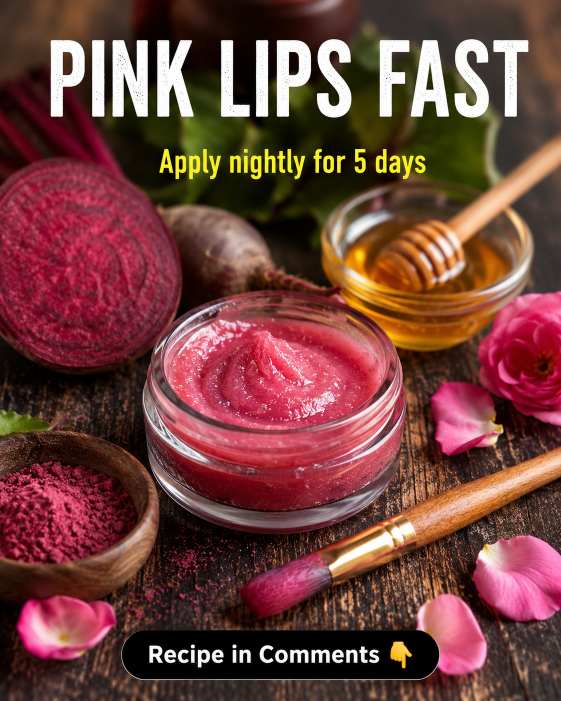
Naturally healthy lips can range from pale pink to deep brown depending on genetics and melanin, so no safe home remedy can permanently turn every person’s lips bright pink in five days. However, dryness, repeated licking, sun exposure, smoking, irritation, and allergic contact cheilitis can make lips look duller, rougher, or darker than usual. The most realistic natural approach is to repair the lip barrier, reduce irritation, protect against sunlight, and—if desired—use harmless plant pigments such as beetroot for a temporary rosy tint. Clinical research confirms that regular lip hydration can reduce dryness, roughness, and chapping, while highly occlusive oil-and-wax formulations can improve dry lips. (PubMed)
The remedies below are deliberately different from simple sugar scrubs or lemon-based DIY treatments. The skin-type categories mainly refer to the skin surrounding the mouth because the lip vermilion itself does not behave exactly like normal facial skin.
Remedy 1: For Normal Skin — Beetroot, Beeswax and Sunflower Rosy Lip Balm
Ingredients and Scientific Working
- Food-grade beetroot powder — ⅛ teaspoon: Its natural red-purple pigments provide a temporary rosy stain. It changes surface color cosmetically rather than reducing melanin.
- High-linoleic sunflower seed oil — 1 teaspoon: Human research found sunflower oil preserved skin-barrier integrity and improved hydration. (PubMed)
- Virgin coconut oil — ½ teaspoon: A randomized controlled trial showed coconut oil significantly improved hydration in dry skin. (PubMed)
- Natural beeswax — ½ teaspoon: Creates an occlusive layer that slows moisture loss; research on oil-and-wax lip formulations supports occlusion as an effective strategy for dry, rough lips. (PubMed)
- Pure shea butter — ½ teaspoon: Provides emollient fatty acids that soften and smooth dry lip tissue; dermatologists list shea butter among useful ingredients for chapped lips. (American Academy of Dermatology)
Procedure
Gently melt the beeswax, shea butter, coconut oil, and sunflower oil using indirect heat. Remove from heat and stir in the beetroot powder. Pour into a clean small container and allow it to solidify.
Apply a very thin layer to clean lips before bed.
How Often to Apply
Use nightly for at least 5 days. Afterward, continue once or twice daily whenever the lips feel dry.
Initial Results
Within 1–3 days, lips may feel smoother and appear glossier. Beetroot can give an immediate temporary rosy tint, but permanent pigment change should not be expected.
Remedy 2: For Combination Skin — Pomegranate, Aloe and Oat Fresh Lip Mask
Ingredients and Scientific Working
- Fresh pomegranate juice — ½ teaspoon: Provides naturally colored polyphenols and may create a subtle temporary tint; it is not clinically proven to permanently lighten dark lips.
- Pure aloe vera gel — 1 teaspoon: Supplies water-rich hydration and soothing polysaccharides.
- Colloidal oatmeal — ¼ teaspoon: Helps strengthen the barrier and soothe dryness or irritation.
- Vegetable glycerin — 1 drop: A humectant that draws water into superficial tissue.
- Rice starch — ¼ teaspoon: Makes the mixture soft and non-abrasive.
- Sunflower seed oil — 1 drop: Adds a small amount of lipid support without making the surrounding combination skin greasy.
Procedure
Mix everything freshly in a clean bowl. Spread a thin layer over the lips without rubbing.
Leave for 5–7 minutes, rinse with lukewarm water, and pat dry. Discard leftovers rather than storing this fresh food-based mixture.
How Often to Apply
Use every other night during the first 5 days. If comfortable, continue three times weekly.
Initial Results
The lips may appear temporarily brighter and better hydrated within 1–3 applications. More even-looking color requires addressing dryness and irritation over several weeks.
Remedy 3: For Oily or Acne-Prone Surrounding Skin — Green Tea and Rice Lightweight Lip Gel
Ingredients and Scientific Working
- Strong cooled green tea — 1 teaspoon: Supplies antioxidant catechins without adding oil.
- Pure aloe vera gel — 1 teaspoon: Adds lightweight hydration.
- Rice starch — ¼ teaspoon: Produces a smooth, non-greasy texture.
- Colloidal oatmeal — ¼ teaspoon: Helps reduce dryness and irritation.
- Vegetable glycerin — 1 drop: Holds moisture in the superficial layers.
- Unsweetened soy milk — ½ teaspoon: Soy compounds have human evidence for improving uneven pigmentation in skin, although lip-specific evidence is limited.
Procedure
Mix until a thin gel develops. Apply only to the lips, avoiding active pimples around the mouth.
Leave for approximately 5 minutes, rinse gently, and avoid rubbing with a towel.
How Often to Apply
Use once nightly for the first 3 days and then on alternate nights through Day 5. Continue three times weekly if desired.
Initial Results
Dryness and dullness may improve within 1–3 days. This treatment will not change genetically determined lip color.
Remedy 4: For Dry Skin — Coconut, Shea and Beeswax Overnight Repair Balm
Ingredients and Scientific Working
- Virgin coconut oil — 1 teaspoon: Has controlled clinical evidence as an effective moisturizer. (PubMed)
- Shea butter — 1 teaspoon: Provides a rich emollient layer particularly suitable for severely dry lips.
- Beeswax — ½ teaspoon: Helps reduce evaporation by forming a protective surface film.
- Sunflower seed oil — ½ teaspoon: Supports barrier integrity and hydration. (PubMed)
- Finely milled colloidal oatmeal — ⅛ teaspoon: Helps soothe rough, irritated skin.
- Beetroot powder — a tiny pinch: Optional, purely for a temporary pink tint.
Clinical lip research supports the broader principle behind this balm: formulations with greater occlusivity can improve lip dryness and roughness by reducing water loss. (PubMed)
Procedure
Melt the beeswax and shea butter gently. Add coconut and sunflower oils. Remove from heat, stir in oatmeal and optional beetroot powder, and allow it to set.
Apply a thin coating before sleep.
How Often to Apply
Use every night for at least 5 days and reapply during the daytime if the lips remain very dry.
Initial Results
Dryness, cracking, and rough texture may begin improving within 1–3 days. Lip hydration studies generally show more substantial improvement after repeated use over weeks. (PubMed)
Remedy 5: For Sensitive Skin — Honey, Oat and Sunflower Comfort Mask
Ingredients and Scientific Working
- Pure honey — ½ teaspoon: Honey has humectant and emollient properties and is used in dermatological moisturizing preparations, including lip products. (PubMed)
- Colloidal oatmeal — ¼ teaspoon: Helps calm irritation and support barrier function.
- Sunflower seed oil — 2 drops: Provides gentle emollient lipids.
- Pure aloe vera gel — ½ teaspoon: Adds soothing hydration.
- Vegetable glycerin — 1 drop: Helps retain water.
- Cool distilled water — ½ teaspoon: Dilutes the fresh mixture.
Procedure
Mix immediately before application. Patch-test a small area first. If comfortable, apply a thin layer for 5 minutes and rinse.
Do not scrub sensitive lips.
How Often to Apply
Use every other night for the first 5 days. Continue twice weekly if completely comfortable.
Initial Results
The most realistic early changes are reduced tightness, softer texture, and less flaking. Sensitive lips should not be aggressively treated for rapid color change.
Does Beetroot Really Make Lips Permanently Pink?
Beetroot can stain the outer surface of the lips because of its intense natural pigments, which explains the rosy appearance seen in many DIY recipes. However, there is no strong human clinical evidence that beetroot permanently reduces lip melanin.
The scientifically stronger strategy is to make lips healthy enough to display their natural color clearly. Dryness, inflammation, rubbing, and contact allergy can all alter lip appearance. Pigmented contact cheilitis is a documented condition in which allergic or irritating substances can cause both inflammation and persistent pigmentation. (PubMed)
Final Tips for Naturally Healthy-Looking Lips
Do not use lemon juice, baking soda, salt, toothbrush scrubs, undiluted essential oils, or repeated sugar exfoliation. Dermatologists specifically warn that citrus, mint, fragrance, and several other ingredients can irritate already-chapped lips. (American Academy of Dermatology)
Stop licking, biting, or peeling the lips. Keep lip brushes and applicators clean and avoid sharing them. Patch-test new preparations, particularly beeswax and botanical ingredients, because even natural substances can trigger contact allergy. (PubMed)
Protect lips outdoors with a non-irritating SPF 30 or higher lip protectant and reapply approximately every two hours. Sun exposure can worsen dryness and discoloration. (American Academy of Dermatology)
Softness and surface glow may begin within 2–3 days. More substantial healing usually takes around 2–3 weeks, and fine dehydration lines improve gradually as moisture is restored. (American Academy of Dermatology)
Diet Plan for Healthy, Naturally Colored Lips
Breakfast: Eggs or plain yogurt with oatmeal and guava, kiwi, strawberries, or orange.
Mid-morning: A small handful of almonds, walnuts, pumpkin seeds, or sesame seeds.
Lunch: Lentils, beans, fish, chicken, eggs, or tofu with leafy greens, tomatoes, and whole grains.
Afternoon: One whole fruit with adequate water.
Dinner: Protein with vegetables such as spinach, broccoli, carrots, or bell peppers and a moderate serving of whole grains.
Drink enough water throughout the day. Include dietary sources of iron, vitamin B12, folate, protein, and vitamin C, but do not take high-dose supplements solely to make the lips pink.
How Long Should You Continue?
Use one remedy suited to your skin type for 2–3 weeks, even though softness may begin within the first five days. Do not rotate all five remedies at the same time.
If persistent darkening, peeling, cracking, burning, or swelling continues beyond 2–3 weeks, see a doctor or dermatologist. Seek assessment sooner for a new persistent dark spot, ulcer, bleeding area, severe pain, or a lip lesion that changes shape or color. Chronic cheilitis can result from allergy, infection, sun damage, nutritional problems, or other medical conditions rather than simple dryness. (DermNet®)
References for the above remedy
- Sutthiboonyapan P, et al. A Randomized Double-Blind Controlled Evaluation of the Therapeutic Benefits of an Herbal Lip Hydrant. Journal of Cosmetic Dermatology. 2025.
https://pubmed.ncbi.nlm.nih.gov/40013415/ - Tamura E, et al. The Efficacy of a Highly Occlusive Formulation for Dry Lips. International Journal of Cosmetic Science.
https://pubmed.ncbi.nlm.nih.gov/31571236/ - Isoda K, et al. The Efficacy of a Lip Balm Containing Pseudo-Ceramide on the Dry Lips of Sensitive Skin-Conscious Subjects.
https://pubmed.ncbi.nlm.nih.gov/28488347/ - Agero ALC, Verallo-Rowell VM. A Randomized Double-Blind Controlled Trial Comparing Extra Virgin Coconut Oil With Mineral Oil as a Moisturizer for Mild to Moderate Xerosis.
https://pubmed.ncbi.nlm.nih.gov/15724344/ - Danby SG, AlEnezi T, Sultan A, et al. Effect of Olive and Sunflower Seed Oil on the Adult Skin Barrier.
https://pubmed.ncbi.nlm.nih.gov/22995032/ - Nong Y, et al. A Review of the Use of Beeswax in Skincare.
https://pubmed.ncbi.nlm.nih.gov/36999457/ - Burlando B, Cornara L. Honey in Dermatology and Skin Care: A Review.
https://pubmed.ncbi.nlm.nih.gov/24305429/ - Figueiredo AS, et al. Pigmented Contact Cheilitis: A Systematic Review.
https://pubmed.ncbi.nlm.nih.gov/39396149/ - American Academy of Dermatology Association. 7 Dermatologists’ Tips for Healing Dry, Chapped Lips.
https://www.aad.org/public/everyday-care/skin-care-basics/dry/heal-dry-chapped-lips - Pal B, et al. Allergic Contact Dermatitis to Lip Care Cosmetic Products.
https://pubmed.ncbi.nlm.nih.gov/37904533/