
Collagen is the structural protein that helps give skin strength and firmness, but a fruit drink does not automatically contain collagen. What foods can do is supply nutrients the body requires to build and protect its own collagen. Vitamin C is particularly important because it supports enzymes involved in collagen formation, while dietary protein supplies amino acids used to construct connective tissue. Colorful fruits and vegetables also contain carotenoids and polyphenols that can accumulate in skin or help protect it from oxidative stress. (PubMed) A “collagen glow drink” should therefore be viewed as a nutritional support strategy rather than an instant collagen replacement. This distinction is especially important because a 2025 meta-analysis found that although pooled collagen-supplement trials appeared beneficial, the benefits were not significant when higher-quality or independently funded studies were analyzed separately. (PubMed)
The drinks below are grouped by skin type for practical purposes, although skin type does not determine how dietary nutrients are absorbed. The exact homemade combinations have not been clinically tested as complete formulas; instead, they use food ingredients whose major components have human clinical or strong mechanistic evidence.
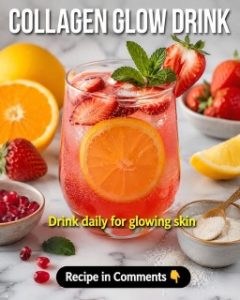
Remedy 1: For Normal Skin — Carrot, Orange and Strawberry Carotenoid Glow Smoothie
Ingredients and Scientific Working
- Carrot — ½ medium: Supplies beta-carotene. Controlled research shows that high-carotenoid fruit and vegetable intake can increase carotenoid deposition in the skin and produce measurable changes in healthy-looking skin color. (PubMed)
- Orange — 1 small: Provides vitamin C, which is necessary for normal collagen synthesis and helps protect skin against oxidative stress. (PubMed)
- Strawberries — ½ cup: Add additional vitamin C plus polyphenols while providing natural flavor without refined sugar.
- Tomato — ½ small: Provides lycopene and other carotenoids that contribute to the antioxidant content of the drink.
- Plain unsweetened yogurt — ½ cup: Supplies protein and amino acids that the body can use for normal tissue protein synthesis.
- Water — ½ cup: Supports hydration and keeps the smoothie light.
Procedure
Wash the produce thoroughly. Chop the carrot and tomato, peel the orange, and blend everything with strawberries, yogurt, and water until completely smooth. Do not strain away the pulp.
A human study using a carotenoid-rich fruit-and-vegetable smoothie found measurable changes in skin coloration after six weeks, supporting the idea that consistent dietary intake matters more than a single drink. (PubMed)
How Often to Use
Drink one small serving daily for the first 3–5 days. Continue five days per week for approximately 6–8 weeks.
Initial Results
Within 1–3 days, better hydration may make previously dehydrated skin look fresher. Carotenoid-related changes should be expected over several weeks, not after one glass.
Remedy 2: For Combination Skin — Pomegranate, Kiwi and Green Tea Antioxidant Cooler
Ingredients and Scientific Working
- 100% pomegranate juice — ⅓ cup: Pomegranate is rich in polyphenols. A randomized human trial found that regular oral pomegranate consumption increased resistance to UVB-induced skin redness. (PubMed)
- Brewed green tea, cooled — ¾ cup: Green-tea polyphenols have been studied in women for photoprotection, microcirculation, elasticity, roughness, and other skin characteristics. (PubMed)
- Kiwi — 1 small: Provides vitamin C needed for normal collagen production.
- Raspberries — ¼ cup: Supply anthocyanins and dietary fiber.
- Fresh mint — 4–5 leaves: Adds flavor without added sugar.
- Chia seeds — 1 teaspoon: Provide alpha-linolenic acid and fiber.
Procedure
Prepare green tea and let it cool completely. Blend with pomegranate juice, kiwi, and raspberries. Stir in chia seeds and mint, then leave for five minutes before drinking.
Do not add syrup or several spoonfuls of honey, because a skin-support drink does not require a large sugar load.
How Often to Use
Drink once daily for 3–5 days, then continue four or five times weekly for 8–12 weeks.
Initial Results
The drink can improve fluid and fruit intake immediately. Antioxidant-related changes in skin are much slower; green-tea and pomegranate trials evaluated participants over weeks. (PubMed)
Remedy 3: For Oily Skin — Tomato, Guava and Cucumber Vitamin-C Smoothie
Ingredients and Scientific Working
- Guava — ½ cup: A naturally vitamin-C-rich fruit that helps supply a nutrient essential for collagen-forming reactions.
- Tomato — 1 small: Adds lycopene and carotenoids without making the drink very sweet.
- Cucumber — ½ cup: Provides water and makes this version lighter for people who prefer low-sugar drinks.
- Red bell pepper — ¼ cup: Another food source of vitamin C and carotenoid pigments.
- Plain unsweetened kefir or yogurt — ½ cup: Provides protein for normal tissue maintenance.
- Water — ½ cup: Supports hydration.
Procedure
Blend all ingredients until smooth. Keep the pulp rather than filtering it into juice.
Although no drink can switch off oily skin, a vegetable-heavy blend avoids the very high sugar concentration found in many commercial juices while supplying vitamin C and carotenoids. Four weeks of high-carotenoid fruit and vegetable intake significantly increased skin carotenoid-associated coloration in a randomized trial. (PubMed)
How Often to Use
Use once daily for the first 3–5 days and then four times weekly.
Initial Results
Hydration may improve the appearance of dullness within several days. Collagen formation and carotenoid accumulation cannot be judged after 1–3 days.
Remedy 4: For Dry Skin — Avocado, Cocoa and Flax Hydration Smoothie
Ingredients and Scientific Working
- Avocado — ¼ medium: Provides monounsaturated fats, carotenoids, and vitamin E. A randomized study found that daily avocado consumption improved measures of facial skin elasticity and firmness in healthy women. (PubMed)
- Unsweetened cocoa powder — 1 tablespoon: Cocoa flavanols have clinical evidence for improving facial elasticity and reducing wrinkle-related measurements after sustained consumption. (PubMed)
- Food-grade flaxseed oil — ½ teaspoon: A controlled study found flaxseed-oil supplementation improved hydration and smoothness while reducing roughness, scaling, and transepidermal water loss. (PubMed)
- Plain yogurt — ½ cup: Supplies protein.
- Rolled oats — 1 tablespoon: Adds soluble fiber and makes the smoothie filling.
- Water or unsweetened milk — ½ cup: Adds fluid without requiring added sugar.
Procedure
Blend avocado, cocoa, yogurt, oats, and water until creamy. Add the flaxseed oil at the end and blend briefly.
Keep the serving small because avocado and oils are nutrient-rich but energy-dense.
How Often to Use
Drink three to five times weekly. Continue for approximately 8–12 weeks before judging chronic dryness or elasticity.
Initial Results
Better fluid and fat intake can make dry skin feel less dull within a few days if the diet was previously inadequate. In controlled trials, changes from avocado, cocoa, and flaxseed were measured over much longer periods. (PubMed)
Remedy 5: For Sensitive Skin — Almond, Pear and Oat Gentle Glow Smoothie
Ingredients and Scientific Working
- Unsalted almonds — 10–12: Almond consumption has been investigated in randomized trials. Daily intake was associated with improvements in facial wrinkle severity and pigment intensity in postmenopausal women. (PubMed)
- Pear — ½ medium: Provides water, fiber, and natural sweetness without strong acidity.
- Rolled oats — 1 tablespoon: Creates a mild, filling base.
- Plain yogurt — ½ cup: Supplies protein for normal tissue maintenance.
- Ground chia seeds — 1 teaspoon: Provide dietary omega-3 fatty acid ALA and fiber.
- Water — ¾ cup: Keeps the drink light and supports normal hydration.
Procedure
Soak the almonds for several hours if desired, then blend with pear, oats, yogurt, chia, and water until completely smooth.
This lower-acid drink may be more comfortable for people who dislike strongly acidic citrus-based smoothies. Do not use it if you have a tree-nut allergy.
How Often to Use
Drink once daily for the first 3–5 days, then three to five times weekly.
Initial Results
The first noticeable effect is more likely to be improved hydration or nutrition rather than wrinkle reduction. The almond study observed facial changes over many weeks rather than several days. (PubMed)
Does a Fruit Drink Actually Contain Collagen?
Strawberries, oranges, pomegranate, carrots, and other plant foods do not contain collagen. Collagen is an animal structural protein. Plant foods instead provide nutrients the body uses in collagen metabolism, particularly vitamin C and antioxidant compounds. (PubMed)
Some studies of hydrolyzed collagen supplements report improved skin hydration or elasticity, but the overall evidence remains debated. Earlier trials and meta-analyses reported benefits, whereas a 2025 systematic review found that positive effects disappeared in analyses restricted to higher-quality or non-industry-funded studies. (PubMed) Therefore, it is more accurate to call these collagen-supporting glow drinks rather than promising that they rebuild facial collagen directly.
Final Tips for Better Skin Glow
Drink enough water throughout the day rather than relying on smoothies alone. Research in healthy women suggests that increasing dietary water can improve some measures of skin hydration, particularly when habitual water intake is low. (PubMed)
Wear broad-spectrum sunscreen daily because UV exposure accelerates collagen breakdown and photoaging. Prioritize adequate sleep, avoid smoking, eat enough protein, and keep skincare gentle. If you use topical natural ingredients separately, patch-test them first.
A hydration-related improvement in freshness may begin within 2–3 days, but measurable improvements in skin coloration, elasticity, or wrinkles generally require 4–24 weeks, depending on the intervention. (PubMed)
Diet Plan for Natural Collagen Support
Breakfast: Eggs or plain yogurt with oats and guava, kiwi, berries, or citrus fruit.
Mid-morning: Almonds, pumpkin seeds, or walnuts with water.
Lunch: Fish, chicken, lentils, beans, eggs, or tofu with bell peppers, tomatoes, leafy greens, and a whole grain.
Afternoon: Choose one of the glow drinks above rather than drinking all five in one day.
Dinner: Include a quality protein source with broccoli, carrots, spinach, tomatoes, or other colorful vegetables.
Throughout the week, prioritize adequate protein plus vitamin-C-rich fruits and vegetables. Carotenoid-rich produce has the strongest direct evidence for dietary changes that produce measurable changes in skin coloration. (PubMed)
How Long Should You Continue?
Choose one drink that suits your preferences and continue it consistently for approximately 8–12 weeks, alongside a balanced diet, good hydration, sleep, and sun protection. Do not expect a five-day drink challenge to rebuild collagen or remove established wrinkles.
If persistent dullness, unusually pale skin, severe dryness, unexplained bruising, hair loss, fatigue, weight changes, or other symptoms continue despite a balanced diet, see a doctor. Nutritional deficiencies, anemia, thyroid disorders, dermatitis, and other medical conditions can affect skin appearance and require proper assessment.
References for the above remedy
- Pullar JM, Carr AC, Vissers MCM. The Roles of Vitamin C in Skin Health. Nutrients. 2017.
https://pubmed.ncbi.nlm.nih.gov/28805671/ - Pezdirc K, Hutchesson MJ, Whitehead R, et al. Consuming High-Carotenoid Fruit and Vegetables Influences Skin Yellowness and Plasma Carotenoids in Young Women: A Randomized Crossover Trial.
https://pubmed.ncbi.nlm.nih.gov/27160341/ - Tan KW, Graf BA, Mitra SR, Stephen ID. Daily Consumption of a Fruit and Vegetable Smoothie Alters Facial Skin Color.
https://pubmed.ncbi.nlm.nih.gov/26186449/ - Heinrich U, Moore CE, De Spirt S, Tronnier H, Stahl W. Green Tea Polyphenols Provide Photoprotection, Increase Microcirculation, and Modulate Skin Properties of Women.
https://pubmed.ncbi.nlm.nih.gov/21525260/ - Henning SM, Yang J, Lee RP, et al. Pomegranate Juice and Extract Consumption Increases Resistance to UVB-Induced Erythema in Healthy Women: A Randomized Controlled Trial.
https://pubmed.ncbi.nlm.nih.gov/31601842/ - Henning SM, et al. Avocado Consumption Increased Skin Elasticity and Firmness in Women: A Pilot Study.
https://pubmed.ncbi.nlm.nih.gov/35037373/ - Yoon HS, Kim JR, Park GY, et al. Cocoa Flavanol Supplementation Influences Skin Conditions of Photo-Aged Women: A 24-Week Double-Blind Randomized Controlled Trial.
https://pubmed.ncbi.nlm.nih.gov/26581682/ - Neukam K, De Spirt S, Stahl W, et al. Supplementation of Flaxseed Oil Diminishes Skin Sensitivity and Improves Skin Barrier Function and Condition.
https://pubmed.ncbi.nlm.nih.gov/21088453/ - Rybak I, Carrington AE, Dhaliwal S, et al. Prospective Randomized Controlled Trial on the Effects of Almonds on Facial Wrinkles and Pigmentation.
https://pubmed.ncbi.nlm.nih.gov/33673587/ - Myung SK, Park Y. Effects of Collagen Supplements on Skin Aging: A Systematic Review and Meta-Analysis of Randomized Controlled Trials. The American Journal of Medicine. 2025.
https://pubmed.ncbi.nlm.nih.gov/40324552/