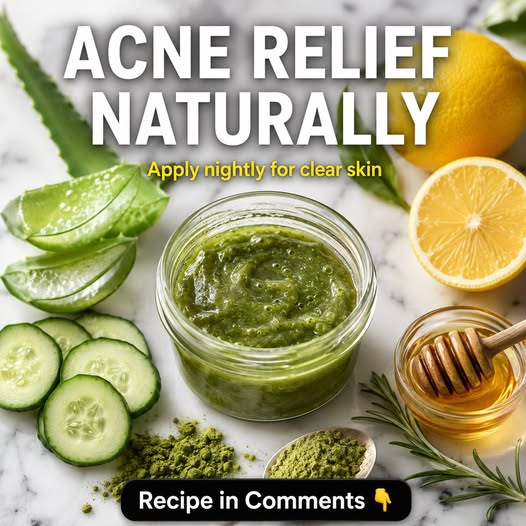
Acne can affect confidence by causing blackheads, whiteheads, inflamed pimples and lingering dark marks. It develops when oil, dead skin cells and inflammation affect the hair follicles, so it cannot usually be cleared overnight with a face mask. Natural ingredients may help calm redness, absorb excess oil and support the skin barrier, but even effective acne treatments normally require six to eight weeks before fewer breakouts become noticeable. The remedies below are supportive options for mild acne and are tailored to different skin types; they should not replace medical treatment for painful, persistent or scarring acne. (American Academy of Dermatology)
The lemon displayed in the image has deliberately been excluded. Lemon juice is highly acidic and may cause burning, irritation and sunlight-related skin reactions. Irritation can worsen breakouts and leave darker post-acne marks. The cucumber and honey shown in the image may feel soothing, but neither has strong clinical evidence for clearing acne. In fact, a randomized trial did not find medical-grade kanuka honey clinically beneficial when added to an acne-cleansing routine. (PMC)
The individual ingredients below have scientific support for acne, oil control, inflammation or barrier care. However, these exact homemade combinations have not been tested as complete clinical formulas. Patch-test each remedy before facial use, prepare it fresh and stop immediately if it causes itching, burning, swelling or increased redness.
Remedy 1: For Normal Skin
Green Tea, Aloe and Oat Balancing Mask
Ingredients and Scientific Benefits
- 1 tablespoon cooled green tea: Green-tea catechins, particularly EGCG, may reduce inflammation, sebum activity and acne lesions when used topically.
- 1 teaspoon clear inner-leaf aloe vera gel: Provides soothing hydration and may reduce treatment-related irritation.
- 1 teaspoon colloidal oatmeal: Supports the protective skin barrier and helps calm rough, irritated skin.
- ¼ teaspoon vegetable glycerin: Functions as a humectant by helping the outer skin layer retain water.
- 2 drops jojoba oil: Softens the skin without requiring a thick, greasy layer.
- 1 teaspoon boiled and cooled water: Dilutes the mixture and makes it easier to spread without rubbing.
How This Remedy Works Scientifically
Clinical studies suggest that properly formulated topical green-tea preparations can reduce inflammatory and non-inflammatory acne lesions. Aloe vera has also been studied alongside tretinoin, where it improved tolerability and treatment outcomes over eight weeks. Oatmeal and glycerin do not directly unclog pores, but they help protect hydration so the skin is less likely to become irritated by excessive washing. (PubMed)
Procedure
Brew plain green tea without sugar or flavouring and let it cool completely. Mix it with the aloe, oatmeal, glycerin, water and jojoba oil. Apply a thin layer to freshly cleansed skin, avoiding the eyes and lips. Leave it on for eight minutes, then rinse gently with lukewarm water and pat dry.
How Often to Apply
Apply once every evening for three to five days. Make a fresh batch for each application and discard leftovers.
Initial Results
Within one to three days, the skin may feel calmer, softer and less tight. Individual pimples may appear less red, but meaningful acne clearing should not be expected within five days.
Remedy 2: For Combination Skin
Clay, Green Tea and Jojoba T-Zone Mask
Ingredients and Scientific Benefits
- 1 teaspoon cosmetic-grade kaolin clay: Absorbs surface oil and may temporarily reduce unwanted shine.
- 1 tablespoon cooled green tea: Supplies antioxidant and anti-inflammatory catechins.
- 1 teaspoon aloe vera gel: Helps prevent the clay mixture from becoming excessively drying.
- ½ teaspoon colloidal oatmeal: Supports the drier areas of combination skin.
- 2 drops jojoba oil: Adds light emollience to dehydrated areas.
- 1 teaspoon boiled and cooled water: Adjusts the consistency without adding fragrance or harsh acids.
How This Remedy Works Scientifically
Clay masks can reduce surface oiliness, although results depend on the formulation and they should not be allowed to dry until the skin feels tight. A prospective pilot study of a clay-and-jojoba mask reported improvement in mild acne, but it lacked the strength of a controlled clinical trial, so its findings are preliminary. Green tea provides the ingredient with the stronger acne-specific evidence in this mixture. (PubMed)
Procedure
Mix the kaolin clay with green tea and water until a smooth paste forms. Add the aloe, oatmeal and jojoba oil. Apply a thin layer mainly over the oily forehead, nose and chin. Use only a very small amount on dry cheeks. Leave it for five to seven minutes and rinse before the clay becomes fully dry or begins cracking.
How Often to Apply
Use on alternate evenings for five days, giving a total of two or three applications. Do not use it nightly because frequent clay masks may increase dryness and irritation.
Initial Results
The T-zone may look less oily after the first application. By the second or third day, congested areas may feel smoother, although blackheads and active acne will require longer-term care.
Remedy 3: For Oily Skin
Diluted Tea Tree and Green Tea Spot Gel
Ingredients and Scientific Benefits
- 2 teaspoons aloe vera gel: Creates a lightweight, soothing base.
- 1 teaspoon cooled green tea: May help reduce inflammation and excessive sebum.
- ½ teaspoon colloidal oatmeal: Minimizes dryness and supports barrier recovery.
- ¼ teaspoon vegetable glycerin: Helps maintain hydration without adding heavy oil.
- 1 drop tea tree essential oil: Contains terpinen-4-ol and other compounds with antimicrobial and anti-inflammatory activity.
- 1 teaspoon boiled and cooled water: Dilutes the mixture and lowers the essential-oil concentration.
How This Remedy Works Scientifically
Randomized trials have found that a professionally formulated 5% tea-tree-oil gel can improve mild to moderate acne, although it acts more slowly than benzoyl peroxide. Homemade mixing cannot reproduce the concentration, stability or safety testing of a clinical gel. This recipe therefore uses only one diluted drop to reduce irritation risk, which also means its acne-clearing effect may be weaker than the studied preparation. Tea tree oil can cause allergic contact dermatitis and must never be applied undiluted. (PubMed)
Procedure
Mix the aloe, green tea, oatmeal, glycerin and water first. Add exactly one drop of tea tree oil and stir thoroughly. Apply a tiny amount only to oily, acne-prone areas or individual pimples. Leave it on for five minutes during the first use and rinse. When no irritation occurs, later applications may remain for up to ten minutes.
How Often to Apply
Use on alternate nights for five days. Do not increase the amount of tea tree oil, and do not use this remedy on broken, squeezed or bleeding pimples.
Initial Results
Excess shine may decrease within one or two applications. Mild inflamed spots may look calmer after several days, but deeper pimples are unlikely to disappear quickly.
Remedy 4: For Dry Skin
Aloe, Oat and Sunflower Barrier Mask
Ingredients and Scientific Benefits
- 1 tablespoon aloe vera gel: Provides water-based hydration and soothing support.
- 1 teaspoon colloidal oatmeal: Helps improve dryness, roughness and barrier function.
- ½ teaspoon vegetable glycerin: Attracts and holds moisture in the outer skin layer.
- 1 teaspoon cooled green tea: Adds antioxidant and anti-inflammatory activity.
- 3 drops sunflower seed oil: Supplies linoleic-acid-rich lipids that support the skin barrier.
- 2 drops jojoba oil: Softens dry skin and improves flexibility.
How This Remedy Works Scientifically
Dry acne-prone skin can become more inflamed when it is repeatedly scrubbed or stripped of oil. Colloidal oatmeal and glycerin support hydration, while sunflower seed oil has demonstrated barrier-preserving effects in skin research. Aloe and green tea may help soothe redness. These ingredients do not remove clogged pores directly, but they can make a gentle acne routine easier to tolerate. (PubMed)
Procedure
Combine the aloe, oatmeal, glycerin and green tea. Stir in the sunflower and jojoba oils. Apply a thin layer without massaging or scrubbing. Leave it on for ten minutes, rinse gently and pat the face dry with a clean towel.
How Often to Apply
Apply once daily for three to five days. Concentrate on dry areas and use less over visibly congested regions.
Initial Results
Tightness and flaking may begin improving after one or two applications. The skin may look calmer and smoother within three days, but clogged pores will need an appropriate long-term acne treatment.
Remedy 5: For Sensitive Skin
Minimal Colloidal Oat and Aloe Compress
Ingredients and Scientific Benefits
- 1 tablespoon boiled and cooled water: Creates a simple, fragrance-free base.
- 1 teaspoon colloidal oatmeal: Helps relieve dryness, roughness and irritation.
- 1 teaspoon aloe vera gel: Provides lightweight soothing hydration.
- 1 teaspoon cooled green tea: Supplies anti-inflammatory polyphenols at a gentle concentration.
- ⅛ teaspoon vegetable glycerin: Improves moisture retention without using essential oils.
How This Remedy Works Scientifically
Sensitive acne-prone skin often worsens when exposed to fragrances, scrubs, citrus, essential oils or too many active ingredients. Colloidal oatmeal has documented anti-inflammatory and barrier-supporting effects, while topical green-tea preparations have shown potential benefits for acne. Aloe and diluted glycerin provide hydration, but all natural ingredients can still cause reactions, so patch-testing remains essential. (PubMed)
Procedure
Mix the oatmeal with water until smooth. Add the aloe, green tea and glycerin. Saturate a clean cotton pad or soft cloth with the mixture and press it gently onto affected areas. Do not rub. Leave it for five minutes, rinse and pat dry.
How Often to Apply
Use once daily for three days. Continue for up to five days only when no burning, itching or worsening redness occurs.
Initial Results
Temporary redness, dryness and discomfort may begin settling within one to three days. Stop the remedy if the skin becomes warmer, itchier or more inflamed.
Final Tips for Preventing New Breakouts
Wash acne-prone skin gently no more than twice daily and after heavy sweating. Use clean fingertips rather than brushes, rough washcloths or facial scrubs. Do not squeeze pimples because this increases inflammation and the risk of dark marks and permanent scars. Choose non-comedogenic sunscreen and skincare, keep pillowcases and makeup tools clean, and remove makeup before sleeping. (American Academy of Dermatology)
Avoid lemon, baking soda, toothpaste, garlic, cinnamon and undiluted essential oils on acne. Visible improvement from proven acne treatment usually begins after six to eight weeks, not one to three days. Natural masks may provide early changes in comfort, redness or oiliness, but they should not be promoted as overnight cures. (American Academy of Dermatology)
Diet Plan for Supporting Clearer Skin
Follow a balanced, lower-glycaemic diet for at least eight to twelve weeks rather than relying on a short detox. Randomized studies suggest that diets built around slowly digested carbohydrates may support acne improvement in some people, although diet is not the only cause of acne. (PubMed)
For breakfast, choose eggs or unsweetened yogurt with whole oats and a piece of fruit. At lunch, eat lentils, beans, chicken or fish with vegetables and brown rice or whole-grain bread. Select nuts, seeds, fruit or plain yogurt as snacks instead of sweets and sugary drinks. Dinner may include grilled fish, chicken, chickpeas or beans with cooked vegetables and salad. Drink water regularly and reduce refined flour, heavily sweetened drinks, candies and frequent fried snacks.
Notice whether a particular food consistently triggers breakouts, but do not eliminate entire food groups without professional advice. Avoid unregulated “acne detox” drinks and high-dose supplements, as some supplements can worsen acne or interact with medicines.
Continue the suitable home remedy for no longer than five days, then maintain a gentle routine. Consult a doctor or dermatologist when acne is painful, deep, widespread, leaving scars, affecting confidence or not improving after six to eight weeks of consistent care. Seek earlier medical advice for sudden severe acne, irregular periods with increased facial hair, or acne that begins after a new medicine. NICE recommends specialist assessment when acne fails to respond to appropriate treatment or is causing scarring or significant psychological distress. (NICE)
References for the above remedy
- American Academy of Dermatology Association. “10 Skin Care Habits That Can Worsen Acne.”
https://www.aad.org/public/diseases/acne/skin-care/habits-stop - American Academy of Dermatology Association. “Acne: Diagnosis and Treatment.”
https://www.aad.org/public/diseases/acne/derm-treat/treat - Kim S, et al. “The Effects of Green Tea on Acne Vulgaris: A Systematic Review and Meta-Analysis.”
https://pubmed.ncbi.nlm.nih.gov/32812270/ - Enshaieh S, et al. “The Efficacy of 5% Topical Tea Tree Oil Gel in Mild to Moderate Acne Vulgaris.”
https://pubmed.ncbi.nlm.nih.gov/17314442/ - Hajheydari Z, et al. “Effect of Aloe Vera Topical Gel Combined with Tretinoin in Treatment of Mild and Moderate Acne Vulgaris.”
https://pubmed.ncbi.nlm.nih.gov/23336746/ - Sobhan M, et al. “Anti-Inflammatory Activities of Colloidal Oatmeal in Dry, Irritated Skin.”
https://pubmed.ncbi.nlm.nih.gov/25607907/ - Meier L, et al. “Clay Jojoba Oil Facial Mask for Lesioned Skin and Mild Acne.”
https://pubmed.ncbi.nlm.nih.gov/22585103/ - Danby SG, et al. “Effect of Olive and Sunflower Seed Oil on the Adult Skin Barrier.”
https://pubmed.ncbi.nlm.nih.gov/22995032/ - Smith RN, et al. “A Low-Glycemic-Load Diet Improves Symptoms in Acne Vulgaris Patients.”
https://pubmed.ncbi.nlm.nih.gov/17616769/ - National Institute for Health and Care Excellence. “Acne Vulgaris: Management.”
https://www.nice.org.uk/guidance/ng198/chapter/Recommendations