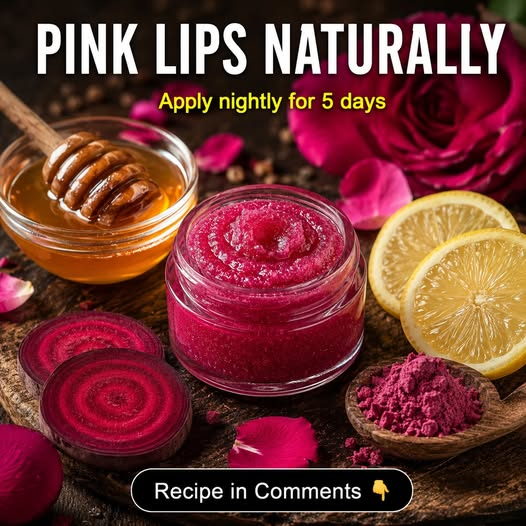
Healthy-looking lips can improve the appearance of the entire face and help a person feel more confident. However, lip colour naturally varies according to genetics, melanin levels and complexion. Dryness, frequent lip licking, smoking, sun exposure, dehydration and irritation from toothpaste or cosmetics may make lips look dull, uneven or darker than usual. Natural care may restore softness, reduce flaky dullness and produce a healthier rosy appearance, but no kitchen remedy has been clinically proven to permanently change genetically dark lips into pink lips within five days. The remedies below are therefore designed to support the lip barrier, calm irritation and improve the appearance of the lips rather than bleach them. (American Academy of Dermatology)
The lemon shown in many online pink-lip recipes has intentionally been excluded. Applying lemon or lime juice to the lips can cause stinging, inflammation and a sunlight-triggered reaction known as phytophotodermatitis. This reaction may leave stubborn post-inflammatory pigmentation, making the lips look darker rather than lighter. (DermNet®)
Choose only one remedy according to the condition of your lips and the skin surrounding your mouth. Prepare a fresh quantity each time and never store water-based homemade mixtures.
Remedy 1: Beetroot, Honey and Oat Treatment for Normal Lips
This remedy is suitable for lips that are generally comfortable but appear slightly dull or uneven. Beetroot gives an immediate temporary rosy stain, while the other ingredients improve moisture and smoothness.
Ingredients and Scientific Benefits
- ½ teaspoon fresh beetroot juice: Contains red-purple betalain pigments that temporarily tint the lip surface. It does not permanently reduce melanin.
- ½ teaspoon pure honey: Forms a moisture-retaining film and supports a moist healing environment.
- ½ teaspoon clear aloe vera gel: Helps soothe mild irritation and supports surface hydration.
- ¼ teaspoon finely powdered oats: Oat compounds help support the skin barrier and calm dryness.
- 2 drops sunflower seed oil: Supplies barrier-supporting lipids and reduces moisture loss.
Beetroot’s betanin pigment acts like a temporary natural colour rather than a bleaching agent. Clinical skin research supports the barrier benefits of colloidal oatmeal and sunflower oil, while aloe and honey have been studied for soothing and wound-supporting properties. These findings support healthier-looking lips but do not prove permanent lip lightening. (PMC)
Procedure
- Mix the beetroot juice, honey, aloe gel and oat powder in a clean bowl.
- Apply a thin layer to clean lips.
- Leave it on for 8–10 minutes without licking.
- Rinse gently with cool water.
- Pat dry and apply two drops of sunflower oil.
How Often to Apply
Apply once each evening for five days. Beetroot may stain clothes, fingers and towels, so handle it carefully.
Initial Results
Within one to three days, the lips may feel smoother and less flaky. Beetroot can create an immediate rosy tint, but the colour gradually fades after washing, eating and drinking.
Remedy 2: Green Tea and Rice Water Care for Combination Skin
This treatment is intended for people who have dry lips but oilier skin around the mouth. It hydrates the lips without applying a heavy layer of oil over the surrounding skin.
Ingredients and Scientific Benefits
- 1 teaspoon cooled green tea: Provides polyphenols with antioxidant and anti-inflammatory activity.
- 1 teaspoon fresh rice water: Rice-derived compounds have shown moisturizing, soothing and potential pigment-regulating properties in dermatological research.
- ½ teaspoon aloe vera gel: Supplies lightweight hydration without heavy greasiness.
- ¼ teaspoon finely ground oats: Helps soften flakes and support the barrier.
- 1 drop sunflower oil: Seals moisture only on visibly dry lip areas.
Green-tea polyphenols have demonstrated protection against some ultraviolet-induced inflammatory changes, although green tea cannot replace sunscreen. Rice-based skincare research suggests possible moisturizing and brightening benefits, but homemade rice water has not been proven to lighten lip pigmentation. (PubMed)
Procedure
- Brew green tea and allow it to cool completely.
- Mix one teaspoon with rice water, aloe gel and oat powder.
- Apply the mixture only to the lips for 10 minutes.
- Rinse and pat dry.
- Place one drop of sunflower oil on the driest areas, avoiding acne-prone skin around the mouth.
How Often to Apply
Use on alternate nights for five days. Discard unused green tea and rice water after each application.
Initial Results
The lips may feel calmer and more hydrated within two or three applications. Dry lines may appear softer, while the surrounding skin should remain relatively non-greasy.
Remedy 3: Oil-Free Rosy Lip Mask for Oily or Acne-Prone Skin
People with oily or acne-prone facial skin may prefer an oil-free treatment, particularly when breakouts occur close to the mouth.
Ingredients and Scientific Benefits
- 1 teaspoon cooled green tea: Helps calm mild surface inflammation.
- ½ teaspoon clear aloe vera gel: Provides lightweight hydration.
- ¼ teaspoon colloidal oat powder: Reduces roughness and supports the protective barrier.
- ¼ teaspoon honey: Creates a short-term moisturizing layer.
- ¼ teaspoon diluted beetroot juice: Adds temporary natural colour without oily ingredients.
Green tea, aloe and oatmeal are included primarily for soothing and barrier support. Honey has evidence in wound care, particularly medical-grade preparations, but kitchen honey should not be placed on cracked, infected or bleeding lips. Beetroot only provides a cosmetic stain and should not be described as a proven treatment for pigmentation. (PubMed)
Procedure
- Dilute fresh beetroot juice with an equal amount of cooled green tea.
- Combine the diluted juice with aloe, oatmeal and honey.
- Spread a thin layer on the lips.
- Leave it for five to eight minutes.
- Rinse thoroughly and pat dry.
How Often to Apply
Apply once daily for three to five days. Stop immediately if small bumps, burning or a rash develops around the mouth.
Initial Results
The lips may look temporarily brighter after the first application because of the beet pigment. Improved softness and reduced roughness are more realistic after two or three days.
Remedy 4: Intensive Overnight Care for Very Dry Lips
This two-stage treatment is designed for lips affected by dehydration, weather changes or frequent exposure to air-conditioning.
Ingredients and Scientific Benefits
- ½ teaspoon honey: Helps maintain a moist surface.
- ½ teaspoon aloe vera gel: Soothes and hydrates.
- ¼ teaspoon colloidal oatmeal: Supports barrier recovery.
- 2 drops virgin coconut oil: Acts as an emollient and reduces dryness.
- 2 drops sunflower seed oil: Helps preserve barrier integrity and hydration.
A randomized trial found virgin coconut oil effective as a moisturizer for mild to moderate dry skin. Separate research found that sunflower oil preserved barrier integrity and improved hydration, while olive oil weakened the barrier in the same study. Therefore, olive oil has not been used in this remedy. (PubMed)
Procedure
- Mix the honey, aloe and oatmeal.
- Apply for 10 minutes and rinse gently.
- Mix the coconut and sunflower oils between clean fingertips.
- Press a very thin layer over slightly damp lips.
- Leave the oil layer overnight.
How Often to Apply
Use nightly for five days. During the daytime, reapply a plain, non-irritating lip moisturizer whenever the lips feel tight.
Initial Results
Dryness and tightness may begin improving after the first night. Flaking may become less visible within two or three days, although deeper cracks require more time and may need medical treatment.
Remedy 5: Minimal Oat and Aloe Treatment for Sensitive Lips
Sensitive lips require fewer active ingredients, no fragrance, no citrus and no aggressive scrubbing.
Ingredients and Scientific Benefits
- 1 teaspoon boiled and cooled water: Temporarily hydrates the lip surface.
- ½ teaspoon colloidal oatmeal: Forms a soothing, barrier-supporting paste.
- ¼ teaspoon clear aloe vera gel: Helps calm mild irritation.
- ¼ teaspoon fresh rice water: Provides a lightweight conditioning base.
- 1 drop sunflower seed oil: Reduces evaporation after rinsing.
Colloidal oatmeal has clinical evidence for improving dryness, hydration and barrier function. Sunflower oil has also shown barrier-preserving effects. Aloe and rice-derived ingredients may offer additional soothing support, but sensitive individuals should patch-test them because natural ingredients can still cause allergic or irritant reactions. (PubMed)
Procedure
- Combine the water and oat powder into a soft paste.
- Add the aloe and rice water.
- Apply without rubbing or scrubbing.
- Leave for five minutes and rinse.
- Press one drop of sunflower oil over the damp lips.
How Often to Apply
Use once daily for three days. Continue for up to five days only when there is no burning, itching or redness.
Initial Results
Sensitive lips may feel less tight within one or two days. Reduced redness depends on whether the irritating toothpaste, cosmetic, food or lip-licking habit has also been removed.
Final Tips for Maintaining Naturally Healthy-Looking Lips
Drink water regularly, avoid licking or biting the lips and keep drinking bottles, makeup tools and applicators clean. Do not scrub the lips with toothbrushes, salt, baking soda, lemon or coarse sugar. Use sun protection formulated for lips when outdoors because ultraviolet exposure can worsen dryness and uneven colour. Dermatologists recommend broad-spectrum SPF 30 or higher for the lips and reapplication during prolonged outdoor exposure. (American Academy of Dermatology)
Patch-test every homemade mixture on the inner arm before placing it on the lips. Stop using it if you experience itching, swelling, burning or blistering. Visible softness can begin within two or three days, while fine dehydration lines may gradually look smoother with continued barrier care. Permanent natural lip colour should not be expected to change.
Diet Plan to Support Healthy Lips
A balanced diet cannot instantly lighten lips, but it can support normal skin repair and help prevent deficiencies associated with inflamed or cracked lips.
For breakfast, eat eggs or fortified cereal with milk or a plant-based alternative, plus one vitamin-C-rich fruit. At lunch, choose lentils, beans, chicken or fish with whole grains and leafy vegetables. For an evening snack, eat a small handful of almonds, walnuts, pumpkin seeds or sunflower seeds. Dinner may include vegetables with beans, lean meat, fish or another protein source. Drink water throughout the day and limit smoking, excessive caffeine and very spicy foods when the lips are already irritated.
Include food sources of iron, folate and vitamin B12. Nutritional deficiencies, including iron and B-vitamin deficiencies, can sometimes contribute to cheilitis, while vitamin B12 deficiency may occasionally be associated with hyperpigmentation. Do not take high-dose supplements without medical advice or appropriate testing. (PMC)
Continue the selected home remedy for three to five days and maintain gentle moisturization and sun protection for at least two to four weeks. Consult a doctor or dermatologist if darkening appeared suddenly, persists despite avoiding irritants, or is accompanied by painful cracks, bleeding, ulcers, swelling, blisters, infection, fatigue or pigmentation elsewhere on the body.
References for the above remedy
- American Academy of Dermatology Association. “7 Dermatologists’ Tips for Healing Dry, Chapped Lips.”
https://www.aad.org/public/everyday-care/skin-care-basics/dry/heal-dry-chapped-lips - DermNet. “Pigmented Contact Cheilitis.”
https://dermnetnz.org/topics/pigmented-contact-cheilitis - DermNet. “Phytophotodermatitis.”
https://dermnetnz.org/topics/phytophotodermatitis - Agero ALC, Verallo-Rowell VM. “A Randomized Double-Blind Controlled Trial Comparing Extra Virgin Coconut Oil with Mineral Oil as a Moisturizer for Mild to Moderate Xerosis.”
https://pubmed.ncbi.nlm.nih.gov/15724344/ - Danby SG, et al. “Effect of Olive and Sunflower Seed Oil on the Adult Skin Barrier.”
https://pubmed.ncbi.nlm.nih.gov/22995032/ - Ilnytska O, et al. “Colloidal Oatmeal Improves Skin Barrier Through Multi-Therapy Activity.”
https://pubmed.ncbi.nlm.nih.gov/27272074/ - Hekmatpou D, et al. “The Effect of Aloe Vera Clinical Trials on Prevention and Healing of Skin Wounds.”
https://pmc.ncbi.nlm.nih.gov/articles/PMC6330525/ - Tashkandi H. “Honey in Wound Healing: An Updated Review.”
https://pmc.ncbi.nlm.nih.gov/articles/PMC8496555/ - Elmets CA, et al. “Cutaneous Photoprotection from Ultraviolet Injury by Green Tea Polyphenols.”
https://pubmed.ncbi.nlm.nih.gov/11209110/ - Zamil DH, et al. “Dermatological Uses of Rice Products: Trend or True?”
https://pubmed.ncbi.nlm.nih.gov/35587098/