
Dandruff can cause visible white or yellow flakes, itching, scalp discomfort, and embarrassment when flakes collect on the hair or clothing. It is commonly considered a mild form of seborrheic dermatitis and is linked to several factors, including the scalp’s response to Malassezia yeast, excess oil, impaired skin-barrier function, stress, weather changes, and individual sensitivity. Dandruff is not simply caused by poor hygiene, and aggressive scratching or harsh home treatments may worsen irritation. (PMC)
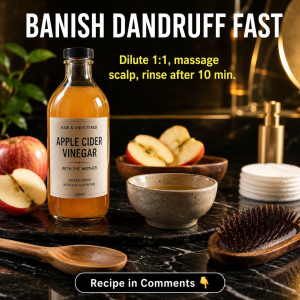
The image recommends diluting apple cider vinegar in a 1:1 ratio. However, this concentration may be too strong for many scalps. There is currently no strong clinical evidence showing that apple cider vinegar reliably cures dandruff. Even dilute apple cider vinegar failed to produce meaningful microbiome changes in a small skin study, while topical vinegar has caused chemical burns in reported cases. Therefore, apple cider vinegar is not used as the main treatment in the remedies below. (PubMed)
The following routines use natural ingredients with clinical or supportive scientific evidence. The complete homemade combinations have not been tested as finished medical treatments, so results may vary. Always perform a patch test for 24 hours and stop immediately if burning, swelling, severe itching, or worsening redness develops.
Remedy 1: Tea Tree and Aloe Scalp Routine for Normal Scalp
Ingredients
- A properly formulated shampoo containing 5% tea tree oil
- 2 tablespoons pure inner-leaf aloe vera gel
- 2 tablespoons previously boiled and cooled water
- 1 teaspoon colloidal oatmeal or very finely powdered plain oats
- ½ teaspoon vegetable glycerin
Scientific Working of Each Ingredient
Tea tree oil: A randomized clinical study found that a properly formulated 5% tea tree oil shampoo improved dandruff severity and symptoms more than placebo after four weeks. Tea tree oil has antifungal activity against organisms associated with dandruff. (PubMed)
Aloe vera: A clinical trial involving people with seborrheic dermatitis found improvement with an aloe-based preparation. Aloe also supports hydration and may calm scalp discomfort. (Taylor & Francis Online)
Colloidal oatmeal: Oats support the protective skin barrier and may help reduce dryness, roughness, and irritation.
Vegetable glycerin: Glycerin attracts water to the outer skin layer and supports scalp hydration. Barrier-supporting scalp treatments containing glycerol have demonstrated improvement in flaking over continued use. (PubMed)
Cooled water: Dilutes the soothing rinse and helps it spread without friction.
Procedure
Wash the scalp with the properly formulated tea tree shampoo according to its instructions. Apply it mainly to the scalp rather than the hair lengths, leave it on for the recommended time, and rinse thoroughly.
Mix the aloe gel, water, oatmeal, and glycerin separately. Apply a thin layer to the scalp for five minutes, then rinse gently with lukewarm water.
How Often to Apply
Use the tea tree shampoo two or three times weekly for four weeks. Use the aloe rinse after each treatment if the scalp remains comfortable.
Initial Results
Itching and loose surface flakes may begin to improve within several days, but meaningful dandruff reduction usually requires two to four weeks of consistent treatment.
Remedy 2: Lemongrass and Aloe Zone Routine for Combination Scalp
Ingredients
- A properly formulated, pre-diluted lemongrass scalp tonic
- 2 tablespoons pure aloe vera gel
- 2 tablespoons cooled boiled water
- 1 teaspoon pure honey
- 1 teaspoon strained oat water
Scientific Working of Each Ingredient
Lemongrass: A randomized, placebo-controlled study tested scalp tonics containing lemongrass essential oil. The 10% formulation produced the strongest dandruff reduction in that study, with improvement becoming noticeable during the first two weeks. (PubMed)
Do not apply undiluted lemongrass essential oil directly to the scalp and do not attempt to create a high-concentration essential-oil mixture at home. Use only a properly prepared scalp formulation and follow its directions.
Aloe vera: Provides lightweight hydration for dry areas without adding a heavy oily coating.
Honey: Honey has moisturizing, antioxidant, and antimicrobial properties. It may support scalp comfort, although it should not replace proven antifungal treatment. (PubMed)
Oat water: Helps soothe dry or tight areas of the scalp.
Cooled water: Creates a lighter rinse suitable for a scalp that is oily in some areas and dry in others.
Procedure
Use the pre-diluted lemongrass scalp tonic only as directed. Concentrate treatment on oily, flaky areas rather than repeatedly coating dry hair lengths.
Mix the aloe, water, honey, and strained oat water. Apply lightly to dry or tight scalp areas for five to seven minutes, then rinse.
How Often to Apply
Follow the tonic instructions for seven to fourteen days. Use the soothing rinse every other day during the first five days.
Initial Results
The scalp may feel fresher within one to three days. Visible reduction in flakes is more realistically expected after approximately one to two weeks.
Remedy 3: Evidence-Inspired Honey Treatment for Oily, Flaky Scalp
Ingredients
- 9 teaspoons raw honey
- 1 teaspoon warm previously boiled water
- 1 tablespoon pure aloe vera gel
- 2 tablespoons cooled water
- ½ teaspoon vegetable glycerin
Scientific Working of Each Ingredient
Raw honey: A small clinical study investigated diluted raw honey for chronic dandruff and seborrheic dermatitis. Participants experienced improvement in itching, scaling, and skin changes during regular treatment. However, the study was small, so honey should be viewed as supportive rather than a guaranteed cure. (PubMed)
Warm water: Creates approximately the high-honey concentration used in the clinical study and makes the mixture easier to spread.
Aloe vera: Helps soothe the scalp after the sticky honey treatment is washed away.
Vegetable glycerin: Supports moisture retention and may reduce tightness after cleansing.
Cooled water: Dilutes the after-rinse and helps remove remaining residue.
Procedure
Mix nine teaspoons of honey with one teaspoon of warm water. Apply the mixture to the scalp in small sections. The research method used a long contact time of approximately three hours, but this may be inconvenient and may irritate some people. During the first application, leave it on for only 20–30 minutes to assess tolerance.
Rinse thoroughly and wash gently. Mix the aloe gel, cooled water, and glycerin and apply for three minutes before a final rinse.
How Often to Apply
Use every other day during a five-day tolerance period. If no irritation develops, continue two times weekly for four weeks.
Initial Results
Itching or dryness may feel calmer after one to three applications. Clear reduction in persistent flakes should be assessed over several weeks rather than after one day.
Remedy 4: Aloe, Glycerin, and Sunflower Moisture Mask for Dry Scalp
Ingredients
- 2 tablespoons pure aloe vera gel
- 2 tablespoons strained oat water
- 1 teaspoon vegetable glycerin
- ¼ teaspoon sunflower seed oil
- 1 teaspoon pure honey
Scientific Working of Each Ingredient
Aloe vera: Adds water-based hydration and may calm mild irritation.
Glycerin: Helps attract and retain water in the outer scalp layer. A clinical scalp treatment containing a high level of glycerol and barrier-supporting ingredients reduced dandruff and improved hydration over eight weeks. (PubMed)
Sunflower seed oil: Provides barrier-supporting fatty acids. Research on adult skin found that sunflower oil supported hydration and preserved barrier integrity. (PubMed)
Oat water: Helps reduce the dry, tight feeling without using rough particles.
Honey: Supports moisture retention and softness.
Procedure
Combine all ingredients until evenly mixed. Apply a thin amount directly to dry scalp areas. Do not saturate the hair. Leave for ten minutes, rinse thoroughly, and wash gently if residue remains.
How Often to Apply
Use on days one, three, and five. Continue once or twice weekly if the scalp feels comfortable.
Initial Results
Dryness and tightness may improve after one or two uses. Fine, powdery flakes caused mainly by dryness may appear reduced within several days. Persistent greasy or itchy dandruff usually needs antifungal treatment.
Remedy 5: Minimal Aloe and Oat Routine for Sensitive Scalp
Ingredients
- 2 tablespoons pure inner-leaf aloe vera gel
- 2 tablespoons previously boiled and cooled water
- 1 tablespoon strained oat water
- ½ teaspoon vegetable glycerin
- 2 drops sunflower seed oil
Scientific Working of Each Ingredient
Aloe vera: An aloe-based preparation showed benefit in a controlled study of seborrheic dermatitis, although homemade aloe gel is not identical to the tested formulation. (Taylor & Francis Online)
Oat water: Provides gentle barrier support without rough scrubbing.
Glycerin: Helps improve hydration and may reduce the tight feeling associated with a damaged scalp barrier.
Sunflower oil: Reduces friction and supports moisture retention.
Cooled water: Creates a mild, fragrance-free base.
Essential oils, lemon juice, baking soda, undiluted vinegar, and strong herbal extracts are intentionally excluded because sensitive skin may react to them.
Procedure
Mix all ingredients well. Apply a very thin layer without rubbing or scratching. Leave for five minutes during the first application, then rinse with cool to lukewarm water.
How Often to Apply
Use every other day for five days. Continue once weekly only if there is no burning, rash, or increased itching.
Initial Results
The scalp may feel calmer and less tight within one to three days. This routine supports comfort but may not control true yeast-related dandruff by itself.
Final Tips for Faster and Longer-Lasting Dandruff Control
Wash according to your scalp and hair type. People with oily, fine, or straight hair may need more frequent washing, while people with curly or tightly coiled hair may use dandruff treatment less often to avoid excessive dryness. Apply treatment mainly to the scalp and allow it enough contact time before rinsing. (American Academy of Dermatology)
Avoid scratching because broken skin can become more inflamed or infected. Keep combs, brushes, pillowcases, towels, and hair tools clean. Rinse shampoo thoroughly, as leftover products can also cause itching and irritation. (American Academy of Dermatology)
Avoid repeatedly covering an oily, dandruff-prone scalp with thick layers of oil. Heavy buildup may make flakes harder to remove. Apply conditioner mainly from the middle of the hair to the ends rather than directly onto the scalp.
Visible improvement may begin within several days, but reliable control generally requires two to four weeks. Dandruff often returns, so maintenance treatment may be needed. Evidence-based dandruff shampoos remain the standard option for persistent symptoms. (American Academy of Dermatology)
Diet Plan for a Healthier Scalp
No specific food or vitamin has been proven to cure dandruff. Research on diet and seborrheic dermatitis remains limited and mainly observational. Some studies have found associations between dietary patterns and seborrheic dermatitis, but they do not prove that one food directly removes flakes. (PubMed)
Breakfast: Eat eggs, plain yogurt, oats, lentils, or another protein source. Add fresh fruit such as guava, orange, apple, or berries.
Mid-morning: Choose fruit or a small handful of almonds, walnuts, pumpkin seeds, or roasted chickpeas.
Lunch: Eat vegetables with lentils, beans, fish, chicken, eggs, or another protein source. Add whole-wheat roti, brown rice, or another minimally processed carbohydrate.
Evening snack: Choose plain yogurt, fruit, unsweetened tea, or roasted chickpeas.
Dinner: Include vegetables and a protein source such as fish, chicken, beans, lentils, tofu, or eggs. Keep heavily processed, very sugary foods occasional rather than daily.
Drink according to thirst, sleep regularly, and manage stress because stress and tiredness may worsen seborrheic dermatitis in some people. (Bad)
How Long Should You Continue?
Try the remedy suited to your scalp for two to four weeks if no irritation develops. Do not use several remedies at the same time because this makes it difficult to identify which ingredient is helping or causing irritation.
See a doctor or dermatologist if dandruff does not improve after four weeks, becomes severely red or painful, spreads to the face or ears, produces thick crusts, causes bleeding, or is accompanied by significant hair loss. Conditions such as scalp psoriasis, eczema, allergic contact dermatitis, and fungal scalp infections can resemble dandruff and may require different treatment. (Cleveland Clinic)
References for the above remedy
- Satchell AC, et al. Treatment of Dandruff With 5% Tea Tree Oil Shampoo.
https://pubmed.ncbi.nlm.nih.gov/12451368/ - Chaisripipat W, et al. Anti-Dandruff Hair Tonic Containing Lemongrass Oil.
https://pubmed.ncbi.nlm.nih.gov/26566122/ - Al-Waili NS. Therapeutic and Prophylactic Effects of Crude Honey on Chronic Seborrheic Dermatitis and Dandruff.
https://pubmed.ncbi.nlm.nih.gov/11485891/ - Vardy DA, et al. A Double-Blind, Placebo-Controlled Trial of an Aloe Vera Emulsion in Seborrheic Dermatitis.
https://doi.org/10.3109/09546639909055904 - Harding CR, et al. A High Glycerol-Containing Leave-On Scalp Care Treatment to Improve Dandruff.
https://pubmed.ncbi.nlm.nih.gov/25134312/ - Danby SG, et al. Effect of Olive and Sunflower Seed Oil on the Adult Skin Barrier.
https://pubmed.ncbi.nlm.nih.gov/22995032/ - Luu LA, et al. Apple Cider Vinegar Soaks Do Not Alter the Skin Bacterial Microbiome.
https://pubmed.ncbi.nlm.nih.gov/34077434/ - Korkmaz A, et al. Chemical Burn Caused by Topical Vinegar Application.
https://pubmed.ncbi.nlm.nih.gov/10720985/ - American Academy of Dermatology. How to Treat Dandruff.
https://www.aad.org/public/diseases/hair-and-scalp-problems/dandruff-how-to-treat - Sanders MGH, et al. Association Between Diet and Seborrheic Dermatitis.
https://pubmed.ncbi.nlm.nih.gov/30130619/