
Acne can affect more than the surface of the skin. Redness, inflamed pimples, excess oil, and lingering marks can make the complexion look uneven and can affect confidence. Natural ingredients may help calm irritation and support the skin barrier, but they should be chosen according to skin type. Importantly, no homemade mask has been clinically proven as a complete cure for acne. The strongest evidence among natural approaches exists for ingredients such as topical green-tea compounds, tea tree oil, aloe vera as an adjunct, and colloidal oatmeal for irritated skin. Clinical acne treatments such as benzoyl peroxide, topical retinoids, salicylic acid, and azelaic acid have substantially stronger evidence and remain recommended treatments. (American Academy of Dermatology)
The following spot masks are therefore best viewed as gentle, supportive home care for mild breakouts rather than replacements for medical acne treatment. Avoid lemon juice, baking soda, toothpaste, cinnamon, and undiluted essential oils because they can irritate the skin and make inflammation worse.
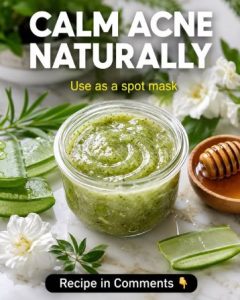
Remedy 1: Green Tea and Aloe Calming Spot Mask for Normal Skin
Ingredients
- 1 tablespoon cooled brewed green tea — provides catechins, particularly EGCG, studied for anti-inflammatory and sebum-modulating activity.
- 1 teaspoon pure aloe vera gel — helps soothe and hydrate irritated skin.
- 1 teaspoon colloidal oatmeal — supports the skin barrier and helps reduce irritation.
- 1 teaspoon cucumber juice — provides water and a cooling effect.
- 1/2 teaspoon vegetable glycerin — a humectant that helps retain skin moisture.
- 1/2 teaspoon plain honey — mainly provides moisture and softness rather than serving as a proven acne treatment.
Why This Remedy Works Scientifically
Green tea is the most acne-focused ingredient in this mixture. EGCG has demonstrated anti-inflammatory activity and may influence sebaceous-gland activity. An eight-week clinical study reported improvement in acne with topical EGCG, while a later systematic review found topical green-tea preparations promising for acne. (PubMed)
Aloe vera contributes soothing and moisturizing effects. A randomized clinical trial found that aloe gel used alongside tretinoin improved tolerability and outcomes compared with tretinoin alone, although this does not prove that aloe alone clears acne. (PubMed) Colloidal oatmeal contains avenanthramides and other compounds with demonstrated anti-inflammatory activity that are particularly useful when the skin feels irritated. (PubMed)
Procedure
Brew green tea and allow it to cool completely. Mix it with aloe, oatmeal, cucumber juice, glycerin, and honey until a soft paste forms. Apply a thin layer only over acne-prone or irritated areas. Leave for 8–10 minutes, then rinse gently with lukewarm water.
How Often to Apply
Use once daily for 3–5 days, then reduce to three times weekly if the skin remains comfortable.
Initial Results
Within 1–3 days, the skin may feel less irritated and better hydrated. Significant reduction in acne lesions should not be expected within only a few days.
Remedy 2: Oat and Green Tea Balancing Mask for Combination Skin
Ingredients
- 2 teaspoons colloidal oatmeal
- 1 tablespoon cooled green tea
- 1 teaspoon aloe vera gel
- 1 teaspoon cucumber juice
- 1/2 teaspoon vegetable glycerin
- 1/2 teaspoon finely powdered kaolin clay
Why This Remedy Works Scientifically
Combination skin needs oil control without stripping dry areas. Green-tea polyphenols have been studied for their effects on both acne and sebum production. Research on topical green-tea formulations has reported reductions in facial sebum, although the formulations used in trials were standardized rather than homemade. (PubMed Central (PMC))
Colloidal oatmeal supports barrier recovery, aloe and glycerin help maintain hydration, while kaolin physically absorbs surface oil. Kaolin should therefore be kept mainly on the oily T-zone instead of covering dry cheeks.
Procedure
Mix the oatmeal and kaolin first. Add green tea, cucumber juice, aloe, and glycerin gradually. Apply a thin layer to pimples and the oily areas of the forehead, nose, and chin. Leave for 7–8 minutes without allowing the clay to become completely dry and cracked. Rinse thoroughly.
How Often to Apply
Apply once daily for the first 3 days, then every other day.
Initial Results
Oiliness may look temporarily reduced after the first few applications. Redness may also appear calmer, but clogged pores and active acne usually require several weeks of consistent treatment.
Remedy 3: Diluted Tea Tree and Aloe Spot Mask for Oily Skin
Ingredients
- 2 teaspoons pure aloe vera gel
- 1 teaspoon cooled green tea
- 1 teaspoon colloidal oatmeal
- 1/2 teaspoon kaolin clay
- 1/2 teaspoon vegetable glycerin
- 1 drop tea tree essential oil
Why This Remedy Works Scientifically
Tea tree oil is one of the better-studied botanical ingredients for mild acne. Randomized research has found that a formulated 5% tea tree oil gel can reduce inflammatory and non-inflammatory acne lesions. (PubMed) However, essential oils can cause irritation or allergic contact dermatitis, so concentrated tea tree oil should never be applied directly to a pimple. (NCCIH)
The single drop used here is intentionally diluted by the other ingredients. The exact homemade mixture has not been clinically tested and should not be assumed to have the same effectiveness as the standardized 5% formulations used in clinical research.
Procedure
Combine aloe, green tea, oatmeal, clay, and glycerin. Add only one drop of tea tree oil and mix thoroughly. Dab a small amount onto individual pimples rather than applying it all over the face. Leave on for 5–7 minutes and rinse.
How Often to Apply
Apply once daily for 3–5 days. Stop immediately if burning, itching, swelling, or persistent redness occurs.
Initial Results
A pimple may look less shiny or irritated within 2–3 days. Clinical studies of tea tree oil measured meaningful acne improvement over many weeks, not overnight.
Remedy 4: Oat, Aloe and Sunflower Barrier Mask for Dry Acne-Prone Skin
Ingredients
- 2 teaspoons colloidal oatmeal
- 1 teaspoon aloe vera gel
- 1 tablespoon cooled green tea
- 1/2 teaspoon vegetable glycerin
- 1/4 teaspoon sunflower seed oil
- 1 teaspoon cucumber juice
Why This Remedy Works Scientifically
Dry acne-prone skin can become worse when repeatedly stripped of natural lipids. Colloidal oatmeal has demonstrated anti-inflammatory and skin-protective properties, making it useful for dryness and irritation. (PubMed)
Aloe and glycerin attract and retain water, while the very small quantity of sunflower seed oil helps reduce moisture loss. Green tea provides the acne-focused antioxidant and anti-inflammatory component.
Procedure
Mix all ingredients into a creamy paste. Apply only a thin coating over irritated acne areas. Leave for approximately 8 minutes. Rinse without scrubbing and pat the skin dry.
How Often to Apply
Use once daily for 3 days, then two or three times weekly depending on dryness.
Initial Results
Dryness, tightness, and roughness may improve within 1–3 days because of increased hydration. Existing pimples generally need considerably longer to resolve.
Remedy 5: Extra-Gentle Oat and Aloe Mask for Sensitive Skin
Ingredients
- 2 teaspoons colloidal oatmeal
- 2 teaspoons cooled boiled water
- 1 teaspoon aloe vera gel
- 1 teaspoon weak cooled green tea
- 1/2 teaspoon vegetable glycerin
- 1 teaspoon cucumber juice
Why This Remedy Works Scientifically
Sensitive skin benefits from fewer potentially irritating actives. Colloidal oatmeal has documented anti-inflammatory properties and helps support the protective skin barrier. (PubMed) Aloe provides hydration and soothing support, while a weak green-tea infusion introduces a small amount of catechins without essential oils or aggressive exfoliating ingredients.
Tea tree oil is intentionally excluded from this recipe because it can cause redness and allergic dermatitis, particularly in reactive skin. (NCCIH)
Procedure
Mix the oatmeal with cooled boiled water. Add aloe, weak green tea, glycerin, and cucumber juice. Apply a small amount to one affected area first. If comfortable, leave it for 5–7 minutes before rinsing gently.
How Often to Apply
After a patch test, use once daily for 3 days and then every other day.
Initial Results
The most realistic early change is reduced tightness, dryness, or visible irritation. Sensitive skin should never be pushed through burning or stinging in an attempt to treat acne faster.
Final Tips for Calmer, Clearer Skin
Wash the face gently no more than twice daily and after heavy sweating. Avoid scrubs, harsh astringents, squeezing pimples, and repeatedly changing treatments. Dermatologists specifically warn that irritation can worsen acne, and popping lesions can increase inflammation and the risk of scarring. (American Academy of Dermatology)
Keep towels, pillowcases, makeup brushes, razors, and skincare tools clean. Perform a patch test before introducing any homemade mask, especially one containing tea tree oil. Stay adequately hydrated and aim for regular sleep, although neither water nor sleep alone is an acne cure.
You may notice improved hydration, less surface oil, or slightly calmer redness within 2–3 days. A fresher “glow” can develop as irritation settles, while hydration may temporarily soften the appearance of fine lines. These acne masks, however, should not be presented as clinically proven wrinkle-reduction treatments. Evidence-based acne therapy generally needs about 4–8 weeks before noticeably fewer breakouts appear. (American Academy of Dermatology)
Diet Plan to Support Acne-Prone Skin
Diet cannot replace acne treatment, but research suggests that eating patterns with a lower glycemic load may help some people. Randomized trials have reported acne improvement with low-glycemic-load diets, although the overall evidence remains imperfect. (PubMed)
A practical daily plan can include oatmeal or eggs with berries for breakfast; a whole-grain roti or brown rice with lentils, chicken, or fish and plenty of vegetables for lunch; an apple, guava, berries, or a small handful of walnuts as a snack; and vegetables with lentils, beans, fish, or lean chicken for dinner. Choose water instead of sugary drinks and limit frequent intake of sweets, refined bakery products, sugary cereals, and large portions of highly refined carbohydrates.
Foods naturally rich in omega-3 fats, including fatty fish, walnuts, chia seeds, and flaxseed, can be included regularly. Some studies suggest omega-3 fatty acids may provide additional anti-inflammatory support, but they should be considered part of an overall balanced diet rather than an acne cure. (PubMed)
Dairy has been associated with acne in some observational studies, but the evidence is inconsistent. Do not remove an entire food group unnecessarily. If you repeatedly notice breakouts after a particular food, discuss a structured dietary trial with a doctor or dietitian rather than adopting severe restrictions.
How Long Should You Continue?
Use a suitable gentle mask for 3–5 days initially to check tolerance. For acne itself, judge progress over approximately 6–8 weeks rather than expecting pimples to disappear in two or three days. If there is no meaningful improvement after 6–8 weeks, or if acne is painful, deep, cystic, leaving scars or dark marks, or affecting your confidence significantly, see a dermatologist. Deep nodules and cysts should be evaluated promptly because they have a higher risk of permanent scarring. (American Academy of Dermatology)
References for the above remedy
- American Academy of Dermatology Association. Acne clinical guideline.
https://www.aad.org/member/clinical-quality/guidelines/acne - Enshaieh S, Jooya A, Siadat AH, Iraji F. The efficacy of 5% topical tea tree oil gel in mild to moderate acne vulgaris: randomized, double-blind placebo-controlled study.
https://pubmed.ncbi.nlm.nih.gov/17314442/ - Yoon JY, et al. Epigallocatechin-3-gallate improves acne in humans by modulating molecular targets in acne pathogenesis.
https://pubmed.ncbi.nlm.nih.gov/23096708/ - Kim S, et al. The effects of green tea on acne vulgaris: systematic review and meta-analysis of randomized clinical trials.
https://pubmed.ncbi.nlm.nih.gov/32812270/ - Hajheydari Z, et al. Effect of Aloe vera topical gel combined with tretinoin in treatment of mild and moderate acne vulgaris.
https://pubmed.ncbi.nlm.nih.gov/23336746/ - Reynertson KA, et al. Anti-inflammatory activities of colloidal oatmeal contribute to its effectiveness in treatment of dry, irritated skin.
https://pubmed.ncbi.nlm.nih.gov/25607907/ - Smith RN, et al. A low-glycemic-load diet improves symptoms in acne vulgaris patients: a randomized controlled trial.
https://pubmed.ncbi.nlm.nih.gov/17616769/ - Meixiong J, et al. Diet and acne: A systematic review.
https://pubmed.ncbi.nlm.nih.gov/35373155/ - National Center for Complementary and Integrative Health. Tea Tree Oil: Usefulness and Safety.
https://www.nccih.nih.gov/health/tea-tree-oil - American Academy of Dermatology Association. Adult acne treatment dermatologists recommend.
https://www.aad.org/public/diseases/acne/diy/adult-acne-treatment
A useful next step would be turning this into a shorter “Recipe in Comments” version that matches the uploaded image while keeping the safety notes intact.