
Hair thinning, slow growth, excessive shedding, and weak strands are common concerns that affect both appearance and confidence. Factors such as stress, nutritional deficiencies, hormonal changes, scalp buildup, heat damage, and poor hair care habits can disturb the natural hair growth cycle. A healthy scalp environment is essential because hair follicles require proper circulation, nutrients, and protection from oxidative stress to function effectively. Natural ingredients such as onion, rosemary, nourishing oils, and plant extracts contain compounds that may support scalp health and improve the appearance of thicker, healthier hair when used consistently. The following remedies are designed according to different scalp types to provide gentle, natural support for hair strength and growth.
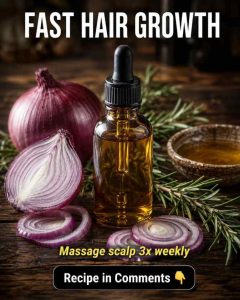
Remedy 1: For Normal Scalp – Onion and Rosemary Growth Oil
Scientific Working of Each Ingredient
Onion Juice (2 tablespoons)
Onion contains sulfur compounds, especially sulfur-containing amino acids, which are important components of keratin, the main structural protein of hair. Onion juice has been studied for supporting hair regrowth in certain types of hair loss by improving scalp nourishment.
Rosemary Essential Oil (5 drops)
Rosemary oil contains compounds such as rosmarinic acid and has been researched for improving scalp circulation. Some studies suggest rosemary oil may support hair growth by stimulating follicles.
Coconut Oil (2 tablespoons)
Coconut oil contains lauric acid, which can penetrate the hair shaft and reduce protein loss, helping strengthen hair strands.
Castor Oil (1 tablespoon)
Castor oil contains ricinoleic acid and fatty acids that help condition the scalp and improve hair softness.
Vitamin E Oil (½ teaspoon)
Vitamin E acts as an antioxidant and helps protect scalp skin from oxidative stress.
Aloe Vera Gel (1 tablespoon)
Aloe vera contains enzymes and moisturizing compounds that support a healthy scalp environment.
Ingredients
- Fresh onion juice – 2 tablespoons
- Rosemary essential oil – 5 drops
- Coconut oil – 2 tablespoons
- Castor oil – 1 tablespoon
- Vitamin E oil – ½ teaspoon
- Aloe vera gel – 1 tablespoon
Procedure
- Extract fresh onion juice by blending and straining onion pieces.
- Mix coconut oil and castor oil in a clean bowl.
- Add rosemary essential oil, vitamin E oil, and aloe vera gel.
- Add onion juice and mix thoroughly.
- Apply the mixture directly to the scalp.
- Massage gently with fingertips for 5 minutes.
- Leave for 30–60 minutes.
- Wash with a mild shampoo.
How Often to Apply
Apply 3 times weekly for at least 4–8 weeks.
Initial Results
Within the first few applications, the scalp may feel more nourished and hair may appear softer. Reduced breakage and improved thickness generally require consistent use over several weeks.
Remedy 2: For Oily Scalp – Rosemary, Green Tea and Onion Scalp Tonic
Scientific Working of Each Ingredient
Rosemary Water (½ cup)
Rosemary contains antioxidant compounds that may support follicle activity and scalp circulation.
Onion Juice (1 tablespoon)
Onion provides sulfur compounds that support keratin formation.
Green Tea (½ cup cooled)
Green tea contains catechins, especially EGCG, which have antioxidant properties and may support scalp health.
Lemon Peel Water (1 tablespoon)
Lemon contains plant antioxidants and may help refresh oily scalp when properly diluted.
Aloe Vera Gel (1 tablespoon)
Aloe vera hydrates without adding heavy oils and helps maintain scalp comfort.
Peppermint Leaves (5–6 leaves)
Peppermint contains menthol, which creates a cooling sensation and supports a refreshed scalp feeling.
Ingredients
- Rosemary water – ½ cup
- Onion juice – 1 tablespoon
- Green tea – ½ cup
- Aloe vera gel – 1 tablespoon
- Lemon peel water – 1 tablespoon
- Mint leaves – few leaves
Procedure
- Prepare rosemary water by steeping rosemary leaves in hot water.
- Allow it to cool.
- Mix all ingredients.
- Apply to scalp using a spray bottle or cotton pad.
- Leave for 20 minutes.
- Rinse thoroughly.
How Often to Apply
Use 2–3 times weekly.
Initial Results
The scalp may feel cleaner and fresher after several uses. Regular use may help maintain a healthier scalp environment.
Remedy 3: For Dry Scalp – Nourishing Fenugreek and Rosemary Hair Mask
Scientific Working of Each Ingredient
Fenugreek Seeds (2 tablespoons)
Fenugreek contains proteins, vitamins, and mucilage that help condition dry hair and improve softness.
Rosemary Oil (4 drops)
Rosemary oil supports scalp stimulation and provides antioxidant benefits.
Olive Oil (2 tablespoons)
Olive oil contains fatty acids and vitamin E that help reduce dryness and improve hair flexibility.
Yogurt (2 tablespoons)
Yogurt contains proteins and lactic acid that help moisturize and gently cleanse the scalp.
Honey (1 teaspoon)
Honey acts as a humectant, helping attract and retain moisture.
Aloe Vera Gel (1 tablespoon)
Aloe vera provides hydration and soothing compounds.
Ingredients
- Fenugreek seeds – 2 tablespoons
- Rosemary oil – 4 drops
- Olive oil – 2 tablespoons
- Yogurt – 2 tablespoons
- Honey – 1 teaspoon
- Aloe vera gel – 1 tablespoon
Procedure
- Soak fenugreek seeds overnight.
- Grind into a smooth paste.
- Add remaining ingredients.
- Apply to scalp and hair.
- Leave for 30 minutes.
- Wash gently.
How Often to Apply
Apply twice weekly.
Initial Results
Hair may feel softer and less rough after the first few applications. Improved strength requires continued care.
Remedy 4: For Sensitive Scalp – Aloe Vera and Chamomile Hair Growth Support Mask
Scientific Working of Each Ingredient
Aloe Vera Gel (3 tablespoons)
Aloe vera contains soothing polysaccharides that support scalp comfort.
Chamomile Tea (2 tablespoons)
Chamomile contains flavonoids with antioxidant properties and is traditionally used for calming skin.
Coconut Oil (1 tablespoon)
Coconut oil helps reduce hair protein loss and protects strands.
Oat Powder (1 tablespoon)
Oats contain beta-glucans that support skin barrier function.
Honey (1 teaspoon)
Honey helps maintain moisture balance.
Rosemary Water (2 tablespoons)
Rosemary water provides plant antioxidants without the concentration of essential oil.
Ingredients
- Aloe vera gel – 3 tablespoons
- Chamomile tea – 2 tablespoons
- Coconut oil – 1 tablespoon
- Oat powder – 1 tablespoon
- Honey – 1 teaspoon
- Rosemary water – 2 tablespoons
Procedure
- Mix all ingredients into a smooth paste.
- Apply gently to scalp.
- Avoid aggressive rubbing.
- Leave for 20 minutes.
- Wash with mild shampoo.
How Often to Apply
Apply once or twice weekly.
Initial Results
The scalp may feel calmer and more hydrated after use. Hair strength improvements require regular application.
Remedy 5: For Weak and Damaged Hair – Protein Repair Hair Oil Blend
Scientific Working of Each Ingredient
Argan Oil (1 tablespoon)
Argan oil contains vitamin E and fatty acids that improve hair softness and shine.
Coconut Oil (2 tablespoons)
Coconut oil penetrates hair fibers and helps reduce protein loss.
Rosemary Oil (5 drops)
Rosemary oil supports scalp stimulation.
Black Seed Oil (1 tablespoon)
Black seed oil contains thymoquinone and antioxidants that may support scalp health.
Onion Extract (1 tablespoon)
Onion compounds provide sulfur that supports keratin structure.
Vitamin E Oil (½ teaspoon)
Vitamin E protects against oxidative damage.
Ingredients
- Coconut oil – 2 tablespoons
- Argan oil – 1 tablespoon
- Black seed oil – 1 tablespoon
- Rosemary oil – 5 drops
- Onion extract – 1 tablespoon
- Vitamin E oil – ½ teaspoon
Procedure
- Mix all oils together.
- Warm slightly using indirect heat.
- Massage into scalp.
- Apply on hair lengths.
- Leave overnight or for 2 hours.
- Wash properly.
How Often to Apply
Apply 2 times weekly.
Initial Results
Hair may appear shinier and smoother within several uses. Reduced breakage may become noticeable after consistent care.
Final Hair Care Tips
- Maintain a protein-rich diet because hair is mainly made of keratin protein.
- Avoid excessive heat styling and harsh chemical treatments.
- Do not tie wet hair tightly because it increases breakage.
- Massage the scalp gently to support circulation.
- Keep combs and pillow covers clean.
- Avoid applying undiluted essential oils directly to the scalp.
- Always perform a patch test before using onion juice or essential oils.
Visible improvement in hair texture may appear within 2–3 weeks, while noticeable changes in hair growth usually require 3–6 months because hair grows slowly.
Continue these remedies for at least 8–12 weeks. If sudden hair loss, bald patches, scalp infection, itching, or excessive shedding continues, consult a dermatologist or hair specialist.
Diet Plan for Faster Hair Growth
Morning
- Warm water
- Eggs or yogurt
- Fruits rich in vitamin C such as oranges, guava, or berries
Breakfast
- Oats with nuts and seeds
or - Whole grain bread with protein source
Lunch
- Chicken, fish, lentils, or beans
- Green vegetables
- Whole grains
Evening Snack
- Almonds and walnuts
- Green tea
Dinner
- Protein-rich meal
- Vegetables
- Healthy fats such as olive oil or avocado
Important Hair Nutrients
- Protein: eggs, fish, legumes
- Iron: spinach, lentils
- Zinc: pumpkin seeds, nuts
- Omega-3: fish, flax seeds
- Vitamin C: citrus fruits
Follow this diet for at least 3 months for better support of the hair growth cycle.
References for the above remedy
- Zaid AN, et al. Effect of onion juice on patchy alopecia areata.
https://pubmed.ncbi.nlm.nih.gov/12126069/ - Panahi Y, et al. Rosemary oil and hair growth study.
https://pubmed.ncbi.nlm.nih.gov/25842469/ - Rele AS. Effect of coconut oil on hair damage prevention.
https://pubmed.ncbi.nlm.nih.gov/12715094/ - Gavazzoni Dias MFR. Hair cosmetics: an overview.
https://www.ncbi.nlm.nih.gov/pmc/articles/PMC4387693/ - Surjushe A, Vasani R, Saple DG. Aloe vera: A short review.
https://www.ncbi.nlm.nih.gov/pmc/articles/PMC2763764/ - Koyama T, et al. Scalp massage and hair thickness improvement.
https://pubmed.ncbi.nlm.nih.gov/29028377/ - Mayo Clinic – Hair loss causes and treatment information.
https://www.mayoclinic.org/diseases-conditions/hair-loss - American Academy of Dermatology – Hair loss care guidance.
https://www.aad.org/public/diseases/hair-loss - Harvard Health Publishing – Nutrition and hair health.
https://www.health.harvard.edu/topics/hair-loss - National Center for Complementary and Integrative Health – Herbal safety information.
https://www.nccih.nih.gov/health/herbsataglance