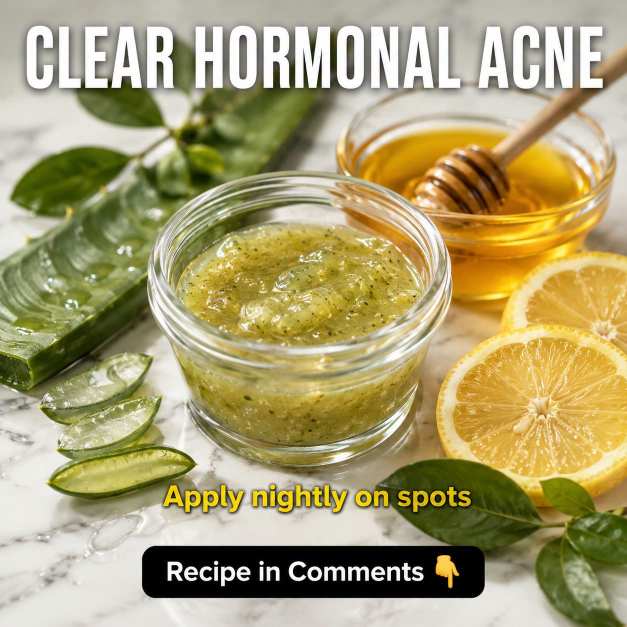
Hormonal acne often appears as persistent, inflamed or painful breakouts around the chin, jawline, lower cheeks and neck. Flare-ups may become more noticeable before menstruation, during pregnancy, around menopause or after other hormonal changes. These breakouts can affect confidence and may leave dark marks or permanent scars when they are repeatedly picked or squeezed. Unlike ordinary surface irritation, hormonal acne begins partly inside the body, where androgen activity can increase oil production and contribute to blocked, inflamed pores. For this reason, a homemade face mask cannot correct the underlying hormonal trigger or guarantee complete clearing. (American Academy of Dermatology)
The remedies below are intended to calm redness, manage excess surface oil and protect the skin barrier while a proper acne routine works. Research supports certain formulated preparations containing topical green-tea extract, aloe vera, colloidal oatmeal and clay. However, the complete homemade mixtures below have not been tested in clinical trials, and brewed tea or fresh aloe may not contain the same standardized concentration as research products. Improvement in comfort or oiliness may begin within one to three days, but meaningful acne reduction normally requires several weeks.
Why the Lemon and Honey Mask in the Image Should Be Modified
Applying lemon juice nightly is not a safe hormonal-acne treatment. Its strong acidity can cause stinging, irritation and barrier damage, while citrus residue combined with sunlight may produce a phototoxic skin reaction and additional pigmentation. Honey may provide moisture, but a randomized trial did not find medical-grade kanuka honey significantly more effective for acne than the comparison treatment. Therefore, neither kitchen honey nor lemon should be presented as a proven cure for hormonal acne. (PubMed Central (PMC))
Remedy 1: Green Tea and Aloe Calming Mask for Normal Skin
Ingredients and Their Scientific Working
Strong green tea: 1 tablespoon. Green tea contains catechins, including EGCG, with anti-inflammatory and antioxidant activity. A meta-analysis of randomized trials found that formulated topical green-tea extracts reduced inflammatory acne lesions, although home-brewed tea is less concentrated than the studied preparations.
Pure inner-leaf aloe vera gel: 1 tablespoon. In a clinical trial, a standardized aloe gel used with tretinoin improved inflammatory and non-inflammatory acne more than tretinoin with its vehicle. This evidence supports aloe as an adjunct, not as a stand-alone hormonal treatment.
Colloidal oatmeal: 1 teaspoon. Finely milled colloidal oatmeal supports hydration and the protective skin barrier. This may reduce irritation that can make an acne routine difficult to tolerate.
Plant-derived glycerin: ¼ teaspoon. Glycerin attracts water into the outer skin layer and helps prevent tightness.
Cool distilled water: 1 tablespoon. Water adjusts the consistency and provides gentle cooling without adding fragrance or oil. (PubMed)
Procedure
Brew green tea for five minutes and allow it to cool completely. Mix one tablespoon of the tea with aloe, colloidal oatmeal, glycerin and distilled water. Leave the mixture for two minutes so the oatmeal softens. Apply a thin layer to clean skin without rubbing or scrubbing. Rinse after 10 minutes and pat the face dry.
How Often to Apply
Apply once daily for three days. When the skin remains comfortable, use it on alternate evenings for another two days and then two or three times weekly.
Initial Results
The face may feel calmer, softer and less tight within one to three days. Individual pimples may look temporarily less red, but hormonal breakouts will not completely clear during this period.
Remedy 2: Two-Zone Oat and Clay Mask for Combination Skin
Ingredients and Their Scientific Working
Cooled green tea: 2 tablespoons. Green-tea compounds may help reduce inflammatory lesions and support oil control when used topically.
Pure aloe vera gel: 1 tablespoon. Aloe supplies lightweight hydration for both oily and dry facial areas.
Colloidal oatmeal: 1 teaspoon. Oatmeal is used mainly on the dry cheeks to support the skin barrier.
Cosmetic-grade kaolin clay: ½ teaspoon. Kaolin absorbs excess surface oil. A clinical study of a formulated clay mask containing kaolin and bentonite reported improvements in sebum and acne-related measurements over several weeks, but plain clay should not be considered equivalent to the tested formula.
Plant-derived glycerin: 2 drops. A small amount reduces dryness without producing a heavy finish.
Distilled water: 1 tablespoon. This keeps the mask thin enough to rinse without friction. (PubMed)
Procedure
Mix the green tea, aloe, glycerin and water, then divide the mixture between two bowls. Add kaolin to the portion for the forehead, nose and chin. Add colloidal oatmeal to the portion for the cheeks and jaw. Apply both thinly. Do not allow the clay to become completely dry or cracked. Rinse after eight minutes.
How Often to Apply
Use on days one, three and five. Continue once or twice weekly when no irritation develops.
Initial Results
The T-zone may feel less greasy after the first few applications, while the cheeks may feel more comfortable. Deep jawline spots are unlikely to disappear within three days.
Remedy 3: Lightweight Green-Tea Clay Mask for Oily Skin
Ingredients and Their Scientific Working
Strong cooled green tea: 2 tablespoons. Research on topical green-tea lotions and extracts suggests possible reductions in inflamed lesions after several weeks of use.
Pure aloe vera gel: 1 tablespoon. Aloe hydrates without adding a heavy oily layer.
Cosmetic-grade kaolin: 1 teaspoon. Kaolin temporarily absorbs surface sebum and creates a matte appearance.
Colloidal oatmeal: ½ teaspoon. Oatmeal balances the drying effect of clay and may reduce irritation.
Plant-derived glycerin: 1 drop. Even oily skin requires water, so a minimal quantity helps prevent dehydration.
Distilled water: 1 teaspoon. Water creates a light, spreadable consistency. (PubMed)
Procedure
Combine the tea, aloe and water. Stir in the kaolin and oatmeal, then add one drop of glycerin. Apply a very thin layer, avoiding broken pimples and the eye area. Rinse after six to eight minutes while the mask is still slightly damp.
How Often to Apply
Apply twice during the first three days and once more on day five. Do not use it daily, because excessive clay may increase irritation and trigger more visible oiliness.
Initial Results
Surface shine may reduce after one use, and mild redness may appear calmer within one to three days. Closed comedones, cysts and hormonal nodules need longer-term treatment.
Tea-tree oil is not included in this homemade formula. Trials have studied properly formulated 5% gels, while pure or oxidized tea-tree oil can cause allergic contact dermatitis. Making an accurate, stable facial concentration in a kitchen mixture is difficult. (PubMed)
Remedy 4: Aloe, Oat and Sunflower Recovery Mask for Dry Skin
Ingredients and Their Scientific Working
Pure aloe vera gel: 1 tablespoon. Aloe provides water-based hydration and may improve tolerance when acne treatments cause redness or scaling.
Cooled green tea: 1 tablespoon. Green tea supplies antioxidant and anti-inflammatory plant compounds.
Colloidal oatmeal: 1 teaspoon. Oatmeal supports hydration and helps protect compromised skin.
Plant-derived glycerin: ¼ teaspoon. Glycerin improves water retention in the outer skin layer.
High-linoleic sunflower seed oil: 2 drops. Sunflower oil can act as an emollient for dry areas. It is included only in a tiny quantity because excessive facial oil may feel uncomfortable on acne-prone skin.
Distilled water: 1 tablespoon. Water prevents the mask from becoming overly sticky or heavy. (PubMed)
Procedure
Mix the oatmeal with distilled water and green tea. Add aloe and glycerin. Apply for 10 minutes and rinse gently. After drying, press two drops of sunflower oil only over flaky areas, avoiding active pustules.
How Often to Apply
Use on alternate evenings for five days. Continue two or three times weekly when dryness persists.
Initial Results
Flaking and tightness may improve within one to three days. Better hydration can make redness look less noticeable, but it does not remove the hormonal cause of acne.
Remedy 5: Minimal Oat Compress for Sensitive Skin
Ingredients and Their Scientific Working
Cool distilled water: 2 tablespoons. This provides a fragrance-free base.
Weak cooled green tea: 1 tablespoon. A weak brew offers a gentler concentration while retaining some antioxidant compounds.
Colloidal oatmeal: 1 teaspoon. Oatmeal is the primary barrier-supporting ingredient.
Pure aloe vera gel: 1 teaspoon. Aloe may soothe irritation but should be patch-tested because occasional allergic reactions are possible.
Plant-derived glycerin: 1 drop. One drop helps limit dryness without leaving a heavy residue. (PubMed)
Procedure
Mix the ingredients and leave them for five minutes. Soak a clean cotton pad or soft cloth in the liquid. Place it over the affected area for five minutes without rubbing. Patch-test the mixture before applying it across the face.
How Often to Apply
Use once on day one. When no itching, burning or swelling develops, repeat on days three and five.
Initial Results
Heat, tightness or mild irritation may feel better after the first applications. Sensitive skin should not be expected to become acne-free within three days.
Final Tips for Managing Hormonal Acne
Wash the face gently twice daily and after sweating. Avoid rough washcloths, facial brushes, harsh scrubs and repeated spot squeezing. Use clean towels and applicators, and prepare every homemade mixture fresh rather than storing it. Choose a non-comedogenic moisturiser and apply it when the skin feels dry, especially when using an acne treatment. (American Academy of Dermatology)
Do not apply lemon, toothpaste, baking soda, garlic, undiluted essential oils or alcohol-based mixtures. Patch-test natural ingredients for 24 to 48 hours because “natural” does not mean allergy-free.
Supportive masks may improve hydration or oiliness within two to three days. Visible acne reduction generally requires four to eight weeks, and deeper hormonal acne may require prescribed treatment for several months. Hormonal therapies used by dermatologists can include certain oral contraceptives or spironolactone for suitable women; these medicines require medical assessment and should never be started without a doctor. (American Academy of Dermatology)
Diet Plan for Hormonal Acne
Breakfast: Choose eggs, unsweetened oatmeal, plain yogurt if tolerated, berries, apples or whole-grain bread. Avoid beginning every day with sweet cereal, pastries or sugary drinks.
Lunch: Fill half the plate with vegetables, one quarter with lentils, beans, fish, chicken or eggs, and one quarter with brown rice, whole-grain bread or another high-fibre carbohydrate.
Snack: Select fruit, cucumber, carrots, roasted chickpeas or a small handful of unsalted nuts.
Dinner: Eat a moderate portion of protein with vegetables and a smaller serving of whole-grain carbohydrate.
Daily routine: Drink water regularly, sleep consistently and keep a food-and-breakout diary. Small randomized studies found that low-glycaemic-load diets reduced inflammatory and non-inflammatory acne over approximately 10 to 12 weeks. This does not mean that every carbohydrate causes acne; the aim is to replace frequent sugary and highly refined foods with fibre-rich choices. (PubMed)
Follow the balanced diet for eight to twelve weeks. Continue a tolerated mask two or three times weekly, but stop immediately if redness, swelling, itching or burning increases.
Consult a dermatologist when acne has not improved after six to eight weeks, or sooner when you have painful cysts, nodules, spreading inflammation or scarring. Women should also seek medical assessment when sudden adult acne occurs with irregular periods, fertility difficulty, increased facial or body hair, scalp hair thinning or darkened velvety skin. These can occur with polycystic ovary syndrome or another hormonal condition. (ACOG)
References for the above remedy
- American Academy of Dermatology Association. “Stubborn Acne? Hormonal Therapy May Help.”
https://www.aad.org/public/diseases/acne/derm-treat/hormonal-therapy - American Academy of Dermatology Association. “Think That DIY Acne Trick Is Helping?”
https://www.aad.org/news/diy-acne-trick - Kim, S. et al. “The Effects of Green Tea on Acne Vulgaris: A Systematic Review and Meta-Analysis of Randomized Clinical Trials.”
https://pubmed.ncbi.nlm.nih.gov/32812270/ - Hajheydari, Z. et al. “Effect of Aloe Vera Topical Gel Combined with Tretinoin in Treatment of Mild and Moderate Acne Vulgaris.”
https://pubmed.ncbi.nlm.nih.gov/23336746/ - Semprini, A. et al. “Randomised Controlled Trial of Topical Kanuka Honey for the Treatment of Acne.”
https://pmc.ncbi.nlm.nih.gov/articles/PMC4746462/ - Capone, K. et al. “Effects of Colloidal Oatmeal Topical Cream on Skin Barrier Properties.”
https://pubmed.ncbi.nlm.nih.gov/32484623/ - Draelos, Z.D. et al. “Comprehensive Assessment of the Efficacy and Safety of a Clay Mask in Oily and Acne Skin.”
https://pmc.ncbi.nlm.nih.gov/articles/PMC10626287/ - Smith, R.N. et al. “A Low-Glycemic-Load Diet Improves Symptoms in Acne Vulgaris Patients: A Randomized Controlled Trial.”
https://pubmed.ncbi.nlm.nih.gov/17616769/ - De Groot, A.C. and Schmidt, E. “Tea Tree Oil: Contact Allergy and Chemical Composition.”
https://pubmed.ncbi.nlm.nih.gov/27173437/ - American College of Obstetricians and Gynecologists. “Polycystic Ovary Syndrome.”
https://www.acog.org/womens-health/faqs/polycystic-ovary-syndrome-pcos