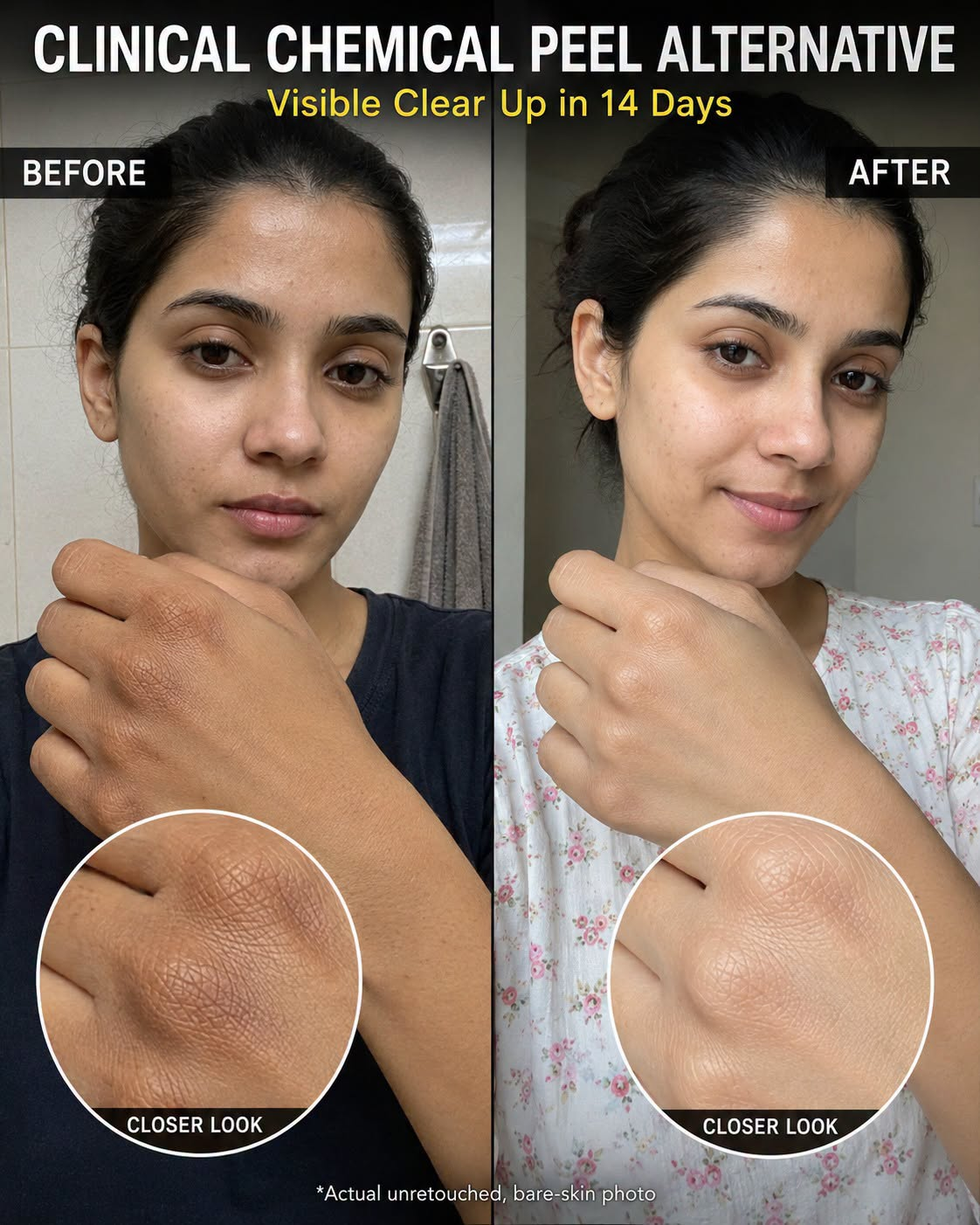
Chemical peels are commonly used to improve uneven skin tone, dullness, rough texture, and mild pigmentation. However, not everyone wants to use acids or undergo professional procedures because they may cause temporary redness, peeling, irritation, or increased sun sensitivity. Fortunately, several natural ingredients contain gentle exfoliating acids, antioxidants, enzymes, and anti-inflammatory compounds that can help improve skin texture over time when used consistently. While these home remedies cannot replace a medical-grade chemical peel, they may provide gradual improvement in skin smoothness and brightness for suitable skin types. Results vary between individuals, and stubborn pigmentation or scars may require evaluation by a dermatologist.
Remedy 1: For Normal Skin
Scientific Working of the Ingredients
Plain yogurt contains natural lactic acid, a gentle alpha-hydroxy acid (AHA) that helps loosen dead skin cells. Rice flour provides mild physical exfoliation while containing antioxidant compounds. Honey acts as a natural humectant, drawing moisture into the skin. Aloe vera supplies polysaccharides that soothe irritation and support skin barrier recovery. Green tea is rich in polyphenols that reduce oxidative stress, while turmeric provides curcumin, known for its anti-inflammatory and antioxidant activity.
Ingredients
- 2 tablespoons plain unsweetened yogurt
- 1 tablespoon finely ground rice flour
- 1 teaspoon raw honey
- 1 teaspoon fresh aloe vera gel
- ½ teaspoon cooled green tea
- A small pinch of turmeric
Procedure
- Mix all ingredients into a smooth paste.
- Wash your face with a gentle cleanser.
- Apply an even layer while avoiding the eye area.
- Leave on for 12–15 minutes.
- Massage gently for one minute before rinsing with lukewarm water.
- Apply a fragrance-free moisturizer.
How Often to Apply
Use three times weekly for two weeks.
Initial Results
Within 3–5 days, skin may feel smoother, softer, and appear slightly brighter.
Remedy 2: For Combination Skin
Scientific Working of the Ingredients
Oatmeal contains beta-glucans that calm the skin while providing gentle exfoliation. Cucumber supplies water and antioxidants that refresh dehydrated areas. Yogurt contributes mild lactic acid exfoliation. Honey supports hydration, and licorice powder contains glabridin, which has shown promise in reducing excess pigmentation.
Ingredients
- 2 tablespoons finely ground oatmeal
- 1 tablespoon cucumber juice
- 1 tablespoon plain yogurt
- 1 teaspoon honey
- ¼ teaspoon licorice powder
- 1 teaspoon rose water
Procedure
- Mix until creamy.
- Apply evenly to clean skin.
- Leave for 15 minutes.
- Rinse gently and moisturize.
How Often to Apply
Apply every other day for one week, then three times weekly.
Initial Results
The skin often feels balanced with less roughness and improved hydration within several applications.
Remedy 3: For Oily Skin
Scientific Working of the Ingredients
Multani mitti (Fuller’s earth) absorbs excess oil. Tomato contains naturally occurring organic acids that provide mild exfoliation. Green tea helps reduce oxidative stress. Aloe vera helps maintain hydration without feeling greasy, while honey reduces excessive dryness after cleansing.
Ingredients
- 1 tablespoon Multani mitti
- 1 tablespoon aloe vera gel
- 1 teaspoon tomato pulp
- 1 teaspoon cooled green tea
- 1 teaspoon honey
- ½ teaspoon finely ground oats
Procedure
- Blend until smooth.
- Apply a thin layer.
- Allow it to dry partially for 10–12 minutes.
- Wash with cool water.
- Finish with a lightweight moisturizer.
How Often to Apply
Use two to three times weekly.
Initial Results
Oiliness may decrease while the skin appears fresher and cleaner after several treatments.
Remedy 4: For Dry Skin
Scientific Working of the Ingredients
Milk cream contains lipids that soften dry skin. Honey improves moisture retention. Oatmeal strengthens the skin barrier. Aloe vera reduces irritation, while mashed banana provides natural sugars and minerals that support hydration.
Ingredients
- 1 tablespoon fresh milk cream
- 1 teaspoon honey
- 1 tablespoon finely ground oatmeal
- 1 teaspoon aloe vera gel
- 2 teaspoons mashed ripe banana
- ½ teaspoon yogurt
Procedure
- Combine thoroughly.
- Apply generously.
- Leave on for 15 minutes.
- Remove with lukewarm water.
- Apply moisturizer immediately afterward.
How Often to Apply
Use three times each week.
Initial Results
Dryness often improves within a few days, and the skin usually feels softer and more comfortable.
Remedy 5: For Sensitive Skin
Scientific Working of the Ingredients
Colloidal oatmeal is well known for supporting the skin barrier and reducing irritation. Aloe vera provides soothing polysaccharides. Cucumber helps cool the skin. Honey supports hydration, while chamomile tea contains naturally occurring compounds with calming properties.
Ingredients
- 2 tablespoons colloidal oatmeal
- 1 tablespoon aloe vera gel
- 1 tablespoon cucumber puree
- 1 teaspoon honey
- 1 tablespoon cooled chamomile tea
Procedure
- Mix into a smooth paste.
- Apply gently without rubbing.
- Leave for 10–12 minutes.
- Rinse with cool water.
- Moisturize using a fragrance-free cream.
How Often to Apply
Use twice weekly.
Initial Results
Sensitive skin may feel calmer, more hydrated, and smoother after several uses.
Final Tips
- Always perform a patch test before using any new natural ingredient.
- Wear a broad-spectrum sunscreen every morning because exfoliated skin is more sensitive to sunlight.
- Stay well hydrated throughout the day.
- Sleep for 7–9 hours every night.
- Avoid harsh scrubs while following these remedies.
- Clean makeup brushes regularly.
- Use a gentle cleanser instead of strong soaps.
- Most people notice gradual improvement within 2–3 weeks rather than dramatic overnight changes.
- If irritation develops, discontinue use immediately.
Diet Plan for Healthier, Brighter Skin
Morning
- One glass of water after waking
- Fresh fruit such as papaya, berries, or oranges
Breakfast
- Oats with nuts and seeds
- Plain yogurt
Mid-Morning
- Green tea
- Cucumber or carrot slices
Lunch
- Grilled fish, lentils, or beans
- Brown rice or whole grains
- Mixed green vegetables
Evening Snack
- A handful of almonds or walnuts
- Fresh fruit
Dinner
- Vegetable soup with lean protein
- Steamed vegetables
- Salad with olive oil
Daily Hydration
Drink approximately 2–3 liters of water unless advised otherwise by your healthcare provider.
Continue these skincare routines and dietary habits consistently for 2–4 weeks. If pigmentation, acne, melasma, persistent redness, painful irritation, or other skin concerns continue or worsen, consult a qualified dermatologist instead of relying solely on home remedies.
References for the above remedy
- Hollinger JC, Angra K, Halder RM. Are Natural Ingredients Effective in the Management of Hyperpigmentation? A Systematic Review.
https://pmc.ncbi.nlm.nih.gov/articles/PMC5843359/ - WebMD. What to Know About Lactic Acid for Skin Care.
https://www.webmd.com/beauty/lactic-acid-for-skin-care - American Academy of Dermatology Association. Colloidal Oatmeal for Eczema and Skin Care.
https://www.aad.org - Journal of Clinical and Aesthetic Dermatology. Natural Cosmeceutical Ingredients for the Management of Hyperpigmentation.
https://jcadonline.com/natural-cosmeceutical-ingredients-hyperpigmentation/ - National Center for Complementary and Integrative Health. Aloe Vera.
https://www.nccih.nih.gov/health/aloe-vera - Healthline. 6 Simple Ingredients You Can Use on Your Face (Reviewed by Dermatology Experts).
https://www.healthline.com/health/6-simple-ingredients-you-can-use-on-your-face - National Center for Complementary and Integrative Health. Green Tea.
https://www.nccih.nih.gov/health/green-tea - Costa A, et al. Association of Emblica, Licorice and Belides as an Alternative to Hydroquinone in the Clinical Treatment of Melasma.
https://pubmed.ncbi.nlm.nih.gov/21085870/