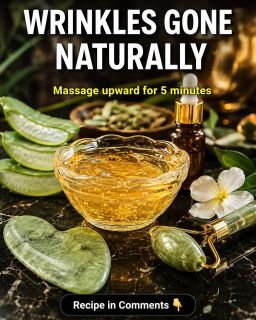
Fine lines and wrinkles develop gradually as skin becomes thinner, drier, and less elastic with age. Sun exposure is one of the biggest accelerators because ultraviolet radiation damages collagen and elastin, while smoking, repeated facial movements, dryness, and environmental stress can make lines more noticeable. Wrinkles cannot realistically be made to “disappear” with one natural mask or five minutes of massage. However, research shows that certain botanical ingredients can improve hydration, texture, elasticity, and some signs of photoaging when used consistently. Moisturizing itself can temporarily plump fine lines, while ingredients such as stabilized soy, Centella asiatica, Echinacea, and green-tea polyphenols have been investigated in human studies. (American Academy of Dermatology)

Remedy 1: For Normal Skin — Soy, Green Tea and Aloe Smoothing Mask
Ingredients and How They Work Scientifically
- Plain unsweetened soy milk — 1 tablespoon: Human research with stabilized topical soy found improvements in skin texture and signs of photoaging, including fine wrinkles. (PubMed Central (PMC))
- Strong cooled green tea — 1 tablespoon: Green tea contains catechins such as EGCG. A double-blind clinical study investigated topical green tea in women with moderate photoaging and found biological improvements in sun-damaged skin. (PubMed)
- Pure aloe vera gel — 1 tablespoon: Aloe provides lightweight hydration. Human studies support its moisturizing effects, although clinical wrinkle-reduction evidence is stronger for standardized oral aloe sterols than for homemade topical gel. (PubMed)
- Colloidal oatmeal — ½ teaspoon: Helps protect the skin barrier and reduces dryness that can exaggerate fine lines.
- Rice starch — ½ teaspoon: Gives a smooth texture and supports gentle barrier-friendly skincare.
- Vegetable glycerin — 2 drops: Draws water into the outer skin layer, temporarily making dehydration lines less obvious.
Procedure
Mix the soy milk and aloe first. Stir in cooled green tea, oatmeal, rice starch, and glycerin until a soft gel-like mask forms. Apply a thin layer to clean skin.
Leave for 8–10 minutes. Rinse gently with lukewarm water without scrubbing.
How Often to Apply
Apply once daily for the first 3 days if comfortable. Continue three times weekly for at least 6 weeks.
Initial Results
Within 1–3 days, the face may feel softer and look temporarily plumper because of improved hydration. True wrinkle improvement requires weeks rather than days; dermatologists note that most anti-aging treatments need at least six weeks. (American Academy of Dermatology)
Remedy 2: For Combination Skin — Echinacea and Oat Firming Gel
Ingredients and Scientific Working
- Cosmetic-grade Echinacea purpurea glycerolic extract — ½ teaspoon: A human study found Echinacea cream and gel increased hydration and reduced measured wrinkles after approximately one month. (PubMed)
- Pure aloe vera gel — 1 tablespoon: Hydrates dry cheeks without making the T-zone excessively greasy.
- Cooled green tea — 1 tablespoon: Adds antioxidant catechins relevant to photoaging.
- Colloidal oatmeal — ½ teaspoon: Helps calm dry or irritated areas.
- Vegetable glycerin — 2 drops: Improves moisture retention.
- Rice starch — ½ teaspoon: Creates a lightweight finish suitable for combination skin.
Procedure
Mix Echinacea extract with aloe and green tea. Add oatmeal, rice starch, and glycerin.
Apply a thinner layer to the forehead and nose and slightly more to dry cheek areas. Leave for approximately 8 minutes and rinse.
How Often to Apply
Use every other day for the first 3–5 days. Continue three times weekly for 4–8 weeks if there is no irritation.
Initial Results
Hydration and smoothness may improve within several applications. Echinacea’s wrinkle effects in the clinical study developed over about a month rather than after one treatment. (PubMed)
Remedy 3: For Oily Skin — Centella and Green Tea Anti-Aging Gel
Ingredients and Scientific Working
- Standardized Centella asiatica extract — ½ teaspoon: A systematic review covering five double-blind randomized studies involving 172 women concluded that standardized Centella preparations improved periocular and lip wrinkles, while also increasing skin hydration. (PubMed)
- Strong cooled green tea — 1 tablespoon: Provides antioxidant tea polyphenols without adding oil.
- Pure aloe vera gel — 1 tablespoon: Hydrates oily skin without a heavy lipid layer.
- Plain soy milk — 1 teaspoon: Supplies soy compounds associated with improvements in photoaged skin.
- Rice starch — 1 teaspoon: Makes the treatment lightweight and non-greasy.
- Vegetable glycerin — 1 drop: Prevents excessive dryness.
Procedure
Mix all ingredients into a thin gel. Apply lightly over the face, avoiding the eyelids.
Leave for 7–8 minutes and rinse. Do not allow the mixture to become completely dry and tight.
How Often to Apply
Apply every other evening during the first 3–5 days, then three times weekly.
Initial Results
Skin may look smoother and less dehydrated within 1–3 days. Studies of Centella-based wrinkle treatments generally lasted around 8–12 weeks, so collagen-related changes should not be expected immediately. (GreenMedInfo)
Remedy 4: For Dry Skin — Aloe, Sunflower and Oat Plumping Mask
Ingredients and Scientific Working
- Pure aloe vera gel — 1 tablespoon: Supplies water-rich hydration and soothing polysaccharides.
- High-linoleic sunflower seed oil — ¼ teaspoon: Human research found sunflower oil preserved skin-barrier integrity and improved hydration, unlike olive oil, which impaired the barrier in the same study. (PubMed)
- Plain soy yogurt — 1 tablespoon: Provides both hydration and soy-derived components investigated for photoaging.
- Colloidal oatmeal — 1 teaspoon: Helps reduce surface roughness and dryness.
- Vegetable glycerin — 2 drops: Attracts water into the stratum corneum.
- Rice starch — ½ teaspoon: Provides a soft, smooth finish.
Procedure
Blend aloe and soy yogurt first. Add oatmeal and rice starch, followed by sunflower oil and glycerin.
Apply to slightly damp skin for 10 minutes. Rinse gently and pat dry.
How Often to Apply
Use once daily for the first 3 days if the skin is very dry, then three times weekly for 6–8 weeks.
Initial Results
Dryness lines can look softer within 1–3 days because moisturization temporarily plumps the skin. The American Academy of Dermatology specifically notes that moisturizer can make some fine lines appear less noticeable. (American Academy of Dermatology)
Remedy 5: For Sensitive Skin — Minimal Oat, Rice and Aloe Comfort Mask
Ingredients and Scientific Working
- Colloidal oatmeal — 1 teaspoon: Supports the skin barrier and helps reduce irritation.
- Pure aloe vera gel — 1 tablespoon: Adds gentle hydration.
- Rice starch — 1 teaspoon: Helps produce a smooth, non-abrasive mask.
- Sunflower seed oil — 2 drops: Provides a small amount of barrier-supporting lipid. (PubMed)
- Vegetable glycerin — 1 drop: Improves moisture retention.
- Cool distilled water — 1 tablespoon: Keeps the mixture light and reduces friction.
Procedure
Combine the oatmeal and rice starch, then add aloe and water. Finish with sunflower oil and glycerin.
Patch-test first. If comfortable, apply a thin layer for only 5–7 minutes and rinse gently.
How Often to Apply
Use every other day for the first 3–5 days. Continue twice weekly if the skin remains calm.
Initial Results
Sensitive skin may feel calmer, smoother, and less tight within several days. Avoid chasing rapid wrinkle reduction, because irritation can actually make signs of aging more noticeable. (American Academy of Dermatology)
Does Aloe and a 5-Minute Upward Massage Remove Wrinkles?
A gentle massage can temporarily improve facial circulation and make the skin feel relaxed, but there is no strong evidence that rubbing upward for five minutes permanently removes wrinkles. Excessive pressure, repeated stretching, or aggressive gua sha use can irritate delicate mature skin.
Aloe is useful primarily as a hydrating and soothing ingredient when applied topically. Interestingly, controlled studies using standardized oral aloe preparations reported improvements in facial wrinkles, elasticity, collagen-related markers, or hyaluronic-acid production, but these findings should not be interpreted as proof that ordinary homemade aloe gel produces the same wrinkle reduction. (PubMed)
For application, use clean fingertips and massage gently for only 1–2 minutes without pulling the skin.
Final Tips for Preventing and Softening Wrinkles
Daily sun protection is more important than any homemade anti-wrinkle mask. The American Academy of Dermatology recommends broad-spectrum SPF 30 or higher because ultraviolet exposure accelerates wrinkles and other signs of premature aging. (American Academy of Dermatology) A randomized trial has also shown that regular sunscreen use slows visible skin aging. (PubMed)
Moisturize every day, avoid smoking, sleep adequately, clean makeup brushes regularly, and stop any treatment that repeatedly burns or stings.
Visible hydration and plumping may begin within 2–3 days, but meaningful changes in fine lines usually require 6–12 weeks, and deeper wrinkles will not completely disappear from natural masks.
Diet Plan for Healthy, Younger-Looking Skin
Breakfast: Eggs or plain yogurt with oatmeal and berries, guava, kiwi, papaya, or orange.
Mid-morning: A small handful of almonds. Controlled trials have reported improvements in facial wrinkle severity with regular almond consumption in postmenopausal women. (PubMed)
Lunch: Lentils, beans, fish, chicken, tofu, or eggs with tomatoes, carrots, leafy vegetables, and whole grains.
Afternoon: One vitamin-C-rich whole fruit with water or unsweetened green tea.
Dinner: Protein with two vegetables, plus a moderate serving of whole grains or potatoes.
Higher dietary vitamin C intake has been associated with a better skin-aging appearance, including fewer wrinkles and less dryness. (PubMed) Include colorful fruits and vegetables, adequate protein, nuts, seeds, and healthy fats rather than relying on “anti-aging detox” drinks.
How Long Should You Continue?
Choose one remedy suited to your skin type and continue it consistently for approximately 6–12 weeks. Do not use all five treatments together.
If wrinkles remain a major concern after three months, or if your skin develops persistent redness, rash, severe peeling, sores, rapidly changing pigmentation, or other unusual changes, see a doctor or dermatologist. Professional treatments have substantially stronger evidence for established wrinkles than homemade remedies.
References for the above remedy
- Wallo W, Nebus J, Leyden JJ. Efficacy of a Soy Moisturizer in Photoaging: A Double-Blind, Vehicle-Controlled, 12-Week Study.
https://pubmed.ncbi.nlm.nih.gov/17941363/ - Chiu AE, et al. Double-Blinded, Placebo-Controlled Trial of Green Tea Extracts in the Clinical and Histologic Appearance of Photoaging Skin.
https://pubmed.ncbi.nlm.nih.gov/16029678/ - Yotsawimonwat S, et al. Skin Improvement and Stability of Echinacea purpurea Dermatological Formulations.
https://pubmed.ncbi.nlm.nih.gov/20384903/ - Kongkaew C, et al. Efficacy and Safety of Centella asiatica on Wrinkles: A Systematic Review and Network Meta-Analysis.
https://pubmed.ncbi.nlm.nih.gov/33413787/ - Haftek M, et al. Clinical, Biometric and Structural Evaluation of Topical Ascorbic Acid and Madecassoside in Photoaged Human Skin.
https://pubmed.ncbi.nlm.nih.gov/18503551/ - Danby SG, et al. Effect of Olive and Sunflower Seed Oil on the Adult Skin Barrier.
https://pubmed.ncbi.nlm.nih.gov/22995032/ - Cho S, et al. Dietary Aloe Vera Supplementation Improves Facial Wrinkles and Elasticity.
https://pubmed.ncbi.nlm.nih.gov/20548848/ - Hughes MCB, et al. Sunscreen and Prevention of Skin Aging: A Randomized Trial.
https://pubmed.ncbi.nlm.nih.gov/23732711/ - Rybak I, et al. Prospective Randomized Controlled Trial on the Effects of Almonds on Facial Wrinkles and Pigmentation.
https://pubmed.ncbi.nlm.nih.gov/33673587/ - American Academy of Dermatology Association. Wrinkle Remedies: How to Reduce the Signs of Aging.
https://www.aad.org/public/everyday-care/skin-care-secrets/anti-aging/wrinkle-remedies