Dark circles can make the face look tired even after a full night’s sleep. They may develop because of genetics, natural pigmentation, visible blood vessels, allergies, repeated eye rubbing, dehydration, under-eye puffiness, sun exposure, thin skin, or shadows created by tear troughs and age-related volume loss. Because the causes are different, no single homemade remedy can permanently remove every type of dark circle. Gentle care may reduce temporary puffiness, dryness, and dullness within one to three days, while true pigmentation or structural shadows usually require several weeks and may need professional treatment. (PubMed)
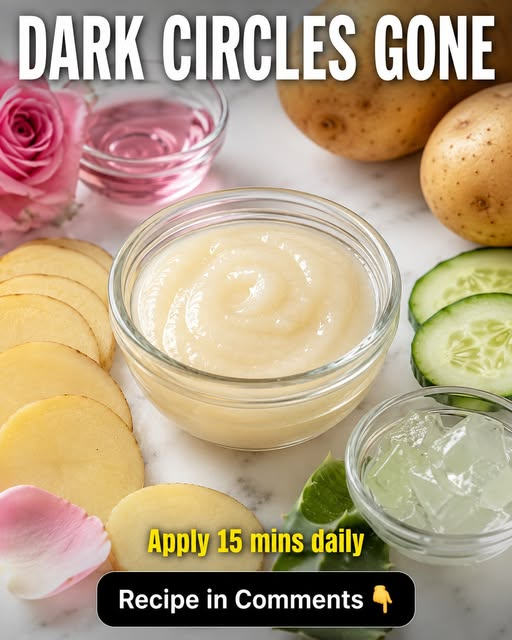
The image shows potato, cucumber, rosewater, and aloe vera. Chilled cucumber may provide a temporary cooling effect, but potato has not been clinically proven to erase under-eye pigmentation. Rosewater may irritate fragrance-sensitive skin. The remedies below focus on cooling, hydration, barrier support, and carefully selected natural ingredients. The individual ingredients have scientific support, but these exact homemade combinations have not been tested as complete treatments.
The skin around the eyes is thin and delicate. Keep every mixture below the lower orbital bone rather than directly against the lashes. Do not allow ingredients to enter the eyes, and never rub or stretch the skin.

Remedy 1: Chilled Green Tea and Aloe Eye Compress for Normal Skin
Normal skin usually tolerates lightweight hydration well. This cooling remedy may temporarily reduce puffiness while improving under-eye softness.
Ingredients and Scientific Working
Cooled green tea — 2 tablespoons: Green tea naturally contains caffeine and antioxidant polyphenols. Caffeine is used in researched under-eye preparations because it may temporarily influence superficial circulation and help reduce the appearance of puffiness. Evidence is stronger for standardized caffeine products than for homemade tea. (PubMed)
Pure aloe vera gel — 1 teaspoon: Aloe contains water-binding compounds. Human research found that aloe-containing formulations improved skin hydration. (PubMed)
Colloidal oatmeal — 1/2 teaspoon: Oat compounds support the protective skin barrier and may reduce dryness and roughness. (PubMed)
Vegetable glycerin — 2 drops: Glycerin attracts water into the outer skin layer and helps create a smoother appearance.
Boiled and cooled water — 1 tablespoon: Water dilutes the mixture and makes it suitable for a light compress.
Procedure
Brew plain green tea and allow it to cool completely. Mix it with aloe, finely powdered oatmeal, glycerin, and cooled water.
Soak two clean cotton pads in the mixture. Squeeze out excess liquid so it cannot drip into the eyes. Place the pads below closed eyes for five minutes. Remove them and rinse the skin gently.
How Often to Apply
Use once daily for three to five days. Continue three times weekly if the skin remains comfortable.
Initial Results
Within one to three days, the under-eye area may feel smoother and appear less tired. Cooling may temporarily reduce mild puffiness, but genetic pigmentation will not disappear this quickly.
Remedy 2: Cucumber, Oat, and Jojoba Treatment for Combination Skin
Combination facial skin may have an oily T-zone while the under-eye area remains dry or dehydrated. This remedy provides water-based cooling with only a very small amount of oil.
Ingredients and Scientific Working
Fresh cucumber juice — 1 tablespoon: Cucumber is mostly water and provides a cooling, refreshing effect. Its main immediate role is hydration rather than permanent pigment removal.
Pure aloe vera gel — 1 teaspoon: Aloe supplies lightweight moisture without creating a heavy coating.
Colloidal oatmeal — 1/2 teaspoon: Oatmeal helps reduce roughness and supports barrier comfort.
Vegetable glycerin — 2 drops: Glycerin improves water retention in the delicate outer skin.
Jojoba oil — 1 drop: Jojoba acts as a light emollient and reduces moisture loss without requiring a thick layer.
Boiled and cooled water — 1 tablespoon: Water creates a gentle, easily spreadable consistency.
Procedure
Peel a small piece of cucumber, blend it, and strain the liquid through a clean cloth. Mix one tablespoon of cucumber juice with aloe, oatmeal, glycerin, and cooled water.
Apply a very thin layer below the eyes, staying away from the lash line. Leave it on for five minutes and rinse gently. Press one drop of jojoba oil between two fingertips and lightly tap it over dry areas.
How Often to Apply
Use on alternate evenings for five days. Continue twice weekly afterward.
Initial Results
The under-eye skin may feel cooler and less tight after the first few applications. Improved hydration may make shadows look slightly softer, but structural hollows will remain.
Remedy 3: Light Caffeine and Rice Cooling Gel for Oily Skin
People with oily facial skin may prefer an oil-free under-eye treatment. This lightweight gel is intended to reduce dryness without leaving a greasy layer.
Ingredients and Scientific Working
Strong cooled green tea — 2 tablespoons: Green tea supplies caffeine and antioxidant plant compounds. Reviews of eye-care ingredients identify caffeine as a promising ingredient for puffiness and some types of under-eye discoloration. (PubMed)
Rice starch water — 1 tablespoon: Rice-derived ingredients may support skin hydration and surface comfort.
Pure aloe vera gel — 1 teaspoon: Aloe provides water-based moisture and improves the texture of the gel.
Colloidal oatmeal — 1/4 teaspoon: Oatmeal helps prevent the area from feeling dry after cleansing.
Vegetable glycerin — 1 drop: A minimal quantity helps retain water without making the mixture excessively sticky.
Boiled and cooled water — 1 tablespoon: Water keeps the preparation light.
Procedure
Mix all ingredients and refrigerate for five minutes. Do not freeze.
Dip two clean cotton pads into the mixture and squeeze them well. Rest them beneath closed eyes for three to four minutes. Do not rub or massage.
Rinse gently and pat dry.
How Often to Apply
Use once daily for three days. Continue every other day for two weeks if no irritation develops.
Initial Results
The area may appear fresher and temporarily less puffy within one to three uses. Cooling and hydration will not permanently remove brown pigmentation.
Remedy 4: Oat, Aloe, and Sunflower Moisture Mask for Dry Skin
Dry under-eye skin can make fine lines and shadows appear more noticeable. Restoring moisture may temporarily improve smoothness and light reflection.
Ingredients and Scientific Working
Colloidal oatmeal — 1 teaspoon: Clinical research found that colloidal-oat formulations improved dryness, moisturization, and skin-barrier condition. (PubMed)
Pure aloe vera gel — 1 teaspoon: Aloe supplies water-rich hydration.
Vegetable glycerin — 3 drops: Glycerin draws moisture into the outer skin layer and may temporarily soften fine dehydration lines.
Cold-pressed sunflower seed oil — 2 drops: Sunflower oil contains linoleic-acid-rich lipids that support barrier integrity and hydration. (PubMed)
Cooled green tea — 1 teaspoon: Green tea provides a light antioxidant liquid base.
Boiled and cooled water — 1 teaspoon: Water softens the oatmeal and prevents an abrasive texture.
Procedure
Mix the oatmeal with water and green tea. Allow it to soften for five minutes. Add aloe and glycerin.
Apply a thin layer below the eyes without rubbing. Leave it on for five to seven minutes and rinse. Press two drops of sunflower oil gently over slightly damp skin.
How Often to Apply
Use nightly for three to five days. Continue three evenings weekly afterward.
Initial Results
Tightness may improve after the first application. Within two or three days, dry lines may look softer and the area may appear less dull.
Remedy 5: Minimal Oat and Cool-Water Compress for Sensitive Skin
Sensitive under-eye skin may react to fragrance, rosewater, essential oils, fresh plant juices, or complicated mixtures. A short ingredient list is safer.
Ingredients and Scientific Working
Colloidal oatmeal — 1 teaspoon: Oat compounds have soothing, antioxidant, and barrier-supporting properties. (PubMed)
Boiled and cooled water — 3 tablespoons: Cool water provides gentle hydration and may temporarily reduce puffiness.
Vegetable glycerin — 1 drop: A very small amount supports moisture retention.
Rice starch water — 1 tablespoon: Rice starch creates a soft, non-exfoliating base.
Pure aloe vera gel — 1/2 teaspoon: Aloe may provide light hydration but should be omitted if it has caused irritation previously.
Procedure
Mix all ingredients and allow the oatmeal to soften for ten minutes. Strain the liquid through a clean cloth.
Soak two soft cotton pads in the liquid and squeeze out excess moisture. Place them below closed eyes for three minutes. Do not press on the eyeballs.
Rinse gently and stop using the remedy if redness, itching, burning, watering, or swelling develops.
How Often to Apply
Use once daily for three days. Continue every other day only when the skin remains calm.
Initial Results
Sensitive skin may feel calmer and less tight within one to three applications. The remedy supports comfort but is not a pigment-removing treatment.
Why Potato and Rosewater Are Not the Main Remedies
Potato is popular in homemade under-eye recipes because its starch feels cooling when applied fresh. However, strong clinical evidence that raw potato removes dark circles is lacking. It should not be presented as a proven bleaching treatment.
Rosewater may feel refreshing, but fragranced botanical waters can irritate sensitive eyelid skin. Repeated inflammation and eye rubbing may worsen dark circles, particularly when eczema or allergic contact dermatitis is involved. Periorbital pigmentation is often linked to several causes rather than one simple skin problem. (PubMed)
Final Tips for Reducing Dark Circles
Use a clean, cool washcloth over closed eyes for several minutes in the morning when puffiness is present. A cool compress may temporarily reduce swelling and make visible vessels less noticeable. (AAO)
Aim for seven to nine hours of sleep and keep the head slightly elevated if fluid tends to collect beneath the eyes overnight. Sleep deprivation can make the eyes appear more swollen and dark circles more visible. (Mayo Clinic)
Avoid rubbing the eyes. Treat persistent allergies, itching, eczema, or watery eyes with professional guidance because repeated inflammation can deepen under-eye discoloration.
Apply broad-spectrum SPF 30 or higher around the orbital bone during the day and wear sunglasses outdoors. Avoid placing sunscreen directly inside the eyes.
Do not apply lemon juice, baking soda, toothpaste, undiluted vinegar, raw garlic, strong essential oils, or harsh scrubs below the eyes. These may cause irritation and worsen pigmentation.
Prepare every homemade mixture fresh. Do not store mixtures containing cucumber, aloe, tea, rice water, or oatmeal because they do not contain a reliable preservation system.
Visible improvements in hydration and mild puffiness may begin within two to three days. Pigmented dark circles generally need several weeks, while hollows, thin skin, and hereditary shadows may not respond significantly to home remedies.
Diet Plan for Healthy Under-Eye Skin
Food cannot directly erase hereditary dark circles, but balanced nutrition supports healthy skin and may help when tired appearance is related to poor diet or a nutritional deficiency.
Breakfast: Choose eggs with whole-grain bread, unsweetened oatmeal with nuts, or plain yogurt with fruit.
Mid-morning: Eat guava, orange, kiwi, papaya, berries, or another vitamin-C-rich fruit.
Lunch: Include lentils, chickpeas, beans, eggs, fish, chicken, tofu, or lean meat. Add leafy vegetables and whole-wheat roti or a moderate portion of rice.
Evening snack: Choose fruit with almonds, walnuts, pumpkin seeds, or sunflower seeds.
Dinner: Eat vegetables with lentils, beans, fish, eggs, tofu, or chicken.
Iron-supporting foods: Include lentils, beans, leafy vegetables, eggs, meat, or fish according to dietary preference. Combine plant sources of iron with vitamin-C-rich foods. Do not take iron supplements without medical testing because dark circles alone do not prove iron deficiency.
Hydration: Drink water according to thirst, weather, activity, and medical needs. Water supports normal hydration but does not remove inherited pigmentation.
Continue the selected remedy for three to five days initially. If it is comfortable, use it two or three times weekly for four to six weeks. Continue healthy sleep and dietary habits for at least eight to twelve weeks.
See a dermatologist or eye doctor if dark circles appear suddenly, affect only one eye, continue to worsen, or occur with pain, redness, significant swelling, rash, eye discharge, headaches, or vision changes. Also seek medical advice if dark circles occur with unusual fatigue, breathlessness, marked paleness, unexplained weight changes, or other persistent symptoms.
References for the above remedy
- Sarkar R, et al. Periorbital Hyperpigmentation: A Comprehensive Review.
https://pubmed.ncbi.nlm.nih.gov/26962392/ - Michelle L, et al. Treatments of Periorbital Hyperpigmentation: A Systematic Review.
https://pubmed.ncbi.nlm.nih.gov/32740208/ - Woolhiser E, et al. Topical Therapies for Periorbital Dyschromia: A 30-Year Review of the Literature.
https://pubmed.ncbi.nlm.nih.gov/39412152/ - Hamie H, et al. A Review of the Efficacy of Popular Eye Cream Ingredients.
https://pubmed.ncbi.nlm.nih.gov/38873621/ - Herman A, Herman AP. Caffeine’s Mechanisms of Action and Its Cosmetic Use.
https://pubmed.ncbi.nlm.nih.gov/23075568/ - Dal’Belo SE, et al. Moisturizing Effect of Cosmetic Formulations Containing Aloe Vera Extract.
https://pubmed.ncbi.nlm.nih.gov/17026654/ - Ilnytska O, et al. Colloidal Oatmeal Improves Skin Barrier Through Multitherapy Activity.
https://pubmed.ncbi.nlm.nih.gov/27272074/ - Reynertson KA, et al. Anti-Inflammatory Activities of Colloidal Oatmeal.
https://pubmed.ncbi.nlm.nih.gov/25607907/ - Sundelin T, et al. Cues of Fatigue: Effects of Sleep Deprivation on Facial Appearance.
https://pubmed.ncbi.nlm.nih.gov/23997369/ - American Academy of Ophthalmology. How to Get Rid of Bags Under the Eyes.
https://www.aao.org/eye-health/tips-prevention/bags-under-eyes