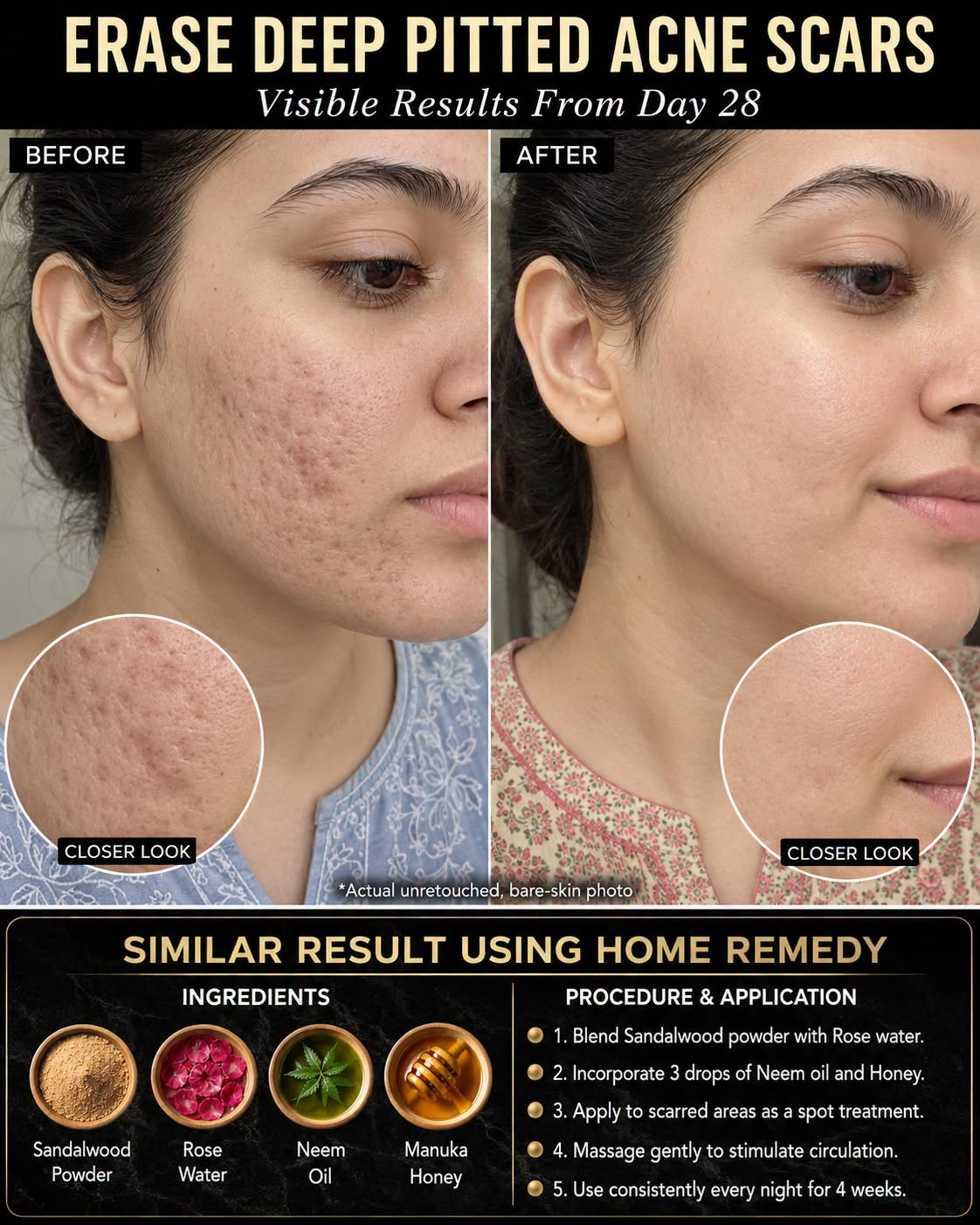
Deep pitted acne scars can affect the smoothness of the face and reduce confidence, especially when they appear on the cheeks, temples, or jawline. These scars form when severe inflammation damages deeper skin tissue and the skin does not rebuild enough collagen to fill the depression. Natural care can support hydration, calm redness, improve post-acne marks, and make the skin look softer by day 28, but it is important to be honest: deep pitted scars usually cannot be fully “erased” with home remedies alone. Dermatology sources explain that acne-scar treatment often needs procedures such as microneedling, laser resurfacing, fillers, subcision, or peels, especially for deeper atrophic scars. Home care works best as a supportive plan for barrier repair, scar appearance, dullness, inflammation, and prevention of new breakouts. (American Academy of Dermatology)
Use only one remedy according to your skin type for 28 days. Apply it on fully healed skin, not on open pimples, cuts, infected acne, or bleeding areas. Always patch test behind the ear for 24 hours.
Remedy 1: For Normal Skin
Scientific Working of Each Ingredient
Ingredients:
Aloe vera gel: 1 teaspoon. Aloe vera contains polysaccharides that help calm irritation, support wound-healing activity, and improve hydration.
Centella asiatica powder or strong cooled gotu kola tea: 1/4 teaspoon powder or 1 teaspoon tea. Centella is known for triterpenoids that support collagen organization and scar-healing activity.
Manuka honey or pure raw honey: 1/2 teaspoon. Honey has humectant, antibacterial, and anti-inflammatory properties that help create a moist healing environment.
Licorice root powder or licorice tea: 1/4 teaspoon powder or 1 teaspoon tea. Licorice helps reduce the look of post-acne pigmentation by influencing melanin activity.
Finely ground oats: 1/2 teaspoon. Oats contain beta-glucan and soothing compounds that support the skin barrier.
Rosehip seed oil: 1 drop. Rosehip oil contains fatty acids and antioxidant compounds that may support smoother-looking scars and dryness control.
Procedure:
Mix aloe vera gel, honey, licorice, and centella until smooth. Add finely ground oats slowly to make a soft paste. Add one drop of rosehip seed oil at the end. Apply a thin layer only on scarred areas or the full cheek area. Leave for 12 minutes, then rinse with cool water. Do not scrub while removing.
How Often to Apply:
Use 4 nights per week for 28 days.
Initial Results:
In 1–3 days, the skin may feel calmer, softer, and less tight. Redness around old marks may look slightly reduced. Pitted depth will not change in a few days, but the surface may look more hydrated.
Remedy 2: For Combination Skin
Scientific Working of Each Ingredient
Ingredients:
Cooled green tea: 1 tablespoon. Green tea contains EGCG, which may help reduce excess sebum and inflammation linked with acne-prone areas.
Aloe vera gel: 1 teaspoon. Helps hydrate dry patches without feeling heavy.
Colloidal oatmeal or very finely blended oats: 1/2 teaspoon. Supports barrier balance on dry cheeks.
Manuka honey: 1/2 teaspoon. Helps maintain moisture and supports a healthy skin surface.
Centella asiatica tea: 1 teaspoon. Supports collagen-related repair pathways.
Licorice root tea: 1 teaspoon. Helps improve uneven post-acne discoloration.
Procedure:
Brew green tea and licorice tea, then cool completely. Mix aloe vera, honey, oatmeal, and centella tea. Add green tea slowly until the paste becomes light and spreadable. Apply more thinly on the oily T-zone and slightly thicker on scarred cheek areas. Leave for 10–12 minutes. Rinse gently.
How Often to Apply:
Use on alternate days for 28 days. On non-mask days, keep the face clean and moisturized.
Initial Results:
Within 1–3 days, oily areas may look less greasy while dry patches may feel more comfortable. Old acne marks may appear less dull because the skin surface is better hydrated.
Remedy 3: For Oily Skin
Scientific Working of Each Ingredient
Ingredients:
Strong cooled green tea: 1 tablespoon. Supports oil control and reduces acne-related inflammation.
Aloe vera gel: 1 teaspoon. Gives lightweight hydration without clogging the skin.
Pure honey: 1/3 teaspoon. Helps calm inflamed areas and supports surface healing.
Turmeric powder: a tiny pinch only. Curcumin has anti-inflammatory properties, but too much can stain and irritate.
Licorice powder: 1/4 teaspoon. Helps brighten brown post-acne spots.
Finely ground oats: 1/2 teaspoon. Reduces irritation from active ingredients and prevents over-drying.
Procedure:
Mix green tea, aloe vera, honey, licorice, and oats. Add only a very small pinch of turmeric. Apply a thin layer to scarred and oily areas. Keep it for 8–10 minutes only. Rinse completely and pat dry. Do not use lemon, baking soda, toothpaste, or undiluted essential oils on pitted scars.
How Often to Apply:
Use 3–4 times weekly for 28 days.
Initial Results:
In 1–3 days, the skin may look less shiny and calmer. If acne is still active, fewer irritated-looking bumps may help prevent future scarring, but existing pits need longer-term collagen remodeling.
Remedy 4: For Dry Skin
Scientific Working of Each Ingredient
Ingredients:
Aloe vera gel: 1 teaspoon. Provides water-based hydration and calming support.
Manuka honey: 1 teaspoon. Acts as a humectant and helps reduce roughness.
Colloidal oatmeal: 1 teaspoon. Helps repair dryness and supports the protective barrier.
Rosehip seed oil: 2 drops. Supports softness and reduces the look of dry scar edges.
Centella asiatica tea: 1 teaspoon. Supports skin-repair signaling.
Mashed avocado: 1 teaspoon. Provides fatty acids that soften dry, flaky skin.
Procedure:
Mash avocado until creamy. Add honey, aloe vera, oatmeal, and centella tea. Mix well, then add rosehip oil. Apply to the dry scarred area in a smooth layer. Leave for 12–15 minutes. Rinse with lukewarm water and pat dry. Avoid rubbing with a towel.
How Often to Apply:
Use 4 times weekly for 28 days.
Initial Results:
Within 1–3 days, dryness, flaking, and tightness may reduce. Pitted scars may look less obvious when the skin is well hydrated because dry edges cast stronger shadows.
Remedy 5: For Sensitive Skin
Scientific Working of Each Ingredient
Ingredients:
Colloidal oatmeal: 1 teaspoon. Clinically studied for soothing irritation and supporting barrier repair.
Aloe vera gel: 1 teaspoon. Helps cool and calm the skin.
Cooled green tea: 1 teaspoon. Provides antioxidant support in a gentle diluted form.
Centella asiatica tea: 1 teaspoon. Supports repair while staying mild when used as tea.
Raw honey: 1/4 teaspoon, optional. Use only if your skin is not allergic to honey.
Clean rose water or plain boiled cooled water: 1 teaspoon. Dilutes the mask and reduces friction during application.
Procedure:
Mix oatmeal with aloe vera, green tea, centella tea, and rose water or boiled cooled water. Add honey only if your patch test is clear. Apply a very thin layer for 7–8 minutes. Rinse gently. Sensitive skin should never be massaged aggressively because friction can worsen redness.
How Often to Apply:
Use every third day for 28 days.
Initial Results:
In 1–3 days, the skin may feel calmer with less burning, dryness, and redness. Scar depth will not disappear quickly, but irritated skin around scars may look smoother.
Final Tips
Choose one remedy according to your skin type and continue it for 28 days before judging results. Natural masks should support the skin, not burn it. Stop immediately if you notice itching, swelling, rash, strong redness, or acne worsening.
Keep skincare tools, towels, pillowcases, and makeup brushes clean. Sleep 7–8 hours, drink enough water, avoid picking pimples, and protect your face from strong sun because sunlight can darken post-acne marks and make scars look more visible. Sunscreen is important for acne-scar contrast and pigmentation control. Visible improvements usually begin within 2–3 days as softness, hydration, and redness improve, while glow and smoother texture may become more noticeable over 4 weeks. Deep pits, rolling scars, and ice-pick scars usually need professional treatment for meaningful lifting. (Mayo Clinic)
If scars are deep, painful acne is still active, marks are spreading, or there is no visible improvement after 28–42 days, see a dermatologist. Home remedies should not replace medical acne treatment.
Diet Plan for Acne Scar Repair and Clearer Skin
Continue this diet plan for at least 6 weeks along with the selected home remedy. The goal is to reduce new acne triggers, support collagen repair, and improve inflammation control. Research reviews suggest that high-glycemic diets can worsen acne in some people, while low-glycemic eating may help reduce breakouts, although results vary from person to person. (PMC)
Morning:
Drink one glass of water. Eat oats, eggs, yogurt if dairy does not trigger your acne, or chickpea flour pancakes with vegetables. Add one vitamin C-rich fruit such as orange, guava, kiwi, or strawberries.
Lunch:
Choose brown rice, whole wheat roti, quinoa, or lentils with vegetables. Add protein such as fish, chicken, eggs, beans, lentils, or tofu. Include salad with cucumber, carrots, and leafy greens.
Evening Snack:
Eat a handful of nuts or seeds, roasted chickpeas, fruit, or green tea. Avoid sugary biscuits, soft drinks, and fried snacks.
Dinner:
Eat a light meal with protein and vegetables. Good options include lentil soup, grilled fish, chicken with vegetables, beans, or vegetable stew with whole grains.
Daily Skin-Support Foods:
Include protein for collagen building, vitamin C fruits, zinc foods such as pumpkin seeds and lentils, omega-3 foods such as fish or chia seeds, and colorful vegetables for antioxidants. Reduce high-sugar foods, frequent fried food, and refined carbohydrates. If milk or whey protein seems to trigger acne, pause it for 3–4 weeks and observe your skin.
References for the above remedy
American Academy of Dermatology Association. Acne scars: Consultation and treatment. https://www.aad.org/public/diseases/acne/derm-treat/scars/treatment
Mayo Clinic. Acne scars: What’s the best treatment? https://www.mayoclinic.org/diseases-conditions/acne/expert-answers/acne-scars/faq-20058101
DermNet. Acne scarring. https://dermnetnz.org/topics/acne-scarring
Jenwitheesuk, K., et al. A prospective randomized, controlled, double-blind trial of Centella asiatica for scar prevention. https://pmc.ncbi.nlm.nih.gov/articles/PMC6166374/
Kim, S., et al. The effects of green tea on acne vulgaris: A systematic review and meta-analysis. https://pubmed.ncbi.nlm.nih.gov/32812270/
Tashkandi, H. Honey in wound healing: An updated review. https://pmc.ncbi.nlm.nih.gov/articles/PMC8496555/
Hekmatpou, D., et al. The effect of Aloe vera clinical trials on prevention and healing of skin wound. https://pmc.ncbi.nlm.nih.gov/articles/PMC6330525/
Capone, K., et al. Effects of colloidal oatmeal topical atopic dermatitis cream on skin microbiome and barrier properties. https://pubmed.ncbi.nlm.nih.gov/32484623/
Sarkar, R., et al. Cosmeceuticals for hyperpigmentation: What is available? https://pmc.ncbi.nlm.nih.gov/articles/PMC3663177/
Meixiong, J., et al. Diet and acne: A systematic review. https://pmc.ncbi.nlm.nih.gov/articles/PMC8971946/