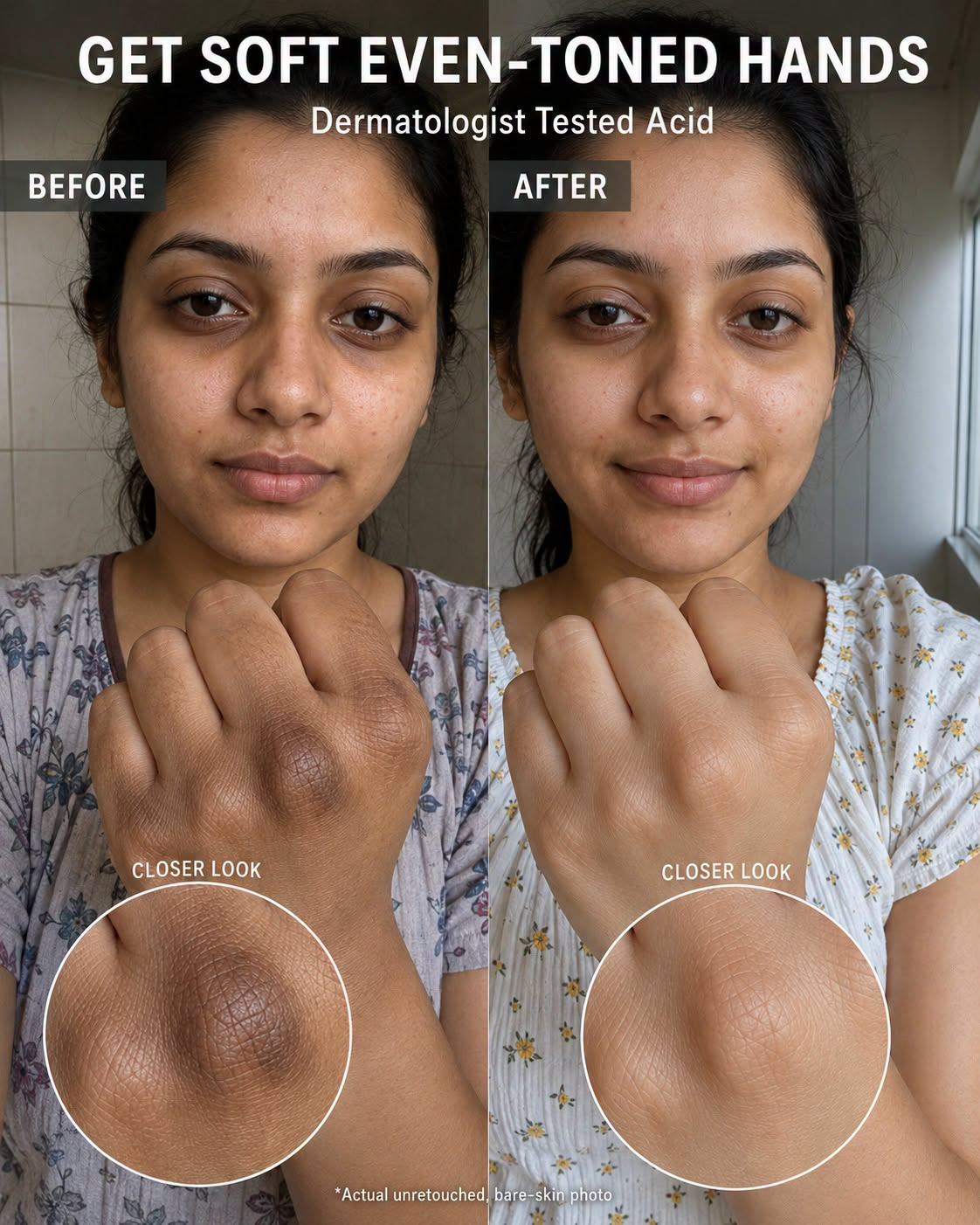
Soft, even-toned hands can make the whole appearance look cleaner, brighter, and more cared for. Dark knuckles, rough patches, dry lines, uneven tone, and dull hand skin often appear because of sun exposure, frequent washing, friction, detergents, dehydration, dryness, and slow buildup of dead skin cells. Gentle natural acids, especially lactic acid from yogurt or buttermilk, can help loosen dull surface cells, while soothing ingredients like aloe vera, oats, honey, rice, green tea, and sunflower oil support hydration and the skin barrier. These remedies are not medical chemical peels, and they should not burn, sting, or peel the skin aggressively. The aim is gradual softness, smoother texture, and a more even look over time.
Remedy 1: For Normal Hand Skin
Ingredients
Plain yogurt, 1 tablespoon: Provides natural lactic acid, a mild alpha hydroxy acid that helps loosen dull dead skin cells.
Aloe vera gel, 1 teaspoon: Adds lightweight hydration and helps calm skin after exfoliation.
Raw honey, 1 teaspoon: Works as a humectant, helping the hands hold moisture.
Rice flour, 1 teaspoon: Gives gentle polishing without harsh scratching when used softly.
Licorice root tea or licorice powder, ½ teaspoon: Supports a more even look because licorice compounds are linked with reduced excess melanin activity.
Sunflower seed oil, 4 drops: Helps soften the skin barrier and reduce roughness.
Scientific Working of This Remedy
This remedy combines mild exfoliation with hydration. Yogurt’s lactic acid helps remove dull surface buildup, which can make the hands look smoother and brighter. Honey and aloe bring water into the outer skin layer, while sunflower oil seals in softness. Rice flour gives a mild polishing effect, and licorice supports tone correction by targeting the look of pigmentation.
Procedure
Mix all ingredients into a smooth paste. Wash your hands with lukewarm water and pat them slightly damp. Apply the mixture to the back of the hands and knuckles. Massage gently in small circles for 60–90 seconds, especially on darker knuckles, but do not scrub hard. Leave it for 8–10 minutes, then rinse and apply a simple moisturizer.
How Often to Apply
Use once daily for 5 days, then continue 3 times weekly.
Initial Results
In 1–3 days, hands may feel softer and look fresher. Dark knuckles usually need 4–8 weeks of consistent care.
Remedy 2: For Combination Hand Skin
Ingredients
Buttermilk, 1 tablespoon: Contains natural lactic acid for mild exfoliation.
Cucumber juice, 1 teaspoon: Gives cooling hydration without heaviness.
Oat powder, 1 teaspoon: Helps calm dry knuckles and supports the skin barrier.
Cooled green tea, 1 teaspoon: Provides antioxidant support against dullness caused by environmental stress.
Aloe vera gel, 1 teaspoon: Hydrates dry areas without making palms greasy.
Vegetable glycerin, 2 drops mixed in 1 teaspoon water: Helps hold moisture in rough areas.
Scientific Working of This Remedy
Combination hand skin often has dry knuckles but sweaty or oily palms. Buttermilk gently smooths uneven texture, while cucumber, aloe, and diluted glycerin hydrate without adding heavy oils. Oats reduce dryness-related roughness, and green tea supports antioxidant protection, helping the hands look clearer and calmer.
Procedure
Mix everything into a thin lotion-like paste. Apply mainly on the back of the hands, fingers, and knuckles. Avoid applying too much on the palms if they become sweaty. Massage upward from the wrist toward the fingers for 2 minutes. Leave for 7–8 minutes and rinse well.
How Often to Apply
Apply on alternate days for 5 days, then 2–3 times weekly.
Initial Results
Within 1–3 days, dry areas may feel smoother while palms should remain comfortable and non-sticky.
Remedy 3: For Oily or Sweaty Hands
Ingredients
Cooled green tea, 2 tablespoons: Helps refresh the skin and provides antioxidant support.
Aloe vera gel, 1 tablespoon: Hydrates without oiliness.
Plain yogurt, 1 teaspoon: Gives mild lactic acid exfoliation for dull patches.
Chickpea flour, 1 teaspoon: Absorbs excess surface oil and gives gentle cleansing.
Rose water, 1 teaspoon: Adds a fresh, light feel.
Raw honey, ¼ teaspoon: Provides a small amount of hydration without greasiness.
Multani mitti, ½ teaspoon: Helps reduce surface oil and sweaty feel when used briefly.
Scientific Working of This Remedy
Oily or sweaty hands still need hydration, but heavy oils can feel uncomfortable. This remedy uses aloe, green tea, and yogurt for water-based care. Chickpea flour and multani mitti absorb extra surface oil, while honey prevents the skin from becoming overly dry. Yogurt helps improve dullness through gentle exfoliation.
Procedure
Mix into a thin paste. Apply to the back of the hands and knuckles. Keep it away from broken skin or cuts. Massage gently for 1 minute and leave for only 5–6 minutes. Do not let the clay dry completely or crack. Rinse with cool water and apply a light moisturizer only on the back of the hands.
How Often to Apply
Use once daily for 3 days, then every other day for the next 2 days.
Initial Results
Hands may feel cleaner, less sticky, and smoother within 1–3 days. Uneven tone improves gradually with continued use and sun protection.
Remedy 4: For Dry Hand Skin
Ingredients
Plain yogurt, 1 tablespoon: Offers mild lactic acid exfoliation to soften rough dead skin.
Mashed avocado, 1 teaspoon: Provides fatty acids that help reduce dryness.
Raw honey, 1 teaspoon: Helps draw moisture into dry skin.
Oat powder, 1 teaspoon: Soothes roughness and supports barrier comfort.
Aloe vera gel, 1 teaspoon: Adds hydration and a cooling effect.
Sunflower seed oil, 6 drops: Helps improve softness and reduce water loss.
Vegetable glycerin, 2 drops diluted in 1 teaspoon water: Supports longer-lasting hydration.
Scientific Working of This Remedy
Dry hands look darker and older when the surface is rough and cracked. Yogurt gently lifts dull cells, while honey, aloe, and glycerin hydrate the outer layer. Avocado and sunflower oil provide emollient support, making the skin feel smoother. Oats reduce tightness and help the skin tolerate exfoliation better.
Procedure
Mix all ingredients until creamy. Apply a medium layer to the hands, focusing on knuckles and dry patches. Massage gently for 2–3 minutes. Cover with soft cotton gloves for 10 minutes if available. Rinse lightly or wipe off with a damp cloth, then apply moisturizer while the skin is slightly damp.
How Often to Apply
Use daily at night for 5 days, then 3 times weekly.
Initial Results
Dryness and roughness may reduce in 1–3 days. Even tone and soft knuckles usually require several weeks.
Remedy 5: For Sensitive Hand Skin
Ingredients
Colloidal oatmeal or very finely blended oats, 1 tablespoon: Helps calm sensitive, dry, or itchy skin.
Aloe vera gel, 1 tablespoon: Provides gentle hydration.
Cucumber juice, 1 tablespoon: Cools and comforts reactive skin.
Rice water, 1 tablespoon: Gives mild soothing and moisturizing support.
Sunflower seed oil, 2 drops: Supports softness without being too heavy.
Plain yogurt, ½ teaspoon: Provides very mild lactic acid exfoliation, but only after a patch test.
Scientific Working of This Remedy
Sensitive hands should not be scrubbed or exposed to strong acids. Oats are the main calming ingredient because they support the skin barrier and reduce dryness. Aloe, cucumber, and rice water hydrate gently. A very small amount of yogurt gives mild exfoliation, but it should be skipped if the skin stings, burns, or becomes red.
Procedure
Do a patch test on a small area for 24 hours first. If there is no reaction, mix the ingredients and apply a thin layer on the hands. Do not rub strongly. Use soft pressing motions on the knuckles for 30 seconds. Leave for 5–7 minutes only, then rinse and moisturize.
How Often to Apply
Use every other day for 5 days.
Initial Results
Sensitive hands may feel calmer and less tight within 1–3 days. Brightening should be slow and gentle, not instant.
Final Tips
Use lukewarm water instead of hot water when washing hands. Apply moisturizer immediately after washing while the skin is slightly damp. Wear gloves when using detergents, cleaning liquids, or dishwashing soap. Apply sunscreen to the back of your hands every morning because sun exposure can darken knuckles and increase uneven tone. Avoid lemon juice, baking soda, toothpaste, harsh scrubs, and undiluted vinegar because they can damage the skin barrier. Always patch test every remedy before full use.
Visible softness usually begins within 2–3 days. A more even hand tone, reduced dullness, and smoother knuckles usually need 4–8 weeks of consistent care. If the darkness is sudden, very thick, velvety, painful, itchy, cracked, bleeding, or linked with fatigue, weight changes, diabetes, hormonal issues, or vitamin deficiency symptoms, see a doctor or dermatologist.
Diet Plan
Continue the selected home remedy for 5 days as an initial softening routine. After that, use it 2–3 times weekly for 6–8 weeks. For better skin repair from inside, follow a simple hand-skin-supporting diet.
Breakfast: Oats, yogurt, eggs, lentils, or whole-grain toast with fruit rich in vitamin C such as orange, guava, kiwi, strawberries, or amla.
Lunch: Add protein from chicken, fish, beans, lentils, tofu, or eggs. Include leafy greens, carrots, cucumber, and tomatoes.
Snack: Take green tea, nuts, seeds, fruit, or coconut water instead of sugary snacks.
Dinner: Eat vegetables with a protein source and whole grains. Add healthy fats from walnuts, almonds, chia seeds, flaxseeds, olive oil, or avocado.
Drink enough water daily. Reduce excess sugar, smoking, and frequent fried foods because they can worsen dullness and affect collagen quality. If the problem persists after 6–8 weeks, or if dark knuckles keep increasing, consult a doctor.
References for the above remedy
- American Academy of Dermatology. “4 skin care tips for your hands.” URL: https://www.aad.org/public/everyday-care/skin-care-basics/care/skin-care-tips-hands (American Academy of Dermatology)
- American Academy of Dermatology. “Dry skin relief from handwashing.” URL: https://www.aad.org/public/everyday-care/skin-care-basics/dry/coronavirus-handwashing (American Academy of Dermatology)
- Almeman AA. “Evaluating the Efficacy and Safety of Alpha-Hydroxy Acids in Dermatology.” URL: https://pmc.ncbi.nlm.nih.gov/articles/PMC11268769/ (PMC)
- Wehr RF, et al. “A controlled comparative efficacy study of 5% ammonium lactate lotion versus an emollient control lotion in moderate xerosis.” URL: https://pubmed.ncbi.nlm.nih.gov/1802909/ (PubMed)
- Pham HT, et al. “A cream containing 10% urea and 4% lactic acid for moderate-to-severe xerosis.” URL: https://pubmed.ncbi.nlm.nih.gov/12046488/ (PubMed)
- Capone K, et al. “Effects of colloidal oatmeal topical treatment on skin barrier and microbiome.” URL: https://pubmed.ncbi.nlm.nih.gov/32484623/ (PubMed)
- Reynertson KA, et al. “Anti-inflammatory activities of colloidal oatmeal.” URL: https://pubmed.ncbi.nlm.nih.gov/25607907/ (PubMed)
- Purnamawati S, et al. “The Role of Moisturizers in Addressing Various Kinds of Dermatitis.” URL: https://pmc.ncbi.nlm.nih.gov/articles/PMC5849435/ (PMC)
- Sarkar R, et al. “Cosmeceuticals for Hyperpigmentation: What is Available?” URL: https://pmc.ncbi.nlm.nih.gov/articles/PMC3663177/ (PMC)
- Pullar JM, et al. “The Roles of Vitamin C in Skin Health.” URL: https://pmc.ncbi.nlm.nih.gov/articles/PMC5579659/ (PMC)