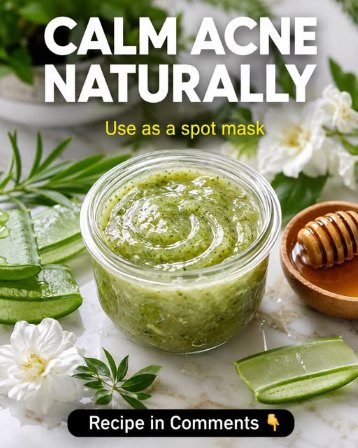
Acne can leave behind dark brown, red or purple marks that make the complexion appear uneven long after the breakout has healed. These flat marks are usually post-inflammatory pigmentation rather than permanent scars, and they may gradually fade with sun protection, controlled acne and consistent skincare. True acne scars alter the skin’s texture: atrophic scars create pits or depressions, while hypertrophic scars and keloids form raised tissue. Homemade masks may improve hydration, redness and the appearance of flat marks, but they cannot rebuild deep tissue or permanently fill pitted scars. Dermatologists commonly use microneedling, chemical peels, lasers, subcision, fillers or combined treatments for structural scarring. (American Academy of Dermatology)
The aloe, honey, cucumber, oats and turmeric shown in the image may feel soothing, but the complete mixture has not been clinically proven to remove acne scars. The remedies below use gentler natural ingredients with evidence related to pigmentation, inflammation, wound healing, acne control or skin-barrier repair. Standardized extracts are preferable to raw leaves and powders because their concentrations are more predictable.
Remedy 1: For Normal Skin
Centella, Aloe and Licorice Mark-Fading Gel
Ingredients
- 1 tablespoon pure aloe vera gel: provides lightweight hydration and may calm acne-related irritation.
- ½ teaspoon standardized Centella asiatica gel: supports wound healing and healthy collagen organisation.
- ¼ teaspoon cosmetic-grade licorice-root extract: contains compounds studied for reducing excess pigmentation.
- 1 teaspoon cooled green tea: provides anti-inflammatory catechins.
- ½ teaspoon colloidal oatmeal: strengthens the skin barrier.
- 1 teaspoon cooled boiled water: creates a light consistency.
Procedure
- Brew plain green tea and cool it completely.
- Mix the aloe gel with Centella and licorice extract.
- Add the tea and boiled water gradually.
- Stir in the colloidal oatmeal.
- Apply a thin layer to clean skin, avoiding the eyelids and active open pimples.
- Leave it on for eight minutes.
- Rinse gently and discard the remaining mixture.
Scientific Working of the Ingredients
Centella asiatica contains compounds such as asiaticoside that may influence collagen production, inflammation and wound repair. A randomized trial found that a standardized Centella cream improved certain scar-related outcomes, although the research involved surgical wounds rather than old pitted acne scars. Licorice extracts contain pigment-regulating compounds and are included among natural agents with clinical evidence for hyperpigmentation. Green tea may reduce inflammatory acne, helping prevent additional marks, while aloe and oatmeal support hydration and barrier recovery. (PubMed)
How Often to Apply
Apply nightly for three to five days. Continue four evenings weekly for eight to twelve weeks if no irritation develops.
Initial Results
Skin may feel calmer and smoother within one to three days. Flat marks require several weeks of consistent care and sun protection.
Remedy 2: For Combination Skin
Green Tea and Rosehip Two-Zone Mask
Ingredients
- 1 teaspoon cosmetic-grade kaolin clay: absorbs excess oil from the T-zone.
- 2 teaspoons cooled green tea: supports oily and inflamed areas.
- 1 teaspoon aloe vera gel: hydrates without a heavy coating.
- ½ teaspoon colloidal oatmeal: protects dry areas from over-cleansing.
- 2 drops cold-pressed rosehip oil: conditions dry, marked areas.
- 1 teaspoon cooled boiled water: adjusts the mask’s texture.
Procedure
- Mix the clay and oatmeal in a clean bowl.
- Add green tea, aloe and enough water to create a soft paste.
- Apply the plain mixture to the forehead, nose and chin.
- Add rosehip oil to the paste remaining in the bowl.
- Apply the enriched portion to dry cheeks and post-acne marks.
- Leave it on for five minutes.
- Rinse before the clay becomes completely dry.
Scientific Working of the Ingredients
Kaolin temporarily removes surface oil, helping prevent an overly shiny appearance. Green-tea extracts have shown benefits for inflammatory and non-inflammatory acne, although brewed tea is weaker than standardized clinical formulations. Rosehip preparations have limited human evidence suggesting possible improvement in postsurgical scar redness and appearance, but research quality remains insufficient to claim that rosehip oil repairs pitted acne scars. Aloe and oatmeal help maintain barrier comfort. (PubMed)
How Often to Apply
Use once during the first three days. Continue once or twice weekly for eight weeks.
Initial Results
Oily areas may look less shiny after one application. Dryness and roughness around flat marks may improve within two to three days.
Remedy 3: For Oily Skin
Oil-Free Green Tea and Licorice Compress
Ingredients
- 1 tablespoon strongly brewed, cooled green tea: provides antioxidant catechins.
- 1 tablespoon cooled boiled water: safely dilutes the preparation.
- 1 teaspoon aloe vera gel: supplies non-greasy hydration.
- ¼ teaspoon cosmetic-grade licorice extract: supports gradual pigment reduction.
- ½ teaspoon colloidal oatmeal: helps prevent irritation.
- 1 drop vegetable glycerin: retains surface moisture.
Procedure
- Combine the tea and boiled water.
- Add the aloe gel and licorice extract.
- Stir in the oatmeal and glycerin.
- Soak clean cotton pads in the liquid.
- Press them over flat acne marks for three to five minutes.
- Remove without rubbing and rinse lightly.
- Prepare a fresh batch each time.
Scientific Working of the Ingredients
Topical green-tea extracts may reduce acne inflammation and lesion counts, which can lower the likelihood of new scars and dark marks. Licorice contains glabridin and related compounds that can interfere with pathways involved in excess melanin production, although clinical evidence remains more limited than for standard dermatological treatments. Aloe and oatmeal reduce dryness and irritation that could otherwise worsen post-inflammatory pigmentation. (PubMed)
How Often to Apply
Use nightly for the first five days. Continue on alternate nights for eight to twelve weeks.
Initial Results
Redness and surface oiliness may appear calmer within two or three days. Brown marks usually fade gradually rather than within five days.
Remedy 4: For Dry Skin
Rosehip, Centella and Oat Recovery Mask
Ingredients
- 1 tablespoon aloe vera gel: supplies water-based hydration.
- ½ teaspoon standardized Centella asiatica gel: supports the healing environment.
- ¼ teaspoon rosehip oil: conditions dry, marked skin.
- ¼ teaspoon high-linoleic sunflower-seed oil: supports the skin barrier.
- 1 teaspoon colloidal oatmeal: reduces roughness and tightness.
- 2 drops vegetable glycerin: improves moisture retention.
Procedure
- Mix the aloe, Centella gel and glycerin.
- Add the oatmeal and leave it for two minutes.
- Stir the rosehip and sunflower oils together.
- Combine the oil mixture with the gel.
- Apply a thin layer to slightly damp skin.
- Leave it on for eight to ten minutes.
- Rinse lightly without using a scrub or facial brush.
Scientific Working of the Ingredients
Dryness can make scar borders and uneven texture look more obvious. Aloe, glycerin and oatmeal increase surface hydration, temporarily creating a smoother appearance. Sunflower oil is rich in linoleic acid and has preserved barrier integrity in human research. Centella and rosehip have limited evidence related to wound and scar appearance, but neither should be presented as a replacement for procedures that remodel depressed acne scars. (PubMed)
How Often to Apply
Apply nightly for three to five days. Continue three times weekly for eight weeks.
Initial Results
Tightness and flaking may improve after the first applications. Hydrated scars can look temporarily softer, but deep depressions will remain.
Remedy 5: For Sensitive Skin
Minimal Oat and Centella Barrier Compress
Ingredients
- 2 tablespoons cooled boiled water: creates a fragrance-free base.
- 1 teaspoon colloidal oatmeal: calms irritation and supports barrier repair.
- 1 teaspoon aloe vera gel: hydrates when tolerated.
- ¼ teaspoon standardized Centella gel: supports healing and comfort.
- 1 drop vegetable glycerin: limits tightness.
- 2 drops sunflower-seed oil: forms a light protective layer.
Procedure
- Mix the oatmeal and cooled water.
- Leave the mixture for five minutes.
- Add the aloe, Centella and glycerin.
- Patch-test beside the jaw for 24–48 hours.
- Apply a thin layer for three minutes.
- Rinse and press the sunflower oil over damp skin.
- Stop immediately if burning, swelling or itching occurs.
Scientific Working of the Ingredients
Sensitive skin often develops darker marks after irritation. Colloidal oatmeal has clinically demonstrated anti-inflammatory, moisturising and barrier-supporting effects. Centella may support wound healing, while aloe, glycerin and sunflower oil reduce dehydration. This gentle remedy may make redness and roughness less noticeable, but it will not resurface established scars. (PubMed)
How Often to Apply
Use every other night for three to five days. Continue twice weekly only when the skin remains comfortable.
Initial Results
Mild tightness and irritation may improve within one to three applications. Pigmentation changes require longer and vary according to skin tone and scar depth.
Final Tips for Fading Acne Marks Safely
Apply broad-spectrum SPF 30 or higher every morning. Sunlight and visible light can deepen post-acne pigmentation and slow fading. Tinted sunscreen containing iron oxide can provide additional protection against visible light, especially for people prone to persistent dark marks. (American Academy of Dermatology)
Control active acne before focusing heavily on scars. Every new deep pimple can leave another mark or depression. Do not squeeze, scratch or pick acne, as physical trauma increases inflammation and scarring risk. (American Academy of Dermatology)
Avoid lemon juice, baking soda, undiluted vinegar, harsh sugar scrubs, toothpaste, raw garlic and concentrated essential oils. Raw turmeric may stain the skin and can cause irritation in some people. Patch-test natural ingredients because plant extracts can still trigger allergies.
Better hydration and reduced redness may be visible within two to three days. Flat brown marks commonly need eight to twelve weeks or longer. Pitted, rolling, ice-pick and raised scars usually require professional treatment.
Diet Plan to Support Clearer Skin
Follow the diet plan for at least eight to twelve weeks while controlling active acne.
Breakfast: Choose eggs, unsweetened yogurt, chickpeas, lentils or oats with guava, kiwi, berries or another vitamin-C-rich fruit.
Lunch: Eat fish, chicken, beans, tofu or lentils with colourful vegetables and a moderate portion of whole grains.
Snack: Select whole fruit, roasted chickpeas, plain yogurt, walnuts or pumpkin seeds instead of sweetened drinks and refined snacks.
Dinner: Include vegetables, protein and healthy fats from fish, avocado, flaxseed, chia seeds or nuts.
Hydration: Drink according to thirst, climate and physical activity. Water supports general skin function but cannot fill acne scars.
A low-glycaemic dietary pattern has improved acne in some controlled research. It may help prevent future marks by reducing breakouts, but food cannot erase existing scar tissue. (American Academy of Dermatology)
Continue one suitable home remedy for eight weeks. See a dermatologist if scars are pitted, raised, painful, spreading or affecting confidence. Medical advice is also important when acne remains cystic, leaves new scars, or does not improve after six to eight weeks of consistent care.
References for the above remedy
- American Academy of Dermatology. Acne Scars: Consultation and Treatment.
https://www.aad.org/public/diseases/acne/derm-treat/scars/treatment - American Academy of Dermatology. Acne Scars: Overview.
https://www.aad.org/public/diseases/acne/derm-treat/scars - Jenwitheesuk K, et al. A Prospective Randomized, Controlled, Double-Blind Trial of Centella Cream for Scar Improvement.
https://pubmed.ncbi.nlm.nih.gov/30310413/ - Belkhelladi M, et al. Rosehip Extract and Wound Healing: A Review.
https://pubmed.ncbi.nlm.nih.gov/37605366/ - Kim S, et al. The Effects of Green Tea on Acne Vulgaris: A Systematic Review and Meta-Analysis.
https://pubmed.ncbi.nlm.nih.gov/32812270/ - Hajheydari Z, et al. Aloe Vera Gel Combined with Tretinoin in Mild and Moderate Acne.
https://pubmed.ncbi.nlm.nih.gov/23336746/ - Hollinger JC, et al. Are Natural Ingredients Effective in the Management of Hyperpigmentation?
https://pubmed.ncbi.nlm.nih.gov/29552273/ - Ilnytska O, et al. Colloidal Oatmeal Improves Skin Barrier and Moisturisation.
https://pubmed.ncbi.nlm.nih.gov/27272074/ - Danby SG, et al. Effect of Olive and Sunflower Seed Oil on the Adult Skin Barrier.
https://pubmed.ncbi.nlm.nih.gov/22995032/ - American Academy of Dermatology. How to Fade Dark Spots in Darker Skin Tones.
https://www.aad.org/public/everyday-care/skin-care-secrets/routine/fade-dark-spots