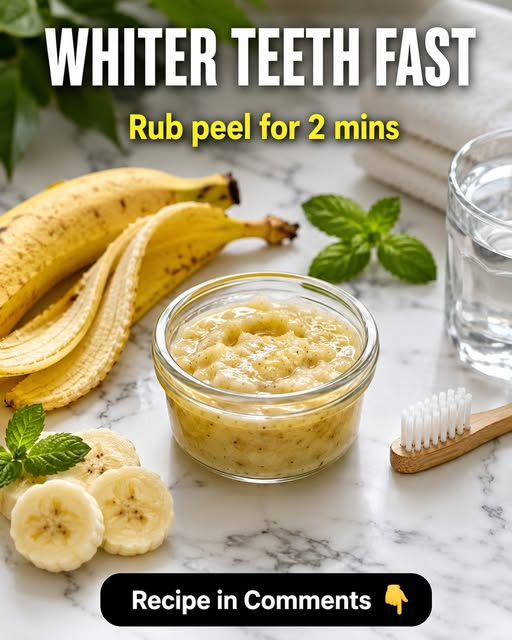
Yellow or dull-looking teeth can affect confidence, but tooth colour is not determined by cleanliness alone. Enamel is naturally translucent, while the dentin underneath has a yellowish tone. Coffee, tea, tobacco, plaque and strongly coloured foods can add external stains, whereas ageing, medication, injury and developmental conditions may darken teeth internally. Home care can remove some surface staining, but it cannot change the natural colour of dentin or whiten crowns, fillings and veneers. (Cleveland Clinic)
The banana-peel method shown in the image is not supported by reliable clinical evidence. Rubbing fruit, lemon, vinegar or other acidic ingredients against teeth may expose enamel to acid without producing controlled bleaching. The American Dental Association advises that “natural” does not automatically mean safe and recommends proven oral-hygiene methods instead of fruit-based scrubs. (MouthHealthy)
The routines below are organised by dental condition rather than skin type. Only the first routine has good evidence for removing external stains. The others protect enamel, reduce plaque and prevent new staining so teeth can look cleaner and brighter.

Remedy 1: For Normal Teeth with Mild Surface Stains
Sodium Bicarbonate Brushing Routine
Ingredients and Materials
- A pea-sized amount of fluoride toothpaste formulated with sodium bicarbonate: removes external stains while fluoride supports enamel.
- A soft-bristled toothbrush: cleans without unnecessarily scratching enamel or gums.
- One glass of plain water: rinses away loose pigment and food debris.
- Dental floss or an interdental brush: removes plaque from spaces a toothbrush cannot reach.
- Sugar-free xylitol gum: stimulates saliva after meals.
- Raw cucumber or carrot slices: provide a low-sugar, fibre-rich snack that encourages saliva.
Procedure
- Rinse the mouth with plain water.
- Place a pea-sized amount of sodium-bicarbonate fluoride toothpaste on a soft brush.
- Brush gently for two minutes, covering the outer, inner and chewing surfaces.
- Spit out the toothpaste without aggressively rinsing away all the fluoride.
- Clean between the teeth once daily with floss or an interdental brush.
- After meals, chew sugar-free xylitol gum when brushing is not possible.
- Use cucumber or carrot as a snack instead of sticky sweets.
Do not make a strongly concentrated baking-soda paste at home. Clinical evidence relates mainly to carefully formulated dentifrices that control concentration, abrasivity and fluoride delivery.
Scientific Working of Each Ingredient
Sodium bicarbonate has mild abrasive and stain-loosening properties. Reviews of clinical studies conclude that correctly formulated baking-soda dentifrices can safely remove external stains and improve apparent whiteness. Fluoride supports enamel remineralisation and helps reduce decay risk. (PubMed)
Mechanical brushing removes plaque and stained pellicle, while interdental cleaning clears deposits between the teeth. Water and xylitol gum stimulate or support saliva, which neutralises acids and assists natural remineralisation. Crunchy vegetables do not bleach enamel, but they are less likely than sticky sugary foods to encourage plaque and staining.
How Often to Apply
Brush twice daily and clean between the teeth once daily. Continue for at least two weeks before assessing stain reduction.
Initial Results
Teeth may feel cleaner within one to three days. Mild surface stains may begin looking lighter after five to fourteen days, but deep or internal discoloration will not respond.
Remedy 2: For Coffee and Tea Stains
Post-Drink Stain-Prevention Routine
Ingredients and Materials
- One glass of plain water: rinses away some staining compounds.
- Unsweetened milk or plain yogurt: provides a lower-sugar alternative to sweet snacks.
- Sodium-bicarbonate fluoride toothpaste: removes accumulated external stain.
- A soft toothbrush: limits unnecessary enamel wear.
- Dental floss: cleans stained plaque between teeth.
- Sugar-free xylitol gum: encourages saliva when away from home.
Procedure
- Drink coffee or tea during a defined period instead of sipping it continuously for hours.
- Rinse the mouth with plain water afterward.
- When the drink contains citrus or another acidic ingredient, wait before brushing rather than brushing softened enamel immediately.
- Brush twice daily with the formulated sodium-bicarbonate fluoride toothpaste.
- Floss once daily, especially around crowded areas where dark deposits collect.
- Chew xylitol gum after the drink when water and brushing are unavailable.
- Avoid adding large quantities of sugar.
Scientific Working of Each Ingredient
Water reduces the amount of stain remaining in contact with the teeth. Fluoride toothpaste containing sodium bicarbonate removes already-established external discoloration more reliably than fruit peels or homemade acid mixtures. Interdental cleaning prevents dark plaque from accumulating between teeth, while saliva helps neutralise acids and wash away debris. (PubMed)
Milk and yogurt do not whiten teeth directly. They simply provide calcium- and protein-containing alternatives to frequent sugary snacks. Limiting the frequency of sugar and acidic exposure helps protect enamel, which is essential because thinned enamel can expose more yellow dentin. (NIDCR)
How Often to Apply
Rinse after every staining drink and follow the complete routine daily for two to four weeks.
Initial Results
New staining may become less noticeable within several days. Existing brown or yellow deposits generally require one to several weeks of consistent cleaning or a professional dental scale and polish.
Remedy 3: For Sensitive Teeth
Gentle Enamel-Protecting Brightness Routine
Ingredients and Materials
- Lukewarm water: avoids triggering temperature sensitivity.
- Fluoride toothpaste made for sensitive teeth: supports enamel and exposed dentin.
- A soft toothbrush: reduces aggressive wear.
- Dental floss or a small interdental brush: removes plaque gently.
- Plain unsweetened yogurt: supplies calcium and protein.
- Sugar-free xylitol gum: supports saliva after eating.
Procedure
- Rinse with lukewarm water.
- Brush gently for two minutes without pressing hard.
- Spit out the toothpaste and avoid repeatedly rinsing.
- Clean between the teeth carefully once daily.
- Use xylitol gum after meals when suitable.
- Avoid banana-peel rubbing, lemon, vinegar, charcoal and rough baking-soda scrubs.
- Include plain yogurt with meals when dairy is tolerated.
Scientific Working of Each Ingredient
Sensitivity commonly develops when enamel becomes thin or dentin and tooth roots become exposed. Acidic fruit treatments may worsen the problem by contributing to enamel erosion. Fluoride supports remineralisation, while gentle brushing limits additional mechanical damage. (PubMed)
Yogurt does not bleach teeth, but calcium-containing foods contribute to a tooth-supportive diet. Xylitol gum encourages saliva, which buffers acids. Sensitive teeth should not be treated with harsh homemade whitening mixtures because even professional bleaching may need adjustment under dental supervision.
How Often to Apply
Follow the routine twice daily for at least two to four weeks.
Initial Results
The mouth may feel cleaner within one to three days. Sensitivity usually requires continued care, while colour improvement depends on whether the discoloration is a removable surface stain.
Remedy 4: For Dry Mouth and Dull-Looking Teeth
Hydration and Saliva-Support Routine
Ingredients and Materials
- Plain water: relieves dryness and rinses food particles.
- Sugar-free xylitol gum: stimulates saliva.
- Cucumber slices: add water and fibre to the diet.
- Plain yogurt: offers a soft, lower-sugar snack.
- Fluoride toothpaste: protects teeth when saliva is reduced.
- Dental floss: removes plaque between teeth.
Procedure
- Sip plain water throughout the day instead of sweetened beverages.
- Chew sugar-free xylitol gum after meals when safe for you.
- Brush twice daily with fluoride toothpaste.
- Floss once daily.
- Select cucumber, plain yogurt or other low-sugar foods for snacks.
- Limit frequent caffeine, alcohol and tobacco if they worsen dryness.
- Never sleep with lemon, honey or sweetened mixtures coating the teeth.
Scientific Working of Each Ingredient
Saliva cleanses the mouth, buffers acids and supplies minerals involved in enamel repair. Reduced saliva can increase plaque, decay and discoloration risk. Water and sugar-free gum support moisture, while fluoride becomes particularly important when natural saliva protection is reduced. (NIDCR)
This routine prevents dullness rather than bleaching enamel. Persistent dry mouth may be related to medications, diabetes, salivary-gland problems or other medical conditions and should not be managed through home remedies alone.
How Often to Apply
Continue daily. Improvement requires ongoing moisture support rather than a five-day treatment.
Initial Results
The mouth may feel fresher within one to three days. Reduced plaque accumulation may gradually make the teeth look cleaner.
Remedy 5: For Gum-Sensitive or Plaque-Prone Teeth
Warm Saltwater and Gentle-Cleaning Routine
Ingredients and Materials
- One cup of warm water: forms a comfortable rinse.
- ¼ teaspoon salt: creates a mild saline solution.
- Fluoride toothpaste: cleans and protects enamel.
- A soft toothbrush: reduces gum trauma.
- Dental floss or interdental brushes: remove plaque along the gumline.
- Sugar-free xylitol gum: supports saliva after meals.
Procedure
- Dissolve the salt completely in warm water.
- Swish gently for approximately 20–30 seconds and spit it out.
- Do not swallow the rinse.
- Brush twice daily with gentle circular movements.
- Clean between the teeth once daily.
- Use xylitol gum after meals when brushing is unavailable.
- Stop the salt rinse after several days unless a dental professional recommends longer use.
Scientific Working of Each Ingredient
Saltwater may provide short-term anti-inflammatory support, but it does not whiten enamel. Clinical research has found that saline rinsing can reduce inflammation in certain dental-care settings. Its value here is soothing the gums so regular cleaning remains comfortable. (PubMed)
Toothpaste, brushing and interdental cleaning remove the plaque that makes teeth look dull around the gumline. Bleeding gums should not be scrubbed with banana peel, charcoal or acidic fruit.
How Often to Apply
Use the saltwater rinse once daily for three to five days. Continue normal brushing and interdental cleaning every day.
Initial Results
Gum comfort and mouth freshness may improve within two to three days. The rinse itself will not alter tooth colour.
Final Tips for Safely Whiter Teeth
Do not rub banana peel, lemon, strawberries, apple cider vinegar, activated charcoal, turmeric or undiluted baking soda over your teeth. Acid may weaken enamel, while coarse scrubs can wear it away and expose more yellow dentin. Oil pulling may have limited benefits for plaque or gingival health, but reliable evidence does not show that it whitens teeth. (MouthHealthy)
Brush twice daily for two minutes with fluoride toothpaste, clean between the teeth once daily, avoid tobacco and limit frequent coffee, tea and red wine. Professional cleaning is often the quickest way to remove hardened deposits and heavy surface stain. (MouthHealthy)
Cleanliness can improve within one to three days, and mild surface stains may lighten over one or two weeks. Internal discoloration requires dentist-supervised whitening or another appropriate dental treatment.
Diet Plan for a Cleaner and Healthier Smile
Breakfast: Choose eggs, plain yogurt, oats or whole-grain foods. Drink unsweetened tea or coffee with the meal rather than sipping continuously.
Lunch: Include vegetables, beans, fish, chicken or another protein source. Finish with water.
Snack: Select cucumber, carrots, unsalted nuts, cheese or plain yogurt instead of sticky sweets.
Dinner: Eat a balanced meal and avoid sugary drinks before bed.
Daily care: Drink water regularly, limit between-meal sugar and brush before sleeping.
Follow the cleaning routine for two to four weeks. See a dentist if stains remain unchanged, because tartar and intrinsic discoloration cannot be removed safely with kitchen ingredients. Seek dental care promptly if one tooth suddenly becomes dark, sensitivity persists, gums bleed repeatedly, or you develop pain, swelling, cavities, cracks or loose teeth.
References for the above remedy
- American Dental Association. Natural Teeth Whitening: Fact vs. Fiction.
https://www.mouthhealthy.org/all-topics-a-z/natural-teeth-whitening - American Dental Association. Oral Health and Daily Hygiene.
https://www.mouthhealthy.org/all-topics-a-z/oral-health - National Institute of Dental and Craniofacial Research. Tooth Decay.
https://www.nidcr.nih.gov/health-info/tooth-decay - Mankodi S, et al. Stain Removal and Whitening by Baking Soda Dentifrice: A Review of Literature.
https://pubmed.ncbi.nlm.nih.gov/29056186/ - Ghassemi A, et al. Effectiveness of a Dentifrice with Baking Soda for Stain Removal and Tooth Whitening.
https://pubmed.ncbi.nlm.nih.gov/23210419/ - Chan AS, et al. Dietary Acids and Habits Associated with Dental Erosion: A Systematic Review.
https://pubmed.ncbi.nlm.nih.gov/32246790/ - Woolley J, et al. The Effect of Oil Pulling with Coconut Oil on Dental Hygiene: A Systematic Review.
https://pubmed.ncbi.nlm.nih.gov/32923724/ - Collins JR, et al. Anti-Inflammatory Effect of Saltwater Mouthwash.
https://pubmed.ncbi.nlm.nih.gov/33389135/ - National Health Service. Taking Care of Your Teeth and Gums.
https://www.nhs.uk/live-well/healthy-teeth-and-gums/take-care-of-your-teeth-and-gums/ - American Dental Association. Diet and Dental Health.
https://www.mouthhealthy.org/all-topics-a-z/diet-and-dental-health