
Dark spots, uneven skin tone, post-acne marks, and other forms of hyperpigmentation develop when the skin produces or deposits extra melanin. Acne, irritation, sun exposure, hormonal changes, and skin injuries are common triggers. While dark spots can affect confidence, aggressive DIY treatments may make pigmentation worse by irritating the skin. The safest approach combines consistent sun protection, control of the original trigger, and gentle ingredients with evidence for pigmentation or skin-barrier support. Dermatologists emphasize that preventing further light exposure is fundamental because ultraviolet and visible light can deepen existing pigmentation. (American Academy of Dermatology)
An important scientific point is that the exact homemade mixtures below have not been tested as complete clinical formulas. Research supports particular components—such as stabilized soy, aloe-derived aloesin, liquiritin from licorice, and standardized mulberry preparations—while ingredients such as oatmeal, glycerin, sunflower oil, and green tea mainly help by supporting hydration, reducing irritation, or controlling acne-related inflammation. This distinction matters because irritation itself can stimulate more pigmentation. (PubMed)
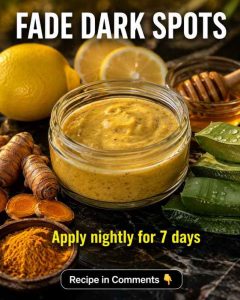
Remedy 1: For Normal Skin — Aloe, Soy and Licorice Brightening Mask
Ingredients and How They Work Scientifically
- Pure inner-leaf aloe vera gel — 1 tablespoon: Aloe contains compounds including aloesin that can interfere with tyrosinase, an enzyme involved in melanin production. Aloe preparations have also been investigated clinically for melasma. (PubMed)
- Plain unsweetened soy yogurt — 1 teaspoon: Stabilized soy extracts have produced measurable improvements in mottled facial pigmentation and overall skin tone in human research. (PubMed)
- Colloidal oatmeal — 1 teaspoon: Helps maintain hydration and calm an irritated skin barrier, indirectly reducing an important trigger for post-inflammatory pigmentation.
- Cooled green tea — 1 teaspoon: Tea polyphenols have antioxidant and anti-inflammatory properties and may be particularly useful when inflammation contributes to uneven tone.
- Pre-diluted, skin-safe licorice extract — 2 drops: Licorice-derived liquiritin has been studied clinically for melasma and may influence melanin distribution and formation. (JPAD)
- Vegetable glycerin — 2 drops: A humectant that attracts water into the upper skin layers and prevents the mask from becoming excessively drying.
Procedure
Mix everything into a smooth paste. Apply a thin layer to clean skin, avoiding the eyelids and lips. Leave it on for 8–10 minutes, then rinse with lukewarm water without scrubbing.
How Often to Apply
Use on alternate nights for the first 3–5 days. If there is no burning, itching, or redness, continue three to four times weekly for 6–8 weeks.
Initial Results
During the first 1–3 days, realistic changes are improved softness, hydration, and a calmer appearance. Significant fading of established pigment should not be expected this quickly.
Remedy 2: For Combination Skin — Mulberry and Aloe Tone-Balancing Pack
Ingredients and Scientific Working
- Pure aloe vera gel — 1 tablespoon: Provides a lightweight hydrating base while aloe-derived compounds may affect melanogenesis.
- Cosmetic-grade, pre-diluted mulberry extract — 3 drops: A randomized placebo-controlled study found significant improvement in melasma after eight weeks with a standardized mulberry extract oil preparation. (PubMed)
- Unsweetened soy milk — 1 teaspoon: Soy contains compounds associated with improved uneven pigmentation in clinical topical studies. (PubMed)
- Cooled green tea — 1 teaspoon: Provides antioxidant and anti-inflammatory polyphenols.
- Colloidal oatmeal — ½ teaspoon: Helps calm dry or easily irritated areas without making the T-zone greasy.
- Vegetable glycerin — 1 drop: Adds light hydration to drier facial areas.
Procedure
Combine the ingredients and apply a thin layer, concentrating on pigmented areas while using less over very oily parts of the T-zone. Leave for approximately 10 minutes and rinse gently.
How Often to Apply
Apply every other evening for the first 5 days. If well tolerated, continue three times per week for approximately 8 weeks.
Initial Results
Within 1–3 days, skin may feel smoother and more balanced. The clinical research on mulberry involved weeks of treatment, so rapid disappearance of spots should not be promised. (PubMed)
Remedy 3: For Oily Skin — Green Tea, Aloe and Licorice Clarifying Gel
Ingredients and Scientific Working
- Strong cooled green tea — 1 tablespoon: Topical green-tea compounds have been studied for acne and inflammation, making them useful when breakouts repeatedly produce new dark marks. (PubMed)
- Pure aloe vera gel — 1 tablespoon: Hydrates without adding heavy oils and provides aloe-derived compounds relevant to pigmentation.
- Plain soy milk — 1 teaspoon: Supplies soy-derived compounds associated with improved mottled pigmentation.
- Colloidal oatmeal — ½ teaspoon: Reduces excessive drying, which can otherwise lead to irritation.
- Pre-diluted licorice extract — 2 drops: Liquiritin-containing licorice preparations have human clinical evidence in melasma. (JPAD)
- Distilled or boiled-and-cooled water — 1 teaspoon: Keeps the mixture lightweight for oilier skin.
Procedure
Mix thoroughly and apply a very thin layer after cleansing. Leave for 8–10 minutes before rinsing. Do not scrub acne lesions or dark marks.
How Often to Apply
Use once daily for the first 3 days only if comfortable; otherwise use on alternate nights. Afterward, three to four applications weekly are sufficient.
Initial Results
Oiliness and irritation may appear reduced within several days. Pigment reduction takes considerably longer because preventing new breakouts and inflammation is part of preventing new post-acne marks.
Remedy 4: For Dry Skin — Sunflower, Oat and Soy Barrier-Restoring Mask
Ingredients and Scientific Working
- Pure aloe vera gel — 1 tablespoon: Supplies water and soothing plant compounds.
- Plain soy yogurt — 1 teaspoon: Adds moisture while providing soy components investigated for uneven pigmentation.
- Colloidal oatmeal — 1 teaspoon: Supports dry, irritated skin and helps reduce moisture loss.
- High-linoleic sunflower seed oil — ¼ teaspoon: Human research found sunflower seed oil preserved skin-barrier integrity and improved hydration better than olive oil in the study conditions. (PubMed)
- Pure honey — ½ teaspoon: Functions mainly as a moisturizing, water-binding ingredient rather than a proven pigment remover.
- Pre-diluted licorice extract — 2 drops: Provides the main additional pigmentation-targeting botanical in this mixture.
Procedure
Blend until creamy. Apply without rubbing and leave on for 10–12 minutes. Rinse gently, pat the face dry, and avoid washing again with harsh cleansers.
How Often to Apply
Use every other evening for 3–5 days, then continue three times weekly for 6–8 weeks if comfortable.
Initial Results
Dryness and tightness can improve sooner than pigmentation. A softer, less flaky appearance may occur within 1–3 days, while dark spots generally require weeks of consistent care.
Remedy 5: For Sensitive Skin — Minimal Aloe, Soy and Oat Calming Mask
Sensitive skin requires the most conservative approach because burning, inflammation, and dermatitis can create additional post-inflammatory pigmentation. Dermatology guidance specifically recommends stopping products that sting or burn when treating dark spots. (American Academy of Dermatology)
Ingredients and Scientific Working
- Colloidal oatmeal — 1 teaspoon: Provides soothing and skin-barrier support.
- Pure aloe vera gel — 1 tablespoon: Helps hydrate and has anti-inflammatory properties in topical human research. (PubMed)
- Plain unsweetened soy milk — 1 teaspoon: Adds a gentle source of soy-derived components associated with improvement in uneven pigmentation.
- Vegetable glycerin — 1 drop: Helps retain moisture without exfoliating the skin.
- Distilled or boiled-and-cooled water — 1 teaspoon: Dilutes the mixture and makes application gentler.
Procedure
Mix until smooth. Patch-test first. If there is no reaction, spread a thin layer over the face for only 5–8 minutes and rinse with cool-to-lukewarm water.
How Often to Apply
Start every other day for 3–5 days. If the skin remains calm, continue two or three times weekly.
Initial Results
The first improvement should be less dryness, tightness, or irritation—not rapid bleaching of pigmentation.
Why Lemon Juice Is Not Included
Although lemon appears frequently in social-media dark-spot remedies, applying raw lemon or lime juice to the face is not a reliable pigmentation treatment. Citrus contains photoreactive compounds capable of producing phytophotodermatitis after ultraviolet exposure, and the reaction may leave additional post-inflammatory hyperpigmentation. (DermNet®)
For the same reason, avoid bleach, baking soda, undiluted essential oils, aggressive scrubs, and repeated strong acids at home.
Final Tips for Fading Dark Spots Safely
Daily sun protection is more important than any homemade mask. Use broad-spectrum SPF 30 or higher every morning; dermatology guidance specifically recommends strong daily photoprotection for post-inflammatory hyperpigmentation, and tinted protection containing iron oxides can additionally reduce visible-light exposure that contributes to pigmentation. (American Academy of Dermatology)
Keep pillowcases, makeup brushes, towels, and skincare tools clean. Do not squeeze pimples or repeatedly rub dark spots. Patch-test every new botanical mixture before facial use, and discontinue anything that causes persistent burning, swelling, itching, or redness.
Hydration and surface glow can improve within 2–3 days, but dark spots themselves normally do not disappear in 2–3 days or even seven days. The American Academy of Dermatology notes that after the cause is stopped, a spot only a few shades darker than the person’s normal skin may still take approximately 6–12 months to fade naturally; appropriate treatment may speed this process. (American Academy of Dermatology)
Diet Plan to Support Healthy Skin
Food should be viewed as nutritional support rather than a treatment capable of bleaching existing pigmentation. No specific meal plan has been proven to erase post-inflammatory hyperpigmentation.
Breakfast: Oatmeal or eggs with guava, berries, kiwi, papaya, or citrus fruit; add unsweetened yogurt or soy yogurt.
Mid-morning: A handful of almonds, walnuts, pumpkin seeds, or another unsalted nut or seed.
Lunch: Lentils, beans, chicken, fish, tofu, or another protein with leafy vegetables, tomatoes, carrots, and whole grains.
Afternoon: One whole fruit rather than juice, accompanied by water.
Dinner: Fish, legumes, tofu, chicken, or eggs with two servings of vegetables and a moderate serving of whole grains.
Drink enough water throughout the day to avoid dehydration. Prioritize fruits, vegetables, adequate protein, healthy fats, and minimally processed foods rather than relying on “detox” drinks or supplements to remove pigmentation.
How Long Should You Continue?
Use a well-tolerated skin-type remedy consistently for 6–8 weeks, while maintaining daily sun protection. Do not rotate between several masks at the same time, because irritation can worsen pigmentation.
If there is little or no improvement after 8–12 weeks, if pigmentation is rapidly spreading, or if a dark area changes shape, color, border, bleeds, becomes painful, or looks different from surrounding spots, see a dermatologist. Melasma, medication-related pigmentation, hormonal pigmentation, and suspicious pigmented lesions may require professional diagnosis rather than home treatment. (American Academy of Dermatology)
References for the above remedy
- American Academy of Dermatology Association. How to fade dark spots in darker skin tones.
https://www.aad.org/public/everyday-care/skin-care-secrets/routine/fade-dark-spots - DermNet. Postinflammatory hyperpigmentation.
https://dermnetnz.org/topics/postinflammatory-hyperpigmentation - Wallo W, Nebus J, Leyden JJ. Efficacy of a soy moisturizer in photoaging: a double-blind, vehicle-controlled, 12-week study. Journal of Drugs in Dermatology.
https://pubmed.ncbi.nlm.nih.gov/17941363/ - Ghafarzadeh M, Eatemadi A. Clinical efficacy of liposome-encapsulated Aloe vera on melasma treatment during pregnancy. Journal of Cosmetic and Laser Therapy.
https://pubmed.ncbi.nlm.nih.gov/28139161/ - Choi S, et al. Aloesin inhibits hyperpigmentation induced by UV radiation. Clinical and Experimental Dermatology.
https://pubmed.ncbi.nlm.nih.gov/12372097/ - Alvin G, Catambay N, Vergara A, Jamora MJ. A comparative study of the safety and efficacy of 75% mulberry extract oil versus placebo as a topical treatment for melasma. Journal of Drugs in Dermatology.
https://pubmed.ncbi.nlm.nih.gov/22052272/ - Zubair S, Mujtaba G. Comparison of efficacy of topical 2% liquiritin, topical 4% liquiritin and topical 4% hydroquinone in the management of melasma. Journal of Pakistan Association of Dermatologists.
https://www.jpad.com.pk/index.php/jpad/article/download/533/506/1072 - Danby SG, et al. Effect of olive and sunflower seed oil on the adult skin barrier: implications for neonatal skin care. Pediatric Dermatology.
https://pubmed.ncbi.nlm.nih.gov/22995032/ - Choi JY, Hwang S, Lee SH, Oh SH. Asymptomatic hyperpigmentation without preceding inflammation as a clinical feature of citrus fruits-induced phytophotodermatitis. Annals of Dermatology.
https://pubmed.ncbi.nlm.nih.gov/29386836/
A useful next step would be turning this article into a shorter “recipe in comments” version that matches the uploaded dark-spots image while keeping the safety claims accurate.