Stretch marks are narrow, scar-like lines that develop when the skin stretches or shrinks rapidly, affecting collagen and elastin in the deeper layer of the skin. They commonly appear during pregnancy, puberty, rapid weight change or muscle growth. New marks may look red, purple, pink or dark brown, while older marks often become pale or silvery. Stretch marks naturally fade with time, but they may not disappear completely. (American Academy of Dermatology)
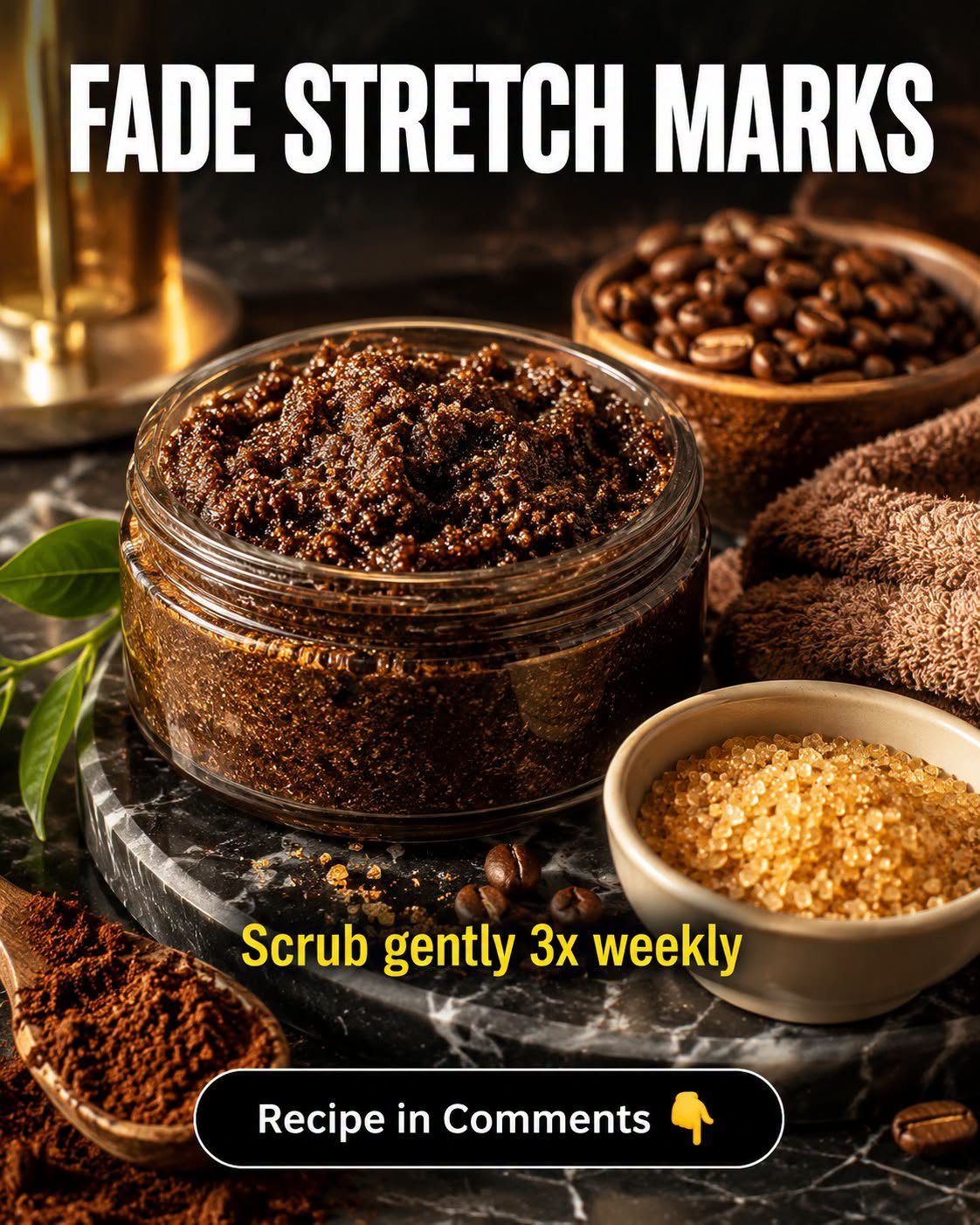
The coffee-and-sugar scrub shown in the image may temporarily make the surface feel smoother, but there is no strong clinical evidence that coffee grounds rebuild the deeper collagen changes responsible for stretch marks. Aggressive scrubbing can also cause irritation. Research suggests that early stretch marks may respond better than mature marks, while ingredients such as Centella asiatica and hyaluronic acid have limited but more promising evidence than popular kitchen scrubs. (American Academy of Dermatology)
The complete homemade routines below have not been clinically tested as finished formulas. Their ingredients are selected for hydration, elasticity support and skin-barrier care. Choose only one remedy according to your skin type.
Remedy 1: For Normal Skin
Centella and Hyaluronic Hydration Treatment
Ingredients
- Standardized Centella asiatica gel: 1 teaspoon
Centella contains triterpene compounds studied for supporting fibroblast activity, collagen formation and skin elasticity. - Hyaluronic acid gel: ½ teaspoon
Hyaluronic acid attracts water and helps temporarily plump and smooth the skin. - Pure aloe vera gel: 1 teaspoon
Aloe supplies lightweight moisture and reduces a dry, tight feeling. - Vegetable glycerin: 2 drops
Glycerin helps the outer skin layer retain water. - Jojoba oil: ¼ teaspoon
Jojoba acts as a light emollient and improves surface softness.
How the Ingredients Work Scientifically
Centella and hyaluronic acid are among the few topical ingredients that have shown some potential for making early stretch marks less noticeable or helping reduce their development. However, results are modest and require regular use. Aloe, glycerin and jojoba mainly improve hydration and texture rather than removing the deeper scar. (American Academy of Dermatology)
Procedure
Mix the aloe and glycerin. Apply the mixture over clean stretch marks and leave it for five minutes.
Apply the Centella gel and hyaluronic gel in a thin layer. Finish with jojoba oil and massage gently for two minutes without pulling the skin.
How Often to Apply
Apply once daily for at least five days. Continue for eight to twelve weeks.
Initial Results
Within one to three days, the area may feel softer and less dry. Actual fading should not be expected within a few days.
Remedy 2: For Combination Skin
Argan, Green Tea and Jojoba Elasticity Massage
Ingredients
- Argan oil: ½ teaspoon
Argan oil provides fatty acids and antioxidant compounds that support softness and elasticity. - Jojoba oil: ½ teaspoon
Creates lightweight moisture without an excessively heavy coating. - Pure aloe vera gel: 1 teaspoon
Hydrates normal and slightly oily areas. - Strong green tea, completely cooled: 1 teaspoon
Contains antioxidant polyphenols. - Finely ground colloidal oatmeal: 1 teaspoon
Supports dry areas and improves skin-barrier comfort. - Vegetable glycerin: 2 drops
Helps retain moisture in the outer skin.
How the Ingredients Work Scientifically
An early clinical study of an argan-containing anti-stretch-mark formulation reported improved skin elasticity, suggesting possible usefulness in prevention or early care. This does not prove that plain argan oil removes established marks. Jojoba, aloe, oatmeal and glycerin mainly improve hydration and surface texture. (PubMed)
Procedure
Mix aloe, cooled green tea, oatmeal and glycerin. Apply for eight minutes, then rinse gently.
Combine the argan and jojoba oils. Massage a small amount into stretch marks for two to three minutes. Use less oil on naturally oily areas.
How Often to Apply
Apply on alternate days for at least five days. Continue four times weekly for eight weeks.
Initial Results
Dry areas may feel smoother within two or three applications. The marks may look less rough because the surrounding skin is better hydrated.
Remedy 3: For Oily Skin
Oil-Free Centella and Green Tea Gel
Ingredients
- Standardized Centella asiatica gel: 1 teaspoon
Provides plant compounds associated with collagen and connective-tissue support. - Hyaluronic acid gel: ½ teaspoon
Hydrates without creating an oily surface. - Pure aloe vera gel: 1 teaspoon
Adds lightweight moisture. - Cooled green tea: 1 teaspoon
Supplies antioxidant polyphenols. - Colloidal oatmeal: ½ teaspoon
Helps reduce irritation and barrier dryness. - Boiled and cooled water: 1 teaspoon
Keeps the treatment light and easily spreadable.
How the Ingredients Work Scientifically
Oily skin can still become dehydrated. Centella and hyaluronic acid provide the main stretch-mark-focused ingredients, while aloe and oatmeal support hydration without a heavy oil layer. Evidence for Centella remains limited, and no topical ingredient consistently removes mature stretch marks. (PubMed)
Procedure
Mix aloe, green tea, oatmeal and water. Apply for five minutes and rinse.
After drying the skin, apply Centella gel followed by a thin layer of hyaluronic gel. Avoid thick oils when the area is acne-prone or develops folliculitis.
How Often to Apply
Use once daily for three to five days. Continue five days weekly for eight to twelve weeks.
Initial Results
The skin may feel smoother and more comfortable within one to three days without excessive greasiness.
Remedy 4: For Dry Skin
Shea, Avocado and Coconut Intensive Body Balm
Ingredients
- Shea butter: 1 teaspoon
Forms a rich protective layer over very dry skin. - Virgin coconut oil: 1 teaspoon
Acts as an emollient and helps reduce moisture loss. - Avocado oil: ½ teaspoon
Provides fatty acids that soften dry, rough skin. - Pure aloe vera gel: 1 teaspoon
Supplies water-based hydration. - Vegetable glycerin: ⅛ teaspoon
Attracts and holds moisture. - Colloidal oatmeal: 1 teaspoon
Supports the protective skin barrier.
How the Ingredients Work Scientifically
Very dry skin can make stretch marks look more textured and noticeable. Coconut oil has clinical evidence as a moisturizer, while natural plant oils and butters can improve softness and barrier comfort. These effects may make the area appear smoother, but moisturization should not be confused with rebuilding the deeper dermis. (PubMed)
Procedure
Mix aloe, oatmeal and glycerin. Apply for ten minutes and rinse gently.
Warm the shea butter between clean palms, then add coconut and avocado oils. Massage a thin layer into damp skin for three minutes.
How Often to Apply
Apply every evening for at least five to seven days. Continue four nights weekly for eight to twelve weeks.
Initial Results
Dryness and tightness may improve after the first application. The skin may look softer within one to three days.
Remedy 5: For Sensitive Skin
Minimal Oat and Jojoba Comfort Treatment
Ingredients
- Colloidal oatmeal: 1 tablespoon
Helps support sensitive and dry skin. - Boiled and cooled water: 1 tablespoon
Creates a simple fragrance-free base. - Pure aloe vera gel: ½ teaspoon
Provides lightweight hydration after patch testing. - Vegetable glycerin: 1 drop
Supports moisture retention. - Jojoba oil: 3 drops
Provides gentle emollient care.
How the Ingredients Work Scientifically
Sensitive skin may become darker, rougher or more uncomfortable when repeatedly irritated. Oatmeal has demonstrated skin-barrier and moisturizing benefits, while aloe, glycerin and jojoba improve softness. This routine is intended to reduce dryness and discomfort rather than erase stretch marks. (PubMed)
Procedure
Patch-test all ingredients for 24–48 hours.
Mix oatmeal, water, aloe and glycerin. Apply without rubbing and leave for five minutes.
Rinse with lukewarm water and press three drops of jojoba oil onto slightly damp skin.
How Often to Apply
Use every other day for at least five days. Continue three times weekly when comfortable.
Initial Results
Mild dryness may improve within one or two applications. Stop if burning, itching, swelling or worsening redness develops.
Final Tips for Fading Stretch Marks Safely
Do not scrub stretch marks with coffee grounds, dry sugar, salt or rough brushes. Stretch marks involve deeper dermal changes, so removing surface cells cannot rebuild ruptured collagen and elastin. Popular oils and butters have also failed to fade stretch marks consistently in studies. (American Academy of Dermatology)
Massage gently rather than aggressively. Apply treatments daily for several weeks because any visible improvement develops slowly. Early red, purple or brown marks generally respond better than older white marks. (American Academy of Dermatology)
Apply moisturizer after bathing while the skin is slightly damp. Keep bowls, hands and towels clean, and discard water-based mixtures after one use.
Use sunscreen when stretch marks are exposed. Tanning does not remove stretch marks and may make them appear more obvious because the marks do not tan like surrounding skin. (American Academy of Dermatology)
Pregnant or breastfeeding individuals should discuss any active treatment with a doctor. Avoid retinoid-containing treatments unless specifically approved by a qualified healthcare professional. (American Academy of Dermatology)
A hydrated glow and smoother surface may begin within two or three days. Continued moisturization may make fine dry lines look softer, but true fading of stretch marks generally requires weeks or months.
Diet Plan for Healthy Skin and Collagen Support
Diet cannot erase existing stretch marks, but adequate protein, vitamin C, zinc and healthy fats support normal skin structure.
Breakfast
Eat eggs, plain yogurt or oatmeal.
Add guava, orange, kiwi, strawberries or another vitamin-C-rich fruit. Vitamin C is required for normal collagen production. (Office of Dietary Supplements)
Mid-Morning
Choose a small handful of almonds, walnuts, pumpkin seeds or sunflower seeds with one seasonal fruit.
Lunch
Include lentils, beans, fish, chicken, eggs or lean meat for protein.
Add vegetables, salad and whole-grain roti or brown rice.
Evening Snack
Choose plain yogurt, roasted chickpeas, fruit or nuts instead of frequently eating sugary snacks.
Dinner
Eat vegetables with fish, chicken, beans, lentils or eggs.
Include healthy fats from nuts, seeds, avocado or suitable plant oils.
Drink water according to thirst, particularly during hot weather or physical activity. Avoid taking large doses of collagen, vitamin E or zinc supplements solely for stretch marks. Food-based nutrition is usually more appropriate unless a doctor identifies a deficiency. Zinc supports normal tissue processes, but excessive supplementation is unnecessary and can cause harm. (Office of Dietary Supplements)
How Long Should You Continue?
Continue the remedy suited to your skin type for at least eight to twelve weeks. Stretch marks often fade naturally over time, but complete disappearance should not be expected. (nhs.uk)
See a doctor or dermatologist when stretch marks appear suddenly without pregnancy, puberty, weight change or muscle growth. Medical advice is also important when the marks are unusually wide or dark purple, appear during long-term steroid use, or occur with rapid weight gain, muscle weakness or easy bruising. (American Academy of Dermatology)
References for the above remedy
- American Academy of Dermatology. “Stretch Marks: Why They Appear and How to Get Rid of Them.”
https://www.aad.org/public/cosmetic/scars-stretch-marks/stretch-marks-why-appear - Korgavkar K, Wang F. “Stretch Marks During Pregnancy: A Review of Topical Prevention.”
https://pubmed.ncbi.nlm.nih.gov/25255817/ - Ud-Din S, et al. “Topical Management of Striae Distensae.”
https://pubmed.ncbi.nlm.nih.gov/26486318/ - Mallol J, et al. “Prophylaxis of Striae Gravidarum with a Topical Centella asiatica Formulation.”
https://pubmed.ncbi.nlm.nih.gov/19291041/ - Wu Y, et al. “Advances in the Treatment of Striae Distensae.”
https://pmc.ncbi.nlm.nih.gov/articles/PMC12820439/ - Bogdan C, et al. “Development of an Anti-Stretch-Mark Cream Containing Argan Oil.”
https://pubmed.ncbi.nlm.nih.gov/27660478/ - Agero ALC, Verallo-Rowell VM. “Extra Virgin Coconut Oil as a Moisturizer for Xerosis.”
https://pubmed.ncbi.nlm.nih.gov/15724344/ - Vaughn AR, et al. “Natural Oils for Skin-Barrier Repair.”
https://pubmed.ncbi.nlm.nih.gov/28707186/ - National Health Service. “Stretch Marks.”
https://www.nhs.uk/conditions/stretch-marks/ - National Institutes of Health, Office of Dietary Supplements. “Vitamin C Fact Sheet for Health Professionals.”
https://ods.od.nih.gov/factsheets/VitaminC-HealthProfessional/