
Introduction
Hair growth is slow by biology, not miracle ingredients. Each follicle follows growth, resting and shedding phases, influenced by genetics, age, hormones, nutrition, illness, medications and hair care. Natural routines can support a healthy scalp and reduce breakage, but no kitchen treatment guarantees rapid growth or reverses every type of hair loss.
A useful distinction is growth from the follicle versus length retention. A conditioner or oil may reduce friction and breakage so hair appears to grow better, while genuine thinning at the scalp may require diagnosis. Sudden shedding, widening parts, bald patches, scalp pain, scaling or itching need more than indefinite home treatment. A dermatologist can check for conditions such as alopecia areata, thyroid disease, iron deficiency, inflammatory scalp disorders or pattern hair loss.
How to Prepare and Apply Natural Hair Treatments Safely
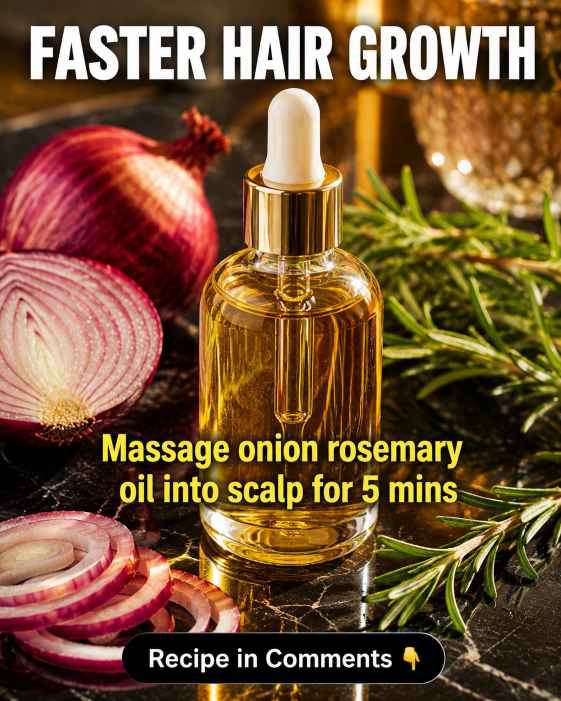
Make each mixture fresh with clean utensils. Patch-test diluted botanical ingredients behind the ear or on the inner arm for 24 hours. Keep mixtures away from the eyes and broken skin, and stop for burning, swelling, hives, blistering or worsening itch. Do not use undiluted essential oils, onion juice, garlic, lemon juice or strong herbal concentrates on the scalp; these can irritate or sensitise skin.
Apply treatments to the scalp only when the recipe is designed for scalp use, and to the mid-lengths and ends when the goal is conditioning. Massage with finger pads, never fingernails, for no more than a few minutes. Avoid tight hairstyles, high heat and vigorous brushing on wet hair. Natural does not mean risk-free or clinically proven.
Remedy 1: For Normal Scalp — Rosemary-Infused Carrier Oil Routine
Ingredients and scientific benefit
Use 1 tablespoon jojoba or grapeseed oil and 1 drop of rosemary essential oil. A carrier oil reduces friction and helps distribute the diluted botanical. Rosemary has limited but notable clinical evidence: one randomized comparative trial examined rosemary oil in people with androgenetic alopecia over six months, so it should be viewed as a possible supportive option—not a guaranteed substitute for established treatment.[1]
Procedure
Mix the oil thoroughly. Apply a few drops to the scalp in sections and massage gently for two minutes. Leave it on for 30 minutes, then shampoo. Do not apply it to the entire scalp if the skin is oily, inflamed or acne-prone.
How Often to Apply
Use twice weekly for at least three months before judging whether it helps. Never increase the essential-oil concentration to accelerate results.
Initial Results
The scalp may feel conditioned afterward. Hair density cannot be judged in one to three days; visible changes, if any, usually require months.
Remedy 2: For Dry or Curly Hair — Aloe and Coconut Conditioning Mask
Ingredients and scientific benefit
Combine 2 tablespoons pure aloe gel with 1 teaspoon coconut oil or a light conditioner. Aloe adds slip and water-based softness, while coconut oil can reduce some protein loss from the hair shaft when used as a pre-wash treatment.[2] This supports length retention, not new follicles.
Procedure
Apply mainly from the mid-lengths to the ends, using only a small amount near the scalp. Cover loosely for 20–30 minutes, then rinse and shampoo gently. Detangle with a wide-tooth comb while the hair is lubricated.
How Often to Apply
Use once weekly for three to five weeks. Reduce coconut oil if the hair becomes stiff, greasy or coated.
Initial Results
Hair may feel softer and show less tangling after one use. Reduced breakage becomes meaningful only after several weeks of gentler handling.
Remedy 3: For Oily or Flaky Scalp — Diluted Green-Tea Rinse
Ingredients and scientific benefit
Brew 1 tea bag or 1 teaspoon green tea in 250 millilitres of water, allow it to cool completely and use it plain. Green tea polyphenols are studied for antioxidant and inflammatory pathways, but brewed tea is not a hair-loss medicine. It should not replace treatment for dandruff or seborrheic dermatitis.[3]
Procedure
After shampooing, pour the cooled tea over the scalp and hair roots. Leave it for five minutes, rinse with clean water and dry without aggressive rubbing. Discard unused tea after one day and do not use it on a raw or intensely irritated scalp.
How Often to Apply
Use once or twice weekly for three weeks. Stop if dryness, redness or increased flaking develops.
Initial Results
The scalp may feel refreshed, but tea cannot create instant new growth. Persistent flakes, pain or sores need medical assessment.
Remedy 4: For Fragile or Chemically Treated Hair — Oat and Yoghurt Length Mask
Ingredients and scientific benefit
Mix 1 tablespoon finely ground colloidal oatmeal, 2 tablespoons plain unsweetened yoghurt and 1 tablespoon water. Oatmeal can improve softness and reduce friction, while yoghurt provides a temporary conditioning texture. Neither ingredient repairs a split end permanently; trimming is the only way to remove an established split.
Procedure
Apply to damp mid-lengths and ends, not the scalp. Leave for 10 minutes, rinse thoroughly with cool-to-lukewarm water and follow with a gentle conditioner. Do not scrub the hair or use hot water.
How Often to Apply
Use once weekly for three to five weeks. Avoid it if dairy or oats have caused contact reactions.
Initial Results
The lengths may feel smoother and less rough after one application. Less breakage may help retain length over the following weeks.
Remedy 5: For Sensitive Scalp — Plain Moisture and Massage Routine
Ingredients and scientific benefit
Use a fragrance-free, scalp-compatible conditioner or a few drops of mineral oil on the hair lengths. A minimalist routine avoids common irritants such as perfume, essential oils, menthol and concentrated plant extracts. A gentle massage may feel relaxing, but evidence does not show that forceful massage reliably reverses hair loss.
Procedure
On a dry or lightly damp scalp, place clean finger pads flat against the skin. Move the scalp gently in small circles for two minutes without pulling hair. Apply conditioner to the lengths, leave for five minutes and rinse. Do not massage over sores, infection or severe inflammation.
How Often to Apply
Practise gentle massage once daily for five days, then continue three to five days weekly if comfortable. Condition the lengths one to two times weekly according to dryness.
Initial Results
The scalp may feel less tense and the hair easier to comb. Any change in shedding or density requires weeks to months and should be monitored objectively with consistent photographs.
Final Tips
Protect the hair you already have. Wear loose hairstyles, vary your part, avoid repeated tight braids or extensions, limit high heat, and use conditioner after washing. Detangle from the ends upward and avoid brushing aggressively when wet. Do not rely on biotin or other supplements unless a clinician identifies a deficiency; excess supplementation can be unhelpful or interfere with testing.
A realistic timeline matters. Hair grows gradually, and shedding fluctuates. Softness may improve within one to three days, while reduced breakage may become apparent over several weeks. New density, when treatment is effective, is usually assessed after at least three to six months. If shedding continues, bald patches appear, or the scalp is painful, see a dermatologist rather than applying stronger home remedies.
Diet Plan
For five days and beyond, build meals around adequate protein, vegetables, fruit, beans, lentils, whole grains, eggs, fish, dairy or fortified alternatives, nuts and seeds. Protein and micronutrients support hair-fibre production, but one “hair-growth food” cannot overcome an untreated cause. Include iron-containing foods such as lentils, beans, meat or fortified grains alongside vitamin C-rich produce to support absorption.
Avoid crash diets and prolonged restriction, which can trigger shedding in some people. Drink according to thirst, sleep regularly and manage stress with practical methods such as walking or relaxation exercises. Continue a balanced diet and gentle hair routine for at least three months. If hair loss persists, ask a clinician whether blood tests or a scalp examination are appropriate; do not self-prescribe iron, zinc or high-dose supplements.
References for the above remedy
- Panahi Y, et al. “Rosemary oil vs minoxidil 2% for the treatment of androgenetic alopecia.” SKINmed (2015). https://pubmed.ncbi.nlm.nih.gov/25842469/
- Rele AS, Mohile RB. “Effect of mineral oil, sunflower oil, and coconut oil on prevention of hair damage.” Journal of Cosmetic Science (2003 ). https://pubmed.ncbi.nlm.nih.gov/12715094/
- A. M. K. et al. “Green Tea and Other Natural Products in Hair Loss.” Journal of Clinical and Aesthetic Dermatology / review literature. https://pmc.ncbi.nlm.nih.gov/articles/PMC6380979/
- American Academy of Dermatology. “Hair Loss: Diagnosis and Treatment.” https://www.aad.org/public/diseases/hair-loss/treatment/diagnosis-treat
- American Academy of Dermatology. “Hair Loss: Tips for Managing.” https://www.aad.org/public/diseases/hair-loss/treatment/tips
- Cleveland Clinic. “Hair Loss: Causes, Symptoms, and Treatment.” https://my.clevelandclinic.org/health/diseases/16957-hair-loss
Note: These references support limited evidence for rosemary oil, coconut-oil hair-shaft conditioning, scalp-care principles and medical evaluation. They do not prove that homemade remedies rapidly grow hair or cure hair loss.