Introduction
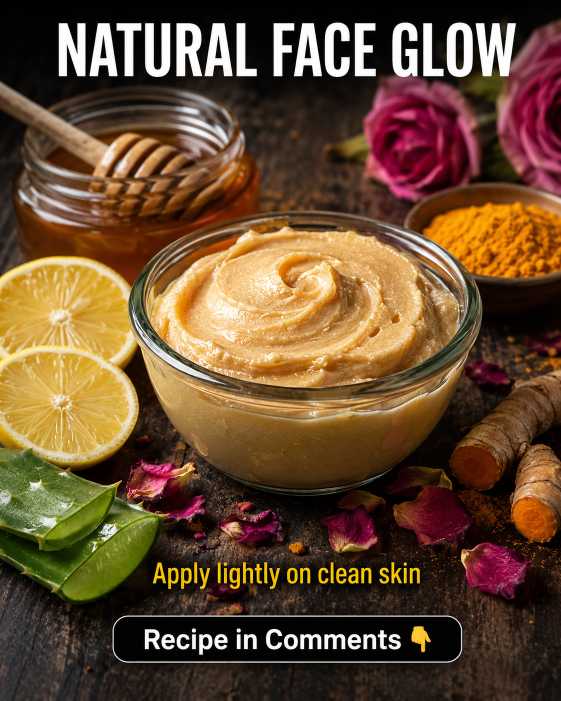
The image shows a golden homemade mask containing honey, turmeric, lemon and aloe. Such a mask may temporarily make skin feel softer and look fresher, but “natural face glow” is not a clinical outcome. Skin appearance reflects genetics, oil, dryness, inflammation, sun exposure, sleep and health. No kitchen mixture can permanently lighten someone’s natural skin tone, erase acne scars or reverse wrinkles overnight.
Honey may act as a humectant, aloe gel can provide a cooling water-based layer and turmeric contains curcuminoids studied for anti-inflammatory activity. Lemon is different: its acidity and citrus compounds can irritate skin and may increase the risk of a sun-related reaction. For that reason, lemon is not recommended in these facial recipes. Use cosmetic-grade ingredients, patch-test, protect skin from ultraviolet light and measure progress over weeks.
How to Prepare and Apply the Mask Safely
Use 1 teaspoon plain cosmetic-grade aloe gel, ½ teaspoon honey, ⅛ teaspoon culinary turmeric and 1 teaspoon colloidal oatmeal or clean water. Mix a fresh portion in a clean bowl. Apply a thin layer to clean skin, avoiding eyelids, lips, nostrils and open lesions. Leave it on for 5–8 minutes, rinse gently with lukewarm water and apply a tolerated moisturiser.
Patch-test each ingredient on the inner arm for 24 hours before facial use. Do not apply it to broken skin, freshly shaved or waxed skin, active sunburn, infected pimples or skin recovering from a peel or procedure. Stop for burning, swelling, hives, worsening redness or itching. Do not add lemon juice, baking soda, toothpaste, undiluted essential oils or rough powders. Never use aloe latex or the yellow sap directly on the face; preparations differ in safety and purity.[1]
Remedy 1: For Normal Skin — Honey, Aloe and Turmeric Softening Mask
Ingredients and scientific benefit
Use 1 teaspoon aloe gel, ½ teaspoon honey, ⅛ teaspoon turmeric, 1 teaspoon colloidal oatmeal and 1 teaspoon clean water. Aloe provides a light water-based layer, honey helps attract moisture and oatmeal can reduce the rough sensation associated with dryness. Turmeric has laboratory and early clinical interest for inflammatory skin processes, but the small amount in a homemade mask is not proven to erase pigmentation or produce a permanent glow.[2]
Procedure
Stir the ingredients into a smooth paste. Apply lightly to the face, avoiding the eye area. Leave for 5–8 minutes, rinse without scrubbing and moisturise. Use sunscreen in the morning.
How Often to Apply
Use once or twice weekly for three to five weeks. Prepare a fresh batch and discard leftovers.
Initial Results
The face may feel softer after one use. A meaningful change in established marks within one to three days is unlikely.
Remedy 2: For Oily or Acne-Prone Skin — Aloe, Oat and Minimal Honey Pack
Ingredients and scientific benefit
Use 1½ teaspoons aloe gel, 1 teaspoon colloidal oatmeal, ⅛ teaspoon turmeric and ¼ teaspoon honey. Reducing honey makes the formula less sticky, while aloe and oatmeal provide slip without heavy oils. This mask does not treat the causes of acne, which may include follicular plugging, oil, hormones and inflammation. Persistent, painful or scarring acne needs appropriate dermatology care.[3]
Procedure
Mix and apply only to intact skin after gentle cleansing. Leave for 5 minutes, rinse fully and use a non-comedogenic moisturiser. Do not scrub the mask away or apply it over a draining pimple.
How Often to Apply
Begin once weekly and increase to twice weekly only if the skin remains calm, for three to five weeks.
Initial Results
Skin may feel less tight after rinsing, but the mask cannot permanently shrink pores, reduce oil production or prevent new breakouts.
Remedy 3: For Dry Skin — Aloe, Honey and Oat Moisture Mask
Ingredients and scientific benefit
Use 1 teaspoon aloe gel, 1 teaspoon honey, 1½ teaspoons colloidal oatmeal and a very small pinch of turmeric. Honey is a humectant, oatmeal supports surface comfort and aloe supplies water-based moisture. Apply only when the barrier is intact; dry or cracked skin can sting even with gentle ingredients.
Procedure
Combine the ingredients and apply over slightly damp skin. Leave for 8 minutes, rinse gently and immediately use a fragrance-free moisturiser. Avoid hot water and washcloth friction.
How Often to Apply
Use once weekly for three to five weeks. Moisturise daily instead of increasing mask frequency.
Initial Results
Tightness may improve after the first use and dehydration lines may appear less obvious. These are surface hydration effects, not permanent wrinkle removal.
Remedy 4: For Sensitive Skin — Diluted Aloe and Oat Comfort Pack
Ingredients and scientific benefit
Use 1 teaspoon aloe gel, 2 teaspoons clean water and 1 teaspoon colloidal oatmeal. Omit turmeric and honey initially to reduce the number of possible triggers. Oatmeal may soothe some irritated skin, but even botanical ingredients can cause contact dermatitis in susceptible people. Fragrance-free products are preferable.[4]
Procedure
Patch-test the mixture first, then apply a thin layer to a small facial area for 5 minutes. Rinse with cool or lukewarm water and apply a moisturiser already known to be tolerated. Avoid lemon, fragrance and essential oils.
How Often to Apply
Begin once weekly for three weeks. Do not increase frequency while the skin stings, peels or looks unusually red.
Initial Results
The face may feel calmer after rinsing. Persistent rash, swelling, flushing or burning requires professional assessment rather than repeated home treatments.
Remedy 5: For Dull or Uneven-Looking Skin — Turmeric, Aloe, Oat and Sun Protection
Ingredients and scientific benefit
Use 1 teaspoon aloe gel, 1 teaspoon colloidal oatmeal, ½ teaspoon honey and ⅛ teaspoon turmeric. The combination may support surface softness and reduce the dry, rough look that makes tone appear uneven. It cannot reliably suppress melanin production or repair scars. Daily broad-spectrum SPF 30 or higher is more important for preventing dark spots and premature aging than a homemade mask.[5]
Procedure
Apply at night for 5–8 minutes, rinse gently and moisturise. The next morning, apply sunscreen to the face, ears and neck; reapply during extended outdoor exposure. Do not add lemon or use turmeric as a substitute for sun protection.
How Often to Apply
Use twice weekly for five to eight weeks if no irritation occurs. Take progress photographs in the same lighting every four weeks.
Initial Results
The surface may look smoother temporarily. Uneven tone usually changes gradually, and melasma or persistent pigmentation may require dermatologist-guided care.
Final Tips
A natural glow is best supported by gentle cleansing, regular moisturising, sunscreen, sufficient sleep, not smoking and a balanced diet. More frequent masking is not automatically better; repeated exposure to turmeric, honey or plant ingredients can irritate the barrier and worsen post-inflammatory dark marks, especially in deeper skin tones.
Keep hands, bowls, towels and cosmetic containers clean. Introduce one new ingredient at a time so a reaction can be identified. If burning occurs, wash the mask off promptly. Do not apply homemade mixtures immediately after retinoids, exfoliating acids, waxing, shaving or professional procedures.
See a dermatologist for deep acne scars, painful cysts, spreading pigmentation, a changing mole, persistent facial swelling or a rash that does not settle. If the concern continues after six to eight weeks of gentle care and sun protection, professional evaluation is more useful than increasing the turmeric or applying the mask daily.
Diet Plan
For five days and beyond, eat regular meals built around vegetables, fruit, beans, lentils, eggs, fish, tofu, yoghurt or fortified alternatives, whole grains, nuts and seeds. Include protein at main meals and vitamin-C-rich foods such as peppers, berries, kiwi or citrus in ordinary portions. A varied diet supports general health, but no food or drink can erase scars or guarantee a brighter complexion.
Continue balanced eating, adequate sleep, hydration and gentle skincare for at least six to eight weeks. Do not start high-dose supplements for dull skin without medical advice. If fatigue, poor wound healing, unusual bruising, severe dryness or sudden skin changes accompany the concern, see a doctor. If the problem persists, consult a dermatologist.
References for the above remedy
- National Center for Complementary and Integrative Health. “Aloe Vera.” https://www.nccih.nih.gov/health/aloe-vera
- National Institutes of Health, PubMed Central. “Curcumin in Dermatology: A Review of Its Effects and Applications.” https://pmc.ncbi.nlm.nih.gov/articles/PMC6684691/
- American Academy of Dermatology. “Acne: Diagnosis and Treatment.” https://www.aad.org/public/diseases/acne/derm-treat/treatment
- National Eczema Association. “Colloidal Oatmeal.” https://nationaleczema.org/eczema/treatment/colloidal-oatmeal/
- American Academy of Dermatology. “Sun Protection.” https://www.aad.org/public/everyday-care/sun-protection
- Cleveland Clinic. “Honey for Skin: Benefits and How to Use It.” https://health.clevelandclinic.org/honey-for-skin
Note: These references support aloe safety, curcumin research, acne care, colloidal-oatmeal use, honey’s humectant role and sun protection. They do not prove that a homemade honey, turmeric and aloe mask permanently brightens skin or creates a guaranteed glow.