
Glass skin refers to a complexion that appears smooth, clear, well-hydrated and naturally reflective. It does not mean poreless skin, permanently lighter skin or instant removal of acne scars and wrinkles. When the skin barrier is healthy and the outer layer contains enough moisture, the face reflects light more evenly and can develop a soft, dewy appearance. Rice-based skincare is popular because rice starch and rice-bran compounds have shown moisturizing and skin-barrier benefits in research. However, most clinical studies used controlled preparations rather than ordinary raw rice water, so homemade remedies should be considered supportive hydration treatments rather than instant skin-transforming cures. (PubMed)
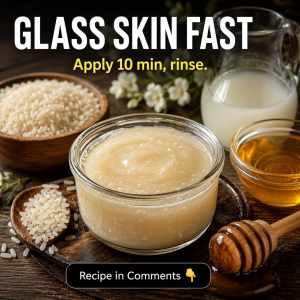
The image includes rice, milk and honey. The remedies below use cooked rice gel instead of rough rice grains because harsh scrubbing may irritate the face. Fresh milk is avoided because homemade milk mixtures spoil quickly and are not standardized skincare treatments. Honey is included only in selected routines because it mainly provides humectant and softening effects. (PubMed)
Remedy 1: For Normal Skin
Rice, Green Tea and Honey Dew Mask
Ingredients
- Cooked rice-starch gel: 1 tablespoon
Rice starch forms a smooth moisturizing base and may support recovery of a weakened skin barrier. - Pure aloe vera gel: 1 teaspoon
Aloe contains water-binding polysaccharides that help improve surface hydration. - Strong green tea, completely cooled: 1 teaspoon
Green tea contains antioxidant polyphenols and has shown moisturizing benefits in topical formulations. - Plain honey: ½ teaspoon
Honey acts as a humectant and emollient, helping the skin feel softer. - Vegetable glycerin: 2 drops
Glycerin attracts water into the outer layer of the skin. - Jojoba oil: 2 drops
Jojoba creates a light emollient layer that reduces roughness.
Scientific Working of Each Ingredient
Rice starch supports skin-barrier recovery and helps reduce moisture loss. Aloe, honey and glycerin increase the amount of water held near the skin surface, which may temporarily soften fine dehydration lines. Green-tea compounds provide antioxidant support and have improved moisture and skin texture in cosmetic research. Jojoba oil helps seal hydration without creating a very heavy finish. (PubMed)
Procedure
Mix one teaspoon of rice flour with three tablespoons of water. Heat gently while stirring until a thin gel forms. Allow it to become completely cool.
Measure one tablespoon of the gel and mix it with aloe, green tea, honey and glycerin.
Apply a thin layer to clean skin. Leave for eight to ten minutes without allowing it to become completely dry.
Rinse gently with lukewarm water. Press two drops of jojoba oil onto slightly damp skin.
How Often to Apply
Use three times during the first five days. Continue three evenings weekly when the skin remains comfortable.
Initial Results
The face may feel softer and look more hydrated within one to three days. A smoother, dewy appearance may develop, but pores and deep marks will not disappear immediately.
Remedy 2: For Combination Skin
Rice, Oat and Aloe Balancing Glow Pack
Ingredients
- Fresh cooked rice gel: 2 teaspoons
Provides lightweight hydration without a thick oily coating. - Colloidal oatmeal: 1 teaspoon
Supports dry areas and strengthens the protective skin barrier. - Pure aloe vera gel: 1 teaspoon
Hydrates both oily and dry areas with a light texture. - Cooled green tea: 2 teaspoons
Supplies antioxidant compounds and additional water. - Vegetable glycerin: 1 drop
Helps prevent tightness after rinsing. - Sunflower seed oil: 2 drops
Softens dry cheeks and helps reduce moisture loss.
Scientific Working of Each Ingredient
Combination skin often has an oily forehead, nose and chin but dry cheeks. Rice gel, aloe and green tea provide light moisture across the face. Oatmeal supports dry or easily irritated areas, while only a small amount of sunflower oil is used where extra softness is required. Clinical research has shown that colloidal oatmeal can improve dryness, moisturization and barrier function. (PubMed)
Sunflower oil contains barrier-supporting fatty acids and has improved hydration while preserving skin-barrier integrity in human research. (PubMed)
Procedure
Mix the rice gel, aloe, green tea, oatmeal and glycerin.
Apply a thin layer over the face. Place slightly more on dry cheeks and less on the oily T-zone.
Leave for seven to eight minutes, then rinse gently.
Apply one drop of sunflower oil to each dry cheek. Skip oil on the nose, forehead and acne-prone areas.
How Often to Apply
Use on alternate evenings for five to seven days. Continue two or three times weekly.
Initial Results
Dry areas may feel smoother after one or two uses. The complexion may appear more balanced and reflective within two or three days because of improved hydration.
Remedy 3: For Oily Skin
Green Tea, Rice and Clay Pore-Comfort Mask
Ingredients
- Fresh rice-starch gel: 2 teaspoons
Creates a light, water-rich base. - Cosmetic-grade kaolin clay: ½ teaspoon
Absorbs some surface oil and temporarily reduces excessive shine. - Strong cooled green tea: 1 tablespoon
Provides antioxidant polyphenols. - Pure aloe vera gel: 1 teaspoon
Hydrates without a heavy oily texture. - Colloidal oatmeal: ½ teaspoon
Helps prevent excessive dryness from the clay. - Boiled and cooled water: 1 teaspoon when needed
Keeps the mask soft and easy to rinse.
Scientific Working of Each Ingredient
Oily skin can still be dehydrated. Harsh cleansing and repeated drying may weaken the skin barrier and make texture appear rough. Rice gel and aloe provide lightweight moisture, while green tea supports hydration and skin microrelief. Kaolin removes some surface oil but does not permanently shrink pores. Oatmeal helps prevent the mask from becoming excessively drying. (PubMed)
Procedure
Mix rice gel, clay, aloe, green tea and oatmeal.
Add cooled water until the mixture has a soft, creamy texture.
Apply a very thin layer to the forehead, nose, chin and other oily areas.
Leave for five minutes. Rinse before the clay becomes hard, cracked or uncomfortable.
Apply a lightweight, non-comedogenic moisturizer afterward.
How Often to Apply
Use twice during the first five days. Continue once or twice weekly.
Initial Results
Surface shine may appear reduced after the first use. Skin may look smoother and less dull within two or three days, but blackheads and enlarged pores will require longer-term care.
Remedy 4: For Dry Skin
Rice-Bran, Aloe and Oat Overnight Hydration Routine
Ingredients
- Fresh cooked rice gel: 1 tablespoon
Provides moisture and a soft, soothing texture. - Pure aloe vera gel: 2 teaspoons
Supports hydration in the outer skin layer. - Colloidal oatmeal: 1 teaspoon
Helps improve dryness, roughness and barrier comfort. - Plain honey: ½ teaspoon
Adds humectant and softening effects. - Vegetable glycerin: ⅛ teaspoon
Helps the skin hold water. - Rice-bran oil: ½ teaspoon
Provides emollient plant lipids and antioxidant compounds. - Sunflower seed oil: ¼ teaspoon
Forms a protective layer that slows moisture loss.
Scientific Working of Each Ingredient
Dry skin often looks dull because rough surface cells reflect light unevenly. Rice gel, aloe, honey and glycerin provide moisture, while oatmeal supports barrier recovery. Rice-bran bioactive compounds have improved hydration when incorporated into tested cosmetic formulations. (PubMed)
Rice-bran and sunflower oils soften rough skin and help reduce water evaporation. Their main role is moisturizing; they should not be described as permanent pore-removing or skin-whitening ingredients. (PubMed)
Procedure
Mix rice gel, aloe, oatmeal, honey and glycerin.
Apply an even layer to clean skin for ten minutes.
Rinse gently and leave the face slightly damp.
Blend rice-bran and sunflower oils in the palm. Press a very thin layer onto dry areas.
How Often to Apply
Apply every evening for the first five days. Continue three or four nights weekly after dryness improves.
Initial Results
Tightness may improve after the first application. Rough texture and fine dehydration lines may look softer within one to three days.
Remedy 5: For Sensitive Skin
Minimal Rice and Oat Barrier Mask
Ingredients
- Cooked rice-starch gel: 1 tablespoon
Provides a smooth base without rough exfoliating particles. - Colloidal oatmeal: 1 teaspoon
Supports sensitive and easily irritated skin. - Boiled and cooled water: 1 teaspoon
Keeps the formula simple and fragrance-free. - Pure aloe vera gel: ½ teaspoon, optional
Adds light hydration after successful patch testing. - Vegetable glycerin: 1 drop
Supports moisture retention. - Sunflower seed oil: 2 drops
Helps reduce water loss after rinsing.
Scientific Working of Each Ingredient
Sensitive skin often appears dull when irritation disrupts its protective barrier. Rice starch and colloidal oatmeal support barrier recovery, while aloe and glycerin provide hydration. Sunflower oil adds a thin protective layer. This simple routine avoids milk, fragrance, essential oils, citrus juice and rough rice particles. (PubMed)
Procedure
Patch-test the ingredients before facial use.
Mix rice gel, oatmeal, water, optional aloe and glycerin.
Apply without rubbing. Leave for only five minutes.
Rinse using cool or lukewarm water.
Press two drops of sunflower oil onto slightly damp skin.
How Often to Apply
Use every other evening during the first five days. Continue twice weekly when well tolerated.
Initial Results
Mild tightness may improve after one or two applications. Stop immediately if burning, itching, swelling or worsening redness occurs.
Final Tips for Achieving a Healthy Glass-Skin Glow
Wash the face gently with a mild, non-abrasive cleanser and lukewarm water. Avoid rough washcloths, facial brushes and aggressive scrubbing because irritation can make redness, dryness and uneven texture more noticeable. (American Academy of Dermatology)
Apply moisturizer while the skin is slightly damp. Moisturizers work partly by trapping water and reducing evaporation, helping the surface appear smoother and brighter. (American Academy of Dermatology)
Use broad-spectrum, water-resistant sunscreen with SPF 30 or higher every morning. Sun protection helps prevent premature aging, uneven pigmentation and additional skin damage. (American Academy of Dermatology)
Do not use lemon juice, baking soda, toothpaste, undiluted vinegar or rough rice-and-sugar scrubs. Glass-looking skin comes from hydration and barrier support, not harsh peeling.
Prepare rice gel, aloe, tea and oatmeal mixtures fresh. Do not store homemade water-based masks because microbial contamination can make cosmetics unsafe. (U.S. Food and Drug Administration)
Keep skincare bowls, spoons, towels and makeup tools clean. Sleep adequately, drink according to thirst and avoid repeatedly touching or picking the face.
Visible hydration and surface glow may begin within two to three days. Fine dehydration lines may appear softer with continued moisturization, but deep wrinkles, acne scars and enlarged pores will not disappear through a homemade mask.
Diet Plan for Naturally Glowing Skin
Breakfast
Eat eggs, plain yogurt or oatmeal.
Add guava, orange, kiwi, strawberries, papaya or another vitamin-C-rich fruit. Vitamin C is required for normal collagen formation. (Office of Dietary Supplements)
Mid-Morning
Choose cucumber, watermelon, a seasonal fruit or a small handful of almonds and walnuts.
Drink plain water according to thirst.
Lunch
Fill approximately half the plate with vegetables or salad.
Add protein from lentils, beans, chicken, fish or eggs.
Include whole-grain roti, brown rice or another minimally processed carbohydrate.
Evening Snack
Choose fruit, plain yogurt, roasted chickpeas or nuts instead of frequently consuming sugary drinks and heavily processed snacks.
Dinner
Eat vegetables with beans, lentils, fish, chicken or eggs.
Include healthy fats from nuts, seeds, avocado or suitable plant oils.
Regular intake of colorful fruits and vegetables can gradually influence skin carotenoid levels and contribute to a healthier-looking complexion, but the effect develops over several weeks and does not replace skincare or sunscreen. (PubMed)
How Long Should You Continue?
Use only the remedy suited to your skin type for four to six weeks. Continue gentle cleansing, suitable moisturizer and daily sun protection as permanent habits.
Hydration and softness may improve within one to three days. More consistent changes in texture and glow generally require several weeks.
See a doctor or dermatologist when dullness is accompanied by severe dryness, persistent itching, painful redness, swelling, peeling or a spreading rash. Medical assessment is also important for sudden pigmentation, persistent acne, yellowing of the skin, unusual paleness or any spot that changes size, shape or color, repeatedly bleeds or does not heal.
References for the above remedy
- De Paepe K, et al. “Effect of Rice Starch as a Bath Additive on the Barrier Function of Healthy but SLS-Damaged Skin.”
https://pubmed.ncbi.nlm.nih.gov/12353708/ - Zamil DH, et al. “Dermatological Uses of Rice Products: Trend or True?”
https://pubmed.ncbi.nlm.nih.gov/35587098/ - Manosroi A, et al. “Antioxidant Activities and Skin Hydration Effects of Rice Bran Bioactive Compounds.”
https://pubmed.ncbi.nlm.nih.gov/21449379/ - Dal’Belo SE, et al. “Moisturizing Effect of Cosmetic Formulations Containing Aloe Vera Extract.”
https://pubmed.ncbi.nlm.nih.gov/17026654/ - Gianeti MD, et al. “The Use of Green Tea Extract in Cosmetic Formulations.”
https://pubmed.ncbi.nlm.nih.gov/23742288/ - Ilnytska O, et al. “Colloidal Oatmeal Improves Skin Barrier Through Multi-Therapy Activity.”
https://pubmed.ncbi.nlm.nih.gov/27272074/ - Danby SG, et al. “Effect of Olive and Sunflower Seed Oil on the Adult Skin Barrier.”
https://pubmed.ncbi.nlm.nih.gov/22995032/ - Burlando B, Cornara L. “Honey in Dermatology and Skin Care: A Review.”
https://pubmed.ncbi.nlm.nih.gov/24305429/ - American Academy of Dermatology. “How to Pick the Right Moisturizer for Your Skin.”
https://www.aad.org/public/everyday-care/skin-care-basics/dry/pick-moisturizer - U.S. Food and Drug Administration. “Microbiological Safety and Cosmetics.”
https://www.fda.gov/cosmetics/potential-contaminants-cosmetics/microbiological-safety-and-cosmetics