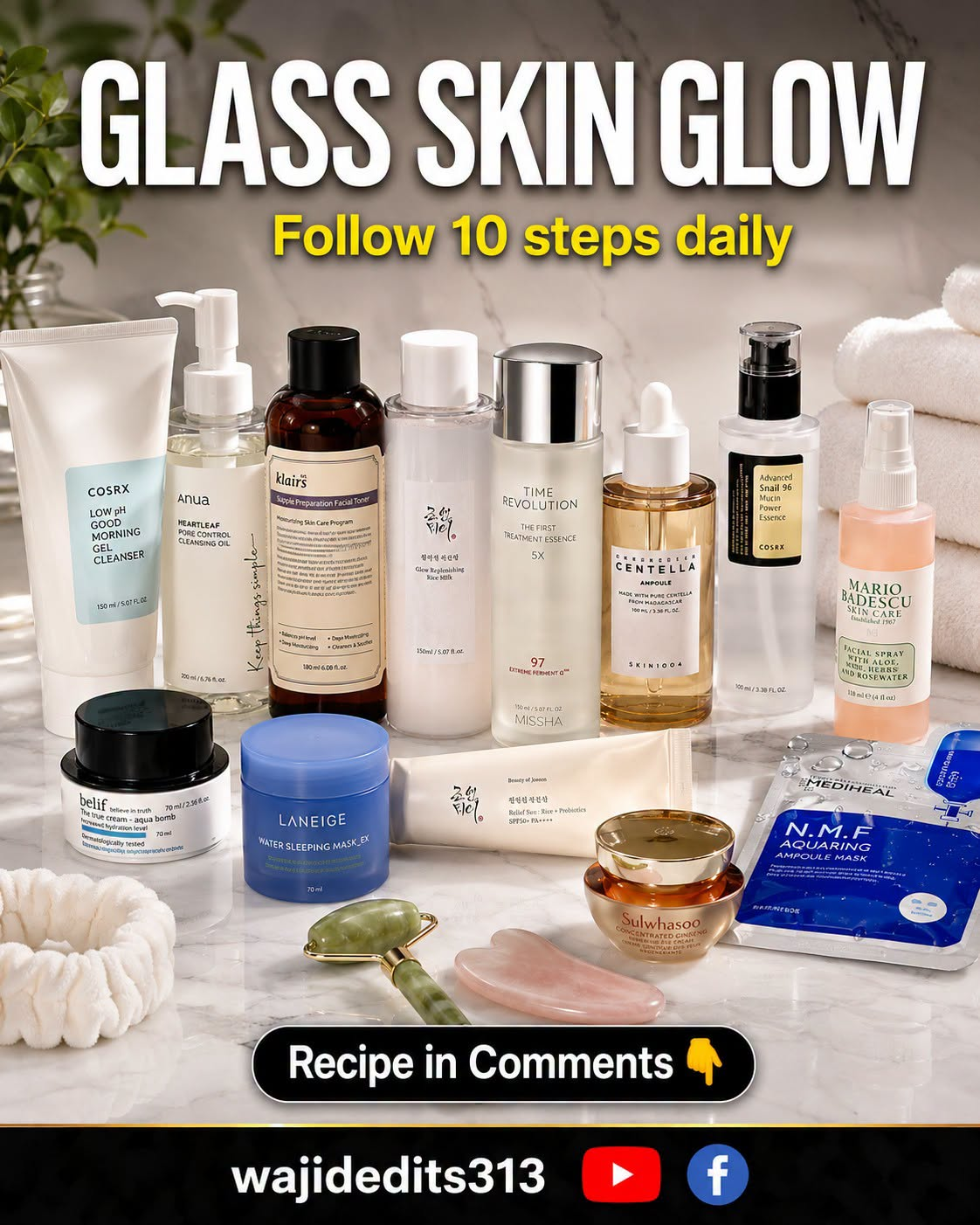
Glass skin refers to skin that looks exceptionally smooth, hydrated, clear, and naturally radiant. This beauty trend is based on achieving a healthy skin barrier, balanced moisture levels, even texture, and a fresh glow rather than creating an unrealistic flawless appearance.
Healthy glowing skin depends on several factors including genetics, hydration, nutrition, sleep, sun protection, skincare habits, and consistency. A proper routine helps improve skin texture by supporting the skin barrier, reducing dryness, controlling excess oil, and protecting collagen.
The image shows a multi-step skincare routine inspired by Korean beauty practices. While many products contain beneficial ingredients, the same principles can be achieved naturally with gentle ingredients such as aloe vera, green tea, honey, oats, rice water, cucumber, and plant oils.
Step 1: Gentle Cleansing (For All Skin Types)
Natural Honey & Aloe Cleanser
Ingredients
1 teaspoon raw honey – natural humectant that attracts moisture.
1 tablespoon aloe vera gel – soothing hydration.
1 tablespoon rosewater – refreshing and calming.
2 drops jojoba oil – supports skin softness.
Scientific Working of Ingredients
Honey: Moisture Retention
Honey contains natural sugars that attract water molecules, helping maintain skin hydration.
Aloe Vera: Skin Barrier Support
Aloe vera contains polysaccharides that help soothe skin and support moisture balance.
Procedure
- Mix ingredients together.
- Apply gently to damp skin.
- Massage for 30 seconds.
- Rinse with lukewarm water.
Frequency
Use morning and night.
Initial Results
Skin may feel softer and cleaner within a few days.
Step 2: Natural Toning
Rosewater Green Tea Toner
Ingredients
3 tablespoons rosewater.
2 tablespoons cooled green tea.
1 teaspoon aloe vera juice.
Scientific Working
Rosewater: Hydration Support
Rosewater provides lightweight hydration and soothing compounds.
Green Tea: Antioxidant Protection
Green tea contains catechins that help protect skin from oxidative stress.
Procedure
Mix ingredients and apply using cotton or clean hands.
Frequency
Daily after cleansing.
Initial Results
Skin may appear fresher and calmer.
Step 3: Hydrating Essence Step
Rice Water Glow Essence
Ingredients
3 tablespoons fermented rice water.
1 teaspoon glycerin.
1 teaspoon aloe vera gel.
Scientific Working
Rice Water: Skin Conditioning
Rice-derived ingredients contain starches and compounds that can improve smoothness and skin feel.
Glycerin: Deep Hydration
Glycerin is a humectant that attracts water into the outer skin layer.
Procedure
Apply a thin layer after toner.
Frequency
Daily.
Initial Results
Skin may appear more hydrated within several days.
Step 4: Gentle Exfoliation
Oat & Yogurt Brightening Mask
Ingredients
1 tablespoon oat powder.
1 tablespoon yogurt.
1 teaspoon honey.
1 teaspoon cucumber juice.
Scientific Working
Oats: Barrier Protection
Oats contain beta-glucans that support sensitive skin and reduce dryness.
Yogurt: Mild Renewal
Yogurt contains lactic acid that helps remove dead surface cells gently.
Procedure
- Mix ingredients.
- Apply for 10 minutes.
- Wash gently.
Frequency
1–2 times weekly.
Initial Results
Skin texture may feel smoother after the first few applications.
Step 5: Hydrating Face Mask
Aloe Honey Glass Skin Mask
Ingredients
2 tablespoons aloe vera gel.
1 teaspoon honey.
1 teaspoon rosewater.
1 teaspoon cucumber juice.
Scientific Working
Aloe Vera: Cooling Hydration
Aloe helps maintain moisture and provides soothing benefits.
Honey: Natural Moisture Support
Honey helps prevent dryness by holding water on the skin surface.
Procedure
Apply for 15 minutes and rinse.
Frequency
3 times weekly.
Initial Results
Skin may look plumper and refreshed.
Step 6: Skin Barrier Repair Oil Treatment
Jojoba & Rosehip Night Serum
Ingredients
1 teaspoon jojoba oil.
3 drops rosehip oil.
2 drops vitamin E oil.
Scientific Working
Jojoba Oil: Skin-Like Lipid Support
Jojoba oil resembles natural skin oils and helps maintain softness.
Rosehip Oil: Fatty Acid Support
Rosehip oil contains essential fatty acids that support skin conditioning.
Procedure
Apply 2–3 drops at night after moisturizer.
Frequency
3–4 nights weekly.
Initial Results
Dryness and rough texture may improve within one week.
Step 7: Natural Under-Eye Care
Cucumber Aloe Cooling Treatment
Ingredients
1 tablespoon cucumber juice.
1 teaspoon aloe vera gel.
1 teaspoon rosewater.
Scientific Working
Cucumber: Cooling Hydration
Cucumber provides water content and refreshing compounds.
Aloe Vera: Soothing Effect
Aloe helps calm delicate skin.
Procedure
Apply under eyes for 10 minutes.
Frequency
Daily or alternate days.
Initial Results
Under-eye area may look fresher.
Step 8: Daily Sun Protection Support
Antioxidant Protection Routine
Natural Support Ingredients
Green tea – antioxidant compounds.
Vitamin C-rich foods – support collagen production.
Aloe vera – hydration support.
Scientific Working
Sun exposure is one of the biggest causes of premature skin aging. Antioxidants help protect against oxidative stress, but natural ingredients cannot replace sunscreen.
Procedure
Use a broad-spectrum sunscreen every morning.
Frequency
Daily.
Initial Results
Skin tone may appear more even over time.
Step 9: Facial Massage for Glow
Aloe Oil Massage Technique
Ingredients
1 teaspoon aloe vera gel.
2 drops jojoba oil.
Scientific Working
Gentle massage may temporarily increase circulation and improve product absorption. It can also reduce facial tension.
Procedure
Massage upward motions for 3–5 minutes.
Frequency
Daily or several times weekly.
Initial Results
Skin may look temporarily brighter after massage.
Step 10: Internal Glow Support
Hydration & Nutrition Routine
Daily Foods
- Citrus fruits
- Leafy vegetables
- Nuts and seeds
- Yogurt
- Fish or plant protein
- Whole grains
Scientific Working
Skin requires protein, vitamins, minerals, and healthy fats to maintain normal repair processes.
Final Tips for Glass Skin Glow
- Sleep 7–9 hours daily.
- Drink enough water.
- Avoid harsh scrubbing.
- Clean makeup tools regularly.
- Do not change skincare products too frequently.
- Always patch test natural ingredients.
- Avoid sleeping with makeup.
- Maintain consistency for visible improvement.
A healthy glow may appear within 1–2 weeks, while smoother texture and improved skin barrier usually require 6–12 weeks.
If you experience persistent acne, severe redness, itching, sudden pigmentation, or skin changes, consult a dermatologist.
Diet Plan for Natural Glass Skin
Continue for at least 8 weeks.
Morning
- Warm water
- Eggs/oats/yogurt
- Vitamin C fruit
Lunch
Include:
- Protein source
- Vegetables
- Whole grains
Evening
Choose:
- Nuts
- Seeds
- Green tea
- Fruit
Dinner
Include:
- Fish/chicken/lentils
- Vegetables
- Healthy fats
Important nutrients:
Vitamin C: supports collagen formation.
Protein: builds skin structure.
Omega-3: supports skin barrier.
Zinc: supports skin repair.
If skin problems continue despite proper skincare and diet, seek advice from a dermatologist.
References for the above remedy
- American Academy of Dermatology. Skin Care Basics.
URL: https://www.aad.org/public/everyday-care/skin-care-basics - Surjushe A, Vasani R, Saple DG. Aloe vera: A short review. Indian Journal of Dermatology.
URL: https://pmc.ncbi.nlm.nih.gov/articles/PMC2763764/ - Lin TK, Zhong L, Santiago JL. Anti-inflammatory and skin barrier repair effects of topical plant oils.
URL: https://pmc.ncbi.nlm.nih.gov/articles/PMC5796020/ - Rawlings AV, Harding CR. Moisturization and skin barrier function.
URL: https://pubmed.ncbi.nlm.nih.gov/12553851/ - Mahmood T, Akhtar N. Green tea effects on skin health.
URL: https://pmc.ncbi.nlm.nih.gov/articles/PMC3738281/ - Burlando B, Cornara L. Honey in dermatology and skin care.
URL: https://pubmed.ncbi.nlm.nih.gov/24305429/ - Draelos ZD. Cosmetic Dermatology: Products and Procedures.
URL: https://www.wiley.com/en-us/Cosmetic+Dermatology%3A+Products+and+Procedures%2C+3rd+Edition-p-9781119655482 - Pullar JM, Carr AC, Vissers MCM. The roles of vitamin C in skin health.
URL: https://pmc.ncbi.nlm.nih.gov/articles/PMC5579659/