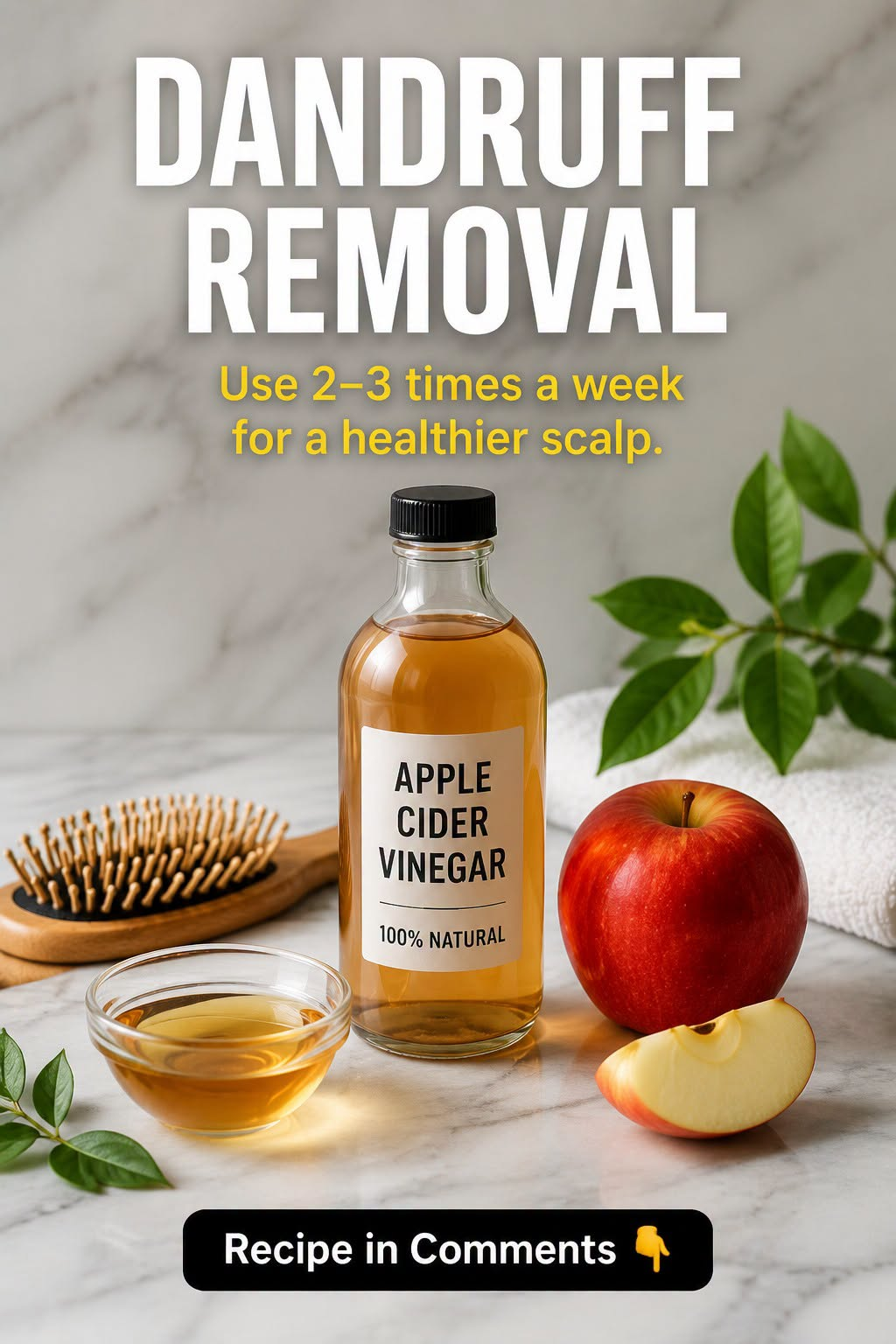
Dandruff is a common scalp condition that causes white flakes, itching, dryness, and sometimes scalp irritation. It occurs when the natural shedding process of scalp skin becomes faster than normal, often influenced by excess oil, dryness, sensitivity, stress, weather changes, or the overgrowth of a yeast called Malassezia, which naturally lives on the scalp.
The apple cider vinegar remedy shown in the image is a traditional scalp-care approach. Apple cider vinegar contains acetic acid, which may help maintain scalp pH balance and create an environment that is less favorable for certain microbes. However, it should always be diluted because concentrated vinegar can irritate or burn the scalp. Effective dandruff care focuses on controlling scalp oil, reducing irritation, supporting the skin barrier, and maintaining a healthy scalp environment.
Different scalp types require different solutions. Oily scalps need balancing ingredients, dry scalps need moisture support, and sensitive scalps need gentle calming ingredients.
Remedy 1: For Normal Scalp
Apple Cider Vinegar & Green Tea Scalp Rinse
Ingredients
2 tablespoons apple cider vinegar – contains acetic acid that may help scalp pH balance.
½ cup green tea (cooled) – provides antioxidant compounds.
2 tablespoons aloe vera gel – soothes and hydrates the scalp.
1 teaspoon honey – helps retain moisture.
5 drops rosemary water – supports scalp freshness.
1 teaspoon coconut water – provides hydration.
Scientific Working of Each Ingredient
Apple Cider Vinegar: Supporting Scalp Balance
Apple cider vinegar contains acetic acid, which has antimicrobial properties in laboratory studies. Diluted use may help remove buildup and maintain a balanced scalp environment.
Green Tea: Antioxidant Protection
Green tea contains catechins that help protect skin cells from oxidative stress and may support a healthier scalp.
Aloe Vera: Reducing Scalp Irritation
Aloe vera contains polysaccharides and soothing compounds that help calm dryness and discomfort.
Procedure
- Mix diluted apple cider vinegar with cooled green tea.
- Add aloe vera gel, honey, rosemary water, and coconut water.
- Apply to scalp using a spray bottle or cotton pad.
- Massage gently for 3 minutes.
- Leave for 10 minutes.
- Wash with a mild shampoo.
How Often to Apply
Use 2 times weekly for 3–4 weeks.
Initial Results
Within 3–5 days, scalp buildup and itching may reduce. Flake improvement usually requires several weeks.
Remedy 2: For Oily Scalp
Tea Tree & Apple Cider Vinegar Anti-Dandruff Treatment
Ingredients
2 tablespoons diluted apple cider vinegar – scalp cleansing support.
½ cup water – safe dilution.
3 drops tea tree oil – antimicrobial support.
2 tablespoons aloe vera gel – hydration without heaviness.
1 teaspoon lemon peel water – refreshing antioxidant support.
1 teaspoon green tea – scalp protection.
Scientific Working of Each Ingredient
Tea Tree Oil: Microbial Control
Tea tree oil contains terpinen-4-ol, a compound studied for antimicrobial activity. Research has shown diluted tea tree oil preparations may improve dandruff symptoms.
Aloe Vera: Maintaining Moisture Balance
Oily scalps still require hydration. Aloe provides moisture without adding heavy oils.
Apple Cider Vinegar: Removing Buildup
Diluted vinegar may help remove excess residue from the scalp surface.
Procedure
- Mix water and apple cider vinegar first.
- Add aloe vera and green tea.
- Add only a few drops of tea tree oil.
- Apply to scalp.
- Leave for 5–10 minutes.
- Rinse thoroughly.
How Often to Apply
Apply 2 times weekly.
Initial Results
Oiliness may feel reduced within a few applications, with gradual reduction in flakes.
Remedy 3: For Dry Scalp
Coconut Oil & Aloe Moisture Repair Mask
Ingredients
1 tablespoon coconut oil – reduces moisture loss.
2 tablespoons aloe vera gel – hydrates scalp.
1 teaspoon honey – attracts moisture.
1 teaspoon yogurt – contains lactic acid.
5 drops vitamin E oil – supports scalp conditioning.
1 teaspoon olive oil – improves softness.
Scientific Working of Each Ingredient
Coconut Oil: Protecting Hair and Scalp Barrier
Coconut oil contains fatty acids that can reduce protein loss from hair and improve softness.
Honey: Natural Humectant
Honey attracts water and helps maintain scalp moisture.
Yogurt: Gentle Conditioning
Yogurt contains lactic acid, which may help soften dry scalp buildup.
Procedure
- Mix all ingredients.
- Apply directly to scalp.
- Massage gently for 5 minutes.
- Leave for 30 minutes.
- Wash with shampoo.
How Often to Apply
Use once weekly.
Initial Results
Dryness and tight scalp feeling may improve within a few uses.
Remedy 4: For Itchy Sensitive Scalp
Oat & Aloe Calming Scalp Treatment
Ingredients
2 tablespoons aloe vera gel – soothing hydration.
1 tablespoon oat water – barrier support.
1 teaspoon honey – moisture retention.
½ cup cooled chamomile tea – calming effect.
1 teaspoon glycerin – hydration support.
2 drops lavender oil (optional) – relaxing aroma.
Scientific Working of Each Ingredient
Oat: Skin Barrier Support
Oats contain beta-glucans that help support the protective barrier and calm irritation.
Aloe Vera: Cooling and Soothing
Aloe provides gentle hydration and may reduce discomfort caused by dryness.
Glycerin: Moisture Retention
Glycerin attracts water and helps prevent excessive dryness.
Procedure
- Mix aloe vera gel with oat water.
- Add honey, chamomile tea, and glycerin.
- Apply to scalp.
- Leave for 15 minutes.
- Rinse gently.
How Often to Apply
Use 2 times weekly.
Initial Results
Itching and dryness may feel reduced within several applications.
Remedy 5: For Combination Scalp (Oily Roots + Dry Ends)
Fenugreek & Green Tea Scalp Mask
Ingredients
2 tablespoons soaked fenugreek paste – supports scalp conditioning.
3 tablespoons green tea – antioxidant support.
1 tablespoon aloe vera gel – hydration.
1 teaspoon yogurt – gentle cleansing.
1 teaspoon coconut oil – moisture protection.
1 teaspoon honey – softness.
Scientific Working of Each Ingredient
Fenugreek: Scalp Conditioning
Fenugreek seeds contain mucilage, which creates a soothing gel-like texture that may help improve scalp comfort.
Green Tea: Antioxidant Support
Green tea compounds help protect scalp skin from oxidative stress.
Yogurt: Scalp Softening
Lactic acid in yogurt may help remove surface buildup gently.
Procedure
- Soak fenugreek seeds overnight.
- Grind into a paste.
- Mix with remaining ingredients.
- Apply to scalp for 20 minutes.
- Wash thoroughly.
How Often to Apply
Apply once weekly.
Initial Results
Scalp may feel cleaner and softer after the first few applications.
Final Tips for Dandruff Control
- Wash hair regularly according to your scalp type.
- Avoid scratching because it can damage scalp skin.
- Do not apply undiluted apple cider vinegar directly.
- Avoid excessive use of styling products.
- Keep combs and brushes clean.
- Change pillow covers regularly.
- Manage stress because stress can worsen scalp problems.
- Maintain a balanced diet rich in protein, zinc, iron, and omega-3 fatty acids.
Visible improvement may begin within 1–2 weeks, but consistent care for 4–6 weeks is usually needed for better dandruff control.
If dandruff is severe, causes redness, painful patches, hair loss, thick scaling, or does not improve after several weeks, consult a dermatologist.
Diet Plan for a Healthy Scalp
Continue this diet for 6–8 weeks.
Morning
- Eggs or yogurt
- Fruits rich in vitamin C
- Nuts such as almonds and walnuts
Lunch
Include:
- Fish, chicken, lentils, or beans
- Green vegetables
- Whole grains
Evening
Choose:
- Pumpkin seeds
- Flax seeds
- Green tea
- Fresh fruit
Dinner
Include:
- Protein source
- Vegetables
- Healthy fats
Important nutrients:
- Zinc → supports scalp health
- Protein → supports hair structure
- Omega-3 → supports scalp moisture
- Iron → supports healthy hair growth
If dandruff continues despite proper care for 1–2 months, seek medical advice.
References for the above remedy
- Cleveland Clinic. Dandruff: Causes, Symptoms and Treatment.
URL: https://my.clevelandclinic.org/health/diseases/6660-dandruff - Mayo Clinic. Dandruff: Diagnosis and Treatment.
URL: https://www.mayoclinic.org/diseases-conditions/dandruff/diagnosis-treatment/drc-20353854 - Satchell AC, Saurajen A, Bell C, Barnetson RS. Treatment of dandruff with 5% tea tree oil shampoo.
URL: https://pubmed.ncbi.nlm.nih.gov/12451368/ - Surjushe A, Vasani R, Saple DG. Aloe vera: A short review.
URL: https://pmc.ncbi.nlm.nih.gov/articles/PMC2763764/ - Lin TK, Zhong L, Santiago JL. Anti-inflammatory and skin barrier repair effects of topical plant oils.
URL: https://pmc.ncbi.nlm.nih.gov/articles/PMC5796020/ - Burlando B, Cornara L. Honey in dermatology and skin care.
URL: https://pubmed.ncbi.nlm.nih.gov/24305429/ - Mahmood T, Akhtar N. Green tea effects on skin health.
URL: https://pmc.ncbi.nlm.nih.gov/articles/PMC3738281/ - Draelos ZD. Cosmetic Dermatology: Products and Procedures.
URL: https://www.wiley.com/en-us/Cosmetic+Dermatology%3A+Products+and+Procedures%2C+3rd+Edition-p-9781119655482/