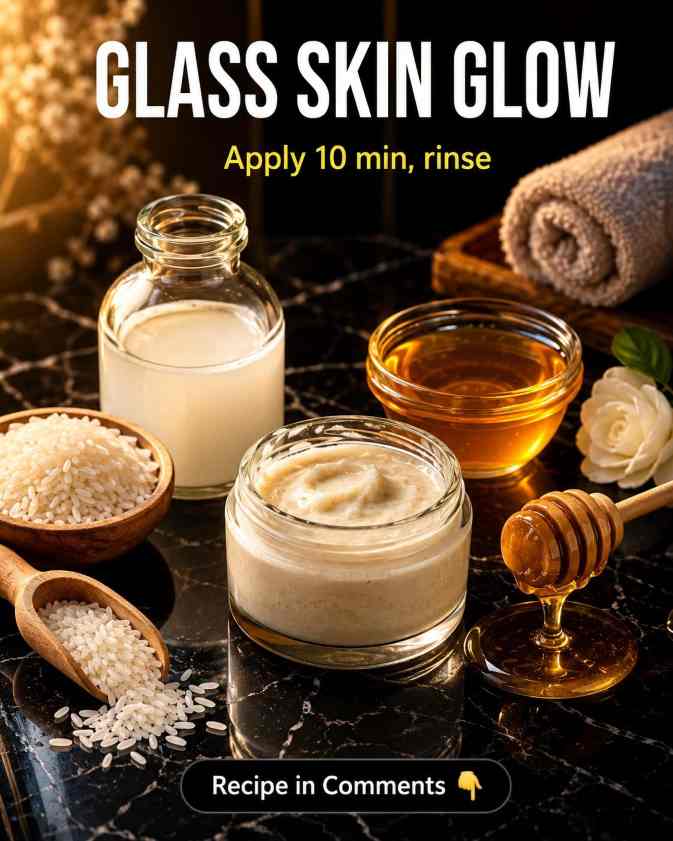
“Glass skin” describes a complexion that looks exceptionally smooth, hydrated, even-toned, and naturally reflective. The effect comes mainly from good hydration, an intact skin barrier, minimal surface roughness, and controlled pigmentation rather than from physically thinning or polishing the skin. A homemade mask can make dehydrated skin appear softer and more luminous within a few applications, but pores, pigmentation, scars, and uneven texture cannot permanently disappear in 10 minutes. Dermatologists emphasize moisturizer and sun protection because retaining water in the skin can immediately improve its smoothness and brightness, while ultraviolet exposure contributes to pigmentation and premature aging. (American Academy of Dermatology)
The remedies below use natural ingredients with research supporting hydration, barrier repair, antioxidant activity, oil control, or improvement in uneven tone. Where clinical research used standardized extracts or professionally formulated creams, a kitchen preparation should not be assumed to produce identical results. These are evidence-informed home-care options, not substitutes for medical treatment.

Remedy 1: For Normal Skin
Rice, Green Tea and Aloe Glass-Glow Mask
Ingredients
- 1 teaspoon rice starch or very finely ground plain rice
- 1 tablespoon freshly brewed, cooled green tea
- 1 tablespoon pure aloe vera gel
- 1/2 teaspoon raw honey
- 1/4 teaspoon vegetable glycerin
Scientific Working of Each Ingredient
Rice: Human research has found that rice-starch exposure can support recovery of a damaged skin barrier, while formulated rice-bran extracts have demonstrated hydration-enhancing effects. Rice-derived ingredients also contain compounds investigated for moisturizing, photoprotective, and tone-evening properties. (PubMed)
Green tea: Green tea polyphenols, particularly EGCG, possess antioxidant properties, and topical green-tea preparations have been investigated for regulating facial sebum. (PubMed)
Aloe vera: Human testing found that aloe-containing formulations increased stratum-corneum hydration, supporting its role as a natural humectant. (PubMed)
Honey: Honey contains sugars and other compounds that give it humectant, emollient, and soothing properties in cosmetic applications. (PubMed)
Vegetable glycerin: Glycerin attracts and retains water in the outer skin. Controlled clinical research shows that glycerol-containing topical preparations significantly increase skin hydration. (PubMed)
Procedure: Mix the rice starch with cooled green tea until smooth. Add aloe, honey, and glycerin. Spread a thin layer over clean skin, avoiding the eyelids. Leave for 10 minutes, rinse gently with lukewarm water, and pat dry.
How Often to Apply: Once daily for 3 days, then 3–4 times weekly.
Initial Results: Within 1–3 days, skin may feel softer and look more hydrated and reflective. Changes in pigmentation or long-term texture require weeks.
Remedy 2: For Combination Skin
Soy, Licorice and Oat Tone-Balancing Mask
Ingredients
- 1 tablespoon unsweetened plain soy milk
- 1 tablespoon cooled licorice-root infusion
- 1 teaspoon finely powdered colloidal oatmeal
- 1 teaspoon aloe vera gel
- 1/4 teaspoon sunflower-seed oil
Scientific Working of Each Ingredient
Soy: A randomized controlled study of a moisturizer containing stabilized soy extracts reported improvements in mottled pigmentation, dullness, texture, and overall skin tone during 12 weeks of use. Plain soy milk is less standardized, so its effect should be expected to be milder. (PubMed)
Licorice: Licorice contains pigmentation-modulating compounds. A clinical study using a standardized formulation containing licorice, emblica, and belides demonstrated significant improvement in melasma over 60 days. A homemade infusion is not equivalent to that clinical preparation, but it provides a scientific basis for licorice-derived ingredients in tone-evening skin care. (PubMed)
Oatmeal: Colloidal oatmeal has demonstrated barrier-repair and anti-inflammatory benefits and can improve dryness and roughness. (PubMed)
Aloe: Aloe supports hydration through a humectant effect. (PubMed)
Sunflower oil: Human research found that sunflower-seed oil preserved skin-barrier integrity and improved hydration. (PubMed)
Procedure: Prepare weak licorice tea and cool it completely. Mix one tablespoon with soy milk, oatmeal, aloe, and sunflower oil. Apply evenly for 10 minutes and rinse without scrubbing.
How Often to Apply: Every other day for the first 5 days, then 3 times weekly.
Initial Results: Dry patches may become softer within 1–3 applications, while oily areas can remain comfortable without a heavy coating. Visible tone-evening takes considerably longer.
Remedy 3: For Oily Skin
Green Tea, Rice and Oat Pore-Smoothing Mask
Ingredients
- 2 tablespoons strongly brewed cooled green tea
- 1 teaspoon rice starch
- 1 teaspoon colloidal oatmeal
- 1 teaspoon aloe vera gel
- 1/2 teaspoon raw honey
Scientific Working of Each Ingredient
Green tea: A facial formulation containing 3% green-tea extract has been studied for reducing sebum, making green tea particularly relevant to oily skin. (PubMed)
Rice starch: Rice starch supports the outer barrier and can help create a temporarily smoother surface by absorbing excess moisture and oil. Human research showed improved barrier recovery after rice-starch exposure. (PubMed)
Colloidal oatmeal: Oat compounds provide antioxidant, anti-inflammatory, moisturizing, and soothing activity. (PubMed)
Aloe: Aloe adds water-based hydration without requiring a heavy oily base. Human testing supports its short-term moisturizing effects. (PubMed)
Honey: Honey acts as a humectant and soothing cosmetic ingredient. (PubMed)
Procedure: Combine the dry ingredients first, then gradually add tea, aloe, and honey. Apply a very thin layer rather than a thick paste. Leave for 8–10 minutes and rinse gently.
How Often to Apply: Once daily for the first 3 days, then every other day.
Initial Results: Oiliness may temporarily reduce and skin may look smoother within 1–3 days. This treatment does not permanently shrink pores; pore visibility often improves simply when oiliness and surface dehydration are better controlled.
Remedy 4: For Dry Skin
Coconut, Aloe and Honey Deep-Hydration Glow Treatment
Ingredients
- 1 teaspoon virgin coconut oil
- 1 teaspoon sunflower-seed oil
- 1 tablespoon aloe vera gel
- 1/2 teaspoon raw honey
- 1/4 teaspoon vegetable glycerin
Scientific Working of Each Ingredient
Virgin coconut oil: A randomized double-blind clinical trial found coconut oil effective for improving skin hydration in people with mild-to-moderate xerosis. (PubMed)
Sunflower oil: Linoleic-acid-rich sunflower oil helps support the skin barrier and has improved hydration in human testing. (PubMed)
Aloe vera: Aloe provides humectant hydration and can increase water content in the outer skin. (PubMed)
Honey: Honey contributes humectant and emollient effects. (PubMed)
Glycerin: Glycerol increases stratum-corneum hydration and supports barrier recovery. (PubMed)
Procedure: Mix aloe, honey, and glycerin first. Add the oils slowly while stirring. Apply a very thin layer for 10–15 minutes. Rinse lightly, leaving the skin comfortable rather than squeaky-clean.
How Often to Apply: Once nightly for 3–5 days, then 3 nights weekly.
Initial Results: Dry skin may appear plumper and more luminous after the first few applications because hydrated skin reflects light more evenly. Persistent roughness generally requires continued care.
Remedy 5: For Sensitive Skin
Oat, Rice and Aloe Barrier-Glow Mask
Ingredients
- 1 tablespoon colloidal oatmeal
- 1 teaspoon rice starch
- 1 tablespoon aloe vera gel
- 1/4 teaspoon vegetable glycerin
- 1/4 teaspoon sunflower-seed oil
Scientific Working of Each Ingredient
Colloidal oatmeal: Clinical studies show that colloidal oatmeal can improve hydration, repair barrier defects, and reduce dryness and roughness. (PubMed)
Rice starch: Rice starch has demonstrated beneficial effects on recovery of irritated barrier function. (PubMed)
Aloe: Provides gentle water-based hydration, although even aloe can occasionally irritate highly reactive individuals. (PubMed)
Glycerin: A well-established humectant that improves skin hydration. (PubMed)
Sunflower oil: Supports skin-barrier integrity without the barrier disruption observed with some other plant oils in human research. (PubMed)
Procedure: Mix all ingredients into a soft cream. Patch-test first. If comfortable, apply for only 5–10 minutes and rinse with lukewarm water.
How Often to Apply: Every other day for at least 5 days.
Initial Results: Tightness, dryness, and surface roughness may improve within 1–3 days. Stop immediately if the skin burns, swells, or develops persistent redness.
Final Tips for a Lasting Glass Skin Glow
Use a gentle cleanser and avoid repeatedly scrubbing the face. Apply moisturizer while the skin is slightly damp, keep towels and facial tools clean, sleep adequately, and patch-test every homemade preparation.
Most importantly, use broad-spectrum SPF 30 or higher every day. Dermatologists consider sunscreen and moisturizer foundational because UV exposure promotes pigmentation, dullness, wrinkles, and other signs of premature aging. (American Academy of Dermatology)
Avoid lemon juice, baking soda, undiluted essential oils, toothpaste, and harsh physical scrubs. Irritation can damage the barrier and make the complexion look rougher rather than glass-like.
Hydration and softness may become noticeable within 2–3 days, but even tone, pigmentation improvement, and smoother long-term texture usually require several weeks. Clinical studies involving soy, rice-derived ingredients, and other botanicals commonly measured changes over weeks rather than days. (PubMed)
Diet Plan for Naturally Glowing Skin
Healthy skin also depends on overall nutrition. Observational research involving more than 4,000 women found that higher vitamin C intake was associated with a lower likelihood of wrinkled appearance and dryness, while higher linoleic-acid intake was associated with less dryness. (PubMed)
Breakfast: Oatmeal with berries, guava, kiwi, or orange, plus almonds or sunflower seeds.
Mid-Morning: One fresh fruit and a handful of walnuts or pumpkin seeds.
Lunch: Lentils, chickpeas, fish, chicken, tofu, or beans with leafy vegetables, tomatoes, peppers, and whole grains.
Evening Snack: Plain yogurt, fruit, roasted chickpeas, or nuts.
Dinner: Fish, eggs, tofu, chicken, or lentils with mixed vegetables and brown rice or whole-grain bread.
Daily: Include colorful fruits and vegetables, adequate protein, nuts, seeds, and healthy fats. Fruit and vegetable intake supplies carotenoids that accumulate in human skin and can influence its healthy-looking coloration. (PubMed)
How Long Should You Continue?
Continue a well-tolerated routine for 6–8 weeks before judging pigmentation, texture, or long-term radiance. Sun protection should continue every day.
If persistent pigmentation, painful acne, intense itching, scaling, burning, unexplained redness, or worsening skin changes continue despite gentle care, see a doctor or dermatologist. Likewise, stop any remedy immediately if it triggers swelling, blistering, or a significant allergic reaction.
References for the above remedy
- De Paepe K, et al. Effect of rice starch as a bath additive on the barrier function of healthy but SLS-damaged skin.
https://pubmed.ncbi.nlm.nih.gov/12353708/ - Manosroi A, et al. Antioxidant activities and skin hydration effects of rice bran bioactive compounds.
https://pubmed.ncbi.nlm.nih.gov/21449379/ - Dal’Belo SE, Gaspar LR, Maia Campos PMBG. Moisturizing effect of cosmetic formulations containing Aloe vera extract.
https://pubmed.ncbi.nlm.nih.gov/17026654/ - Capone K, et al. Effects of Colloidal Oatmeal Topical Atopic Dermatitis Cream on Skin Microbiome and Skin Barrier Properties.
https://pubmed.ncbi.nlm.nih.gov/32484623/ - Danby SG, et al. Effect of olive and sunflower seed oil on the adult skin barrier.
https://pubmed.ncbi.nlm.nih.gov/22995032/ - Agero ALC, Verallo-Rowell VM. A randomized double-blind controlled trial comparing extra virgin coconut oil with mineral oil as a moisturizer.
https://pubmed.ncbi.nlm.nih.gov/15724344/ - Wallo W, Nebus J, Leyden JJ. Efficacy of a soy moisturizer in photoaging: a double-blind, vehicle-controlled, 12-week study.
https://pubmed.ncbi.nlm.nih.gov/17941363/ - Costa A, et al. Association of emblica, licorice and belides as an alternative to hydroquinone in the clinical treatment of melasma.
https://pubmed.ncbi.nlm.nih.gov/21152784/ - Breternitz M, et al. Placebo-controlled, double-blind randomized study of a glycerol-based emollient on skin hydration and barrier function.
https://pubmed.ncbi.nlm.nih.gov/18025807/ - Cosgrove MC, et al. Dietary nutrient intakes and skin-aging appearance among middle-aged American women.
https://pubmed.ncbi.nlm.nih.gov/17921406/