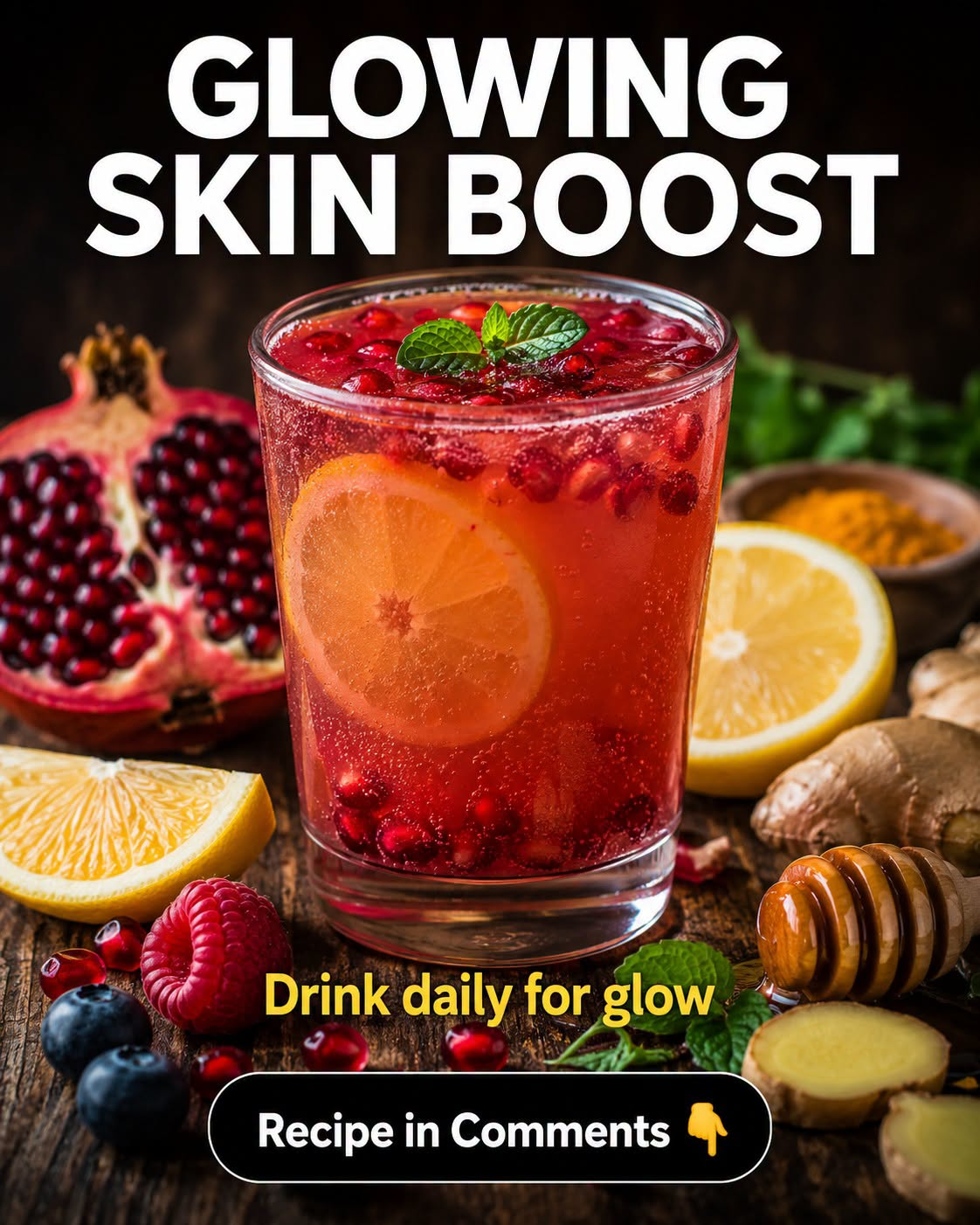
Healthy-looking skin depends on far more than one drink. Sun exposure, sleep, smoking, stress, skincare, hormonal changes, illness and overall diet all influence dullness, pigmentation, dryness and premature lines. The pomegranate-based drink shown in the image contains several nutritious ingredients, but it cannot brighten the complexion or reverse ageing overnight. Research suggests that regular intake of certain fruits, vegetables, carotenoids, healthy fats and antioxidant-rich foods may gradually improve skin colour, hydration or resistance to environmental damage. These benefits generally require four to twelve weeks of consistent intake rather than one to three days.
Skin type does not completely determine nutritional needs. The following recipes are arranged by skin type mainly to control acidity, sweetness, richness and digestive tolerance. Each drink uses ingredients supported by human studies, although the complete homemade recipes have not been tested as finished clinical formulas. Choose one drink instead of consuming all five daily.
Remedy 1: For Normal Skin
Pomegranate, Guava and Berry Glow Refresher
Ingredients
- ½ cup pomegranate arils: provides ellagitannins, anthocyanins and other antioxidant polyphenols.
- ½ small guava: supplies vitamin C required for normal collagen production.
- ¼ cup blueberries or strawberries: contributes colourful antioxidant compounds.
- ½ cup chilled water: creates a hydrating, low-calorie base.
- 1 teaspoon ground chia seeds: adds fibre and plant-based omega-3 fat.
- 4 fresh mint leaves: adds flavour without extra sugar.
Procedure
- Wash the fruit and mint thoroughly.
- Chop the guava into small pieces.
- Place the pomegranate, guava, berries and water in a blender.
- Add the ground chia seeds and mint.
- Blend until smooth.
- Strain only when the seeds make the drink uncomfortable.
- Consume it immediately without adding honey or sugar.
Scientific Working of the Ingredients
In a 12-week randomized study, daily pomegranate juice or extract increased resistance to ultraviolet-B-induced redness, although it did not replace sunscreen or significantly improve every measured skin feature. Pomegranate polyphenols may help limit oxidative stress caused by environmental exposure. (PubMed)
Guava and berries contribute vitamin C. The body needs vitamin C for collagen biosynthesis, protein metabolism and antioxidant protection. Chia supplies fibre and alpha-linolenic acid, while mint makes the drink more enjoyable without adding free sugar. (Office of Dietary Supplements)
How Often to Drink
Drink one small glass daily for at least five days. Continue five times weekly for eight to twelve weeks.
Initial Results
During the first one to three days, the drink may improve fruit and fluid intake. Genuine changes in skin tone or photoprotection should not be expected so quickly.
Remedy 2: For Combination Skin
Avocado, Kiwi and Cucumber Balance Smoothie
Ingredients
- ¼ ripe avocado: supplies monounsaturated fat and vitamin E.
- 1 peeled kiwi: provides vitamin C and carotenoids.
- ½ small cucumber: adds water without making the drink excessively sweet.
- ½ cup plain unsweetened yogurt or soy yogurt: contributes protein.
- 1 teaspoon ground flaxseed: supplies fibre and alpha-linolenic acid.
- ½ cup cold water: creates a lighter consistency.
Procedure
- Wash and chop the avocado, kiwi and cucumber.
- Place them in a clean blender.
- Add the yogurt, flaxseed and water.
- Blend until smooth and creamy.
- Add more water when the mixture is too thick.
- Drink it with breakfast.
- Do not consume it in addition to a large meal.
Scientific Working of the Ingredients
A small randomized pilot study found that eating one avocado daily for eight weeks improved certain measurements of forehead elasticity and firmness in healthy women. It did not significantly change hydration, pigmentation or sebum compared with the control group. The quarter-avocado used here is smaller than the study amount, so the recipe should be considered supportive rather than clinically equivalent. (PubMed)
Kiwi contributes vitamin C, yogurt provides amino acids needed for normal tissue maintenance, and flaxseed supplies essential fatty acids. A controlled study of flaxseed oil reported improvements in skin roughness, scaling, sensitivity and water loss after twelve weeks. Ground flaxseed does not deliver the same dose as flaxseed oil, but it is a practical whole-food addition. (PubMed)
How Often to Drink
Take one serving on alternate mornings for five days. Continue four times weekly for eight weeks.
Initial Results
The drink may improve fullness and hydration within the first few days. Elasticity-related changes require several weeks.
Remedy 3: For Oily Skin
Tomato, Carrot and Red Pepper Carotenoid Drink
Ingredients
- 2 tablespoons unsalted tomato paste: provides concentrated lycopene.
- ½ small cooked carrot: supplies beta-carotene.
- ¼ red bell pepper: contributes vitamin C and carotenoids.
- ½ small cucumber: adds water and volume.
- 1 teaspoon extra-virgin olive oil: supports absorption of fat-soluble carotenoids.
- ½ cup cold water: creates a drinkable consistency.
- 3 basil leaves: adds flavour without sugar.
Procedure
- Steam or boil the carrot until soft and let it cool.
- Add the carrot, tomato paste, pepper and cucumber to a blender.
- Pour in the water and olive oil.
- Add the basil leaves.
- Blend until completely smooth.
- Serve without salt, honey or sweetened juice.
- Drink it with lunch rather than on an empty stomach.
Scientific Working of the Ingredients
In a randomized trial, women consumed tomato paste providing 16 milligrams of lycopene with olive oil daily for twelve weeks. The intervention increased protection against certain ultraviolet-related skin changes and reduced markers associated with collagen breakdown. This recipe contains a smaller quantity and cannot replace sunscreen. (PubMed)
Human dietary studies also show that carotenoid-rich fruit and vegetable intake can gradually produce measurable changes in skin colour. The effect represents carotenoid deposition rather than bleaching or treatment of acne. (PubMed)
Eating dietary fat does not automatically make oily skin oilier. The small amount of olive oil is included to assist carotenoid absorption.
How Often to Drink
Drink one small glass four times weekly. Continue for eight to twelve weeks.
Initial Results
No meaningful change in oil production should be expected within one to three days. The immediate benefit is replacing a sugary drink with a vegetable-rich option.
Remedy 4: For Dry Skin
Cocoa, Flaxseed and Berry Hydration Smoothie
Ingredients
- 1 teaspoon unsweetened natural cocoa powder: provides cocoa flavanols.
- ½ cup plain yogurt or unsweetened soy yogurt: supplies protein.
- ½ cup strawberries or blueberries: contributes vitamin C and anthocyanins.
- 1 teaspoon freshly ground flaxseed: adds essential fatty acids.
- ¼ small avocado: supplies monounsaturated fat.
- ½ cup cold water or unsweetened milk: adjusts the consistency.
Procedure
- Add the yogurt, berries and avocado to a blender.
- Sprinkle in the cocoa and ground flaxseed.
- Pour in the water or milk.
- Blend until smooth.
- Add extra water if necessary.
- Drink it as part of breakfast.
- Avoid sweetened cocoa mixtures, syrups and added sugar.
Scientific Working of the Ingredients
Controlled studies using high-flavanol cocoa for twelve weeks reported improvements in skin blood flow, hydration, density, roughness or elasticity. However, ordinary cocoa powder is not standardized and may contain considerably fewer flavanols than the study preparations. (PubMed)
Avocado and flaxseed add unsaturated fats, while yogurt contributes protein. These nutrients support a balanced diet, but dry skin still requires a suitable topical moisturiser. Research suggests that applying moisturiser has a more direct effect on skin hydration than simply increasing water intake. (PubMed)
How Often to Drink
Drink one serving three or four mornings weekly for at least eight weeks.
Initial Results
You may feel fuller and better hydrated during the first few days. Visible improvements in dryness or elasticity are unlikely before several weeks.
Remedy 5: For Sensitive Skin
Pear, Oat and Almond Gentle Smoothie
Ingredients
- ½ ripe pear: provides water and natural sweetness with mild acidity.
- 1 tablespoon rolled oats: supplies soluble fibre.
- 6 unsalted almonds, soaked overnight: contributes vitamin E and healthy fat.
- ½ cup plain yogurt or unsweetened soy yogurt: provides protein.
- ½ small cucumber: adds water.
- ½ cup cold water: keeps the drink light.
Procedure
- Soak the almonds overnight and discard the soaking water.
- Peel the almonds if their skins are difficult to digest.
- Soak the oats for ten minutes.
- Add all ingredients to a blender.
- Blend until completely smooth.
- Begin with half a serving to test digestive tolerance.
- Avoid this recipe if you have a nut allergy.
Scientific Working of the Ingredients
A randomized trial involving postmenopausal women found that daily almond consumption reduced wrinkle severity and facial pigment intensity after sixteen to twenty-four weeks. The findings cannot be generalized to every age, skin tone or quantity of almonds, but they support almonds as part of a skin-friendly diet. (PubMed)
Oats provide soluble fibre, pear and cucumber create a mild base, and yogurt adds protein. The recipe avoids lemon, ginger, turmeric and concentrated spices, which may be uncomfortable for people with reflux or digestive sensitivity.
How Often to Drink
Use three times during the first five days. Continue three or four times weekly for at least eight weeks if well tolerated.
Initial Results
The smoothie may improve satiety and fluid intake within one to three days. It will not quickly treat redness, eczema, rosacea or allergic skin reactions.
Final Tips for Naturally Glowing Skin
Apply broad-spectrum, water-resistant SPF 30 or higher every morning. Antioxidant drinks can complement sun protection, but they cannot replace it. Sunlight contributes to pigmentation, roughness, wrinkles and loss of elasticity. (American Academy of Dermatology)
Eat whole fruit more frequently than drinking juice because whole fruit retains more fibre and is generally more filling. Avoid adding honey merely because it is natural; it still contributes free sugar. A diet consistently high in sugar and refined carbohydrates may encourage glycation, a process that can alter collagen and elastin over time. (PubMed)
Sleep adequately, avoid smoking, keep makeup tools clean and use a moisturiser suitable for your skin type. Visible softness and improved hydration may begin within two or three days, but dietary changes associated with skin colour, elasticity or photoprotection generally require six to twelve weeks.
Diet Plan for Clear and Glowing Skin
Breakfast: Choose eggs, plain yogurt, lentils, chickpeas or tofu with guava, kiwi, berries or another vitamin-C-rich fruit.
Lunch: Eat fish, chicken, beans or lentils with colourful vegetables and a moderate portion of whole grains.
Snack: Select whole fruit, plain yogurt, roasted chickpeas, walnuts or almonds instead of pastries and sweetened drinks.
Dinner: Include vegetables, protein and unsaturated fats from fish, avocado, seeds or nuts.
Hydration: Drink according to thirst, climate and activity. Additional water will not independently cure dull skin, especially when you are already adequately hydrated.
Follow one selected drink and the diet plan for eight to twelve weeks. People with diabetes, kidney disease, food allergies, digestive disorders or prescription medicines should discuss major dietary changes with a healthcare professional.
See a doctor or dermatologist if dullness or skin changes persist, particularly when accompanied by severe fatigue, pallor, unexplained weight loss, jaundice, persistent itching, painful acne, sudden pigmentation or a spreading rash.
References for the above remedy
- Henning SM, et al. Pomegranate Juice and Extract Consumption Increases Resistance to UVB-Induced Erythema.
https://pubmed.ncbi.nlm.nih.gov/31601842/ - National Institutes of Health, Office of Dietary Supplements. Vitamin C: Health Professional Fact Sheet.
https://ods.od.nih.gov/factsheets/VitaminC-HealthProfessional/ - Henning SM, et al. Avocado Consumption Increased Skin Elasticity and Firmness in Women: A Pilot Study.
https://pubmed.ncbi.nlm.nih.gov/35037373/ - Neukam K, et al. Flaxseed Oil Diminishes Skin Sensitivity and Improves Skin Barrier Function.
https://pubmed.ncbi.nlm.nih.gov/21088453/ - Rizwan M, et al. Tomato Paste Rich in Lycopene Protects Against Cutaneous Photodamage in Humans.
https://pubmed.ncbi.nlm.nih.gov/20854436/ - Tan KW, et al. Daily Consumption of a Fruit and Vegetable Smoothie Alters Facial Skin Color.
https://pubmed.ncbi.nlm.nih.gov/26186449/ - Yoon HS, et al. Cocoa Flavanol Supplementation Influences Skin Conditions in Photo-Aged Women.
https://pubmed.ncbi.nlm.nih.gov/26581682/ - Heinrich U, et al. Long-Term Ingestion of High-Flavanol Cocoa Improves Skin Hydration and Microcirculation.
https://pubmed.ncbi.nlm.nih.gov/16702322/ - Rybak I, et al. Effects of Almond Consumption on Facial Wrinkles and Pigmentation.
https://pubmed.ncbi.nlm.nih.gov/33673587/ - Whitehead RD, et al. Fruit and Vegetable Consumption Produces Beneficial Changes in Skin Appearance.
https://pubmed.ncbi.nlm.nih.gov/22412966/