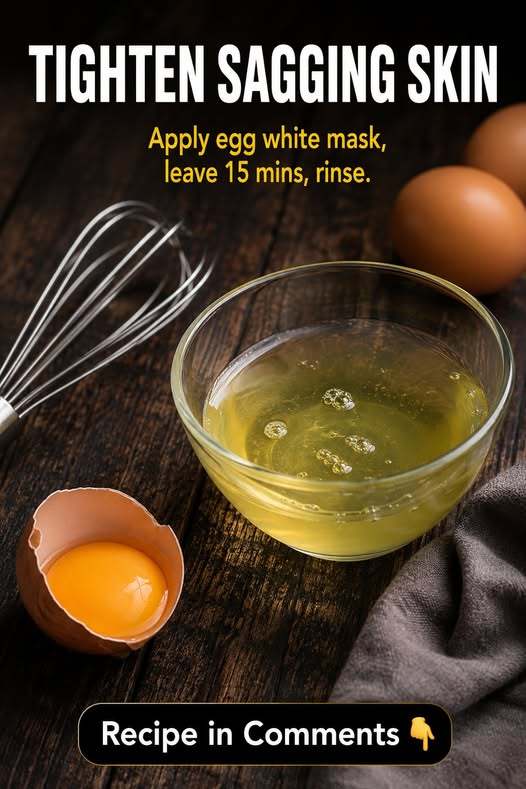
Sagging skin develops gradually as collagen, elastin, facial fat and bone support change with age. Ultraviolet exposure, smoking, repeated irritation, major weight loss and inadequate skincare can make looseness, fine lines and crepey texture more noticeable. A homemade mask cannot lift significantly loose skin or rebuild deep collagen in a few days. What natural skincare can realistically do is improve hydration, reduce roughness and temporarily plump dehydration lines so the face appears smoother and firmer. Daily sun protection remains the most important step for preventing further loss of elasticity and premature ageing. (American Academy of Dermatology)
Does an Egg White Mask Tighten Sagging Skin?
Egg white contracts into a thin film as it dries, producing a temporary pulling sensation. This may make the surface feel tighter for a few minutes, but reliable clinical evidence does not show that raw egg white increases collagen, restores elastin or permanently lifts sagging skin. Raw eggs may also carry Salmonella, which can contaminate the hands, bowl, towels and areas around the mouth. People with an egg allergy should not put egg white on their skin. Safer, better-supported ingredients are used in the remedies below. (CDC)
The finished homemade mixtures have not been clinically tested as complete formulas. Evidence relates to selected ingredients and their effects on hydration, barrier function, elasticity or photoaged skin. Prepare each water-based remedy immediately before application and discard leftovers.
Remedy 1: For Normal Skin
Argan, Green Tea and Aloe Firm-Looking Mask
Ingredients
- 1 tablespoon pure aloe vera gel: supplies lightweight hydration through a humectant effect.
- 2 teaspoons cooled green tea: provides antioxidant catechins.
- 1 teaspoon colloidal oatmeal: supports the moisture barrier and smooths roughness.
- ¼ teaspoon cosmetic argan oil: provides emollient fatty acids and has human evidence related to elasticity.
- 2 drops vegetable glycerin: helps attract and retain water in the outer skin layer.
- 1 teaspoon cooled boiled water: creates a light, spreadable consistency.
Procedure
- Brew plain green tea and let it cool completely.
- Combine the aloe gel, green tea and boiled water.
- Add the oatmeal and allow it to soften for two minutes.
- Mix in the glycerin and argan oil.
- Apply a thin layer to clean skin, avoiding the eyes and lips.
- Leave it on for eight to ten minutes.
- Rinse with lukewarm water and pat the skin dry.
Scientific Working of the Ingredients
Aloe vera can increase surface hydration, while glycerin helps retain moisture in the stratum corneum. Hydrated skin appears temporarily fuller, making fine dehydration lines less visible. Colloidal oatmeal improves moisturisation and barrier function. Green-tea formulations have demonstrated improvements in skin moisture, roughness and some elasticity measurements after continued application. A human study involving postmenopausal women also reported improved elasticity following regular topical argan-oil application over 60 days. (PubMed)
How Often to Apply
Apply once daily for the first three days. Continue three evenings weekly for six to eight weeks.
Initial Results
Skin may feel softer and look temporarily plumper within one to three days. Changes in elasticity, when they occur, need several weeks rather than a single application.
Remedy 2: For Combination Skin
Green Tea, Jojoba and Clay Zone Mask
Ingredients
- 1 teaspoon cosmetic-grade kaolin clay: absorbs surface oil from shiny areas.
- 2 teaspoons cooled green tea: supplies antioxidant compounds.
- 1 teaspoon aloe vera gel: hydrates without a heavy greasy layer.
- ½ teaspoon colloidal oatmeal: prevents excessive dryness.
- ¼ teaspoon jojoba oil: softens dry cheek and mouth areas.
- 1 teaspoon cucumber water: creates a cooling, water-rich base.
Procedure
- Combine the kaolin clay and oatmeal.
- Gradually add the green tea, cucumber water and aloe.
- Apply the plain mixture only to the forehead, nose and chin.
- Add the jojoba oil to the mixture remaining in the bowl.
- Apply this softer mixture to dry cheek areas.
- Leave everything on for five to seven minutes.
- Rinse before the clay becomes hard, cracked or uncomfortable.
Scientific Working of the Ingredients
Kaolin removes some surface oil, producing a temporarily smoother, less shiny finish. Jojoba behaves as an emollient and limits tightness on dry zones. Green tea provides antioxidant support, while aloe and oatmeal improve hydration and barrier comfort. A preliminary clinical evaluation of a clay-and-jojoba mask reported improvement in mildly blemished skin, although it did not prove that the combination lifts loose skin. The firmer-looking result mainly comes from balanced hydration and smoother surface texture. (PubMed)
How Often to Apply
Use twice during the first five days. Continue once or twice weekly for six weeks.
Initial Results
The T-zone may appear less oily after the first application. Dry areas may look smoother within two or three days, but structural sagging will remain unchanged.
Remedy 3: For Oily Skin
Cooling Green Tea and Oat Hydration Gel
Ingredients
- 1 tablespoon chilled green tea: provides catechin antioxidants.
- 1 tablespoon aloe vera gel: supplies oil-free hydration.
- 1 tablespoon strained cucumber water: cools and dilutes the formula.
- ½ teaspoon colloidal oatmeal: soothes the barrier.
- 1 drop vegetable glycerin: prevents a stripped feeling.
- 1 teaspoon cooled boiled water: keeps the mask lightweight.
Procedure
- Mix the cooled tea, cucumber water and boiled water.
- Whisk in the aloe gel.
- Add the oatmeal and one drop of glycerin.
- Apply a very thin layer to clean skin.
- Leave it on for five to eight minutes.
- Rinse gently without scrubbing.
- Follow with a lightweight moisturiser if the face feels tight.
Scientific Working of the Ingredients
Oily skin can still be dehydrated. When the surface lacks water, fine lines and uneven texture may appear more obvious. Aloe and diluted glycerin increase water content without requiring a rich oil. Oatmeal supports the barrier, while green-tea cosmetic formulations have improved hydration, roughness and skin microrelief during clinical evaluation. These effects can make the face appear smoother but do not physically reposition loose tissue. (PubMed)
How Often to Apply
Use nightly for the first three days. Continue on alternate evenings for four weeks.
Initial Results
The face may feel fresher after the first use. Surface smoothness and dehydration lines may improve within two to three days.
Remedy 4: For Dry Skin
Coconut, Argan and Oat Recovery Balm
Ingredients
- 1 teaspoon virgin coconut oil: reduces dryness and works as an emollient.
- ½ teaspoon cosmetic argan oil: supplies lipid-rich conditioning.
- 1 tablespoon aloe vera gel: adds water-based hydration.
- 1 teaspoon colloidal oatmeal: relieves roughness and scaling.
- 2 drops vegetable glycerin: increases moisture retention.
- ½ teaspoon sunflower-seed oil: supports barrier integrity.
Procedure
- Combine the aloe, glycerin and colloidal oatmeal.
- Warm the coconut oil between clean fingertips.
- Mix the coconut, sunflower and argan oils together.
- Stir the oils into the aloe mixture immediately before use.
- Apply a thin layer to slightly damp skin.
- Leave it on for ten minutes.
- Rinse lightly and press any remaining oiliness into dry areas.
Scientific Working of the Ingredients
Virgin coconut oil has performed well as a moisturiser in randomized trials involving dry skin. Sunflower-seed oil has preserved barrier integrity and improved hydration, while colloidal oatmeal reduces dryness and roughness. Argan oil has direct human evidence for improving measured skin elasticity after regular use. This remedy may therefore help dry, crepey skin look more supple, although it cannot correct jowls or advanced laxity. (PubMed)
How Often to Apply
Apply nightly for three to five days, followed by three applications weekly for eight weeks.
Initial Results
Tightness and flaking may improve after the first use. Dryness lines may appear softer within two or three days because the skin is holding more moisture.
Remedy 5: For Sensitive Skin
Minimal Oat and Sunflower Barrier Compress
Ingredients
- 2 tablespoons cooled boiled water: forms a simple fragrance-free base.
- 1 tablespoon colloidal oatmeal: calms dryness and supports the barrier.
- 1 teaspoon aloe vera gel: provides hydration when tolerated.
- 2 drops vegetable glycerin: helps reduce water loss.
- 3 drops sunflower-seed oil: adds a light protective lipid layer.
- 1 teaspoon cucumber water: supplies gentle cooling.
Procedure
- Mix the oatmeal with cooled boiled water.
- Let it stand for five minutes.
- Add the cucumber water, aloe and glycerin.
- Patch-test the mixture beside the jaw for 24–48 hours.
- Apply a thin layer for only three to five minutes.
- Rinse and gently press the sunflower oil over damp skin.
- Omit aloe if it causes stinging or redness.
Scientific Working of the Ingredients
Clinical research supports colloidal-oat formulations for improving dryness, hydration, itching and barrier function. Sunflower oil supplies linoleic acid and has performed favourably in human barrier studies. Glycerin retains water, while aloe can provide additional hydration. This minimal approach reduces the risk of irritation, which is important because inflamed skin can appear rougher and older. (PubMed)
How Often to Apply
Apply every other evening for the first five days. Continue twice weekly when no irritation develops.
Initial Results
Sensitive skin may feel calmer and less tight within one to three applications. Stop immediately if burning, swelling, persistent redness or itching occurs.
Final Tips for Firmer, Younger-Looking Skin
Apply broad-spectrum SPF 30 or higher every morning. A randomized trial found that regular sunscreen use slowed visible skin ageing, and dermatologists identify sun protection as the foundation of an anti-ageing routine. (PubMed)
Use lukewarm water, cleanse gently and apply moisturiser while the skin is slightly damp. Avoid lemon juice, baking soda, undiluted essential oils, aggressive scrubs and masks that sting or burn. Irritation can worsen dryness and make the face look older. (American Academy of Dermatology)
Perform a patch test before every new remedy. Keep bowls, cloths and applicators clean, and discard homemade water-based preparations after use. Visible softness and temporary plumping commonly begin within two to three days. Genuine changes in elasticity take several weeks or months, while moderate or severe sagging may require dermatologist-performed procedures.
Diet Plan to Support Collagen and Skin Elasticity
Breakfast
Choose eggs, plain yogurt, beans, lentils or tofu with vitamin-C-rich fruit such as guava, kiwi, strawberries or oranges. Vitamin C is required for normal collagen biosynthesis. (Office of Dietary Supplements)
Lunch
Eat fish, chicken, chickpeas, beans or lentils with colourful vegetables and whole grains. Adequate protein provides amino acids required to maintain body tissues.
Afternoon Snack
Select berries, guava, unsalted nuts, pumpkin seeds or plain yogurt instead of sugary beverages and pastries.
Dinner
Include vegetables, protein and a source of unsaturated fat such as avocado, seeds, nuts or fish. A small pilot trial found improved facial firmness and elasticity after regular avocado consumption, but avocado should be part of an overall balanced diet rather than treated as a cure. (PubMed)
Duration and Medical Advice
Follow the diet plan for at least eight to twelve weeks and use one appropriate topical remedy consistently for six to eight weeks. See a dermatologist when sagging is sudden, one-sided, associated with facial weakness or swelling, or accompanied by a new lump or significant skin change. Professional advice is also appropriate when loose skin continues to affect confidence despite three months of consistent sun protection and gentle skincare.
References for the above remedy
- American Academy of Dermatology. Eleven Ways to Reduce Premature Skin Aging.
https://www.aad.org/public/everyday-care/skin-care-secrets/anti-aging/reduce-premature-aging-skin - Centers for Disease Control and Prevention. Raw Eggs Are Risky.
https://www.cdc.gov/food-safety/foods/no-raw-dough.html - Hughes MCB, et al. Sunscreen and Prevention of Skin Aging: A Randomized Trial.
https://pubmed.ncbi.nlm.nih.gov/23732711/ - Dal’Belo SE, et al. Moisturizing Effect of Cosmetic Formulations Containing Aloe Vera Extract.
https://pubmed.ncbi.nlm.nih.gov/17026654/ - Gianeti MD, et al. The Use of Green Tea Extract in Cosmetic Formulations.
https://pubmed.ncbi.nlm.nih.gov/23742288/ - Boucetta KQ, et al. The Effect of Dietary and Cosmetic Argan Oil on Skin Elasticity.
https://pubmed.ncbi.nlm.nih.gov/25673976/ - Danby SG, et al. Effect of Olive and Sunflower Seed Oil on the Adult Skin Barrier.
https://pubmed.ncbi.nlm.nih.gov/22995032/ - Agero ALC, Verallo-Rowell VM. Virgin Coconut Oil as a Moisturizer for Xerosis.
https://pubmed.ncbi.nlm.nih.gov/15724344/ - Ilnytska O, et al. Colloidal Oatmeal Improves Skin Barrier and Moisturisation.
https://pubmed.ncbi.nlm.nih.gov/27272074/ - National Institutes of Health, Office of Dietary Supplements. Vitamin C: Health Professional Fact Sheet.
https://ods.od.nih.gov/factsheets/VitaminC-HealthProfessional/