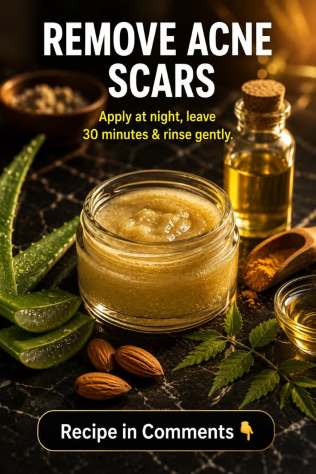
Acne can leave behind uneven colour and texture that may remain visible long after a breakout has healed. These changes can affect confidence, especially when concealer does not fully cover them. However, flat brown, red, pink or bluish marks are usually post-inflammatory pigmentation rather than permanent scars. True acne scars are indented, pitted or raised because the skin produced too little or too much collagen while healing. Flat marks can gradually fade, but deep ice-pick, rolling, boxcar and raised scars generally require professional treatment. (American Academy of Dermatology)
The following natural remedies are intended to calm inflammation, improve hydration, support the skin barrier and reduce the risk of new breakouts that could create more marks. The complete homemade mixtures have not been clinically tested as acne-scar cures. Research supports specific properties of their individual ingredients, particularly aloe vera, green tea, Centella asiatica, licorice, colloidal oatmeal, glycerin and sunflower oil. Do not leave these preservative-free preparations on overnight. Prepare a fresh portion for each application and discard the remainder.
Remedy 1: Centella and Green Tea Recovery Gel for Normal Skin
Ingredients and Their Scientific Benefits
- Pure clear aloe vera gel – 2 teaspoons: Provides lightweight hydration and has been investigated for supporting wound healing and calming inflammation.
- Strong green tea, cooled – 1 teaspoon: Green-tea catechins have antioxidant and anti-inflammatory activity. Clinical studies of standardized topical green-tea preparations have shown reductions in inflammatory acne lesions.
- Ready-to-use water-based Centella asiatica gel – ½ teaspoon: Centella contains triterpenes such as asiaticoside and madecassoside, which have been studied for wound repair and scar development.
- Colloidal oatmeal – 1 teaspoon: Supports the outer skin barrier and helps reduce roughness, dryness and irritation.
- Vegetable glycerin – 2 drops: Acts as a humectant, helping the outer layer of the skin retain water.
Scientific Working of the Remedy
Centella is included to support the skin’s repair environment, although clinical studies have generally used standardized creams rather than homemade plant preparations. Green tea may help control inflammatory breakouts, thereby reducing the chance of additional marks. Aloe, oatmeal and glycerin improve hydration and barrier comfort, which can temporarily make superficial texture appear smoother. (PubMed Central (PMC))
Procedure
Mix the aloe gel, Centella gel and glycerin in a clean bowl. Add the green tea, followed by the colloidal oatmeal. Apply a thin layer to freshly cleansed skin. Leave it on for 8–10 minutes and rinse gently with lukewarm water.
How Often to Apply
Apply once each evening for five days. Thereafter, use it three times weekly when the skin remains comfortable.
Initial Results
Within one to three days, normal skin may feel softer, calmer and better hydrated. Established acne marks will not disappear during this period.
Remedy 2: Licorice and Oat Tone Mask for Combination Skin
Ingredients and Their Scientific Benefits
- Ready-to-use water-soluble licorice extract – ¼ teaspoon: Licorice contains compounds that can influence excess pigment production and provide anti-inflammatory activity.
- Pure aloe vera gel – 2 teaspoons: Hydrates dry areas without forming a heavy oil layer on the T-zone.
- Colloidal oatmeal – 1½ teaspoons: Helps soothe the cheeks while gently absorbing surface moisture.
- Cooled green tea – 1 teaspoon: Supplies antioxidant catechins that may calm inflamed blemishes.
- Vegetable glycerin – 1 drop: Prevents the mask from leaving dry areas feeling tight.
Scientific Working of the Remedy
Clinical research has examined licorice-containing preparations for hyperpigmentation such as melasma, but a homemade mask is not equivalent to a standardized clinical formula. Licorice may nevertheless provide supportive pigment-regulating and soothing activity. Green tea focuses on active inflammation, while oatmeal, aloe and glycerin help balance oily and dry facial zones. (PubMed)
Procedure
Combine the aloe and licorice extract. Stir in the oatmeal and green tea until a smooth paste forms. Apply a slightly thicker layer to the cheeks and a thinner layer over the forehead, nose and chin. Leave it for 7–8 minutes and rinse without scrubbing.
How Often to Apply
Use on alternate evenings for five days. Continue two or three times weekly if no burning, rash or increased dryness develops.
Initial Results
Dry areas may feel more comfortable, while the T-zone may look less shiny within two or three applications. Pigmentation usually requires several weeks or months to change noticeably.
Remedy 3: Green Tea and Centella Cooling Lotion for Oily Skin
Ingredients and Their Scientific Benefits
- Strong cooled green tea – 1 tablespoon: Topical green-tea extracts have demonstrated benefits for inflammatory acne in randomized studies.
- Water-based Centella asiatica gel – 1 teaspoon: Supports healing processes and may help calm visible redness.
- Pure aloe vera gel – 1 teaspoon: Delivers water-based hydration without intentionally stripping natural oils.
- Colloidal oatmeal – ½ teaspoon: Supports the barrier and gives the lotion a soft, non-abrasive texture.
- Vegetable glycerin – 1 drop: Helps prevent dehydration after cleansing.
Scientific Working of the Remedy
Oily skin should not be repeatedly dried with lemon, alcohol, baking soda or harsh clay mixtures. Damaging the barrier can increase irritation and make post-acne marks more noticeable. Green tea has the strongest acne-specific evidence in this formula, while Centella, aloe, oatmeal and glycerin support recovery and hydration. (FAO AGRIS)
Procedure
Whisk all ingredients until they form a thin lotion. Apply a light layer to clean skin, concentrating on areas that frequently develop inflamed pimples. Leave it for 6–8 minutes and rinse well.
How Often to Apply
Apply once daily for three days and then on alternate days for another week. Do not use it on freshly squeezed, bleeding or open pimples.
Initial Results
The skin may feel fresher and less irritated within one to three days. This remedy is more useful for preventing additional inflammation than for changing old, deep scars.
Remedy 4: Sunflower and Oat Moisture Mask for Dry Skin
Ingredients and Their Scientific Benefits
- Pure aloe vera gel – 1 tablespoon: Adds water-based hydration and supports skin comfort.
- Colloidal oatmeal – 1 teaspoon: Helps improve hydration and strengthens the protective outer barrier.
- Vegetable glycerin – 3 drops: Increases water content in the outer skin layer.
- Cold-pressed sunflower seed oil – 2 drops: Supplies linoleic-acid-rich lipids and has been shown to preserve barrier integrity better than olive oil.
- Water-based Centella gel – ½ teaspoon: Provides supportive compounds associated with skin repair.
Scientific Working of the Remedy
Dryness makes roughness, flaking and shallow irregularities more visible. Glycerin attracts water, while sunflower oil helps reduce moisture loss. Oatmeal and aloe soothe the surface, and Centella provides additional repair support. Sunflower oil should be used sparingly because adding excessive oil may feel heavy on acne-prone areas. (PubMed)
Procedure
Blend the aloe, oatmeal and glycerin first. Add the Centella gel and sunflower oil and mix thoroughly. Apply to slightly damp skin for 8–10 minutes. Rinse gently before the mask becomes completely dry.
How Often to Apply
Use nightly for three days and then three times weekly. Apply a simple non-comedogenic moisturiser afterward if the skin remains dry.
Initial Results
Tightness and flaking may improve within one or two applications. Better hydration may make the face look temporarily smoother and more radiant, but it will not fill pitted scars.
Remedy 5: Minimalist Oat Compress for Sensitive Skin
Ingredients and Their Scientific Benefits
- Colloidal oatmeal – 1 tablespoon: Has clinical evidence for improving hydration and supporting irritated skin barriers.
- Boiled and cooled water – 1 tablespoon: Produces a soft paste without fragrance or acidic ingredients.
- Pure aloe vera gel – 1 teaspoon: Provides lightweight soothing moisture.
- Vegetable glycerin – 1 drop: Reduces post-rinse tightness when properly diluted.
- Sunflower seed oil – 1 drop: Adds a small amount of barrier-supporting lipid.
Scientific Working of the Remedy
Sensitive skin benefits from a shorter ingredient list and minimal exposure time. Oatmeal is the main supportive ingredient because clinical studies show improvements in barrier function and hydration. Aloe and diluted glycerin add moisture, while one drop of sunflower oil reduces excessive dryness. (PubMed)
Procedure
Soak the oatmeal in cooled water for two minutes. Mix in the aloe, glycerin and sunflower oil. Apply without rubbing and leave it for five minutes. Rinse with cool-to-lukewarm water.
How Often to Apply
Use once daily for three days. Continue on alternate days only if the skin shows no itching, swelling, burning or rash.
Initial Results
Sensitive skin may feel calmer and less tight within one to three days. Stop immediately if redness becomes worse.
Final Tips
Apply broad-spectrum, water-resistant SPF 30 or higher every morning because sunlight can deepen discoloration and delay visible improvement. Avoid picking, squeezing or scratching acne, as additional inflammation increases the likelihood of pigmentation and scarring. (American Academy of Dermatology)
Patch-test every ingredient for 24 hours before applying it widely. Keep bowls, towels and applicators clean. Avoid lemon juice, undiluted vinegar, baking soda, toothpaste, essential oils and coarse scrubs. Hydration-related glow and temporary softening of fine lines may begin within two or three days, but genuine scar remodelling and wrinkle reduction cannot be promised from homemade masks.
Diet Plan for Acne-Prone Skin
A balanced, lower-glycaemic eating pattern may help reduce new acne in some people, although diet cannot remove existing scar tissue. Research indicates that high glycaemic load has a modest association with acne, while the evidence concerning dairy varies among individuals. (PubMed Central (PMC))
Breakfast: Oatmeal with berries and seeds, eggs with whole-grain toast, or unsweetened yoghurt when dairy does not appear to trigger breakouts.
Mid-morning snack: An apple, orange, pear or small portion of unsalted nuts.
Lunch: Vegetables with lentils, beans, fish or chicken, plus a moderate serving of brown rice or whole-grain bread.
Afternoon snack: Cucumber, carrots, roasted chickpeas or fresh fruit instead of sugary drinks and packaged desserts.
Dinner: Grilled fish, lean poultry, beans or lentils with cooked vegetables and a smaller whole-grain portion.
Fluids: Drink water regularly and reduce frequent consumption of sweetened beverages, pastries, white bread and heavily refined snacks.
Continue a patch-tested home remedy for two to four weeks and follow the balanced diet for approximately eight to twelve weeks before assessing its influence on new breakouts. Consult a dermatologist when acne continues to produce marks, when scars are pitted or raised, or when there is no improvement after several weeks. Deep acne scars often require procedures such as microneedling, laser treatment, chemical peels, fillers or scar surgery selected according to the scar type. (American Academy of Dermatology)
References for the above remedy
- American Academy of Dermatology Association. “Acne scars: Signs and symptoms.”
URL: https://www.aad.org/public/diseases/acne/derm-treat/scars/symptoms
(American Academy of Dermatology) - American Academy of Dermatology Association. “Acne scars: Consultation and treatment.”
URL: https://www.aad.org/public/diseases/acne/derm-treat/scars/treatment
(American Academy of Dermatology) - American Academy of Dermatology Association. “Acne scars: How to care for your skin after treatment.”
URL: https://www.aad.org/public/diseases/acne/derm-treat/scars/self-care
(American Academy of Dermatology) - Kim, S. et al. “The effects of green tea on acne vulgaris: A systematic review and meta-analysis of randomized clinical trials.”
URL: https://pubmed.ncbi.nlm.nih.gov/32812270/
(FAO AGRIS) - Arribas-López, E. et al. “A Systematic Review of the Effect of Centella asiatica on Wound Healing.”
URL: https://pmc.ncbi.nlm.nih.gov/articles/PMC8956065/
(PubMed Central (PMC)) - Costa, A. et al. “Association of emblica, licorice and belides as an alternative to hydroquinone in the clinical treatment of melasma.”
URL: https://pubmed.ncbi.nlm.nih.gov/21152784/
(PubMed) - Capone, K. et al. “Effects of Colloidal Oatmeal Topical Atopic Dermatitis Cream on Skin Microbiome and Skin Barrier Properties.”
URL: https://pubmed.ncbi.nlm.nih.gov/32484623/
(PubMed) - Breternitz, M. et al. “The influence of a cream containing 20% glycerin and its vehicle on skin barrier properties.”
URL: https://pubmed.ncbi.nlm.nih.gov/18498456/
(PubMed) - Danby, S.G. et al. “Effect of olive and sunflower seed oil on the adult skin barrier: implications for neonatal skin care.”
URL: https://pubmed.ncbi.nlm.nih.gov/22995032/
(PubMed) - Meixiong, J., Ricco, C. and Vasavda, C. “Diet and acne: A systematic review.”
URL: https://pmc.ncbi.nlm.nih.gov/articles/PMC8971946/
(PubMed Central (PMC))