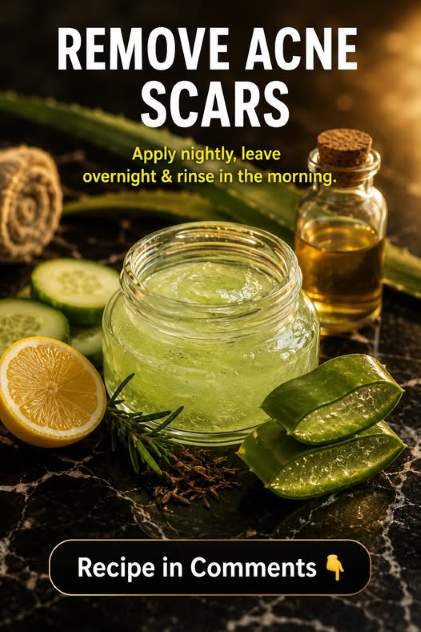
Acne scars and dark marks can make the skin look uneven and may affect confidence long after active breakouts have healed. However, it is important to distinguish between true acne scars and post-acne marks. Flat brown, red, pink or bluish spots are usually post-inflammatory discoloration rather than permanent scars, and they may gradually fade. Indented ice-pick, rolling and boxcar scars involve structural changes within the skin and cannot be removed overnight with aloe vera, lemon or any homemade mask. Dermatological procedures are generally required to noticeably improve these deeper scars. [1][2]
The remedies below are designed to calm irritation, maintain hydration, support the skin barrier and reduce the likelihood of new blemishes that could leave additional marks. Research supports certain properties of the individual ingredients, but the complete homemade mixtures have not been clinically tested as acne-scar treatments. Realistic early results include softer, calmer and better-hydrated skin within one to three days. Noticeable fading of discoloration usually requires consistent care, sun protection and several weeks.
Remedy 1: Aloe and Oat Recovery Gel for Normal Skin
Ingredients and Their Scientific Benefits
- Pure clear aloe vera gel – 1 tablespoon: Aloe provides hydration and contains compounds associated with anti-inflammatory activity and wound-healing support. Clinical evidence concerns wound care and supportive acne treatment rather than removal of established scars. [4]
- Finely ground colloidal oatmeal – 1 teaspoon: Oat compounds, including beta-glucans and lipids, help soothe dryness and strengthen the skin’s protective barrier. [6]
- Freshly brewed green tea, cooled – 1 teaspoon: Green tea contains catechins such as EGCG. Topical green-tea preparations have reduced inflammatory acne lesions in clinical research, which may help prevent new marks. [5]
- Honey – ½ teaspoon: Honey acts as a humectant and has been studied extensively in wound care, although ordinary honey is not proven to erase acne scars. [7]
- Vegetable glycerin – 2 drops: Glycerin draws water into the outer skin layer and has demonstrated measurable improvements in hydration. [9]
Scientific Working of the Remedy
This gel supports normal skin through three complementary actions. Aloe and glycerin improve surface hydration, oatmeal helps maintain the barrier, and green tea may calm inflammation associated with recurring blemishes. Honey prevents the mixture from drying too quickly. Better hydration can temporarily make shallow texture appear smoother, but it does not rebuild deep scar tissue.
Procedure
Mix all ingredients in a clean glass bowl until a smooth gel forms. Cleanse the face gently and pat it dry. Apply a thin layer to areas with flat post-acne marks, avoiding the eyelids, lips and broken pimples. Leave it on for 8–10 minutes, rinse with lukewarm water and pat dry. Prepare a fresh batch each time.
How Often to Apply
Apply once daily for five days, preferably in the evening. After five days, reduce use to three times weekly if the skin remains comfortable.
Initial Results
Within one to three days, the skin may feel softer and less tight. Acne marks will not disappear in this period, but their appearance may look less pronounced when the surrounding skin is properly hydrated.
Remedy 2: Green Tea and Turmeric Mask for Combination Skin
Ingredients and Their Scientific Benefits
- Cooled green tea – 1 tablespoon: Green-tea catechins have antioxidant and anti-inflammatory activity and may help control inflammatory blemishes. [5]
- Pure aloe vera gel – 2 teaspoons: Aloe hydrates dry facial areas without creating a heavy, greasy layer. [4]
- Finely ground oatmeal – 2 teaspoons: Oatmeal absorbs some surface moisture while supporting sensitive or dry areas of combination skin. [6]
- Honey – ½ teaspoon: Honey helps retain water and keeps the mask flexible rather than overly drying. [7]
- Turmeric powder – a very small pinch, less than 1/16 teaspoon: Curcumin has antioxidant and anti-inflammatory properties, but topical clinical evidence remains preliminary. Turmeric may stain light skin, towels and clothing. [8]
Scientific Working of the Remedy
Green tea and turmeric are included to calm the inflammatory environment that can contribute to persistent redness and new acne marks. Aloe and honey protect the drier cheek area, while oatmeal gives the mixture a soft consistency without abrasive scrubbing.
Procedure
Combine the oatmeal and turmeric first. Add aloe, honey and enough green tea to create a spreadable paste. Apply a light layer over the face, using less around dry areas. Leave it for 7–8 minutes. Wet your fingertips and rinse without rubbing or exfoliating.
How Often to Apply
Use on alternate evenings for five days. Do not use it on the same night as strong exfoliating acids, retinoids or acne medication unless a clinician has confirmed that the combination is appropriate.
Initial Results
Oilier areas may feel fresher while the cheeks feel less dry. Redness may appear calmer within two or three days, but pigmentation changes require considerably longer.
Remedy 3: Cooling Green Tea Mask for Oily Skin
Ingredients and Their Scientific Benefits
- Strong cooled green tea – 2 teaspoons: Topical green-tea research suggests benefits for inflammatory acne and, in some studies, surface sebum control. [5]
- Pure aloe vera gel – 1 tablespoon: Aloe provides water-based hydration, which is important because dehydrating oily skin can increase irritation. [4]
- Colloidal oatmeal – 2 teaspoons: Oatmeal helps create a non-scrubbing paste and supports the skin barrier. [6]
- Turmeric – one tiny pinch: Turmeric supplies curcumin, an antioxidant compound investigated for inflammatory skin conditions. [8]
- Boiled and cooled water – 1 teaspoon if needed: Water adjusts the consistency so the mask spreads without pulling or rubbing the skin.
Scientific Working of the Remedy
This remedy does not attempt to “dry out” oily skin. Excessive drying and harsh scrubbing can damage the barrier and make inflammation more noticeable. Green tea and turmeric focus on inflammatory activity, while aloe and oatmeal keep the treatment gentle enough for regular use.
Procedure
Mix the oatmeal and turmeric, then stir in the aloe and green tea. Add water only when the mixture is too thick. Apply it to clean skin for 6–8 minutes. Rinse thoroughly and pat dry with a freshly washed towel.
How Often to Apply
Apply once daily for three days, followed by alternate-day application for another week. Discontinue it if itching, burning or additional breakouts develop.
Initial Results
The face may feel less greasy and more comfortable within one to three days. Existing dark marks will not vanish, although preventing new inflammatory lesions can reduce the formation of additional marks.
Remedy 4: Honey-Glycerin Moisture Mask for Dry Skin
Ingredients and Their Scientific Benefits
- Pure aloe vera gel – 1 tablespoon: Aloe supplies lightweight hydration and may support recovery of irritated skin. [4]
- Honey – 1 teaspoon: Honey is a natural humectant and has wound-care evidence, but it should not be treated as a clinically proven scar remover. [7]
- Vegetable glycerin – 3 drops: Glycerin increases water content in the outer skin layer and helps relieve dryness. [9]
- Finely ground oatmeal – 1 teaspoon: Colloidal oatmeal helps reduce roughness and supports barrier repair. [6]
- Boiled and cooled water – 1 teaspoon: Water thins the mixture and prevents excessive stickiness.
Scientific Working of the Remedy
Dry skin can make post-acne texture look rougher and more visible. Aloe, honey and glycerin attract or retain moisture, while oatmeal helps reduce water loss through a weakened barrier. This can improve softness and temporarily make superficial unevenness appear less obvious.
Procedure
Blend the ingredients into a soft gel. Apply a thin layer to clean, slightly damp skin. Leave it for 8–10 minutes, ensuring that it does not dry completely. Rinse gently and apply a simple non-comedogenic moisturizer.
How Often to Apply
Apply nightly for three days and then three or four times weekly. People with pollen, bee-product or honey allergies should omit honey and use additional aloe instead.
Initial Results
Dryness and tightness may improve after the first few applications. The skin may look plumper because of improved hydration, but this should not be confused with permanent scar correction.
Remedy 5: Minimalist Oat Compress for Sensitive Skin
Ingredients and Their Scientific Benefits
- Colloidal oatmeal – 1 tablespoon: Oatmeal has evidence for improving hydration and barrier function in irritated skin. [6]
- Boiled and cooled water – 1 tablespoon: Water creates a soft, low-friction paste without fragrance or active acids.
- Pure aloe vera gel – 1 teaspoon: Aloe adds soothing hydration, although sensitive users must patch-test it. [4]
- Cooled green tea – 1 teaspoon: Green tea offers antioxidant compounds, but it should be omitted if it causes stinging. [5]
- Vegetable glycerin – 2 drops: A small amount helps the skin retain moisture and reduces post-rinse tightness. [9]
Scientific Working of the Remedy
Sensitive skin generally responds best to fewer ingredients. Oatmeal and glycerin prioritize barrier support, while diluted aloe and green tea provide gentle hydration and antioxidant support. Turmeric and honey are excluded to reduce the chance of staining, allergy or irritation.
Procedure
Allow the oatmeal to soak in water and green tea for two minutes. Add aloe and glycerin. Spread it over the affected area without massaging. Leave it for 5–7 minutes and rinse with cool-to-lukewarm water.
How Often to Apply
Use once daily for three days. Continue on alternate days only when no redness, itching, rash or burning occurs.
Initial Results
Sensitive skin may feel calmer and less dry within one to three days. Persistent redness, burning or worsening pigmentation requires professional assessment rather than additional home treatments.
Final Tips for Preventing and Fading Post-Acne Marks
Use broad-spectrum, water-resistant SPF 30 or higher every morning because ultraviolet exposure can darken healing marks and prolong uneven pigmentation. Do not pick, squeeze or scratch pimples, as physical trauma increases the likelihood of discoloration and scarring. [3]
Keep bowls, spoons, towels and application brushes clean. Patch-test every mixture on a small area for 24 hours before using it on the whole face. Never add lemon juice, undiluted vinegar, baking soda or essential oils to these masks; irritation can worsen inflammation and post-acne discoloration.
Drink enough water, sleep for approximately seven to nine hours, cleanse gently and avoid introducing several new remedies at the same time. Softer and better-hydrated skin may be noticeable within two or three days. Actual fading of flat acne marks generally takes weeks or months, while indented or raised scars are unlikely to respond to home masks.
Diet Plan to Support Clearer Skin
Diet cannot erase existing scar tissue, but a balanced, lower-glycemic eating pattern may help some people experience fewer acne breakouts. Evidence concerning dairy is mixed, so unnecessary or extreme food restriction is not recommended. [10]
Breakfast: Choose oatmeal with berries and seeds, eggs with whole-grain toast, or unsweetened yogurt with fruit when dairy does not appear to trigger breakouts.
Mid-morning snack: Eat an apple, pear, orange or a small handful of unsalted nuts.
Lunch: Include half a plate of vegetables, one portion of beans, lentils, chicken or fish, and a moderate serving of brown rice or whole-grain bread.
Afternoon snack: Choose cucumber, carrots, roasted chickpeas or fresh fruit rather than sugary drinks and packaged sweets.
Dinner: Eat grilled fish, lentils, beans or lean poultry with cooked vegetables and a smaller portion of whole-grain carbohydrates.
Fluids: Drink water regularly. Limit highly sweetened beverages, frequent desserts and excessive refined carbohydrates. People who notice acne after whey-protein supplements may consider stopping the supplement temporarily and discussing alternative protein sources with a qualified dietitian.
Continue the gentle home-care routine for two to four weeks and the balanced diet for at least eight to twelve weeks before judging its effect on new breakouts. Stop immediately if any remedy causes swelling, rash, severe burning or worsening acne. Consult a dermatologist when marks persist, active acne remains uncontrolled, scars are indented or raised, or the condition is affecting confidence. Professional treatments such as prescription topicals, chemical peels, microneedling, laser procedures, fillers or scar surgery may be required depending on the scar type. [2]
References for the above remedy
- American Academy of Dermatology Association. “Acne scars: Signs and symptoms.” Explains that flat post-inflammatory hyperpigmentation is not a true scar.
URL: https://www.aad.org/public/diseases/acne/derm-treat/scars/symptoms (American Academy of Dermatology) - American Academy of Dermatology Association. “Acne scars: Consultation and treatment.”
URL: https://www.aad.org/public/diseases/acne/derm-treat/scars/treatment (American Academy of Dermatology) - American Academy of Dermatology Association. “Acne scars: How to care for your skin after treatment.” Includes recommendations concerning sun protection and realistic expectations.
URL: https://www.aad.org/public/diseases/acne/derm-treat/scars/self-care (American Academy of Dermatology) - Hekmatpou, D., Mehrabi, F., Rahzani, K. and Aminiyan, A. “The Effect of Aloe Vera Clinical Trials on Prevention and Healing of Skin Wound: A Systematic Review.”
URL: https://pubmed.ncbi.nlm.nih.gov/30666070/ (PubMed) - Kim, S. et al. “The effects of green tea on acne vulgaris: A systematic review and meta-analysis of randomized clinical trials.”
URL: https://pubmed.ncbi.nlm.nih.gov/32812270/ (PubMed) - Capone, K. et al. “Effects of Colloidal Oatmeal Topical Atopic Dermatitis Cream on Skin Microbiome and Skin Barrier Properties.”
URL: https://pubmed.ncbi.nlm.nih.gov/32484623/ (PubMed) - Jull, A.B. et al. “Honey as a topical treatment for wounds.” Cochrane Database of Systematic Reviews.
URL: https://pubmed.ncbi.nlm.nih.gov/25742878/ (PubMed) - Vaughn, A.R., Branum, A. and Sivamani, R.K. “Effects of Turmeric on Skin Health: A Systematic Review of the Clinical Evidence.”
URL: https://pubmed.ncbi.nlm.nih.gov/27213821/ (PubMed) - Breternitz, M. et al. “The influence of a cream containing 20% glycerin and its vehicle on skin barrier properties.”
URL: https://pubmed.ncbi.nlm.nih.gov/18498456/ (PubMed) - Meixiong, J. et al. “Diet and acne: A systematic review.”
URL: https://pubmed.ncbi.nlm.nih.gov/35373155/ (PubMed)