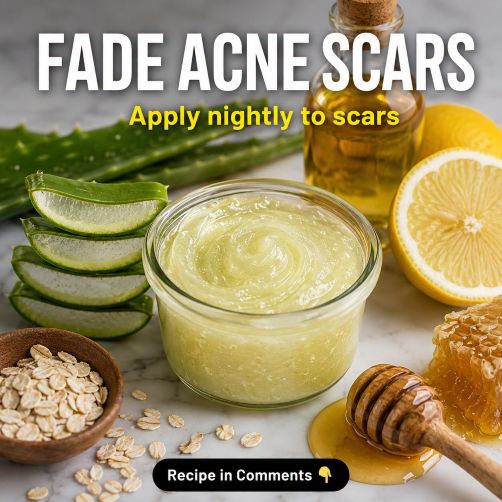
Acne can leave flat brown, red, purple, or grey marks that remain long after a pimple has healed, affecting skin tone and confidence. These flat areas are commonly post-inflammatory hyperpigmentation or post-inflammatory redness, not permanent acne scars. True acne scars produce indentations, pits, thickened tissue, or raised areas and generally cannot be removed with homemade masks. Dermatological treatments such as microneedling, chemical peels, laser therapy, subcision, fillers, or prescription skincare may be needed for structural scars. (American Academy of Dermatology)
The remedy shown in the image contains lemon, but applying lemon juice to acne marks is not recommended. Citrus compounds followed by ultraviolet exposure can cause irritation, blistering, and additional hyperpigmentation. Lemon may therefore make the exact problem you are trying to treat more noticeable. (PubMed)
The following natural remedies are designed mainly to support the gradual fading of flat post-acne marks by controlling inflammation, protecting the skin barrier, preventing dryness, and limiting repeated breakouts. Research has generally tested standardized extracts or professionally prepared formulations rather than homemade mixtures. Therefore, these remedies should be viewed as gentle supportive care, not guaranteed scar treatments.
Remedy 1: Aloe, Soy and Green Tea Mask for Normal Skin
Ingredients and Scientific Working
- 1 tablespoon clear aloe vera gel: Aloe supplies soothing polysaccharides and supports hydration. A clinical trial found that a properly formulated aloe gel helped improve acne treatment tolerability and results when used with tretinoin.
- 1 teaspoon cooled green tea: Green-tea catechins, including EGCG, have antioxidant and anti-inflammatory activity. Research suggests that topical green-tea preparations can reduce inflammatory acne lesions.
- 1 teaspoon unsweetened soy milk: Soy contains compounds that may interfere with the transfer of pigment into surface skin cells. A controlled study found that stabilized topical soy improved uneven pigmentation and skin tone.
- 1 teaspoon colloidal oatmeal: Oatmeal contains beta-glucans and avenanthramides that help maintain moisture and calm irritation.
- 1 teaspoon cooled licorice-root infusion: Licorice contains glabridin, which has demonstrated tyrosinase-inhibiting and anti-inflammatory activity in laboratory and animal research.
Procedure
Prepare weak green tea and licorice tea separately, then let both cool completely. Combine one teaspoon of each with the aloe gel, soy milk, and colloidal oatmeal.
Apply a thin layer to clean skin, concentrating on flat acne marks rather than open pimples. Leave it on for 8 to 10 minutes. Rinse gently with lukewarm water and apply a non-comedogenic moisturizer.
Do not scrub the mask while removing it because rubbing can increase inflammation.
How Often to Apply
Use once daily for the first three days. If the skin remains comfortable, continue three times weekly for six to eight weeks.
Initial Results
The skin may feel calmer, softer, and more hydrated within one to three days. Acne marks will not disappear in this period. More noticeable tone improvement normally requires several weeks.
Remedy 2: Centella and Oat Barrier Mask for Combination Skin
Ingredients and Scientific Working
- 1 teaspoon plain Centella asiatica gel: Centella contains triterpenoid compounds associated with wound repair and scar modulation. A controlled clinical study found improved pigmentation measurements in treated surgical scars, although this evidence is not specific to acne scars.
- 1 tablespoon aloe vera gel: Aloe offers light hydration without creating a heavy oily layer over the T-zone.
- 1 teaspoon colloidal oatmeal: Oatmeal supports dry cheek areas and helps protect the skin barrier.
- 2 teaspoons cooled green tea: Green tea may help reduce inflammation and excessive oiliness in acne-prone areas.
- 1 teaspoon unsweetened soy milk: Soy-derived compounds may gradually improve uneven-looking pigmentation.
Procedure
Mix all ingredients into a smooth gel. Apply a slightly thicker layer to dry cheeks and a very thin layer to the forehead, nose, and chin.
Leave it on for 7 to 8 minutes before rinsing. Follow with a lightweight moisturizer, applying a little more to dry areas and less to the oily T-zone.
Prepare a fresh mixture for every application. Do not store homemade masks because water-based ingredients can become contaminated.
How Often to Apply
Apply on alternate evenings for at least five days. Continue two or three times weekly for approximately eight weeks if no irritation appears.
Initial Results
Dry areas may feel less tight and the T-zone may appear calmer within one to three days. Gradual improvement in post-acne discolouration may begin after several weeks of consistent use and sun protection.
Remedy 3: Green Tea and Licorice Treatment for Oily Skin
Ingredients and Scientific Working
- 2 tablespoons strongly brewed, cooled green tea: Clinical evidence suggests topical green-tea extract can reduce inflammatory acne and may help control sebum production.
- 1 tablespoon aloe vera gel: Aloe gives oily skin water-based hydration and may reduce dryness caused by acne treatments.
- 1 teaspoon licorice-root infusion: Licorice compounds may help regulate pigment production and calm inflammation.
- 1 teaspoon colloidal oatmeal: Oatmeal prevents the treatment from becoming excessively drying.
- A tiny pinch of turmeric: Curcumin has antioxidant and anti-inflammatory properties, but clinical evidence for raw turmeric masks remains limited. Too much may stain or irritate the skin.
Procedure
Mix the green tea, aloe gel, and licorice infusion. Add the oatmeal and only a very small pinch of turmeric.
Apply a thin layer for five to seven minutes. Rinse thoroughly without rubbing. Do not leave this mask on overnight, as advised in the image, because prolonged contact increases the possibility of irritation.
Use a clean towel to pat the skin dry and apply a lightweight, non-comedogenic moisturizer.
How Often to Apply
Use every other day for the first five days. Continue twice weekly for six to eight weeks if the skin tolerates it.
Initial Results
Oiliness and inflammatory redness may appear slightly reduced within one to three days. Existing dark marks generally require at least six to twelve weeks to become noticeably lighter.
Remedy 4: Honey, Soy and Oat Mask for Dry Skin
Ingredients and Scientific Working
- 2 teaspoons colloidal oatmeal: Oatmeal strengthens moisture retention and reduces dryness-related irritation.
- 1 tablespoon aloe vera gel: Aloe adds water and creates a soothing texture without aggressive exfoliation.
- 1 teaspoon pasteurized honey: Honey is a humectant that attracts moisture. It has research supporting wound-care applications, but it has not been proven to erase acne scars.
- 1 teaspoon unsweetened soy milk: Soy may support more even-looking pigmentation.
- 1 teaspoon plain Centella asiatica gel: Centella compounds are studied for wound repair and scar appearance.
Procedure
Combine the oatmeal and soy milk first. Allow the mixture to rest for one minute, then add the aloe, honey, and Centella gel.
Apply a soft layer to clean skin for seven minutes. Do not let the mask dry until it cracks. Rinse while it is still slightly moist and immediately apply a fragrance-free moisturizer.
Avoid honey if you have a known allergy to honey, pollen, bee products, or propolis.
How Often to Apply
Use on alternate evenings for the first five days. Continue twice weekly for six to eight weeks.
Initial Results
Dryness, tightness, and roughness may improve within one to three days. Better hydration can make marks look temporarily less prominent, but it does not fill indented scars.
Remedy 5: Minimal Oat and Centella Mask for Sensitive Skin
Ingredients and Scientific Working
- 2 teaspoons colloidal oatmeal: Oatmeal has clinical evidence for improving hydration, skin-barrier function, and irritation in sensitive or eczema-prone skin.
- 1 teaspoon plain Centella asiatica gel: Centella may support skin recovery, although sensitive skin should use it cautiously.
- 1 teaspoon aloe vera gel: Purified inner-leaf aloe may provide soothing hydration.
- 1 teaspoon weak, cooled green tea: A diluted infusion offers antioxidant support with less risk of excessive dryness.
- 2 teaspoons boiled and cooled water: Water dilutes the mixture and reduces ingredient concentration.
Procedure
Combine the oatmeal and cooled water. Add the remaining ingredients and mix gently.
Apply the mask first to a small area near the jaw for five minutes. If no burning, itching, swelling, or persistent redness occurs during the next 24 hours, use it on the affected facial areas.
During full application, leave it on for no more than five minutes. Rinse with lukewarm water and apply a gentle moisturizer.
How Often to Apply
Use every third day during the first week. If tolerated, continue once or twice weekly for six weeks.
Initial Results
Sensitive skin may feel calmer and less dry within two to three days. Avoid trying to accelerate fading through frequent masks, scrubbing, or stronger ingredients because irritation can deepen pigmentation.
Final Tips for Fading Acne Marks Safely
Use a broad-spectrum, non-comedogenic sunscreen with SPF 30 or higher every morning. Sun exposure can maintain or deepen post-inflammatory pigmentation, while daily protection allows marks to fade more evenly. (American Academy of Dermatology)
Wash your face no more than twice daily using lukewarm water and your fingertips. Avoid brushes, gritty scrubs, facial razors over active acne, toothpaste, baking soda, undiluted vinegar, lemon juice, and essential oils.
Do not squeeze, scratch, or pop pimples. Picking prolongs inflammation and increases the risk of both dark marks and permanent scarring. (American Academy of Dermatology)
Clean pillowcases, makeup brushes, mobile-phone screens, and reusable facial tools regularly. Sleep adequately and follow one routine consistently instead of introducing a new remedy every few days.
Improved hydration, softness, and glow may begin within two to three days. Pigmentation usually fades over weeks or months. These remedies are not proven to reduce wrinkles, although better hydration may temporarily soften the appearance of fine dehydration lines.
Home Remedy and Diet Plan
Select only the remedy designed for your skin type. Continue it for six to eight weeks, provided no irritation develops. Using all five remedies together will not produce faster results and may damage the skin barrier.
A supportive diet should be followed for approximately eight to twelve weeks:
Breakfast: Oats with seeds and fresh fruit, or eggs with whole-grain bread.
Lunch: Lentils, chickpeas, beans, fish, or chicken with salad, vegetables, and whole-grain roti.
Snack: A small portion of walnuts, almonds, pumpkin seeds, or low-sugar fruit.
Dinner: Grilled fish, chicken, beans, or lentils with cooked vegetables and a moderate serving of whole grains.
Drinks: Water and unsweetened tea. Reduce sugary beverages, energy drinks, sweets, refined bakery foods, and frequent large portions of white bread or refined rice.
Research indicates that diets with a high glycaemic load can modestly worsen acne. The relationship between acne and dairy is mixed and varies between individuals, so there is no need to remove all dairy unless you repeatedly notice a personal connection. (PubMed)
See a dermatologist if acne continues to produce new marks after six to eight weeks, or if you have painful cysts, raised scars, deep pits, spreading inflammation, or emotional distress. Seek medical care immediately for facial swelling, severe burning, blistering, infection, or breathing difficulty.
References for the above remedy
- American Academy of Dermatology. Acne scars: Signs and symptoms.
URL: https://www.aad.org/public/diseases/acne/derm-treat/scars/symptoms - American Academy of Dermatology. Acne scars: Consultation and treatment.
URL: https://www.aad.org/public/diseases/acne/derm-treat/scars/treatment - Kim S, et al. The effects of green tea on acne vulgaris: A systematic review and meta-analysis of randomized clinical trials.
URL: https://pubmed.ncbi.nlm.nih.gov/32812270/ - Hajheydari Z, et al. Effect of Aloe vera topical gel combined with tretinoin in mild and moderate acne vulgaris.
URL: https://pubmed.ncbi.nlm.nih.gov/23336746/ - Yokota T, et al. The inhibitory effect of glabridin from licorice extracts on melanogenesis and inflammation.
URL: https://pubmed.ncbi.nlm.nih.gov/9870547/ - Wallo W, et al. Efficacy of a soy moisturizer in photoaging: A double-blind, vehicle-controlled study.
URL: https://pubmed.ncbi.nlm.nih.gov/17941363/ - Capone K, et al. Effects of colloidal oatmeal topical cream on skin microbiome and skin-barrier properties.
URL: https://pubmed.ncbi.nlm.nih.gov/32484623/ - Paocharoen V. A randomized controlled double-blind trial of Centella cream for scar improvement.
URL: https://pmc.ncbi.nlm.nih.gov/articles/PMC6166374/ - Meixiong J, et al. Diet and acne: A systematic review.
URL: https://pubmed.ncbi.nlm.nih.gov/35373155/ - Choi JY, et al. Citrus fruits-induced phytophotodermatitis and hyperpigmentation.
URL: https://pubmed.ncbi.nlm.nih.gov/29386836/