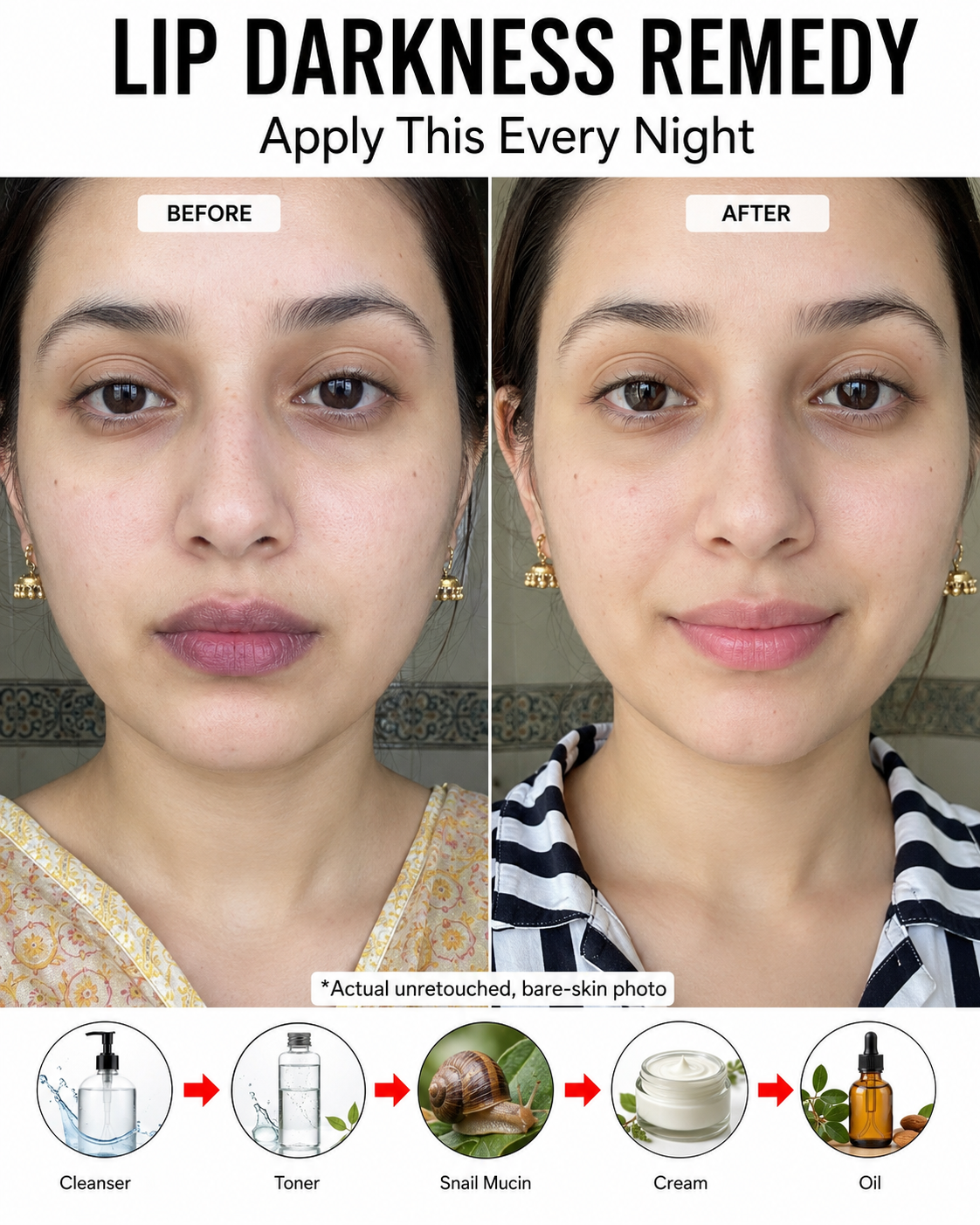
Dark lips can make the face look tired even when the skin is clear and healthy. Lip darkness may happen due to dryness, sun exposure, smoking, dehydration, lip licking, harsh lip products, allergies, friction, or nutritional deficiencies such as low vitamin B12. The safest natural approach is not harsh bleaching; it is barrier repair, gentle exfoliation, hydration, antioxidant support, and daily sun protection. The remedies below are designed by skin type using simple ingredients with scientific value. Use them only on the outer lip area, avoid open cuts, and always do a patch test first.

Remedy 1: For Normal Skin
Ingredients
Fresh aloe vera gel, 1 teaspoon: Aloe contains soothing polysaccharides and aloesin-like compounds that support calm skin and may help reduce excess melanin activity.
Raw honey, 1/2 teaspoon: Honey is a natural humectant that attracts moisture and supports a smoother lip barrier.
Finely ground oat powder, 1/4 teaspoon: Oats contain beta-glucans and antioxidant compounds that calm dryness and reduce rough texture.
Vegetable glycerin, 2 drops: Glycerin pulls water into the upper skin layers, making lips look plumper and less dull.
Sweet almond oil, 2 drops: Almond oil works as an emollient, sealing softness and reducing flaky edges.
Cooled green tea, 1/2 teaspoon: Green tea catechins provide antioxidant support against environmental damage.
Scientific Working of This Remedy
This remedy works by softening dead surface cells, calming mild inflammation, and restoring moisture. Aloe and green tea help reduce irritation-related dullness. Honey and glycerin increase hydration, while oat powder gently smooths roughness without aggressive scrubbing. Almond oil seals the lips so water loss is reduced overnight.
Procedure
Mix aloe gel, honey, oat powder, glycerin, and green tea into a smooth paste. Apply a thin layer over clean lips. Leave it for 8–10 minutes. Wipe gently with a damp cotton pad. Finish with 2 drops of almond oil as an overnight seal.
How Often to Apply
Apply every night for 5 days. After that, use 3 nights per week for maintenance.
Initial Results
Within 1–3 days, lips may feel softer, less tight, and less flaky. The dark tone caused by dryness may look lighter, but deeper pigmentation usually needs 3–6 weeks of consistent care.
Remedy 2: For Combination Skin
Ingredients
Cucumber juice, 1 teaspoon: Cucumber has high water content and soothing phytochemicals that calm heat and dryness.
Aloe vera gel, 1/2 teaspoon: Helps reduce irritation and supports surface repair.
Plain yogurt, 1/4 teaspoon: Yogurt contains lactic acid, a mild alpha-hydroxy acid that helps loosen dead cells.
Raw honey, 1/4 teaspoon: Adds hydration and reduces the dry, dull look.
Cooled green tea, 1/2 teaspoon: Supports antioxidant protection.
Sunflower seed oil, 1 drop: A light oil rich in linoleic acid that supports the skin barrier without feeling too heavy.
Scientific Working of This Remedy
Combination skin needs balance: hydration without greasiness and exfoliation without over-drying. Yogurt provides gentle lactic-acid exfoliation to reduce dull surface buildup. Cucumber, aloe, and green tea calm the lip area, while honey hydrates. Sunflower seed oil gives a light protective layer, useful for lips that are dry in some areas but oily around the mouth.
Procedure
Mix cucumber juice, aloe gel, yogurt, honey, and green tea. Apply a very thin layer on the lips for 5–7 minutes only. Wipe off gently. Dab one drop of sunflower seed oil on the lips before sleeping.
How Often to Apply
Use on alternate nights for 5–7 days. Do not use yogurt if lips are cracked, burning, or peeling badly.
Initial Results
In 2–3 days, lips may look cleaner, smoother, and less patchy. The center of the lips may appear fresher because dry dead cells are reduced.
Remedy 3: For Oily Skin
Ingredients
Aloe vera gel, 1 teaspoon: Lightweight soothing base that hydrates without heaviness.
Licorice root tea or licorice powder, 1/4 teaspoon: Licorice compounds such as glabridin are studied for melanin-related pigmentation support.
Cooled green tea, 1 teaspoon: Helps protect against oxidative stress and irritation.
Cucumber juice, 1/2 teaspoon: Adds light hydration and cooling.
Raw honey, 1/4 teaspoon: Keeps lips moist without needing heavy oils.
Vegetable glycerin, 1 drop: Provides controlled hydration.
Scientific Working of This Remedy
Oily skin types often dislike thick balms, but lips still need water-binding ingredients. Aloe, cucumber, honey, and glycerin hydrate without a greasy layer. Green tea helps calm environmental stress, while licorice is included for its pigment-balancing action. This remedy is especially useful when lips are dark from repeated irritation, licking, sun exposure, or dryness rather than natural lip color.
Procedure
Prepare strong licorice tea by soaking licorice root in hot water and cooling it, or use a tiny pinch of licorice powder. Mix with aloe gel, green tea, cucumber juice, honey, and glycerin. Apply for 6–8 minutes. Rinse lightly and leave the lips bare or seal with only one drop of sunflower oil if needed.
How Often to Apply
Apply every night for 3 days, then continue every other night for 2 weeks.
Initial Results
Within 1–3 days, lips may feel less sticky, less dull, and more hydrated. Pigmentation changes are gradual and depend on avoiding sun exposure and harsh lip products.
Remedy 4: For Dry Skin
Ingredients
Raw honey, 1/2 teaspoon: Hydrates and supports a moist healing environment.
Shea butter, 1/4 teaspoon: Rich in fatty acids that seal moisture and soften cracked texture.
Virgin coconut oil, 1–2 drops: Helps reduce water loss and supports barrier comfort.
Aloe vera gel, 1/2 teaspoon: Soothes dryness-related irritation.
Colloidal oat or finely ground oat powder, 1/4 teaspoon: Reduces roughness and calms sensitivity.
Vegetable glycerin, 2 drops: Strong humectant for dehydrated lips.
Sweet almond oil, 2 drops: Adds emollient softness and improves overnight comfort.
Scientific Working of This Remedy
Dry lips often look darker because cracks and flakes create shadows. This remedy focuses on barrier repair. Honey and glycerin pull moisture in, aloe calms irritation, oats reduce roughness, and shea butter with coconut and almond oils locks hydration in place. When the lip surface becomes smooth, the natural pink tone appears clearer.
Procedure
Mix honey, aloe, oat powder, and glycerin. Apply for 10 minutes. Wipe off with a soft damp cloth; do not scrub. Melt shea butter between clean fingers and mix with coconut oil and almond oil. Apply a thin layer overnight.
How Often to Apply
Use every night for 7 days. Continue the sealing step nightly if lips remain dry.
Initial Results
Dryness-related darkness may look better in 1–2 days because flakes soften quickly. Cracks and tightness may reduce within 3–5 days.
Remedy 5: For Sensitive Skin
Ingredients
Colloidal oat powder, 1/2 teaspoon: Gentle skin protectant with soothing and anti-inflammatory properties.
Fresh aloe vera gel, 1 teaspoon: Calms irritation and supports comfort.
Cucumber juice, 1/2 teaspoon: Provides cooling hydration.
Vegetable glycerin, 1 drop: Hydrates without fragrance or acids.
Sunflower seed oil, 2 drops: Light barrier-supporting oil suitable for delicate skin.
Plain honey, 1/4 teaspoon: Adds moisture, but skip it if you are allergic or reactive.
Scientific Working of This Remedy
Sensitive lips can become darker from inflammation, allergic reactions, over-exfoliation, and burning ingredients. This remedy avoids lemon, baking soda, cinnamon, toothpaste, and strong scrubs. Oat and aloe calm the skin, cucumber cools, glycerin hydrates, and sunflower oil protects the barrier. The goal is to stop irritation first, because inflamed lips often produce more uneven pigment.
Procedure
Mix oat powder, aloe gel, cucumber juice, glycerin, and honey. Apply for only 5 minutes. Rinse gently with cool water. Pat dry and apply sunflower seed oil in a very thin layer.
How Often to Apply
Use 3 nights per week for the first week. If there is no burning or redness, continue on alternate nights for 2–3 weeks.
Initial Results
Sensitive lips may feel calmer within 1–2 applications. Redness, tightness, and roughness may reduce in 2–3 days.
Final Tips for Faster and Safer Results
Drink enough water daily because dehydrated lips look darker and more lined. Use a fragrance-free lip balm with SPF 30 during the day, because sun exposure is one of the most common reasons lips become darker. Avoid licking, biting, or peeling the lips. Keep towels, lip brushes, and lip containers clean. Stop using any lip product that causes burning, itching, swelling, or repeated peeling. Do not use lemon juice, baking soda, toothpaste, salt scrubs, cinnamon, or strong essential oils on dark lips, because irritation can worsen pigmentation. Visible improvement from dryness often starts within 2–3 days, while true reduction in lip darkness usually needs 4–8 weeks of steady care.
Diet Plan for Lip Darkness Support
Continue the diet plan for at least 4–6 weeks along with the home remedy. For breakfast, take eggs or yogurt with oats, dates, and fruit. For lunch, include lentils, beans, chicken, fish, or paneer with green vegetables and whole grains. For snacks, use almonds, walnuts, pumpkin seeds, cucumber, carrots, and seasonal fruit. For dinner, eat a light meal with protein, vegetables, and healthy fats such as olive oil or seeds. Add vitamin B12 foods such as eggs, dairy, fish, chicken, or fortified foods, especially if you feel tired, have mouth ulcers, or notice unusual pigmentation. Also include iron and folate sources such as spinach, legumes, beetroot, citrus fruits, and lean protein.
Continue the remedy and diet consistently, but if lip darkness persists beyond 6–8 weeks, becomes one-sided, forms a dark spot, bleeds, cracks repeatedly, burns, swells, or changes shape or color, see a dermatologist or doctor. Persistent lip pigmentation can sometimes be linked to allergies, vitamin deficiency, medication effects, hormonal issues, smoking-related changes, or sun-related lip disease.
References for the above remedy
- American Academy of Dermatology Association. “7 dermatologists’ tips for healing dry, chapped lips.” URL: https://www.aad.org/public/everyday-care/skin-care-basics/dry/heal-dry-chapped-lips (American Academy of Dermatology)
- DermNet NZ. “Actinic cheilitis.” URL: https://dermnetnz.org/topics/actinic-cheilitis (DermNet®)
- Wang Z, et al. “Effects of aloesin on melanogenesis in pigmented skin equivalents.” PubMed. URL: https://pubmed.ncbi.nlm.nih.gov/18377621/ (PubMed)
- Tashkandi H. “Honey in wound healing: An updated review.” PubMed Central. URL: https://pmc.ncbi.nlm.nih.gov/articles/PMC8496555/ (PMC)
- Kurtz ES, Wallo W. “Colloidal oatmeal: history, chemistry and clinical properties.” PubMed. URL: https://pubmed.ncbi.nlm.nih.gov/17373175/ (PubMed)
- Varma SR, et al. “In vitro anti-inflammatory and skin protective properties of Virgin coconut oil.” PubMed Central. URL: https://pmc.ncbi.nlm.nih.gov/articles/PMC6335493/ (PMC)
- Lin TK, Zhong L, Santiago JL. “Anti-Inflammatory and Skin Barrier Repair Effects of Topical Application of Some Plant Oils.” PubMed Central. URL: https://pmc.ncbi.nlm.nih.gov/articles/PMC5796020/ (PMC)
- Zheng XQ, et al. “Green Tea Catechins and Skin Health.” PubMed Central. URL: https://pmc.ncbi.nlm.nih.gov/articles/PMC11673495/ (PMC)
- Sarkar R, et al. “Cosmeceuticals for Hyperpigmentation: What is Available?” PubMed Central. URL: https://pmc.ncbi.nlm.nih.gov/articles/PMC3663177/ (PMC)
- Kannan R, et al. “Cutaneous lesions and vitamin B12 deficiency.” PubMed Central. URL: https://pmc.ncbi.nlm.nih.gov/articles/PMC2294086/ (PMC)