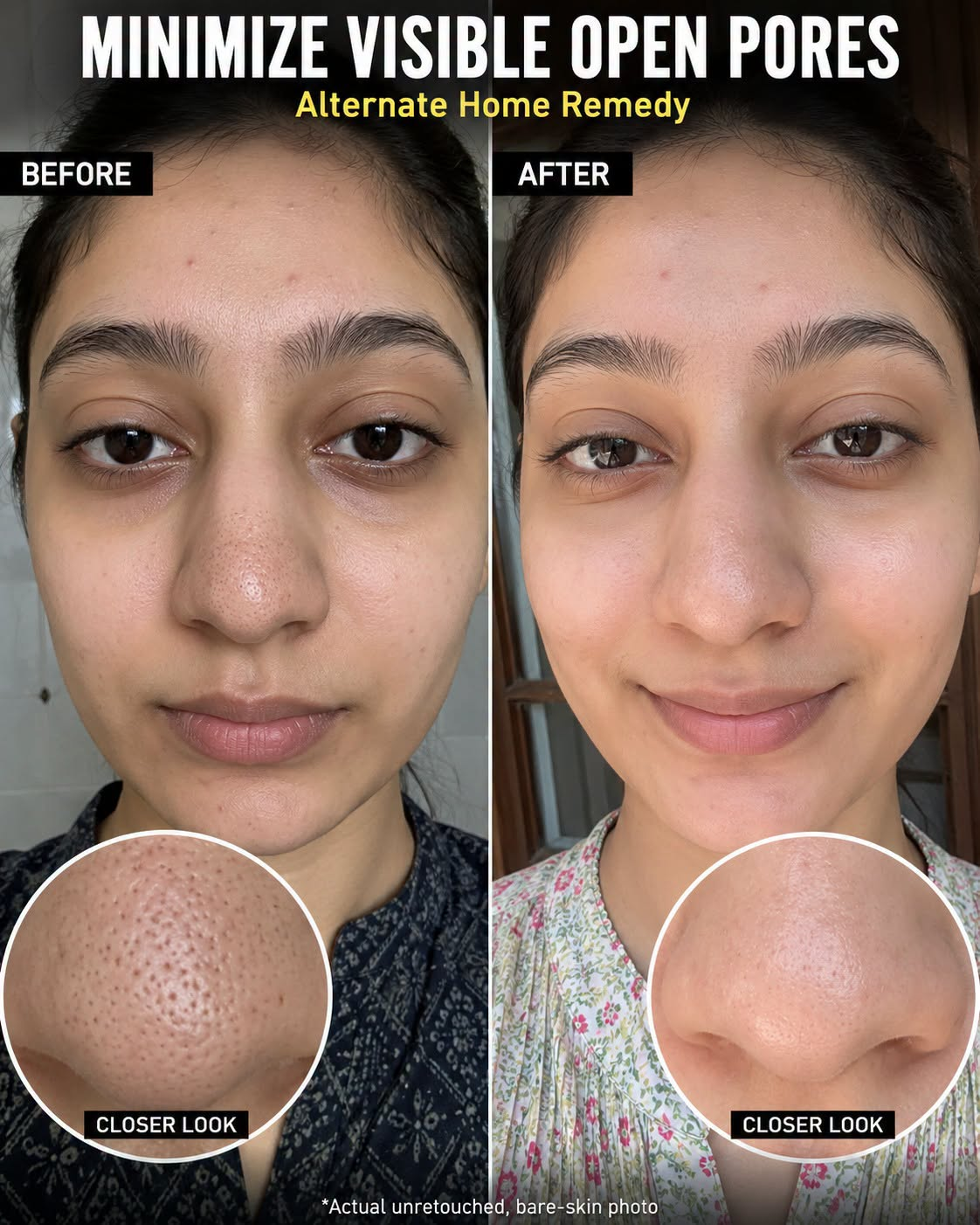
Visible open pores are a common skincare concern, especially around the nose, cheeks, and forehead. While pores cannot be permanently closed because their size is largely determined by genetics, age, sun exposure, and oil production, they can appear significantly smaller when excess oil, dead skin cells, and debris are removed and the skin’s collagen remains healthy. Natural ingredients supported by scientific research can help improve skin texture, regulate sebum production, gently exfoliate the skin, and maintain hydration, making pores appear less noticeable over time. The following remedies are tailored for different skin types using easily available natural ingredients with scientifically supported benefits.
Important: These remedies help reduce the appearance of enlarged pores—they do not permanently shrink pore size.
Remedy 1: For Normal Skin
Ingredients
- 1 tablespoon plain yogurt
- 1 teaspoon finely ground oatmeal
- 1 teaspoon pure honey
- ½ teaspoon cucumber juice
- ½ teaspoon fresh aloe vera gel
- 2 drops green tea extract (or 1 teaspoon cooled brewed green tea)
Scientific Working of the Ingredients
Yogurt naturally contains lactic acid, a gentle alpha hydroxy acid that exfoliates dead skin cells without damaging the skin barrier. Oatmeal contains beta-glucans and avenanthramides, which soothe irritation while gently cleansing pores. Honey acts as a natural humectant and contains antimicrobial compounds that help keep pores clean. Aloe vera provides polysaccharides that hydrate the skin and support wound healing. Cucumber supplies antioxidants and silica, while green tea delivers epigallocatechin gallate (EGCG), which has anti-inflammatory and sebum-regulating effects.
Procedure
- Combine all ingredients into a smooth paste.
- Wash your face with lukewarm water.
- Apply evenly, avoiding the eye area.
- Leave for 15–20 minutes.
- Massage gently in circular motions.
- Rinse with cool water.
- Apply a lightweight moisturizer.
How Often to Apply
Apply 3 times per week for at least one week.
Initial Results
Within 2–3 days, the skin may feel smoother and fresher. After one week, pores often appear cleaner and less noticeable.
Remedy 2: For Combination Skin
Ingredients
- 1 tablespoon multani mitti (Fuller’s Earth)
- 1 teaspoon rose water
- ½ teaspoon aloe vera gel
- ½ teaspoon cucumber juice
- 1 teaspoon cooled green tea
- ½ teaspoon honey
Scientific Working of the Ingredients
Multani mitti absorbs excess sebum from oily areas while leaving drier regions relatively comfortable. Rose water contains antioxidant compounds that calm the skin. Aloe vera maintains hydration without adding oil. Green tea polyphenols reduce inflammation and help regulate oil production. Honey prevents excessive drying by attracting moisture to the skin.
Procedure
- Mix ingredients until creamy.
- Apply a thin layer over the face.
- Leave on for 12–15 minutes.
- Do not allow the mask to become completely dry.
- Rinse using cool water.
- Finish with a fragrance-free moisturizer.
How Often to Apply
Use on alternate days for one week.
Initial Results
The T-zone typically appears less oily while the cheeks remain hydrated. Pores gradually appear more refined.
Remedy 3: For Oily Skin
Ingredients
- 1 tablespoon bentonite clay
- 1 teaspoon brewed green tea
- ½ teaspoon lemon peel powder (not fresh lemon juice)
- 1 teaspoon aloe vera gel
- ½ teaspoon witch hazel (alcohol-free)
- 2 drops tea tree essential oil (well diluted)
Scientific Working of the Ingredients
Bentonite clay binds excess oil and impurities from the skin surface. Green tea’s EGCG reduces sebum secretion. Tea tree oil possesses antimicrobial activity against acne-causing bacteria when properly diluted. Aloe vera minimizes dryness following oil absorption. Lemon peel contains natural antioxidants and vitamin C compounds without the irritation risk associated with direct lemon juice.
Procedure
- Mix into a smooth paste.
- Apply to oily areas.
- Leave for 10–15 minutes.
- Rinse thoroughly.
- Apply an oil-free moisturizer.
How Often to Apply
Use 2–3 times weekly.
Initial Results
Within several applications, shine is reduced and clogged pores become less visible.
Remedy 4: For Dry Skin
Ingredients
- 1 tablespoon mashed avocado
- 1 teaspoon honey
- 1 teaspoon aloe vera gel
- 1 teaspoon plain yogurt
- ½ teaspoon oat flour
- ½ teaspoon flaxseed gel
Scientific Working of the Ingredients
Avocado contains healthy fatty acids and vitamin E that strengthen the skin barrier. Honey attracts moisture into the outer skin layer. Yogurt provides gentle exfoliation through lactic acid without excessive dryness. Oat flour calms inflammation, while flaxseed gel forms a hydrating film that improves skin smoothness.
Procedure
- Blend all ingredients thoroughly.
- Apply generously.
- Leave for 20 minutes.
- Rinse with lukewarm water.
- Apply moisturizer immediately afterward.
How Often to Apply
Use 3 times weekly.
Initial Results
Skin becomes softer and more hydrated. Better hydration reduces the visibility of pores by plumping the surrounding skin.
Remedy 5: For Sensitive Skin
Ingredients
- 1 tablespoon pure aloe vera gel
- 1 teaspoon colloidal oatmeal
- 1 teaspoon cucumber juice
- ½ teaspoon calendula tea
- ½ teaspoon honey
- 1 teaspoon cooled chamomile tea
Scientific Working of the Ingredients
Sensitive skin benefits from anti-inflammatory ingredients that strengthen the skin barrier. Aloe vera reduces redness and supports repair. Colloidal oatmeal improves skin barrier function while relieving irritation. Chamomile contains flavonoids that calm inflammation. Calendula possesses wound-healing properties, while cucumber provides hydration and antioxidant protection.
Procedure
- Mix ingredients gently.
- Apply with clean fingertips.
- Leave for 15 minutes.
- Rinse with cool water.
- Pat dry without rubbing.
How Often to Apply
Apply every other day.
Initial Results
The skin generally feels calmer and more comfortable, with smoother texture that gradually makes pores appear less prominent.
Additional Scientific Tips to Reduce Visible Pores
- Always wear broad-spectrum sunscreen (SPF 30 or higher), as UV exposure breaks down collagen, making pores appear larger.
- Cleanse your face twice daily using a gentle cleanser suitable for your skin type.
- Avoid squeezing blackheads, as this can permanently stretch pores.
- Remove makeup before sleeping.
- Stay hydrated to maintain healthy skin elasticity.
- Change pillowcases regularly to reduce bacteria and oil buildup.
- Perform a patch test before trying any new natural ingredient.
- Avoid harsh scrubs that may irritate the skin and worsen pore appearance.
Visible improvements usually begin after 2–4 weeks of consistent skincare, although smoother skin may be noticed within several days.
Diet Plan for Healthier-Looking Skin
A healthy diet supports collagen production, controls inflammation, and regulates oil production.
Morning
- Warm water
- Fresh fruit rich in vitamin C (orange, kiwi, guava)
Breakfast
- Oatmeal with chia seeds
- Greek yogurt
- Mixed berries
Mid-Morning
- Green tea
- Handful of almonds or walnuts
Lunch
- Grilled fish or lentils
- Brown rice or quinoa
- Mixed green vegetables
Evening Snack
- Cucumber slices
- Carrot sticks
- Pumpkin seeds
Dinner
- Vegetable soup
- Lean protein
- Steamed broccoli or spinach
Daily Hydration
Drink 2–3 liters of water daily unless advised otherwise by your healthcare provider.
Continue these remedies and dietary habits consistently for 4–8 weeks. If enlarged pores are associated with severe acne, persistent inflammation, cysts, or significant skin changes, consult a board-certified dermatologist for evaluation and appropriate treatment.
References for the above remedy
- American Academy of Dermatology Association. How to Minimize Large Pores
https://www.aad.org/public/everyday-care/skin-care-secrets/routine/minimize-pores - National Center for Complementary and Integrative Health. Tea Tree Oil
https://www.nccih.nih.gov/health/tea-tree-oil - National Center for Biotechnology Information. Colloidal Oatmeal: History, Chemistry and Clinical Properties
https://www.ncbi.nlm.nih.gov/pmc/articles/PMC3998204/ - National Center for Biotechnology Information. Honey in Dermatology and Skin Care
https://www.ncbi.nlm.nih.gov/pmc/articles/PMC5661189/ - National Center for Biotechnology Information. Aloe Vera: A Short Review
https://www.ncbi.nlm.nih.gov/pmc/articles/PMC2763764/ - National Center for Biotechnology Information. Green Tea and Skin Health
https://www.ncbi.nlm.nih.gov/pmc/articles/PMC5384166/ - American Academy of Dermatology Association. How to Care for Your Skin
https://www.aad.org/public/everyday-care - National Center for Biotechnology Information. Role of Alpha Hydroxy Acids in Skin Care
https://www.ncbi.nlm.nih.gov/books/NBK482393/ - Harvard T.H. Chan School of Public Health. The Nutrition Source – Healthy Eating Plate
https://www.hsph.harvard.edu/nutritionsource/healthy-eating-plate/ - Mayo Clinic. Skin Care Basics
https://www.mayoclinic.org/healthy-lifestyle/adult-health/in-depth/skin-care/art-20048237