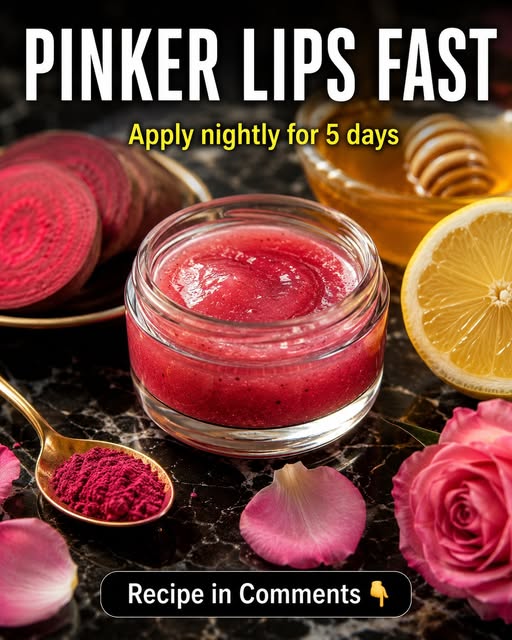
Dryness, sun exposure, frequent lip licking, smoking, irritation from toothpaste or cosmetics, allergies and natural genetics can all influence lip colour. Some people naturally have deeper lip pigmentation, and no homemade mask can permanently turn naturally brown lips pink within five days. However, restoring moisture, removing irritants and protecting the lips from sunlight can reduce dullness, flaking and uneven texture, allowing the natural lip tone to look healthier and more defined. Unexplained or rapidly changing pigmentation should be examined because pigmented lip lesions can have several different causes. (PubMed)
The beetroot shown in the image can leave a temporary reddish stain, but clinical evidence does not show that it permanently removes pigmentation. Lemon juice is excluded because citrus can irritate already-dry lips, and plant chemicals combined with sunlight may cause inflammation followed by darker discolouration. (DermNet®)
Use only one remedy suited to your skin and lip condition. Patch-test it beside the mouth for 24 hours and prepare water-containing mixtures fresh for each application.
Remedy 1: For Normal Skin
Aloe and Coconut Overnight Lip Conditioning Mask
Ingredients
- ½ teaspoon pure aloe vera gel: increases surface hydration through a humectant action.
- ¼ teaspoon virgin coconut oil: softens the lips and reduces moisture loss.
- ¼ teaspoon shea butter: creates a protective emollient layer.
- 1 pinch colloidal oatmeal: comforts mild dryness and supports the barrier.
- 1 drop vegetable glycerin: attracts water into the outer lip surface.
- 1 drop sunflower-seed oil: supplies lightweight barrier-supporting lipids.
Procedure
- Soften the shea butter between clean fingertips.
- Mix it with the coconut and sunflower oils.
- Combine the aloe gel, glycerin and oatmeal separately.
- Stir both mixtures together immediately before use.
- Apply a very thin layer to clean, slightly damp lips.
- Leave it on overnight.
- Rinse gently in the morning and discard any leftover mixture.
Scientific Working of the Ingredients
Aloe vera has demonstrated a moisturising effect, probably because it helps bind water near the skin surface. Coconut oil has performed effectively as a moisturiser in controlled research involving dry skin. Colloidal oatmeal can improve hydration, roughness and barrier function, while shea butter and sunflower oil form an emollient layer that limits further drying. These effects can make the natural lip colour look clearer, but they do not bleach pigment. (PubMed)
How Often to Apply
Apply nightly for five days. Continue three nights weekly when the lips remain comfortable.
Initial Results
Within one to three days, the lips may feel softer and look less grey or dull because surface flakes and dehydration are reduced.
Remedy 2: For Combination Skin
Cucumber, Aloe and Oat Lightweight Lip Gel
Ingredients
- 1 teaspoon strained cucumber water: supplies cool, lightweight moisture.
- ½ teaspoon aloe vera gel: hydrates without a heavy waxy texture.
- 1 pinch colloidal oatmeal: soothes rough areas.
- 1 drop vegetable glycerin: supports water retention.
- 2 drops sunflower-seed oil: protects especially dry sections.
- 1 drop virgin coconut oil: conditions peeling corners.
Procedure
- Grate a clean piece of cucumber and strain the liquid through clean cloth.
- Mix one teaspoon of the cucumber water with aloe and glycerin.
- Add a small pinch of colloidal oatmeal.
- Apply the gel over the entire lip surface.
- Press the sunflower and coconut oils only onto dry or peeling areas.
- Leave it on for 15 minutes.
- Rinse gently and apply a tiny amount of the oil blend before sleeping.
Scientific Working of the Ingredients
This zone-based approach provides water-based hydration without covering the entire mouth in a thick oily layer. Aloe, glycerin and cucumber water improve temporary moisture, while oatmeal helps smooth dry texture. Sunflower oil contains linoleic acid and has been shown to preserve skin-barrier integrity and improve hydration. (PubMed)
How Often to Apply
Use nightly for three to five days, then every other evening for two weeks.
Initial Results
Dry patches may become less visible after the first two applications. The lips may look more even when flaky areas no longer reflect light irregularly.
Remedy 3: For Oily or Acne-Prone Skin
Green Tea and Aloe Non-Greasy Lip Compress
This remedy is intended for people whose surrounding facial skin is oily or prone to breakouts and who dislike thick lip masks.
Ingredients
- 1 teaspoon cooled green tea: provides antioxidant polyphenols.
- 1 teaspoon cooled boiled water: safely dilutes the preparation.
- ½ teaspoon aloe vera gel: gives lightweight hydration.
- 1 pinch colloidal oatmeal: supports irritated or rough lips.
- 1 drop vegetable glycerin: reduces tightness.
- 1 drop sunflower-seed oil: forms a minimal protective layer.
Procedure
- Brew plain green tea and cool it completely.
- Mix it with boiled water, aloe, oatmeal and glycerin.
- Soak a small clean cotton pad in the liquid.
- Press it gently over closed lips for three minutes.
- Remove the pad without rubbing.
- Apply one drop of sunflower oil across both lips.
- Discard the remaining preparation.
Scientific Working of the Ingredients
Green tea supplies antioxidant and anti-inflammatory compounds, although evidence does not show that brewed tea lightens lips. Aloe and diluted glycerin hydrate without creating a heavy coating. Oatmeal reduces dryness and roughness, while a minimal amount of sunflower oil helps slow moisture loss. The resulting smoother surface may make the natural lip tone appear fresher. (PubMed)
How Often to Apply
Use once nightly for five days. Continue three evenings weekly if no irritation develops.
Initial Results
The lips may feel refreshed after one use. Tightness and minor flaking may improve within two to three days.
Remedy 4: For Dry and Severely Chapped Lips
Shea, Coconut and Oat Intensive Lip Balm
Ingredients
- ½ teaspoon shea butter: provides a thick protective emollient layer.
- ¼ teaspoon virgin coconut oil: conditions dry lip tissue.
- ¼ teaspoon sunflower-seed oil: supports the lipid barrier.
- ¼ teaspoon aloe vera gel: adds water-based hydration.
- 1 pinch colloidal oatmeal: soothes roughness and scaling.
- 1 drop vegetable glycerin: improves moisture retention.
Procedure
- Soften the shea butter without heating it.
- Mix in the coconut and sunflower oils.
- Combine the aloe, glycerin and oatmeal separately.
- Stir the two mixtures together before application.
- Apply a generous layer to damp lips.
- Leave it on overnight.
- In the morning, remove only loose residue; do not scrub away attached skin.
Scientific Working of the Ingredients
Dermatologists recommend non-irritating ingredients such as shea butter for chapped lips. Coconut oil acts as a moisturising emollient, while sunflower oil supplies linoleic-acid-rich lipids. Aloe and glycerin increase surface water, and oatmeal can improve scaling, roughness and barrier condition. Hydrated lips may appear naturally rosier because cracking and opaque dead skin become less noticeable. (American Academy of Dermatology)
How Often to Apply
Apply every night for five to seven days and reapply a plain protective balm after meals when needed.
Initial Results
Painful tightness may improve after the first night. Cracking and peeling may begin decreasing within three to five days, although severely damaged lips may need two to three weeks.
Remedy 5: For Sensitive Skin
Minimal Oat and Sunflower Lip Wrap
Ingredients
- 1 teaspoon cooled boiled water: creates a fragrance-free base.
- ½ teaspoon colloidal oatmeal: calms irritation and supports barrier recovery.
- ¼ teaspoon aloe vera gel: hydrates when tolerated.
- 2 drops vegetable glycerin: attracts surface moisture.
- 3 drops sunflower-seed oil: reduces water loss.
- 1 small amount of shea butter, about the size of a grain of rice: seals in moisture.
Procedure
- Mix the water and oatmeal and let them stand for five minutes.
- Add the aloe and glycerin.
- Patch-test the mixture beside the mouth.
- When no reaction occurs, apply it for five minutes.
- Rinse gently and pat the lips until slightly damp.
- Press the sunflower oil and shea butter over the lips.
- Stop if burning, swelling or itching occurs.
Scientific Working of the Ingredients
Colloidal oatmeal has antioxidant, anti-inflammatory and barrier-supporting properties. Sunflower oil and shea butter provide emollient protection, while glycerin and aloe support hydration. Fragrance, rosewater, citrus, mint, cinnamon and essential oils are excluded because these can irritate sensitive or chapped lips. (PubMed)
How Often to Apply
Use nightly for three to five days. Continue twice weekly only when the lips remain calm.
Initial Results
Sensitive lips may feel less tight within one to three applications. Stop immediately if redness or discomfort increases.
Final Tips for Naturally Healthier-Looking Lips
Apply a broad-spectrum lip balm with SPF 30 or higher before going outdoors and reapply approximately every two hours during extended sun exposure. Ultraviolet exposure can worsen dryness and pigmentation, while chronic sun damage may produce persistent scaling known as actinic cheilitis. (American Academy of Dermatology)
Avoid licking, biting, picking or scrubbing your lips. Saliva evaporates and can make dryness worse. Also avoid lemon, cinnamon, mint, peppermint, fragrance, toothpaste, baking soda and undiluted essential oils when the lips are chapped. (American Academy of Dermatology)
Improved softness and a clearer natural tone may begin within two to three days, but genuine pigmentation changes usually take longer and depend on the cause. Naturally dark lips should not be aggressively bleached.
Diet Plan for Healthy Lip Colour
Breakfast: Eat eggs, yogurt, lentils or chickpeas with vitamin-C-rich fruit such as guava, kiwi or berries.
Lunch: Choose chicken, fish, beans, tofu or lentils with leafy vegetables and whole grains.
Snack: Select fruit, plain yogurt, pumpkin seeds or unsalted nuts instead of heavily salted snacks.
Dinner: Include protein, vegetables and healthy fats from fish, avocado, nuts or seeds.
Hydration: Drink water according to thirst, weather and activity. Reduce smoking and excessive alcohol because both can contribute to dryness and changes in appearance.
Continue the selected lip remedy for five to seven days and maintain sun protection and the diet plan for at least four weeks. See a doctor or dermatologist when darkness appears suddenly, affects only one area, continues to spread or does not improve after two to three weeks. Medical assessment is also important for bleeding, ulcers, swelling, severe pain, persistent crusting, a firm lump or a dry scaly patch that repeatedly returns.
References for the above remedy
- Alawi F. Approaches to the Evaluation of Lip Hyperpigmentation.
https://pubmed.ncbi.nlm.nih.gov/22715817/ - American Academy of Dermatology. Seven Dermatologists’ Tips for Healing Dry, Chapped Lips.
https://www.aad.org/public/everyday-care/skin-care-basics/dry/heal-dry-chapped-lips - American Academy of Dermatology. Sunscreen Frequently Asked Questions.
https://www.aad.org/media/stats-sunscreen - Agero ALC, Verallo-Rowell VM. Virgin Coconut Oil as a Moisturizer for Mild to Moderate Xerosis.
https://pubmed.ncbi.nlm.nih.gov/15724344/ - Dal’Belo SE, et al. Moisturizing Effect of Cosmetic Formulations Containing Aloe Vera Extract.
https://pubmed.ncbi.nlm.nih.gov/17026654/ - Ilnytska O, et al. Colloidal Oatmeal Improves Skin Barrier and Moisturisation.
https://pubmed.ncbi.nlm.nih.gov/27272074/ - Danby SG, et al. Effect of Olive and Sunflower Seed Oil on the Adult Skin Barrier.
https://pubmed.ncbi.nlm.nih.gov/22995032/ - Reynertson KA, et al. Anti-Inflammatory Activities of Colloidal Oatmeal.
https://pubmed.ncbi.nlm.nih.gov/25607907/ - Lin TK, et al. Anti-Inflammatory and Skin-Barrier Repair Effects of Topical Plant Oils.
https://pubmed.ncbi.nlm.nih.gov/29280987/ - Grosu C, et al. New Insights Concerning Phytophotodermatitis Induced by Phototoxic Plants.
https://pmc.ncbi.nlm.nih.gov/articles/PMC11355232/