
Sun tanning occurs when ultraviolet radiation stimulates the skin to produce more melanin as a protective response. Although a tan may look like a surface stain, the pigment is formed inside the epidermis and cannot be washed away or removed in ten minutes. As naturally pigmented skin cells gradually shed, the colour becomes lighter, but continued sunlight can keep the tan active. The safest home routine therefore combines strict sun protection with gentle hydration, controlled exfoliation and ingredients that may calm ultraviolet-related inflammation. Dermatologists emphasize that tanning is evidence of skin damage and that preventing further ultraviolet exposure is the most important step for restoring an even-looking complexion. (American Academy of Dermatology)
The remedies below use natural ingredients selected for evidence relating to hydration, barrier support, mild exfoliation or ultraviolet-induced inflammation. However, the complete homemade mixtures have not been tested as clinical treatments for tanning. They may improve dryness and dullness while the tan fades naturally, but they should not be expected to change a person’s natural skin colour.
Why Lemon Is Not Included
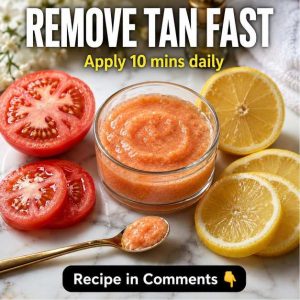
The tomato-and-lemon mask shown in the image is not recommended. Lemon juice is highly acidic and can irritate facial skin. More importantly, citrus juice left on the skin before sunlight may cause phytophotodermatitis, a phototoxic reaction that can produce redness, pain, blisters and darker pigmentation. A published medical case described burn-like injuries after lemon exposure followed by sunlight. Removing lemon from the routine makes it safer and reduces the risk of worsening the very pigmentation being treated. (PubMed)
Remedy 1: For Normal Skin
Aloe, Yogurt and Green Tea Renewal Mask
Ingredients: Use 1 tablespoon plain unsweetened yogurt, 1 tablespoon pure aloe vera gel, 1 teaspoon finely ground colloidal oatmeal, 1 teaspoon freshly brewed and cooled green tea, ½ teaspoon honey and two drops of vegetable glycerin.
Scientific Working of Each Ingredient
Yogurt naturally contains lactic acid, which may help loosen dull surface cells. Clinical trials of standardized lactic-acid creams have shown modest improvement in roughness and mottled pigmentation, but yogurt contains a much lower and unpredictable concentration, so its effect will be gentler. Aloe contains compounds including aloesin; laboratory research has found that isolated aloesin can inhibit tyrosinase, an enzyme involved in melanin production. This does not prove that fresh aloe gel will remove a tan, but it provides a reasonable scientific basis for including it in a soothing routine. (PubMed)
Green tea contains antioxidant polyphenols. Human studies of concentrated topical green-tea extracts have shown reduced ultraviolet-induced redness and cellular damage, although brewed household tea is weaker and cannot replace sunscreen. Colloidal oatmeal supports the moisture barrier, glycerin attracts water into the outer skin layer, and honey gives the mask a soft, moisture-retaining texture. Controlled studies have demonstrated improved hydration and barrier function with formulated oatmeal and glycerol treatments. (PubMed)
Procedure
Combine the oatmeal, yogurt and honey in a clean bowl. Add the aloe, glycerin and cooled green tea and mix until smooth. Apply a thin layer to freshly cleansed skin, avoiding the eyelids, lips and any irritated areas.
Leave it on for eight to ten minutes. Rinse with cool or lukewarm water without scrubbing, then apply a gentle moisturizer. Prepare a fresh mixture each time because homemade masks contain no preservatives.
How Often to Apply: Apply once daily for three days. Continue on alternate days for another week if no irritation occurs.
Initial Results: The skin may feel softer and look less dull within one to three days. Actual tan fading normally requires several weeks of consistent sun protection.
Remedy 2: For Combination Skin
Two-Zone Green Tea and Soft-Clay Treatment
Ingredients: Use 1 teaspoon cosmetic-grade kaolin clay, 1 tablespoon aloe vera gel, 1 tablespoon cooled green tea, 1 teaspoon colloidal oatmeal, 1 teaspoon strained cucumber juice and two drops of vegetable glycerin.
Scientific Working of Each Ingredient
Combination skin needs different treatment on oily and dry areas. Kaolin absorbs surface oil from the forehead, nose and chin, making these areas look cleaner without physically scraping the skin. It does not remove melanin, so it should only be used for temporary oil control.
Green tea may calm ultraviolet-related inflammation, while aloe provides a cooling, water-rich base. Oatmeal and glycerin help protect the drier cheeks from excessive moisture loss. Cucumber juice mainly supplies water and a cooling sensation; convincing clinical evidence for cucumber as a tan remover is lacking, so it should be viewed as a supporting ingredient rather than a bleaching agent. Evidence for the stronger benefits comes from green-tea extracts and colloidal-oat formulations rather than the complete homemade mixture. (PubMed)
Procedure
Mix the aloe, green tea, cucumber juice, oatmeal and glycerin. Apply this light mixture over the cheeks and jawline.
Transfer half of the remaining mixture to another bowl and stir in the kaolin clay. Apply the clay portion only to the nose, chin and forehead. Leave both sections on for five to seven minutes. Rinse before the clay becomes completely dry or begins cracking.
How Often to Apply: Use on alternate days for five days. Afterward, limit the clay portion to once or twice weekly.
Initial Results: Oiliness may decrease after the first application, while the cheeks may feel more comfortable and hydrated. A smoother surface can make the tan look less patchy within two or three days.
Remedy 3: For Oily Skin
Short-Contact Yogurt, Aloe and Oat Clarifying Pack
Ingredients: Use 2 teaspoons plain unsweetened yogurt, 1 teaspoon aloe vera gel, 1 teaspoon colloidal oatmeal, 1 teaspoon cooled green tea, ½ teaspoon cosmetic-grade kaolin clay and ½ teaspoon honey.
Scientific Working of Each Ingredient
Oily skin can look darker when excess sebum, sweat and dead surface cells create a dull layer. Yogurt provides very mild lactic-acid activity, while kaolin removes some surface oil. Oatmeal prevents the mask from becoming overly drying, aloe adds hydration and green tea supplies polyphenols associated with reduced ultraviolet-related inflammation.
Honey is included in a very small amount to prevent the pack from drying hard. It should not be considered a clinically proven pigment treatment. Controlled research supports formulated lactic acid for photodamaged texture, but improvement took weeks or months rather than a few days. Therefore, this remedy should be used as gentle surface care, not as a rapid bleaching mask. (PubMed)
Procedure
Mix all ingredients into a thin, creamy paste. Add several drops of cooled green tea if it feels too thick. Spread a light layer over the face, concentrating on oily areas.
Leave it on for five minutes only. Wet your fingertips and loosen the mixture before rinsing it away. Do not massage it like a scrub, as friction can trigger irritation and post-inflammatory pigmentation.
How Often to Apply: Apply on days one, three and five. Do not use the clay-and-yogurt pack every day.
Initial Results: The face may feel cleaner and look less greasy after one use. Surface brightness may improve within three days, while meaningful pigment fading is likely to take at least four to eight weeks.
Remedy 4: For Dry Skin
Oat, Coconut and Aloe Moisture Mask
Ingredients: Use 1 tablespoon colloidal oatmeal, 1 tablespoon cooled boiled water, 1 teaspoon aloe vera gel, ½ teaspoon virgin coconut oil, ¼ teaspoon vegetable glycerin and ½ teaspoon honey.
Scientific Working of Each Ingredient
Dryness creates tiny rough scales that scatter light and make tanned skin look more uneven. Colloidal oatmeal supports the skin barrier and has improved hydration, skin pH and barrier function in controlled clinical research. Glycerin attracts water into the outer skin layer, while coconut oil reduces dryness by adding emollient lipids. A randomized trial found virgin coconut oil effective as a moisturizer for mild-to-moderate dry skin. (PubMed)
Aloe adds water and may soothe mild heat-related discomfort. Honey gives the mixture a softer consistency and helps prevent rapid drying. These ingredients can improve how light reflects from the surface, creating a healthier glow, but they do not dissolve melanin.
Procedure
Soak the oatmeal in cooled boiled water for two minutes. Add the aloe, glycerin, honey and coconut oil. Mix thoroughly and apply without rubbing.
Leave the mask on for ten minutes. Rinse gently and immediately apply moisturizer while the skin remains slightly damp. People who develop clogged pores easily should keep the coconut oil away from acne-prone areas.
How Often to Apply: Apply once daily for three days, followed by three times weekly for two weeks.
Initial Results: Tightness and roughness may improve after the first application. Better hydration may make the skin appear brighter and more even within two or three days.
Remedy 5: For Sensitive Skin
Fragrance-Free Oat and Sunflower Compress
Ingredients: Use 1 tablespoon colloidal oatmeal, 2 tablespoons cooled boiled water, ¼ teaspoon vegetable glycerin, three drops of high-linoleic sunflower seed oil and ½ teaspoon aloe vera gel only when previously tolerated.
Scientific Working of Each Ingredient
Sensitive skin needs barrier repair rather than aggressive exfoliation. Colloidal oatmeal can improve hydration and reduce barrier disruption. Glycerin supports water retention, while a very small quantity of sunflower seed oil supplies linoleic-acid-rich lipids. Human skin research suggests sunflower oil is less disruptive to the barrier than olive oil, which is why olive oil is not used in this remedy. (PubMed)
Cooled boiled water creates a clean, soft compress. Aloe may provide additional hydration, but it should be omitted when it has previously caused itching or redness. Sensitive skin should not be treated with lemon, baking soda, undiluted vinegar, essential oils, rough tomato pulp or grainy scrubs.
Procedure
Combine the oatmeal and water and allow the mixture to soften for five minutes. Stir in the glycerin and sunflower oil. Add aloe only when it is known to be tolerated.
Apply a thin layer for five minutes, rinse with cool water and pat dry. Complete a 24-hour patch test behind the ear or along the jaw before using it on the full face.
How Often to Apply: Use once daily for three days. If comfortable, continue on alternate days for one to two weeks.
Initial Results: Redness, dryness and tightness may feel calmer within one to three applications. Sensitive skin pigmentation should be treated slowly because irritation can make darkening worse.
Final Tips for Fading a Sun Tan Safely
Use broad-spectrum SPF 30 or higher every morning, even when the weather is cloudy. Apply it to the face, neck, ears and other exposed areas approximately 15 minutes before going outside, and reapply about every two hours when outdoors or after sweating. Shade, a wide-brimmed hat and protective clothing provide additional protection. Visible light can also worsen hyperpigmentation, especially in deeper skin tones, so a tinted sunscreen containing iron oxide may be helpful. (American Academy of Dermatology)
Avoid scrubbing, bleaching creams of unknown origin, repeated clay masking and picking at flaky skin. Keep bowls, towels and applicators clean, prepare masks fresh and stop any remedy that causes burning or persistent redness.
Hydration and smoother texture may create visible brightness within two or three days. However, a true tan generally fades gradually as pigmented epidermal cells are replaced. Depending on the tan’s depth and continued sun exposure, improvement may take four to twelve weeks. Natural remedies may soften fine dehydration lines, but they do not reverse established wrinkles or permanently lighten natural skin colour.
Diet Plan to Support Healthy, Even-Looking Skin
Follow this balanced diet for at least six to eight weeks while maintaining daily sun protection.
Breakfast: Choose oatmeal with plain yogurt and berries, or eggs with whole-grain bread and a vitamin-C-rich fruit such as guava or orange.
Mid-morning: Eat one seasonal fruit with a small handful of almonds or walnuts.
Lunch: Include lentils, beans, fish or chicken with vegetables, salad and a moderate serving of brown rice or whole-grain roti.
Evening: Drink water or unsweetened green tea. Avoid using green tea as a substitute for sunscreen.
Dinner: Choose vegetable soup, chickpeas, tofu, fish or chicken with cooked vegetables.
Include cooked tomatoes with a small amount of healthy oil as part of meals. Controlled trials have found that regular dietary intake of lycopene-rich tomato preparations can contribute to protection against ultraviolet-related redness, but the benefit developed over approximately ten to twelve weeks and did not replace external sun protection. (PubMed)
Continue the appropriate remedy for two weeks and maintain sun protection for at least eight to twelve weeks. See a dermatologist if pigmentation becomes patchy, grey-brown, painful, itchy or progressively darker, or if no improvement appears after eight to twelve weeks. Persistent pigmentation may be melasma, post-inflammatory hyperpigmentation or another condition requiring professional treatment.
References for the above remedy
- American Academy of Dermatology Association. “Sunscreen FAQs.”
https://www.aad.org/media/stats-sunscreen - American Academy of Dermatology Association. “How to Fade Dark Spots in Darker Skin Tones.”
https://www.aad.org/public/everyday-care/skin-care-secrets/routine/fade-dark-spots - Jones, K. et al. “Modulation of Melanogenesis by Aloesin: A Competitive Inhibitor of Tyrosinase.”
https://pubmed.ncbi.nlm.nih.gov/12213089/ - Elmets, C.A. et al. “Cutaneous Photoprotection from Ultraviolet Injury by Green Tea Polyphenols.”
https://pubmed.ncbi.nlm.nih.gov/11209110/ - Capone, K. et al. “Effects of Colloidal Oatmeal Topical Atopic Dermatitis Cream on Skin Microbiome and Skin Barrier Properties.”
https://pubmed.ncbi.nlm.nih.gov/32484623/ - Stiller, M.J. et al. “Topical 8% Glycolic Acid and 8% L-Lactic Acid Creams for the Treatment of Photodamaged Skin.”
https://pubmed.ncbi.nlm.nih.gov/8651713/ - Breternitz, M. et al. “Placebo-Controlled, Double-Blind, Randomized Study of a Glycerol-Based Emollient.”
https://pubmed.ncbi.nlm.nih.gov/18025807/ - Danby, S.G. et al. “Effect of Olive and Sunflower Seed Oil on the Adult Skin Barrier.”
https://pubmed.ncbi.nlm.nih.gov/22995032/ - Agero, A.L.C. and Verallo-Rowell, V.M. “A Randomized Double-Blind Controlled Trial Comparing Extra Virgin Coconut Oil with Mineral Oil as a Moisturizer for Xerosis.”
https://pubmed.ncbi.nlm.nih.gov/15724344/ - Harshman, J. et al. “Lemons in the Arizona Sunshine: Furocoumarins Leading to Phytophotodermatitis and Burn-Like Injuries.”
https://pubmed.ncbi.nlm.nih.gov/29324427/