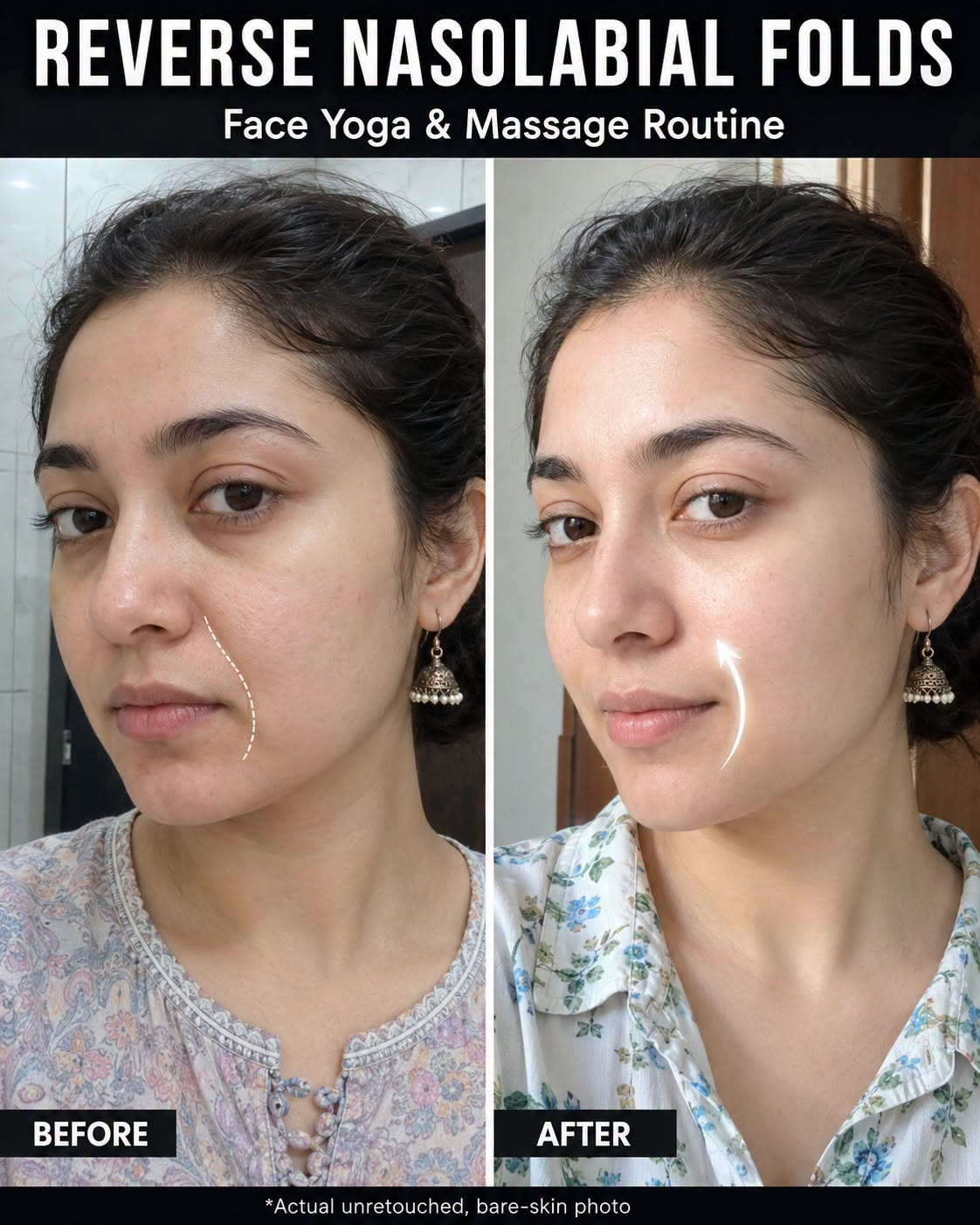
Nasolabial folds are the smile lines that run from the sides of the nose toward the corners of the mouth. They become more visible because of natural aging, facial volume changes, sun exposure, dryness, repeated facial expressions, and loss of skin elasticity. A natural routine cannot permanently “erase” deep folds in a few days, but a gentle face yoga and massage routine combined with hydrating, barrier-supporting ingredients can make the area look smoother, fresher, and more lifted. The goal is to improve skin moisture, reduce surface tightness, support elasticity, and encourage better-looking cheek firmness over time. These remedies are tailored by skin type so the skin is supported without becoming greasy, dry, or irritated.
Remedy 1: For Normal Skin
Ingredients
Aloe vera gel, 1 tablespoon: Contains polysaccharides that bind water and help the skin look plumper and calmer.
Cooled green tea, 1 tablespoon: Green tea catechins provide antioxidant support against oxidative stress linked with skin aging.
Raw honey, 1 teaspoon: Works as a natural humectant, helping draw moisture to the skin.
Finely ground oats, 1 teaspoon: Oats contain beta-glucans and avenanthramides that soothe and support the skin barrier.
Cucumber juice, 1 teaspoon: Adds lightweight hydration and cooling comfort.
Sweet almond oil, 3 drops: Provides emollient fatty acids that soften the fold area.
Rose water, 1 teaspoon: Offers mild antioxidant and calming support when tolerated.
Scientific Working of This Remedy
This blend works by combining humectants, antioxidants, and emollients. Aloe, honey, cucumber, and glycerin-like natural sugars help improve surface hydration, which can make shallow smile lines appear softer. Oats and rose water calm visible stress, while green tea helps protect skin from oxidative damage. Almond oil reduces roughness so massage glides smoothly without pulling the skin.
Procedure
Mix all ingredients into a smooth paste. Wash your face and apply a thin layer around the cheeks, nasolabial folds, and lower face. With clean fingers, massage upward from the corners of the mouth toward the cheekbones for 2 minutes. Then perform a gentle cheek-lift exercise: smile softly without squinting, place two fingers on the upper cheeks, lift slightly upward, hold for 5 seconds, and repeat 8 times. Leave the mask on for 10 minutes, then rinse with cool water.
How Often to Apply
Use once daily for 5 days, then 3 times weekly.
Initial Results
Within 1–3 days, the skin may feel smoother, softer, and more hydrated. The fold may look slightly less shadowed because the surface is better moisturized.
Remedy 2: For Combination Skin
Ingredients
Aloe vera gel, 1 tablespoon: Hydrates without feeling heavy.
Plain yogurt, 1 teaspoon: Contains lactic acid, which gently smooths dull surface cells.
Green tea, 1 tablespoon: Helps reduce oxidative stress and supports a fresher look.
Honey, ½ teaspoon: Provides controlled hydration without making the T-zone too greasy.
Oat powder, 1 teaspoon: Balances soothing care for dry and oily areas.
Cucumber juice, 1 teaspoon: Refreshes and cools the skin.
Vegetable glycerin, 2 drops diluted in 1 teaspoon water: Acts as a strong water-binding humectant.
Scientific Working of This Remedy
Combination skin needs hydration without clogging or heaviness. Aloe, cucumber, and diluted glycerin hydrate the cheek fold area, while yogurt’s mild lactic acid helps improve surface smoothness. Green tea supports antioxidant defense, and oats reduce the chance of irritation on drier cheek zones.
Procedure
Mix the ingredients until creamy. Apply mainly around the cheeks and smile lines, using only a very thin layer on the nose or oily areas. Massage from the side of the nose outward and upward toward the temples using light pressure for 3 minutes. Add the “air cheek hold”: fill your cheeks gently with air, move the air from left to right for 10 seconds, relax, and repeat 5 times. Rinse after 8–10 minutes.
How Often to Apply
Apply on alternate days for 5 days, then continue 2–3 times weekly.
Initial Results
In 1–3 days, dry cheek areas may look more comfortable while oily areas should not feel overloaded. Smile lines may appear slightly smoother because of better water balance.
Remedy 3: For Oily Skin
Ingredients
Cooled green tea, 2 tablespoons: Lightweight antioxidant support.
Aloe vera gel, 1 tablespoon: Hydrates oily skin without a greasy layer.
Cucumber juice, 1 tablespoon: Provides cooling water-based hydration.
Oat powder, 1 teaspoon: Soothes and helps reduce uncomfortable shine.
Honey, ½ teaspoon: Adds gentle moisture and calming support.
Rose water, 1 teaspoon: Gives a fresh feel and mild calming effect.
Multani mitti, ½ teaspoon: Helps absorb excess oil, but should be used lightly to avoid dryness.
Scientific Working of This Remedy
Oily skin can still show folds if it is dehydrated. This remedy focuses on water-based hydration and antioxidant support instead of heavy oils. Aloe and cucumber plump the surface, green tea helps protect against environmental stress, oats calm the skin, and a small amount of multani mitti controls shine without stripping the cheek area.
Procedure
Mix into a thin paste. Apply only a light coat around the nasolabial folds and cheeks; avoid letting it dry until cracked. Massage with two fingers in slow upward strokes from the mouth corner to the cheekbone for 2 minutes. Then do a gentle “smile resistance” exercise: smile softly, place fingertips beside the mouth corners, give slight outward resistance, hold 4 seconds, and repeat 6 times. Rinse before the mask fully dries.
How Often to Apply
Use once daily for 3 days, then every other day for the next 2 days.
Initial Results
Within 1–3 days, the skin may look less shiny yet more refreshed. Hydration can reduce the tired shadow around the folds.
Remedy 4: For Dry Skin
Ingredients
Aloe vera gel, 1 tablespoon: Adds water-binding hydration.
Avocado mash, 1 teaspoon: Supplies natural fatty acids for softness.
Raw honey, 1 teaspoon: Helps attract and hold moisture.
Finely ground oats, 1 teaspoon: Supports barrier comfort.
Sweet almond oil, 5 drops: Softens dry skin and reduces rough texture.
Vegetable glycerin, 2 drops diluted in 1 teaspoon rose water or plain water: Improves water retention.
Cucumber juice, 1 teaspoon: Adds freshness and prevents the blend from feeling too heavy.
Scientific Working of This Remedy
Dry skin makes nasolabial folds look deeper because the surface lacks water and lipids. Honey, aloe, and diluted glycerin hydrate the upper skin layers. Avocado and almond oil provide emollient support, while oats soothe dryness-related tightness. This creates a smoother surface for massage and helps the fold area look less creased.
Procedure
Mash well until creamy. Apply around the cheeks, smile lines, and lower face. Massage upward for 4 minutes using slow strokes, never pulling downward. Add a cheek-lift pose: open the mouth into a soft “O,” smile gently to lift the cheeks, hold 5 seconds, and repeat 8 times. Leave for 12 minutes, then rinse and apply a simple moisturizer if needed.
How Often to Apply
Use daily for 5 days, preferably at night.
Initial Results
Within 1–3 days, dry tightness should reduce and the fold area may appear softer, especially in the morning.
Remedy 5: For Sensitive Skin
Ingredients
Colloidal oatmeal or very finely blended oats, 1 tablespoon: Helps calm and protect delicate skin.
Pure aloe vera gel, 1 tablespoon: Provides gentle hydration and soothing support.
Cucumber juice, 1 tablespoon: Cools visible discomfort.
Diluted vegetable glycerin, 1 drop in 1 tablespoon water: Adds mild hydration without heaviness.
Sunflower seed oil, 2 drops: Supports barrier lipids and is lighter than many heavy oils.
Raw honey, ¼ teaspoon, optional: Use only if your skin tolerates honey well.
Plain cooled green tea, 1 teaspoon: Adds antioxidant support in a mild form.
Scientific Working of This Remedy
Sensitive skin needs barrier repair and low-friction massage. Oats are the main calming ingredient because they help reduce dryness and discomfort. Aloe and cucumber hydrate gently. Sunflower seed oil supports the skin barrier, while diluted glycerin holds water. Green tea adds antioxidant value, but the formula stays mild and fragrance-free.
Procedure
Mix into a soft gel-paste. Patch test first behind the ear for 24 hours. Apply a thin layer only if there is no stinging or redness. Instead of strong massage, use gentle pressing movements along the folds for 1 minute, then glide upward with two fingers using almost no pressure. Do a relaxed cheek exercise: close the lips, smile lightly, hold 3 seconds, relax, and repeat 5 times. Rinse after 7 minutes.
How Often to Apply
Apply every other day for 5 days.
Initial Results
Within 1–3 days, the skin may feel calmer, less tight, and better hydrated. Sensitive skin should improve slowly, so avoid aggressive rubbing.
Final Tips
Keep your massage pressure light because hard rubbing can irritate skin and worsen lines. Always massage upward and outward, not downward. Drink enough water, sleep 7–8 hours, clean your hands and skincare tools before touching your face, and avoid harsh scrubs around the mouth. Use sun protection every morning because UV exposure is one of the biggest causes of premature sagging, wrinkles, and deeper folds. Do a patch test before every new remedy. Visible freshness may begin within 2–3 days, while more noticeable softening needs consistent care for 6–8 weeks. Face yoga studies suggest that meaningful facial fullness changes require long-term practice, not overnight results.
Diet Plan
Continue the remedies for 5 days as an initial routine, then maintain them 2–3 times weekly for 6–8 weeks. For diet, focus on foods that support collagen, hydration, and antioxidant protection.
Morning: Drink water after waking. Eat eggs, yogurt, oats, or lentils for protein, plus citrus, guava, berries, or amla for vitamin C.
Lunch: Include vegetables, beans, chicken, fish, tofu, or lentils. Add healthy fats from nuts, seeds, avocado, or olive oil.
Evening snack: Take green tea, cucumber, fruit, or soaked almonds instead of sugary snacks.
Dinner: Choose protein with cooked vegetables and whole grains. Add omega-3 sources such as fish, chia seeds, flaxseeds, or walnuts.
Avoid excessive sugar, smoking, frequent late nights, and dehydration because these can worsen collagen breakdown and dullness. If nasolabial folds deepen suddenly, appear only on one side with facial weakness, or come with swelling, pain, rash, unexplained weight loss, or if the problem persists despite 6–8 weeks of care, see a doctor or dermatologist.
References for the above remedy
- Alam M, et al. Association of Facial Exercise With the Appearance of Aging. JAMA Dermatology, 2018. URL: https://jamanetwork.com/journals/jamadermatology/fullarticle/2666801 (JAMA Network)
- Cho S, et al. Dietary Aloe Vera Supplementation Improves Facial Wrinkles and Elasticity. Annals of Dermatology, 2009. URL: https://pubmed.ncbi.nlm.nih.gov/20548848/ (PubMed)
- Purnamawati S, et al. The Role of Moisturizers in Addressing Various Kinds of Dermatitis. Clinical Medicine & Research, 2017. URL: https://pmc.ncbi.nlm.nih.gov/articles/PMC5849435/ (PMC)
- Burlando B, Cornara L. Honey in Dermatology and Skin Care: A Review. Journal of Cosmetic Dermatology, 2013. URL: https://pubmed.ncbi.nlm.nih.gov/24305429/ (PubMed)
- Pazyar N, et al. Oatmeal in Dermatology: A Brief Review. Indian Journal of Dermatology, Venereology and Leprology, 2012. URL: https://ijdvl.com/oatmeal-in-dermatology-a-brief-review/ (ijdvl.com)
- Febrinasari RP, et al. Green Tea as a Cosmetic Agent for Skin Aging: A Scoping Review. URL: https://pmc.ncbi.nlm.nih.gov/articles/PMC12441187/ (PMC)
- Lin TK, Zhong L, Santiago JL. Anti-Inflammatory and Skin Barrier Repair Effects of Topical Application of Some Plant Oils. International Journal of Molecular Sciences, 2017. URL: https://pmc.ncbi.nlm.nih.gov/articles/PMC5796020/ (PMC)
- Lee M, et al. Skin Anti-Inflammatory Activity of Rose Petal Extract. Journal of Medicinal Food, 2018. URL: https://pmc.ncbi.nlm.nih.gov/articles/PMC6261181/ (PMC)
- Cao C, et al. Diet and Skin Aging: From the Perspective of Food Nutrition. Nutrients, 2020. URL: https://pmc.ncbi.nlm.nih.gov/articles/PMC7146365/ (PMC)
- American Academy of Dermatology. Sun Protection. URL: https://www.aad.org/public/everyday-care/sun-protection (aad.org)