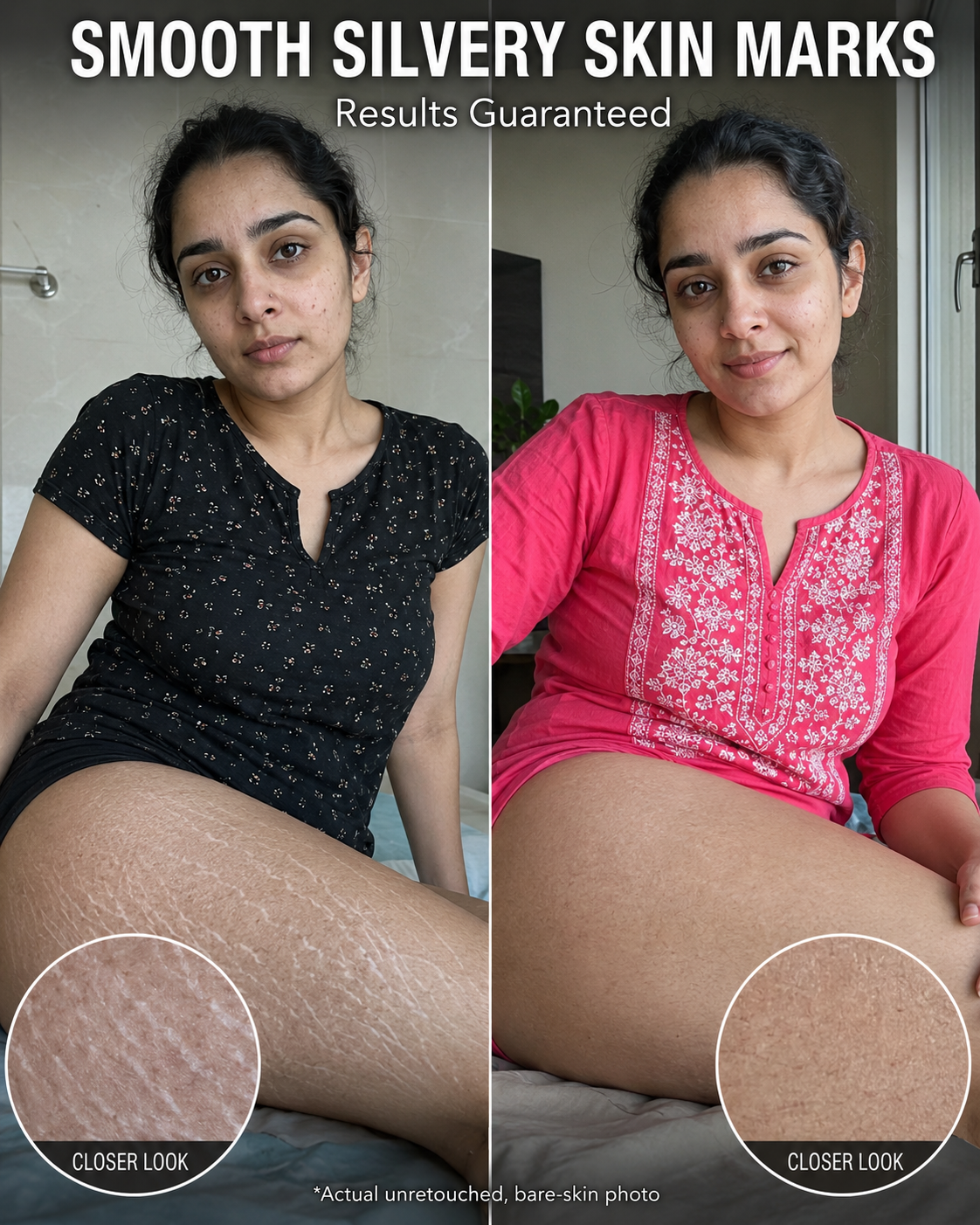
Smooth silvery skin marks usually refer to mature stretch marks, also called striae albae. They often appear on thighs, hips, stomach, breasts, arms, or buttocks after rapid stretching of the skin due to weight change, puberty, pregnancy, muscle gain, hormonal changes, or genetics. These marks are not dangerous, but they can affect confidence because the skin may look lined, dry, uneven, or slightly shiny. Home remedies cannot honestly “erase” deep stretch marks overnight, but the right natural ingredients can improve hydration, softness, skin barrier strength, and the visible roughness around the marks. With consistent care, many people notice smoother-looking skin within 2–3 days, while deeper texture improvement usually needs 8–12 weeks.
Remedy 1: For Normal Skin
Centella, Aloe and Almond Elasticity Massage
Ingredients
Centella asiatica powder or strong gotu kola tea, 1 teaspoon: supports collagen-related skin repair and improves elasticity.
Fresh aloe vera gel, 1 tablespoon: hydrates and supports skin recovery.
Sweet almond oil, 1 teaspoon: gives slip for massage and helps reduce dryness.
Colloidal oatmeal or very finely ground oats, 1 teaspoon: calms roughness and supports the skin barrier.
Rose water, 1 tablespoon: makes the paste lighter and soothing.
Rice flour, 1 teaspoon: gives very mild polishing without harsh scrubbing.
Scientific Working of Each Ingredient
Centella contains triterpenoids that are studied for collagen support and skin firmness. Aloe vera contains polysaccharides that help moisture retention and skin comfort. Almond oil is most useful when paired with gentle massage because massage may improve skin flexibility. Oatmeal supports the outer skin barrier, while rice flour gently removes dry flakes so silvery marks look less chalky.
Procedure
Mix all ingredients into a smooth paste. Apply on clean stretch-mark areas. Massage gently in circular motions for 8–10 minutes. Leave it for another 15 minutes, then rinse with lukewarm water. Pat dry and apply 2–3 drops of almond oil.
How Often to Apply
Use daily for 5 days, then 3–4 times weekly for 8–12 weeks.
Initial Results
Within 1–3 days, the skin may feel softer, less dry, and less flaky. The silvery lines may look smoother because the surface is better hydrated.
Remedy 2: For Combination Skin
Green Tea, Flaxseed and Aloe Balance Gel
Ingredients
Cooled green tea, 2 tablespoons: antioxidant support for stressed skin.
Aloe vera gel, 1 tablespoon: lightweight hydration.
Fresh flaxseed gel, 1 tablespoon: forms a soft moisture film.
Sunflower seed oil, ½ teaspoon: supports skin barrier lipids without feeling too heavy.
Finely ground oats, 1 teaspoon: reduces dryness and irritation.
Cucumber juice, 1 tablespoon: cools and refreshes mixed skin areas.
Scientific Working of Each Ingredient
Combination skin needs hydration without greasiness. Green tea catechins help calm oxidative stress and excess oiliness. Flaxseed gel gives a natural gel texture that keeps water on the skin. Sunflower seed oil contains linoleic acid, which supports barrier repair. Aloe and cucumber cool the skin, while oats reduce tightness.
Procedure
Mix the ingredients into a thin gel. Apply a generous layer on the marks. Massage for 5 minutes only, then leave for 15 minutes. Rinse and pat dry. Do not apply a heavy oil afterward.
How Often to Apply
Apply every night for 5 days, then alternate nights for 8 weeks.
Initial Results
In 2–3 days, the skin may look more even and comfortable, with less dryness on the marked area and less heaviness on surrounding skin.
Remedy 3: For Oily Skin
Oil-Free Centella and Cucumber Smoothing Mask
Ingredients
Strong centella tea, 2 tablespoons: supports skin elasticity.
Aloe vera gel, 1 tablespoon: hydrates without oil.
Cucumber juice, 1 tablespoon: soothes and cools the skin.
Green tea powder, ¼ teaspoon: antioxidant and oil-balancing support.
Rice flour, 1 teaspoon: mild surface smoothing.
Colloidal oatmeal, ½ teaspoon: protects against irritation from over-cleansing.
Scientific Working of Each Ingredient
Oily skin should not be treated with heavy butters or thick oils. Centella is included for collagen-supportive activity. Aloe gives water-based hydration. Green tea may help reduce excess sebum activity and oxidative stress. Rice flour and oatmeal make the skin feel smoother without aggressive exfoliation.
Procedure
Make a light paste. Apply only on the stretch-mark area. Massage very gently for 3–4 minutes. Leave it for 10 minutes and rinse fully. Use a clean towel and avoid applying body oil afterward.
How Often to Apply
Use on alternate days for the first 5 days, then 3 times weekly.
Initial Results
Within 1–3 days, the area may feel cleaner, smoother, and less sticky. The marks may appear less dull because dead surface flakes are reduced.
Remedy 4: For Dry Skin
Shea, Oat and Sunflower Deep Moisture Balm
Ingredients
Unrefined shea butter, 1 teaspoon: seals moisture and softens rough skin.
Aloe vera gel, 1 tablespoon: adds water-based hydration.
Sunflower seed oil, 1 teaspoon: supports barrier lipids.
Colloidal oatmeal, 1 tablespoon: calms dryness and itching.
Mashed ripe avocado, 1 teaspoon: provides fatty acids for softness.
Chamomile tea, 1 tablespoon: makes the mix soothing and spreadable.
Ground flaxseed gel, 1 teaspoon: adds a smooth moisture layer.
Scientific Working of Each Ingredient
Dry stretch marks look more visible because dehydration makes fine lines appear sharper. Shea butter and avocado soften the surface. Sunflower oil helps reduce water loss. Oatmeal supports the skin barrier, while aloe and flaxseed gel increase hydration. Chamomile tea keeps the formula gentle.
Procedure
Mix well until creamy. Apply a thick layer on the marks. Massage for 10 minutes, then leave for 20 minutes. Wipe with a damp cloth instead of harsh washing. Seal with a tiny amount of sunflower seed oil.
How Often to Apply
Apply daily for 5 days, then 4 times weekly for 8–12 weeks.
Initial Results
In 1–3 days, dry white lines may look less sharp, and the skin may feel more flexible and comfortable.
Remedy 5: For Sensitive Skin
Oat, Aloe and Chamomile Calm Compress
Ingredients
Colloidal oatmeal, 1 tablespoon: barrier-supporting and calming.
Pure aloe vera gel, 1 tablespoon: gentle hydration.
Cooled chamomile tea, 2 tablespoons: soothing liquid base.
Cucumber juice, 1 tablespoon: cooling effect.
Sunflower seed oil, ¼ teaspoon: light barrier support.
Rice starch, ½ teaspoon: softens the paste and reduces friction.
Scientific Working of Each Ingredient
Sensitive skin needs low-friction care. Oatmeal is one of the best natural ingredients for barrier comfort. Aloe and cucumber hydrate without strong exfoliation. Chamomile tea is gentle and calming for many people. Sunflower oil is used in a very small amount to reduce dryness without overwhelming the skin.
Procedure
Mix into a soft paste and chill for 5 minutes. Apply gently without rubbing. Leave for 10–12 minutes. Rinse with cool water and pat dry. Avoid perfumes, essential oils, lemon juice, baking soda, or strong scrubs.
How Often to Apply
Use once daily for 3 days, then alternate days if the skin feels comfortable.
Initial Results
Within 2–3 days, tightness, dryness, and irritation may reduce. The stretch marks may look calmer because the surrounding skin is less inflamed.
Final Tips
Always do a patch test on the inner arm for 24 hours before applying any remedy to a larger area. Keep towels, bowls, and applicators clean to avoid irritation. Drink enough water, sleep 7–8 hours, and avoid harsh soaps on the marked area. Do not scrub aggressively because stretch marks are already delicate dermal scars. If the area is exposed to sunlight, use sun protection because tanning can make silvery lines look more obvious. Visible softness usually starts within 2–3 days, while a smoother glow and fine-line texture improvement need consistent care over several weeks.
Diet Plan
Follow the topical remedy and diet plan for 8–12 weeks. For breakfast, eat oats or whole-grain bread with eggs, yogurt, or lentils, plus a vitamin C fruit such as orange, guava, kiwi, or berries. For lunch, choose chicken, fish, beans, lentils, or paneer with vegetables and whole grains. For snacks, take nuts, seeds, fruit, or unsweetened yogurt. For dinner, include protein again with colorful vegetables, especially bell peppers, spinach, tomatoes, carrots, and broccoli. Drink 6–8 glasses of water daily, more if you sweat a lot. Protein, vitamin C, zinc, and healthy fats support collagen formation and skin repair from inside.
If the marks are rapidly spreading, painful, very itchy, purple, associated with sudden weight change, steroid use, hormonal symptoms, pregnancy concerns, or if there is no improvement after 12 weeks of consistent care, see a doctor or dermatologist.
References for the above remedy
- Mikes BA, Montojo J. Striae Distensae. StatPearls, NCBI Bookshelf. URL: https://www.ncbi.nlm.nih.gov/books/NBK436005/ (NCBI)
- Korgavkar K, Wang F. Stretch marks during pregnancy: a review of topical prevention. PubMed. URL: https://pubmed.ncbi.nlm.nih.gov/25255817/ (PubMed)
- Cochrane. Topical preparations for preventing stretch marks in pregnancy. URL: https://www.cochrane.org/evidence/CD000066_topical-preparations-preventing-stretch-marks-pregnancy (Cochrane)
- Taşhan ST, Kafkasli A. The effect of bitter almond oil and massaging on striae gravidarum. PubMed. URL: https://pubmed.ncbi.nlm.nih.gov/22594386/ (PubMed)
- Bylka W, Znajdek-Awiżeń P, Studzińska-Sroka E, Brzezińska M. Centella asiatica in cosmetology. URL: https://pmc.ncbi.nlm.nih.gov/articles/PMC3834700/ (PMC)
- Hekmatpou D, Mehrabi F, Rahzani K, Aminiyan A. The effect of Aloe vera clinical trials on prevention and healing of skin wound. URL: https://pmc.ncbi.nlm.nih.gov/articles/PMC6330525/ (PMC)
- Ilnytska O, et al. Colloidal oatmeal improves skin barrier through multi-therapy activity. PubMed. URL: https://pubmed.ncbi.nlm.nih.gov/27272074/ (PubMed)
- Danby SG, et al. Effect of olive and sunflower seed oil on the adult skin barrier. PubMed. URL: https://pubmed.ncbi.nlm.nih.gov/22995032/ (PubMed)
- Saric S, et al. Green tea and other tea polyphenols: effects on sebum production and acne vulgaris. URL: https://pmc.ncbi.nlm.nih.gov/articles/PMC5384166/ (PMC)
- Pullar JM, Carr AC, Vissers MCM. The roles of vitamin C in skin health. URL: https://pmc.ncbi.nlm.nih.gov/articles/PMC5579659/ (PMC)