
Dry, rough feet and cracked heels develop when the thick outer layer of skin loses moisture and becomes less flexible. Long hot showers, dry weather, frequent barefoot walking, open-backed footwear, friction, and inadequate moisturization can all contribute. Although “baby-soft feet in 3 days” is an attractive promise, three days is more realistic for noticeable improvements in hydration, roughness, and softness than for completely healing deep heel fissures. Dermatologists recommend short lukewarm washing, moisturizing immediately afterward, overnight occlusion, and appropriate footwear as core measures for dry, cracked heels. (American Academy of Dermatology)
The following remedies are tailored to different skin types. Importantly, do not scrub deep, bleeding, painful, or infected cracks. Those require appropriate medical care rather than a home pedicure.
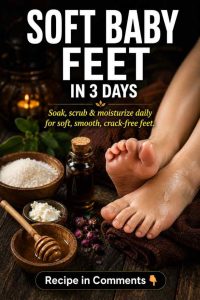
Remedy 1: For Normal Skin – Oat, Banana and Honey Softening Foot Mask
Ingredients
- 2 tablespoons finely ground oats
- 2 tablespoons mashed ripe banana
- 1 teaspoon honey
- 1 tablespoon plain unsweetened yogurt
- 1 teaspoon sunflower seed oil
- 1 tablespoon aloe vera gel
Scientific Working of Each Ingredient
Oats: Colloidal oatmeal is one of the better-supported natural ingredients for dry skin. A randomized clinical study found that a colloidal-oatmeal cream significantly improved skin hydration and barrier function. (PubMed)
Sunflower oil: Works primarily as an emollient, helping reduce water loss and making rough surface skin feel more flexible.
Honey: Acts as a humectant and helps create a moisture-rich mask.
Banana: Supplies water and makes the mixture creamy, although there is not strong clinical evidence that banana itself repairs cracked heels.
Aloe vera and yogurt: Provide additional moisture and make the mask easier to spread.
Procedure
Wash the feet for about 5–10 minutes in lukewarm water and pat them dry. Do not soak them for a prolonged period because excessive bathing can worsen dryness. (American Academy of Dermatology)
Mash the banana thoroughly. Add aloe, yogurt and honey before stirring in finely ground oats and sunflower oil.
Apply generously to the heels and soles. Leave for 15–20 minutes, rinse gently and moisturize immediately.
How Often to Apply
Use every evening for 3–5 days.
Initial Results
The heels may feel softer after the first treatment. Within three days, superficial roughness and dryness can become noticeably better, although established cracks may remain.
Remedy 2: For Combination Skin – Aloe, Oat and Avocado Foot Pack
Ingredients
- 2 tablespoons pure aloe vera gel
- 1 tablespoon finely ground oats
- 1 tablespoon mashed avocado
- 1 teaspoon honey
- 1 teaspoon plain yogurt
- ½ teaspoon sunflower seed oil
Scientific Working: Hydration Plus Barrier Support
Combination skin on the feet can have relatively normal areas alongside extremely dry heels. The remedy therefore concentrates emollients without turning the entire foot into a heavy oil treatment.
Oatmeal has demonstrated measurable improvements in hydration and skin-barrier properties in human research. (PubMed) Avocado and sunflower oil provide lipids that make dry surface skin feel smoother, while honey and aloe contribute hydration.
Clinical research involving moisturizers for very dry skin also demonstrates an important principle: regular moisturization can significantly decrease visible dryness and tactile roughness. (PubMed)
Procedure
Mash the avocado until completely smooth. Add aloe, honey and yogurt. Mix in oats and sunflower oil.
Apply a thicker layer over dry heels and a thinner layer elsewhere.
Leave for 15 minutes, rinse and apply moisturizer while the skin is still slightly damp.
How Often to Apply
Apply once nightly for 3–5 consecutive nights.
Initial Results
Expect softer heels and reduced tightness within 1–3 days. Deep fissures will take longer to heal.
Remedy 3: For Oily or Sweaty Feet – Aloe and Oat Lightweight Foot Mask
Ingredients
- 2 tablespoons aloe vera gel
- 1½ tablespoons finely ground oats
- 1 tablespoon plain yogurt
- 1 teaspoon honey
- 1 tablespoon cooled green tea
- 1 teaspoon cucumber pulp
Scientific Working: Softening Without Heavy Oils
Sweaty feet can still develop thick, dry heels. Applying excessive oils may feel uncomfortable, so this recipe relies on a lighter moisturizing base.
Colloidal oats are again the key scientifically supported ingredient. Research shows improvements in hydration, pH and barrier function with topical colloidal-oatmeal formulations. (PubMed)
Aloe, cucumber and cooled tea add water, while honey helps hold moisture against the surface.
However, excessive sweating combined with itching, peeling between the toes, burning, or scaling can indicate athlete’s foot. A moisturizing mask does not treat a fungal infection.
Procedure
Mix the aloe and yogurt first. Add oats, honey, cucumber and cooled green tea.
Apply mainly to dry heels rather than packing the mixture between the toes.
Leave for 10–15 minutes and rinse thoroughly. Dry carefully, particularly between the toes.
How Often to Apply
Use nightly for 3 days, then every other evening as required.
Initial Results
Rough skin may feel softer after several applications without leaving the entire foot heavily greasy.
Remedy 4: For Very Dry Skin – Shea Butter, Oat and Coconut Oil Heel Balm
Ingredients
- 1 tablespoon plain shea butter
- 1 teaspoon virgin coconut oil
- 1 teaspoon finely ground oats
- ½ teaspoon honey
- 1 teaspoon aloe vera gel
- ½ teaspoon sunflower seed oil
Scientific Working: Occlusion Is the Secret
Very dry heels need more than water—they need something that slows evaporation afterward.
Oils and butter create an emollient/occlusive layer that makes thick heel skin more flexible. Oatmeal contributes barrier support.
However, the most important scientific principle is occlusion. The American Academy of Dermatology recommends moisturizing cracked heels while they are still damp and specifically recommends an occlusive layer before bed, with socks to help keep it in place. (American Academy of Dermatology)
Procedure
Soften the shea butter between clean fingers and mix in coconut and sunflower oils.
Add aloe, honey and extremely finely powdered oats.
After washing the feet briefly, pat them almost dry. Massage a small quantity into the heels for approximately one minute.
For an overnight version, use a smooth balm without gritty oat particles, then put on clean cotton socks. Wash the feet in the morning.
How Often to Apply
Apply nightly for at least 5–7 days. Severe dryness may require several weeks of consistent care.
Initial Results
Very dry heels can feel considerably softer by the following morning. After three nights, superficial flaking and roughness may decrease, but deep cracks should not be expected to disappear.
Remedy 5: For Sensitive Skin – Minimalist Colloidal Oat Foot Treatment
Ingredients
- 2 tablespoons finely powdered oats
- 2 tablespoons lukewarm water
- 1 tablespoon aloe vera gel
- 1 teaspoon plain yogurt
- ½ teaspoon honey
Scientific Working: Repair Without Aggressive Scrubbing
Sensitive feet benefit from fewer ingredients.
Colloidal oatmeal has clinical evidence supporting improvements in dry, compromised skin. In one randomized study, a 1% colloidal-oatmeal cream significantly improved barrier defects, hydration and several measures of eczema severity over 14 days. (PubMed)
This recipe deliberately avoids lemon, vinegar, baking soda, essential oils and salt scrubs. These ingredients are unnecessary for moisturizing sensitive or cracked heels and may sting open fissures.
Procedure
Mix finely powdered oats with lukewarm water and let them soften for two minutes.
Add aloe, yogurt and honey.
Patch-test first. Apply gently to intact dry skin for 10 minutes and rinse. Do not rub the mixture into cracks.
How Often to Apply
Use every other day for 3–5 days initially.
Initial Results
Dryness and tightness may improve within the first few applications. Discontinue if redness, itching or burning develops.
Should You Soak and Scrub Your Feet Every Day?
The image recommends “soak, scrub and moisturize daily,” but the scrubbing portion should be approached carefully.
The American Academy of Dermatology advises limiting baths or showers to about 5–10 minutes, because prolonged exposure to water can worsen dryness. (American Academy of Dermatology)
If your heels merely have intact, thick, callused skin, very gentle removal of loose dead skin after brief washing can be reasonable. Do not aggressively scrape, cut or repeatedly scrub the heel.
If there are actual fissures, bleeding, inflammation or pain, skip physical exfoliation.
The 3-Day Soft-Feet Routine
Morning: Wash briefly with lukewarm water, dry thoroughly and apply moisturizer to the heels. Wear properly fitting, closed-back footwear when practical.
Evening: Wash or soak for no more than about 5–10 minutes. Apply the remedy suitable for your skin type, rinse if required and moisturize immediately.
Before bed: For very dry heels, an occlusive layer followed by clean socks helps retain moisture overnight. The AAD specifically recommends this strategy for cracked heels. (American Academy of Dermatology)
After three days, continue moisturization rather than stopping as soon as the feet look better.
Final Tips for Baby-Soft Feet
Avoid very hot water, aggressive pumice use, razor-like callus-removal tools and cutting thick skin yourself. Moisturize within a few minutes after washing because this helps trap water in the skin. Avoid frequently walking barefoot if your heels crack easily, and choose shoes that support the heel rather than repeatedly exposing it to friction and pressure. These measures closely match dermatologists’ recommendations for preventing recurrent cracked heels. (American Academy of Dermatology)
Visible improvement in softness and hydration may begin within 1–3 days, but complete repair can take considerably longer. The clinical oatmeal research demonstrating significant barrier improvements, for example, evaluated treatment over 14 days rather than three days. (PubMed)
Diet Plan for Healthy Skin and Feet
Diet will not directly exfoliate calluses or heal a heel fissure, but adequate nutrition supports normal skin maintenance.
Breakfast: Oatmeal or whole-grain bread with eggs or plain yogurt, plus vitamin-C-rich fruit such as guava, kiwi, orange or berries.
Mid-morning: Choose fruit with a small handful of almonds, walnuts or seeds.
Lunch: Include vegetables, whole grains and protein from lentils, chickpeas, beans, fish, chicken or eggs.
Afternoon: Choose fruit, plain yogurt or nuts rather than regularly relying on highly processed snacks.
Dinner: Combine vegetables with beans, lentils, eggs, fish or lean meat. Include healthy dietary fats from nuts, seeds or avocado.
Drink according to thirst and environmental conditions. There is no need to consume excessive water specifically to “hydrate” cracked heels from within.
Continue the home routine for at least 1–2 weeks if it is helping, and continue basic moisturizing afterward to prevent recurrence.
If heel cracks are deep, painful, bleeding, swollen, warm, draining fluid, or not improving, see a doctor, dermatologist or podiatrist. Medical assessment is particularly important for people with diabetes, poor circulation or reduced sensation in the feet; the AAD notes that medical conditions such as diabetes can contribute to cracked heels. (American Academy of Dermatology)
References for the above remedy
- American Academy of Dermatology. How to care for dry, cracked heels.
https://www.aad.org/public/everyday-care/skin-care-basics/dry/dry-heels - American Academy of Dermatology. Dermatologists offer tips for treating dry, cracked heels.
https://www.aad.org/news/how-to-care-dry-cracked-heels - Capone K, Kirchner F, Klein SL, Tierney NK. Effects of Colloidal Oatmeal Topical Atopic Dermatitis Cream on Skin Microbiome and Skin Barrier Properties. Journal of Drugs in Dermatology. 2020.
https://pubmed.ncbi.nlm.nih.gov/32484623/ - Gunt HB, Levy SB, Lutrario CA. Clinical Improvements in Very Dry Skin from a Natural Ingredient-Based Moisturizing Cream Compared With a Leading Colloidal Oatmeal Control. Journal of Drugs in Dermatology. 2018.
https://pubmed.ncbi.nlm.nih.gov/30005098/ - Reynertson KA, et al. Anti-inflammatory activities of colloidal oatmeal contribute to the effectiveness of oats in treatment of itch associated with dry, irritated skin. Journal of Drugs in Dermatology.
https://pubmed.ncbi.nlm.nih.gov/25607907/ - Evangelista MTP, Abad-Casintahan F, Lopez-Villafuerte L. The effect of topical virgin coconut oil on SCORAD index, transepidermal water loss, and skin capacitance. International Journal of Dermatology.
https://pubmed.ncbi.nlm.nih.gov/24320105/ - Agero ALC, Verallo-Rowell VM. A randomized double-blind controlled trial comparing extra virgin coconut oil with mineral oil as a moisturizer for mild to moderate xerosis. Dermatitis.
https://pubmed.ncbi.nlm.nih.gov/15724344/