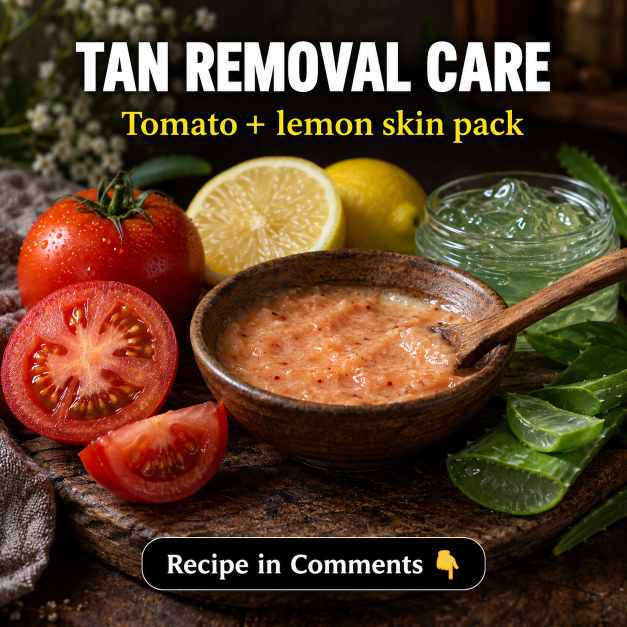
Sun exposure is one of the main reasons behind tanning, uneven skin tone, and dull-looking skin. When ultraviolet (UV) rays reach the skin, they stimulate melanin production, which is the natural pigment responsible for skin color. This process protects the skin from UV damage, but excessive sun exposure can lead to a darker appearance, uneven patches, and loss of natural brightness.
A proper tan-care routine focuses on gentle exfoliation, hydration, antioxidant protection, and preventing further sun damage. Natural ingredients such as aloe vera, yogurt, oats, vitamin-rich fruits, and soothing plant extracts can support healthier-looking skin. Different skin types require different approaches because oily, dry, sensitive, and combination skin may react differently to ingredients.
These remedies may help improve dullness and uneven appearance over time. They do not permanently change natural skin color or remove melanin instantly, but consistent care and sun protection can help restore a more even-looking complexion.
Remedy 1: For Normal Skin – Aloe Vera and Yogurt Brightening Mask
Scientific Working of Ingredients
Aloe Vera Gel (2 tablespoons)
Aloe vera contains polysaccharides and antioxidant compounds that help maintain skin hydration and support skin comfort after sun exposure.
Yogurt (2 tablespoons)
Yogurt contains lactic acid, an alpha-hydroxy acid (AHA), which helps remove dead skin cells gently and improves skin smoothness.
Honey (1 teaspoon)
Honey works as a humectant, attracting moisture to the skin and improving softness.
Turmeric Powder (¼ teaspoon)
Turmeric contains curcumin, a compound studied for antioxidant and soothing properties.
Oat Powder (1 teaspoon)
Oats contain beta-glucan, which supports the skin barrier and helps calm dryness.
Procedure
- Mix aloe vera gel, yogurt, honey, turmeric, and oat powder.
- Apply the mixture evenly on clean skin.
- Leave it for 15–20 minutes.
- Wash gently with normal water.
- Apply moisturizer afterward.
How Often to Apply
Use 2–3 times per week.
Initial Results
Skin may feel softer and appear fresher within a few applications. Gradual improvement in uneven tone requires consistent care.
Remedy 2: For Combination Skin – Rice Water and Aloe Vera Tan Care Mask
Scientific Working of Ingredients
Rice Water (3 tablespoons)
Rice water contains starches, amino acids, and plant compounds that are traditionally used for improving skin softness and appearance.
Aloe Vera Gel (2 tablespoons)
Provides lightweight hydration without making combination skin feel oily.
Cucumber Juice (1 tablespoon)
Contains high water content and soothing compounds that refresh tired-looking skin.
Green Tea (1 tablespoon)
Green tea contains catechins with antioxidant properties that help protect skin from environmental stress.
Gram Flour (1 teaspoon)
Gram flour is traditionally used as a gentle cleansing ingredient.
Procedure
- Prepare fresh rice water and cool it.
- Mix with aloe vera gel, cucumber juice, green tea, and gram flour.
- Apply a thin layer.
- Leave for 15 minutes.
- Rinse gently without harsh rubbing.
How Often to Apply
Apply on alternate days.
Initial Results
Skin may look cleaner, smoother, and more refreshed.
Remedy 3: For Oily Skin – Clay and Green Tea Tan Removal Mask
Scientific Working of Ingredients
Multani Mitti (Fuller’s Earth) (1 tablespoon)
Fuller’s earth can absorb excess oil from the skin surface and help remove impurities.
Green Tea (3 tablespoons)
Green tea polyphenols provide antioxidant support against environmental stress.
Aloe Vera Gel (1 tablespoon)
Adds hydration while maintaining a lightweight feel.
Tomato Pulp (1 tablespoon)
Tomato contains lycopene, an antioxidant compound that supports skin protection.
Honey (½ teaspoon)
Helps prevent excessive dryness caused by clay.
Procedure
- Mix fuller’s earth with green tea.
- Add aloe vera gel, tomato pulp, and honey.
- Apply evenly.
- Remove after 10–15 minutes before complete drying.
- Moisturize the skin.
How Often to Apply
Use once or twice weekly.
Initial Results
Skin may feel less oily and appear brighter due to removal of surface impurities.
Remedy 4: For Dry Skin – Milk and Avocado Hydrating Tan Care Mask
Scientific Working of Ingredients
Milk (2 tablespoons)
Milk contains lactic acid, which provides gentle exfoliating properties.
Avocado (2 tablespoons mashed)
Avocado contains fatty acids and vitamins that nourish dry skin.
Aloe Vera Gel (1 tablespoon)
Helps improve hydration.
Honey (1 teaspoon)
Supports moisture retention.
Almond Oil (5 drops)
Contains vitamin E and fatty acids that improve skin softness.
Procedure
- Mix mashed avocado with milk, aloe vera, honey, and almond oil.
- Apply to clean face.
- Leave for 20 minutes.
- Wash gently.
How Often to Apply
Apply 2 times weekly.
Initial Results
Dry skin may feel more comfortable and hydrated after use.
Remedy 5: For Sensitive Skin – Oat and Aloe Vera Soothing Tan Mask
Scientific Working of Ingredients
Aloe Vera Gel (2 tablespoons)
Provides soothing hydration and supports skin comfort.
Oat Powder (2 teaspoons)
Contains beta-glucan and avenanthramides that support the skin barrier.
Chamomile Water (2 tablespoons)
Contains botanical compounds traditionally used for calming irritated skin.
Honey (1 teaspoon)
Helps maintain moisture.
Cucumber Juice (1 tablespoon)
Provides cooling hydration.
Procedure
- Mix all ingredients into a smooth paste.
- Apply gently without rubbing.
- Leave for 10–15 minutes.
- Wash with cool water.
- Apply a gentle moisturizer.
How Often to Apply
Use once or twice weekly.
Initial Results
Skin may feel calmer, softer, and less dry.
Final Tips for Tan Removal Care
Removing tan requires patience because excess melanin gradually decreases as skin naturally renews itself. Avoid aggressive scrubbing because it can damage the skin barrier and increase sensitivity.
Follow these important habits:
- Apply broad-spectrum sunscreen every day, especially before outdoor activities.
- Reapply sunscreen after prolonged sun exposure.
- Wear protective clothing and use shade when possible.
- Keep skin hydrated with suitable moisturizers.
- Avoid harsh bleaching products that may irritate the skin.
- Always perform a patch test before using new ingredients.
- Maintain regular skincare instead of relying on occasional treatments.
Visible freshness may appear within several days, but improvement in uneven tone usually requires several weeks of consistent protection and care.
If pigmentation becomes severe, develops suddenly, or does not improve, consult a dermatologist for proper evaluation.
Diet Plan for Brighter and Healthy Skin
Morning
- Water after waking
- Vitamin C-rich fruits such as oranges, guava, kiwi, or strawberries
Breakfast
- Eggs or yogurt
- Oats or whole grains
- Nuts and seeds
Lunch
- Vegetables
- Protein sources such as fish, chicken, beans, or lentils
- Salad
Evening
- Green tea
- Almonds or walnuts
Dinner
- Balanced meal with vegetables and protein
Important nutrients for skin health:
- Vitamin C supports collagen formation.
- Vitamin E provides antioxidant support.
- Omega-3 fatty acids support skin barrier function.
- Zinc supports normal skin repair.
- Adequate water helps maintain hydration.
Continue healthy eating and sun protection habits. If tanning or pigmentation persists despite proper care, consult a dermatologist.
References for the above remedy
- American Academy of Dermatology Association – How to protect your skin from sun damage
https://www.aad.org/public/everyday-care/sun-protection - PubMed – Ultraviolet radiation and skin pigmentation
https://pubmed.ncbi.nlm.nih.gov/20471678/ - PubMed – Aloe vera and its biological activities
https://pubmed.ncbi.nlm.nih.gov/16877012/ - PubMed – Green tea polyphenols and skin protection
https://pubmed.ncbi.nlm.nih.gov/10926734/ - PubMed – Alpha hydroxy acids and skin improvement
https://pubmed.ncbi.nlm.nih.gov/15457561/ - PubMed – Honey applications in dermatology
https://pubmed.ncbi.nlm.nih.gov/24305429/ - PubMed – Oat ingredients and skin barrier function
https://pubmed.ncbi.nlm.nih.gov/27254822/ - Harvard Health Publishing – Understanding sun damage and skin ageing
https://www.health.harvard.edu/a_to_z/sun-damage-to-the-skin-a-to-z