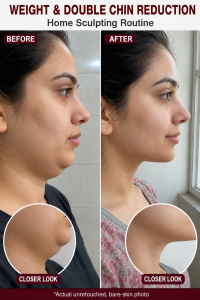
A double chin can affect the side profile, jawline definition, and overall facial confidence. It may appear because of body-weight changes, genetics, posture, aging, fluid retention, or reduced skin firmness under the chin. A home sculpting routine can help improve the look of puffiness, skin texture, and jawline sharpness, but it is important to be honest: no topical home remedy can “melt” chin fat in 1–3 days. Real fat reduction needs steady weight management, balanced eating, physical activity, and time. The natural remedies below are designed by skin type to support smoother, tighter-looking neck and chin skin while pairing safely with a healthy weight-loss plan.
Remedy 1: For Normal Skin
Green Tea, Aloe, and Coffee Sculpting Pack
Ingredients
- Brewed green tea, 1 tablespoon: Provides catechins that support antioxidant protection and may help skin exposed to oxidative stress.
- Aloe vera gel, 1 tablespoon: Hydrates and supports softer, more elastic-looking skin.
- Finely powdered coffee, ½ teaspoon: Contains caffeine, which may temporarily improve the look of puffiness and skin tightness.
- Plain yogurt, 1 teaspoon: Contains mild lactic acid that helps smooth dull surface skin.
- Raw honey, ½ teaspoon: Works as a humectant to keep the skin soft.
- Rice flour, ½ teaspoon: Gives the pack a smooth texture and mild polishing effect without strong scrubbing.
Scientific Working of Each Ingredient
Green tea helps protect the skin from free-radical stress, which is linked with premature aging and loss of firmness. Aloe vera improves hydration, making the under-chin area look smoother. Coffee may create a temporary tighter look by reducing the appearance of water retention. Yogurt’s lactic acid gently loosens dull dead cells, while honey keeps the skin from feeling dry after rinsing. Rice flour adds gentle texture, but it should not be rubbed harshly.
Procedure
Mix all ingredients into a smooth paste. Clean your chin and neck with lukewarm water. Apply a thin layer under the chin and along the jawline. Use two fingers to massage upward from the neck toward the jaw for 60 seconds. Leave for 10–12 minutes, then rinse gently.
How Often to Apply
Use once daily for 5 days, then 3 times weekly.
Initial Results
Within 1–3 days, the chin area may look less puffy and the skin may feel smoother. Visible fat reduction requires several weeks of diet and exercise, not only topical care.
Remedy 2: For Combination Skin
Cucumber, Green Tea, and Oat Balancing Chin Mask
Ingredients
- Cucumber juice, 1 tablespoon: Gives lightweight hydration and cooling comfort.
- Brewed green tea, 1 tablespoon: Helps calm oily-looking areas and supports antioxidant care.
- Colloidal oatmeal, 1 teaspoon: Supports the skin barrier and reduces roughness.
- Aloe vera gel, 1 teaspoon: Hydrates without heaviness.
- Honey, ½ teaspoon: Softens dry patches.
- Yogurt, ½ teaspoon: Provides mild lactic acid smoothing.
Scientific Working of Each Ingredient
Combination skin needs balance because some areas under the chin may feel oily while the neck may feel dry. Cucumber and aloe provide water-based hydration without making the skin greasy. Green tea supports a fresher, less dull appearance. Oatmeal protects the barrier, which is important when skin is exposed to massage or repeated cleansing. Honey hydrates dry spots, while yogurt gently improves uneven texture.
Procedure
Mix the ingredients into a thin creamy mask. Apply under the chin, along the jawline, and down the upper neck. Do light upward strokes for 1 minute. Keep the mask on for 10 minutes. Rinse with cool water and pat dry.
How Often to Apply
Apply on alternate days for 7 days.
Initial Results
In 1–3 days, the skin may look more even and less tired. Mild fluid puffiness may appear reduced, especially if combined with better sleep and lower salt intake.
Remedy 3: For Oily Skin
Green Tea and Coffee Lightweight Tight-Look Gel
Ingredients
- Aloe vera gel, 1 tablespoon: Gives oil-free hydration.
- Strong cooled green tea, 1 tablespoon: Helps refresh oily skin and provides antioxidant compounds.
- Fine coffee powder, ¼ teaspoon: Supports a temporary firm-looking effect.
- Multani mitti, ½ teaspoon: Absorbs excess oil from the surface.
- Rose water, 1 teaspoon: Makes the mixture light and soothing.
- Honey, ¼ teaspoon: Prevents the mask from over-drying the skin.
Scientific Working of Each Ingredient
Oily skin often becomes dehydrated when treated with harsh cleansers. Aloe hydrates without clogging. Green tea supports oil balance and antioxidant defense. Coffee may help the skin look slightly tighter for a short time. Multani mitti absorbs extra oil, but it must be used in a small amount to avoid dryness. Honey adds light moisture so the skin does not feel stretched after rinsing.
Procedure
Blend everything into a smooth gel-mask. Apply a very thin layer under the chin and jawline. Do not scrub with the coffee. Leave for 7–8 minutes only. Rinse with cool water.
How Often to Apply
Use once daily for 3 days, then every other day for one week.
Initial Results
The chin and neck area may look less shiny within 1–2 days. The jawline may appear cleaner because surface oil and puffiness are reduced.
Remedy 4: For Dry Skin
Aloe, Oat, and Glycerin Moisture-Firm Neck Pack
Ingredients
- Aloe vera gel, 1 tablespoon: Adds water-based hydration.
- Colloidal oatmeal, 1 teaspoon: Helps repair the dry skin barrier.
- Glycerin, 3 drops: Pulls moisture into the upper skin layer.
- Honey, 1 teaspoon: Softens and hydrates dry skin.
- Virgin coconut oil, ¼ teaspoon: Seals moisture and reduces roughness.
- Green tea, 1 teaspoon: Adds antioxidant support.
Scientific Working of Each Ingredient
Dry skin can make the double-chin area look older and looser because dehydration lines become more visible. Aloe and glycerin increase surface hydration. Honey supports softness. Oatmeal helps calm dryness and protects the skin barrier. Coconut oil reduces water loss, while green tea supports the skin against environmental stress.
Procedure
Mix aloe, oatmeal, honey, glycerin, and green tea first. Add coconut oil last. Apply under the chin and neck. Massage upward very gently for 1 minute. Leave for 15–20 minutes. Rinse with lukewarm water.
How Often to Apply
Use daily for 5 days, then 3 times weekly.
Initial Results
Within 1–3 days, dryness lines may look softer and the skin may feel more flexible. This can make the chin area look smoother, though actual fat loss takes longer.
Remedy 5: For Sensitive Skin
Gentle Oat, Aloe, and Green Tea Comfort Mask
Ingredients
- Colloidal oatmeal, 1 tablespoon: Helps calm sensitive or easily irritated skin.
- Aloe vera gel, 1 tablespoon: Provides gentle hydration and cooling.
- Weak brewed green tea, 1 teaspoon: Adds mild antioxidant care.
- Glycerin, 2 drops: Supports hydration without fragrance.
- Cucumber juice, 1 teaspoon: Gives a cooling effect.
- Boiled and cooled water, 1 teaspoon if needed: Makes the mask thinner and gentler.
Scientific Working of Each Ingredient
Sensitive skin should not be treated with strong exfoliants, lemon juice, baking soda, or rough scrubs. Oatmeal helps reduce dryness and discomfort. Aloe and cucumber cool the skin. Weak green tea gives mild antioxidant support without making the mask too active. Glycerin improves hydration, which can make the skin under the chin look smoother.
Procedure
Mix all ingredients into a soft paste. Apply a thin layer under the chin and neck. Do not massage strongly. Leave for 7–10 minutes, then rinse with cool water.
How Often to Apply
Use every other day for 5 days.
Initial Results
The skin may feel calmer and less tight within 1–3 days. Puffiness may look slightly reduced if irritation or dryness was making the area appear swollen.
Final Tips
Do not depend only on masks for double chin reduction. Use the remedy as a skin-support step, and combine it with a healthy routine. Keep your phone at eye level because constant neck bending can make the under-chin area look folded. Do 5 minutes of gentle jawline exercises daily, such as chin lifts, slow neck stretches, and tongue-to-palate holds. Avoid painful movements or forceful pulling.
Drink enough water, sleep 7–8 hours, reduce very salty foods, keep towels and skincare tools clean, and patch test every remedy for 24 hours before full use. Avoid lemon juice, toothpaste, baking soda, harsh scrubs, and strong essential oils under the chin because this skin can irritate easily. Apply sunscreen to the neck and under-chin area every morning, especially if you are working on firmness and pigmentation.
Visible skin improvements usually begin within 2–3 days, especially less puffiness and smoother texture. For actual weight and double chin reduction, continue the full routine for 8–12 weeks. If the double chin appears suddenly, feels painful, comes with swelling, difficulty swallowing, thyroid-area enlargement, or does not improve despite healthy weight management, see a doctor.
Diet Plan
Follow this diet plan for at least 8–12 weeks. In the morning, drink water and take a protein-rich breakfast such as eggs, Greek yogurt, lentils, chickpeas, tofu, or oats with nuts. Add a vitamin C fruit such as guava, orange, kiwi, strawberries, or amla because vitamin C supports normal collagen formation. At lunch, eat half a plate of vegetables, one palm-sized protein portion, and a moderate portion of whole grains such as brown rice, roti, quinoa, or oats.
In the evening, drink unsweetened green tea if it suits your body. Avoid adding sugar. For snacks, choose fruit, roasted chickpeas, yogurt, cucumber, carrots, or a small handful of nuts. At dinner, keep the meal lighter but protein-based, such as lentil soup, grilled fish, chicken, beans, tofu, or vegetables with whole grains. Add healthy fats from chia seeds, flaxseeds, walnuts, olive oil, or avocado in small portions.
Limit sugary drinks, bakery foods, fried snacks, late-night overeating, and crash dieting. A steady calorie deficit, regular walking, strength training, and enough sleep are more effective than extreme diets. If weight continues to increase despite diet and activity, or if you have hormonal issues, thyroid symptoms, PCOS signs, or unexplained swelling, consult a doctor.
References for the above remedy
- Centers for Disease Control and Prevention. “Steps for Losing Weight.” Supports gradual weight management through nutrition, physical activity, stress control, and sleep.
URL: https://www.cdc.gov/healthy-weight-growth/losing-weight/index.html
(CDC) - National Institute of Diabetes and Digestive and Kidney Diseases. “Weight Management.” Supports healthy eating and regular physical activity for long-term weight control.
URL: https://www.niddk.nih.gov/health-information/weight-management
(NIDDK) - NIDDK. “Tips to Help You Get Active.” Recommends at least 150 minutes of physical activity weekly for healthy adults.
URL: https://www.niddk.nih.gov/health-information/weight-management/tips-get-active
(NIDDK) - Alam, M. et al. “Association of Facial Exercise With the Appearance of Aging.” JAMA Dermatology, 2018. Supports that consistent facial exercise may modestly improve facial appearance over time.
URL: https://pmc.ncbi.nlm.nih.gov/articles/PMC5885810/
(PMC) - Gholami, F. et al. “Does green tea catechin enhance weight-loss effect of exercise training?” 2024. Supports a small weight-reduction effect when green tea catechins are combined with exercise.
URL: https://pmc.ncbi.nlm.nih.gov/articles/PMC11445908/
(PMC) - Dupont, E. et al. “An integral topical gel for cellulite reduction.” Supports topical cosmetic improvement in skin appearance in a randomized controlled study, relevant to caffeine-based firming claims.
URL: https://pmc.ncbi.nlm.nih.gov/articles/PMC3933246/
(PMC) - Cho, S. et al. “Dietary Aloe Vera Supplementation Improves Facial Wrinkles and Elasticity.” Supports aloe vera’s role in wrinkle and elasticity improvement.
URL: https://pmc.ncbi.nlm.nih.gov/articles/PMC2883372/ - Capone, K. et al. “Effects of Colloidal Oatmeal Topical Atopic Dermatitis Cream on Skin Microbiome and Skin Barrier Properties.” Supports colloidal oatmeal for barrier support and soothing care.
URL: https://pubmed.ncbi.nlm.nih.gov/32484623/ - Smith, W. P. “Epidermal and dermal effects of topical lactic acid.” Supports lactic acid’s role in smoother skin texture and anti-aging care.
URL: https://pubmed.ncbi.nlm.nih.gov/8784274/ - NIH Office of Dietary Supplements. “Vitamin C Fact Sheet for Health Professionals.” Supports the role of vitamin C in collagen synthesis and connective tissue health.
URL: https://ods.od.nih.gov/factsheets/VitaminC-HealthProfessional/
(ods.od.nih.gov)