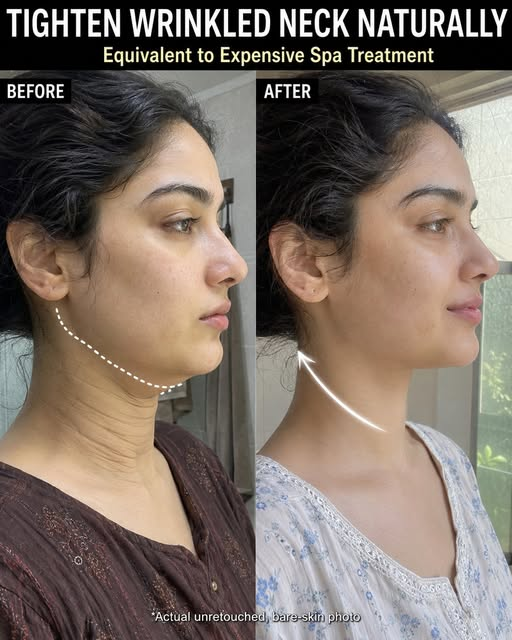
A wrinkled neck can make the face look older even when the skin on the cheeks and forehead still looks fresh. The neck has thinner skin, fewer oil glands, and is often exposed to sun, phone posture, dehydration, and neglect in daily skincare. Natural remedies cannot give the same instant lift as medical procedures, but carefully chosen ingredients can improve hydration, support the skin barrier, reduce dryness lines, calm inflammation, and make the neck look smoother and firmer over time. The remedies below are designed by skin type and use evidence-supported natural ingredients such as aloe vera, green tea, colloidal oatmeal, honey, glycerin, coconut oil, sunflower oil, and mild lactic acid from yogurt. Always patch test first, and avoid applying any remedy on broken, infected, burning, or highly irritated skin.
Remedy 1: For Normal Skin
Green Tea, Aloe, and Oat Neck-Firming Mask
Ingredients
- Aloe vera gel, 1 tablespoon: Supports moisture and may help collagen-related skin repair.
- Cooled green tea, 1 tablespoon: Rich in catechins that help protect skin from oxidative stress.
- Finely ground colloidal oatmeal, 1 teaspoon: Forms a soft protective film and improves hydration.
- Raw honey, 1 teaspoon: Works as a natural humectant and helps the skin feel soft.
- Plant-based glycerin, 3 drops: Pulls water into the outer skin layer for a plumper look.
- Sunflower seed oil, 3 drops: Helps support the skin barrier without feeling too heavy.
Scientific Working of Each Ingredient
Aloe vera supports softness and elasticity by improving moisture balance. Green tea provides antioxidant support, which is important because UV exposure and pollution increase collagen breakdown. Oatmeal helps reduce roughness by strengthening the barrier. Honey and glycerin attract water, giving fine neck lines a temporarily smoother appearance. Sunflower seed oil adds light lipid support, helping prevent water loss.
Procedure
Mix aloe vera gel, cooled green tea, oatmeal, honey, glycerin, and sunflower oil into a smooth paste. Clean the neck with lukewarm water and pat dry. Apply the mixture upward from the collarbone to the jawline. Leave it for 15 minutes, then rinse gently. Do not scrub.
How Often to Apply
Apply once daily for 5 days, preferably in the evening.
Initial Results
Within 1–3 days, the neck may feel softer, less dry, and slightly plumper. Fine dehydration lines can look reduced, but deep wrinkles need longer care.
Remedy 2: For Combination Skin
Balancing Aloe-Yogurt Neck Smoothing Pack
Ingredients
- Aloe vera gel, 1 tablespoon: Hydrates dry areas without making oily zones greasy.
- Plain unsweetened yogurt, 1 teaspoon: Contains mild lactic acid for gentle surface smoothing.
- Cooled green tea, 2 teaspoons: Helps balance oily-looking areas and supports antioxidant protection.
- Colloidal oatmeal, 1 teaspoon: Soothes the skin and reduces rough texture.
- Raw honey, ½ teaspoon: Adds moisture to dry patches.
- Sunflower seed oil, 2 drops: Gives light barrier support only where the neck feels dry.
Scientific Working of Each Ingredient
Combination skin needs hydration without heaviness. Aloe and green tea hydrate and calm the skin while keeping the texture fresh. Yogurt’s natural lactic acid gives very mild exfoliating support, helping dull surface cells loosen. Oatmeal reduces irritation risk and supports barrier repair. Honey improves softness, while a tiny amount of sunflower oil helps dry areas retain moisture.
Procedure
Blend all ingredients until creamy. Apply a thin layer to the neck. If some areas are oilier, apply less mixture there. Leave for 10–12 minutes only. Rinse with cool water and pat dry.
How Often to Apply
Use on alternate days for 5–7 days.
Initial Results
In 1–3 days, the neck may appear smoother and less patchy. Dry lines may soften while oily areas should not feel overloaded.
Remedy 3: For Oily Skin
Green Tea and Oat Tight-Look Neck Gel
Ingredients
- Strong cooled green tea, 1 tablespoon: Helps reduce greasy appearance and provides antioxidants.
- Aloe vera gel, 1 tablespoon: Lightweight hydration without clogging.
- Colloidal oatmeal, ½ teaspoon: Calms the skin and reduces irritation from excess oil cleansing.
- Raw honey, ½ teaspoon: Hydrates lightly and supports a healthy skin surface.
- Plain yogurt, ½ teaspoon: Gives mild lactic acid smoothing.
- Rice flour, ½ teaspoon: Adds a soft, non-oily texture and helps the mask stay in place.
Scientific Working of Each Ingredient
Oily neck skin still needs water, not heavy oils. Aloe provides water-based hydration. Green tea polyphenols have been studied for oily skin and sebum-related concerns. Oatmeal helps protect the barrier because over-washing oily skin can make wrinkles look worse. Honey prevents tight dryness after rinsing. Yogurt gives mild exfoliation, while rice flour gives a light mattifying feel.
Procedure
Mix the ingredients into a thin gel-paste. Apply only a light layer to the neck. Keep it on for 8–10 minutes. Rinse with cool water. Avoid rubbing because friction can worsen neck lines.
How Often to Apply
Apply once daily for 3 days, then continue every other day for one week.
Initial Results
Within 1–3 days, the neck may look less greasy, smoother, and more even. Fine lines caused by dehydration may look softer.
Remedy 4: For Dry Skin
Coconut-Oat Deep Moisture Neck Repair Balm
Ingredients
- Colloidal oatmeal, 1 teaspoon: Helps reduce dryness and supports barrier repair.
- Aloe vera gel, 1 tablespoon: Adds water-based hydration.
- Virgin coconut oil, ½ teaspoon: Works as an emollient to reduce dryness.
- Plant-based glycerin, 4 drops: Pulls moisture into the skin surface.
- Raw honey, 1 teaspoon: Helps soften and hydrate.
- Sunflower seed oil, 4 drops: Adds lighter fatty acids for barrier comfort.
Scientific Working of Each Ingredient
Dry skin shows wrinkles more clearly because the outer layer loses water and becomes rough. Glycerin and honey attract moisture. Aloe soothes and hydrates. Oatmeal supports the barrier and reduces dryness-related irritation. Coconut oil and sunflower oil help seal hydration so the neck looks smoother and less crepey.
Procedure
Mix oatmeal, aloe, honey, and glycerin first. Add coconut oil and sunflower oil at the end. Apply a thin layer to the neck and massage upward for 30 seconds with very light pressure. Leave for 20 minutes. Rinse with lukewarm water, or wipe gently with a damp soft cloth if the skin is extremely dry.
How Often to Apply
Use daily for 5 days, then 3 times weekly for maintenance.
Initial Results
Dry tightness may improve within 1–2 days. The neck can look more comfortable, supple, and less creased by day 3.
Remedy 5: For Sensitive Skin
Calm Oat-Aloe Neck Comfort Mask
Ingredients
- Colloidal oatmeal, 1 tablespoon: Helps calm sensitive skin and supports the skin barrier.
- Aloe vera gel, 1 tablespoon: Gives gentle hydration and cooling comfort.
- Cooled weak green tea, 1 teaspoon: Provides mild antioxidant support.
- Plant-based glycerin, 2 drops: Adds hydration without fragrance.
- Sunflower seed oil, 2 drops: Supports the barrier with a light texture.
- Boiled and cooled water, 1 teaspoon if needed: Makes the mask smoother and less concentrated.
Scientific Working of Each Ingredient
Sensitive skin needs fewer active ingredients and a softer approach. Oatmeal is useful because it helps calm dryness, itching, and barrier weakness. Aloe gives light hydration. Weak green tea provides antioxidant support without making the mixture too strong. Glycerin improves surface hydration, while sunflower oil helps reduce moisture loss.
Procedure
Mix oatmeal with aloe and water first. Add weak green tea, glycerin, and sunflower oil. Apply a very thin layer to the neck. Leave for only 7–10 minutes. Rinse with cool water and pat dry. Stop immediately if burning, itching, or redness appears.
How Often to Apply
Use every other day for 5 days.
Initial Results
Sensitive skin may feel calmer and less tight within 1–3 days. The neck may look smoother because dryness and irritation are reduced.
Final Tips
Keep your neck routine gentle. Apply remedies upward, but do not pull the skin. Avoid harsh scrubs, lemon juice, baking soda, toothpaste, and strong essential oils on the neck because they can irritate thin skin. Use sunscreen on the neck every morning, because sun exposure is one of the biggest reasons for premature wrinkles and loose-looking skin. Stay hydrated, sleep 7–8 hours, clean pillow covers regularly, and avoid keeping the neck bent toward the phone for long periods. Do a patch test behind the ear or on the inner arm for 24 hours before applying any remedy to the full neck.
Visible improvements usually begin within 2–3 days as hydration improves. For better glow, smoother texture, and softer wrinkle appearance, continue the selected remedy for 2–3 weeks. Natural remedies work gradually and mainly improve dryness lines, roughness, and dullness; deep folds, major sagging, sudden swelling, severe itching, rash, or skin discoloration should be checked by a doctor or dermatologist.
Diet Plan
Continue this diet plan for at least 4 weeks along with the suitable home remedy. In the morning, drink water and eat vitamin C-rich fruit such as orange, guava, kiwi, strawberries, or amla because vitamin C supports normal collagen formation. At breakfast, include protein such as eggs, yogurt, lentils, chickpeas, or tofu because skin repair needs amino acids. At lunch, add leafy greens, carrots, tomatoes, cucumber, and a healthy fat source such as avocado, nuts, seeds, or olive oil. In the evening, drink unsweetened green tea if it suits you. At dinner, include protein again with vegetables and whole grains. Add omega-3 sources such as flaxseeds, chia seeds, walnuts, or fish if you eat it.
Limit excess sugar, deep-fried foods, smoking, and alcohol because they can worsen dullness and premature aging. If neck wrinkles are increasing quickly, the skin is painful, there is a lump or thyroid-area swelling, or the problem persists despite 3–4 weeks of care, see a doctor.
References for the above remedy
- Cho, S. et al. “Dietary Aloe Vera Supplementation Improves Facial Wrinkles and Elasticity and It Increases the Type I Procollagen Gene Expression in Human Skin in vivo.”
URL: https://pmc.ncbi.nlm.nih.gov/articles/PMC2883372/ (PMC) - Chiu, A. E. et al. “Double-blinded, placebo-controlled trial of green tea extracts in the clinical and histologic appearance of photoaging skin.”
URL: https://pubmed.ncbi.nlm.nih.gov/16029678/ (PubMed) - Capone, K. et al. “Effects of Colloidal Oatmeal Topical Atopic Dermatitis Cream on Skin Microbiome and Skin Barrier Properties.”
URL: https://pubmed.ncbi.nlm.nih.gov/32484623/ (PubMed) - Fluhr, J. W. et al. “Glycerol and the skin: holistic approach to its origin and functions.”
URL: https://pubmed.ncbi.nlm.nih.gov/18510666/ (PubMed) - Agero, A. L. C. and Verallo-Rowell, V. M. “A randomized double-blind controlled trial comparing extra virgin coconut oil with mineral oil as a moisturizer for mild to moderate xerosis.”
URL: https://pubmed.ncbi.nlm.nih.gov/15724344/ (PubMed) - Smith, W. P. “Epidermal and dermal effects of topical lactic acid.”
URL: https://pubmed.ncbi.nlm.nih.gov/8784274/ (PubMed) - Mahmood, T. et al. “Outcomes of 3% Green Tea Emulsion on Skin Sebum Production in Male Volunteers.”
URL: https://pmc.ncbi.nlm.nih.gov/articles/PMC5504505/ (PMC) - NIH Office of Dietary Supplements. “Vitamin C: Fact Sheet for Health Professionals.”
URL: https://ods.od.nih.gov/factsheets/VitaminC-HealthProfessional/ (Office of Dietary Supplements) - American Academy of Dermatology Association. “11 ways to reduce premature skin aging.”
URL: https://www.aad.org/public/everyday-care/skin-care-secrets/anti-aging/reduce-premature-aging-skin (American Academy of Dermatology)