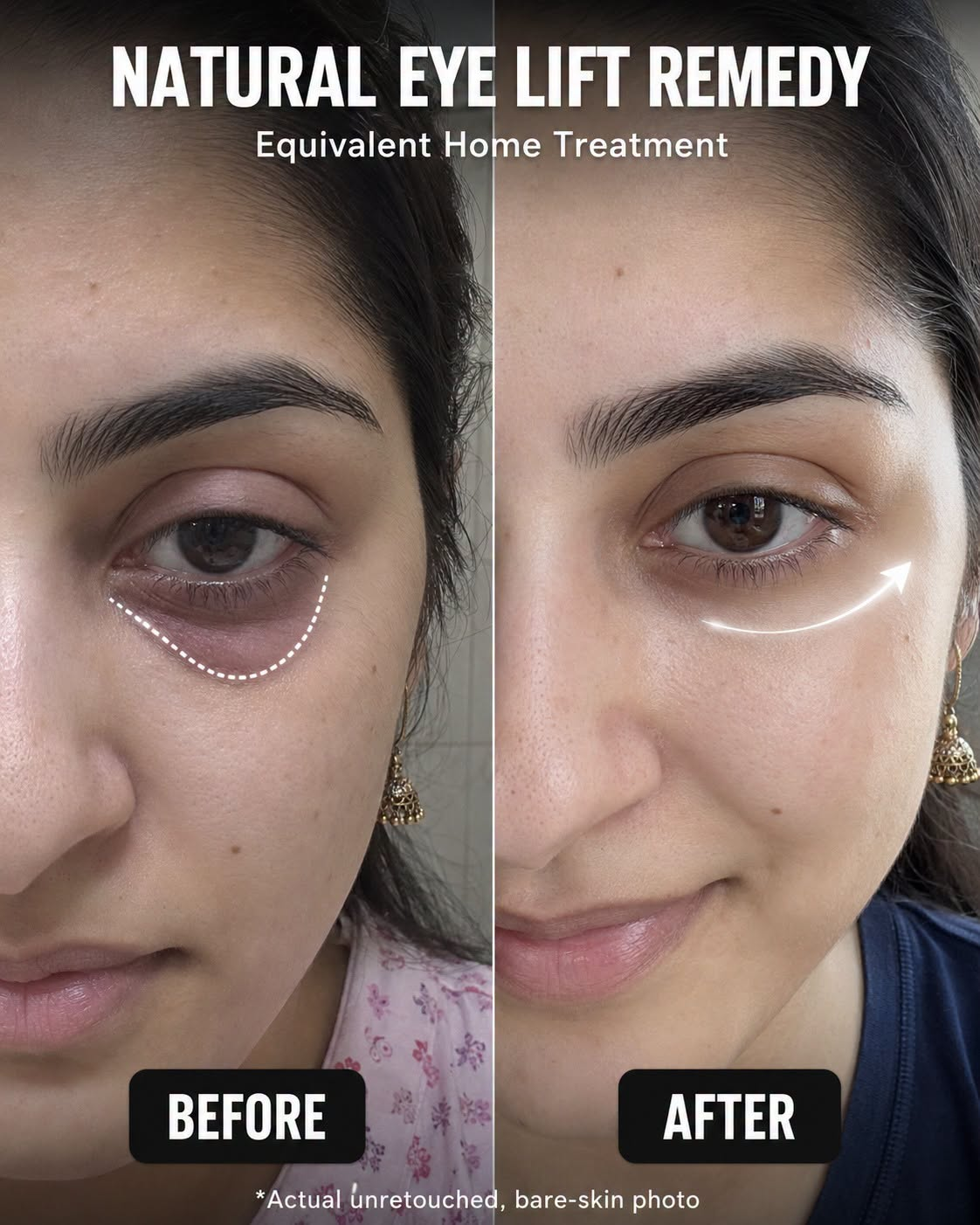
A natural eye lift remedy is not the same as surgery or medical eyelid tightening, but the right home treatment can make the eye area look fresher by reducing morning puffiness, improving hydration, calming inflammation, and softening fine dryness lines. Under-eye bags and a tired eyelid look often become more visible because the skin around the eyes is very thin, easily dehydrated, and affected by poor sleep, salt intake, allergies, aging, and fluid retention. Dermatology sources support cool compresses for temporary puffiness, while ingredients such as caffeine, green tea polyphenols, colloidal oatmeal, glycerin, aloe vera, honey, sunflower seed oil, and Centella asiatica have evidence for swelling reduction, antioxidant support, barrier repair, hydration, and skin firmness support. Home remedies work best when they are gentle, kept away from the lash line, and selected according to skin type. (Mayo Clinic)
Remedy 1: For Normal Skin
Scientific Working of This Remedy
This balanced remedy uses cooling, caffeine, humectants, and mild soothing ingredients. Green tea provides caffeine and catechins that may temporarily reduce puffiness by constricting small blood vessels and calming oxidative stress. Aloe vera and glycerin help bind water to the skin, while colloidal oatmeal supports the skin barrier and reduces roughness. Honey adds mild humectant and soothing benefits, but it should be used in a very small amount and rinsed fully.
Ingredients
Cold brewed green tea: 1 tablespoon, for caffeine-based de-puffing and antioxidant support.
Fresh aloe vera gel: 1 teaspoon, for calming and light hydration.
Colloidal oatmeal powder: ½ teaspoon, for barrier support and softness.
Plant-derived glycerin: 1 drop, for moisture retention.
Raw honey: ¼ teaspoon, for humectant and soothing action.
Chilled clean water: 1 teaspoon, to thin the paste safely.
Procedure
Mix all ingredients into a smooth, thin gel-paste. Wash your face and pat dry. Apply only around the under-eye bone and outer eyelid area, not on the lash line or inside the eye. Leave for 7–8 minutes. Remove gently with cool water and a soft cotton pad. Finish by pressing a cool damp cloth over closed eyes for one minute.
How Often to Apply
Use once daily for 5 days, preferably in the morning.
Initial Results
Within 1–3 days, the eye area may look less puffy, smoother, and more awake. Fine dryness lines may look softer because the skin is better hydrated.
Remedy 2: For Combination Skin
Scientific Working of This Remedy
Combination skin needs moisture without heaviness. This remedy combines green tea for puffiness, Centella asiatica for firmness support, aloe vera for calming hydration, and oatmeal for barrier balance. Licorice root is added in a tiny amount because it contains compounds studied for brightening and anti-inflammatory skin benefits, which may help the under-eye area look more even over time.
Ingredients
Cold green tea: 2 teaspoons, for caffeine and catechin support.
Aloe vera gel: 1 teaspoon, for lightweight hydration.
Colloidal oatmeal: ½ teaspoon, for barrier repair and comfort.
Centella asiatica powder or strong gotu kola tea: ¼ teaspoon powder or 1 teaspoon tea, for firmness-supporting triterpenes.
Licorice root tea: 1 teaspoon, for tone-evening and soothing support.
Glycerin: 1 drop, for controlled moisture.
Procedure
Blend the ingredients into a thin mask. Apply a very light layer under the eyes and at the outer corners where fine lines appear. Do not apply on mobile eyelids if your eyes water easily. Leave for 6–7 minutes. Rinse with cool water and pat dry.
How Often to Apply
Apply on alternate days for 7 days.
Initial Results
In 2–3 days, combination skin may look calmer, less shiny in the T-zone, and more refreshed around the eyes without feeling greasy.
Remedy 3: For Oily Skin
Scientific Working of This Remedy
Oily skin around the face still needs hydration around the eyes. Over-drying can make fine lines appear deeper. This remedy uses black tea or green tea for caffeine, aloe vera for oil-free hydration, oatmeal for soothing, and a tiny amount of fuller’s earth only to absorb excess surface oil below the orbital bone. Fuller’s earth should never be placed close to the eye or left until fully dry.
Ingredients
Cold black tea or green tea: 1 tablespoon, for caffeine-related de-puffing.
Aloe vera gel: 1 teaspoon, for non-oily hydration.
Colloidal oatmeal: ½ teaspoon, for skin comfort.
Fuller’s earth: ¼ teaspoon, for mild oil absorption away from the lash line.
Honey: ⅛ teaspoon, for gentle moisture balance.
Chilled water: 1 teaspoon, to keep the mixture thin.
Procedure
Mix into a runny paste. Apply only under the eye bone and outer corner area. Keep at least one finger-width away from the lash line. Leave for 5 minutes only; do not let it crack or dry hard. Rinse thoroughly with cool water.
How Often to Apply
Use every other day for 5–6 days.
Initial Results
You may notice less under-eye heaviness and a cleaner, less oily look within 1–3 days. Skin should feel fresh, not tight.
Remedy 4: For Dry Skin
Scientific Working of This Remedy
Dry under-eye skin often looks loose because dehydration makes small lines more visible. This remedy focuses on humectants and barrier support. Glycerin draws water into the outer skin layer, aloe vera gives light hydration, oatmeal calms dryness, and sunflower seed oil supports the skin barrier better than many heavier kitchen oils. Centella adds firmness-supporting botanical compounds.
Ingredients
Aloe vera gel: 1 teaspoon, for soothing hydration.
Glycerin: 2 drops, for moisture binding.
Colloidal oatmeal: ½ teaspoon, for dryness and barrier comfort.
Centella asiatica tea or powder: 1 teaspoon tea or ¼ teaspoon powder, for elasticity support.
Cold green tea: 1 teaspoon, for antioxidant and caffeine support.
Sunflower seed oil: 1 drop, for barrier support and softness.
Procedure
Mix everything well until creamy. Apply a rice-grain-thin layer under the eyes and on the outer corners. Leave for 8–10 minutes. Rinse gently. After rinsing, apply one extra drop of aloe vera mixed with water if the skin still feels dry.
How Often to Apply
Apply once daily at night for 5 days, then 3 times weekly.
Initial Results
Within 2–3 days, dry creasing may look softer and the under-eye area may feel more flexible and comfortable.
Remedy 5: For Sensitive Skin
Scientific Working of This Remedy
Sensitive skin needs the shortest ingredient list and the mildest contact time. Colloidal oatmeal is one of the most reliable natural soothing ingredients for barrier support. Aloe vera can calm the skin, but only use it if you already tolerate it. Glycerin hydrates without fragrance. A cool compress helps reduce temporary puffiness without strong actives.
Ingredients
Colloidal oatmeal: 1 teaspoon, for soothing and barrier repair.
Cool boiled water: 1 tablespoon, for a clean base.
Aloe vera gel: ½ teaspoon, for calming hydration.
Glycerin: 1 drop, for gentle moisture.
Cold green tea: 1 teaspoon, optional, for mild caffeine support.
Soft cotton pads: 2, for gentle application.
Procedure
Mix oatmeal, water, aloe, glycerin, and green tea into a milky liquid. Soak cotton pads in it, squeeze well so they do not drip, and place them below the eyes while lying down. Keep the pads away from the lash line. Remove after 5 minutes and rinse with cool water.
How Often to Apply
Use once daily for 3–5 days. Sensitive skin should not be over-treated.
Initial Results
In 1–3 days, the area may look calmer and less puffy. If redness, burning, watering, or itching occurs, stop immediately.
Final Tips
Always do a patch test on the jawline or behind the ear before applying anything near the eyes. Keep all mixtures away from the lash line and never allow honey, oils, powders, tea, or glycerin to enter the eye. Use clean bowls, clean cotton pads, and fresh mixtures every time. Avoid lemon juice, baking soda, toothpaste, strong essential oils, garlic, and turmeric near the eyes because they can irritate or burn delicate skin. Sleep 7–9 hours, reduce late-night salty foods, keep your head slightly elevated if you wake with puffiness, and drink enough water. Visible freshness often begins within 2–3 days, while smoother texture and softer fine lines usually need several weeks of consistent gentle care.
Diet Plan
Continue this diet support for 2–4 weeks along with the home remedy. In the morning, drink water and eat a protein-rich breakfast such as oats with yogurt, eggs, or lentils. Add vitamin C foods like oranges, guava, berries, lemon water, or bell peppers to support normal collagen formation. At lunch, include leafy greens, beans, chicken, fish, or chickpeas with whole grains. For snacks, choose walnuts, almonds, pumpkin seeds, or fruit instead of salty packaged foods. At dinner, keep salt lighter and include vegetables plus protein to reduce overnight fluid retention. Limit sugary drinks, excess tea or coffee at night, fried foods, and very salty snacks.
Follow the remedy for 5–7 days for puffiness and 4–6 weeks for fine dryness lines. If eye swelling, drooping, dark circles, irritation, or puffiness persists, keeps returning, appears suddenly on one side, becomes painful, affects vision, or comes with redness or severe itching, see a doctor or dermatologist.
References for the above remedy
- Mayo Clinic. “Bags under eyes: Diagnosis and treatment.” Supports cool compresses, sleep, salt reduction, and medical consultation for persistent puffiness.
URL: https://www.mayoclinic.org/diseases-conditions/bags-under-eyes/diagnosis-treatment/drc-20369931 - Johns Hopkins Medicine. “How to Get Rid of Bags Under Your Eyes.” Supports cold compresses for reducing swelling and inflammation around the eyes.
URL: https://www.hopkinsmedicine.org/health/expert-qa/how-to-get-rid-of-bags-under-your-eyes - Elias, M. L., et al. “Caffeine in Skincare: Its Role in Skin Cancer, Sun Protection, and Cosmetics.” Supports caffeine’s vasoconstrictive role in reducing the look of puffy under-eyes.
URL: https://pmc.ncbi.nlm.nih.gov/articles/PMC10718232/ - Hamie, H., et al. “A review of the efficacy of popular eye cream ingredients.” Supports evidence for caffeine and vitamin-based ingredients in periocular concerns.
URL: https://pmc.ncbi.nlm.nih.gov/articles/PMC11175953/ - Reynertson, K. A., et al. “Anti-inflammatory activities of colloidal oatmeal.” Supports colloidal oatmeal’s anti-inflammatory, antioxidant, and skin-soothing effects.
URL: https://pubmed.ncbi.nlm.nih.gov/25607907/ - Fluhr, J. W., et al. “Glycerol and the skin: holistic approach to its origin and functions.” Supports glycerol/glycerin for improving dry skin and barrier function.
URL: https://pubmed.ncbi.nlm.nih.gov/18510666/ - McLoone, P., et al. “Honey: A Therapeutic Agent for Disorders of the Skin.” Supports honey’s anti-inflammatory, antimicrobial, and wound-healing skin properties.
URL: https://pmc.ncbi.nlm.nih.gov/articles/PMC5661189/ - Bylka, W., et al. “Centella asiatica in cosmetology.” Supports Centella asiatica use in photoaging, firmness, and skin elasticity support.
URL: https://pmc.ncbi.nlm.nih.gov/articles/PMC3834700/ - Danby, S. G., et al. “Effect of olive and sunflower seed oil on the adult skin barrier.” Supports sunflower seed oil for preserving barrier integrity and improving hydration.
URL: https://pubmed.ncbi.nlm.nih.gov/22995032/ - Katiyar, S. K. “Green tea polyphenolic antioxidants and skin photoprotection.” Supports green tea polyphenols for antioxidant and anti-inflammatory skin benefits.
URL: https://pubmed.ncbi.nlm.nih.gov/11351267/