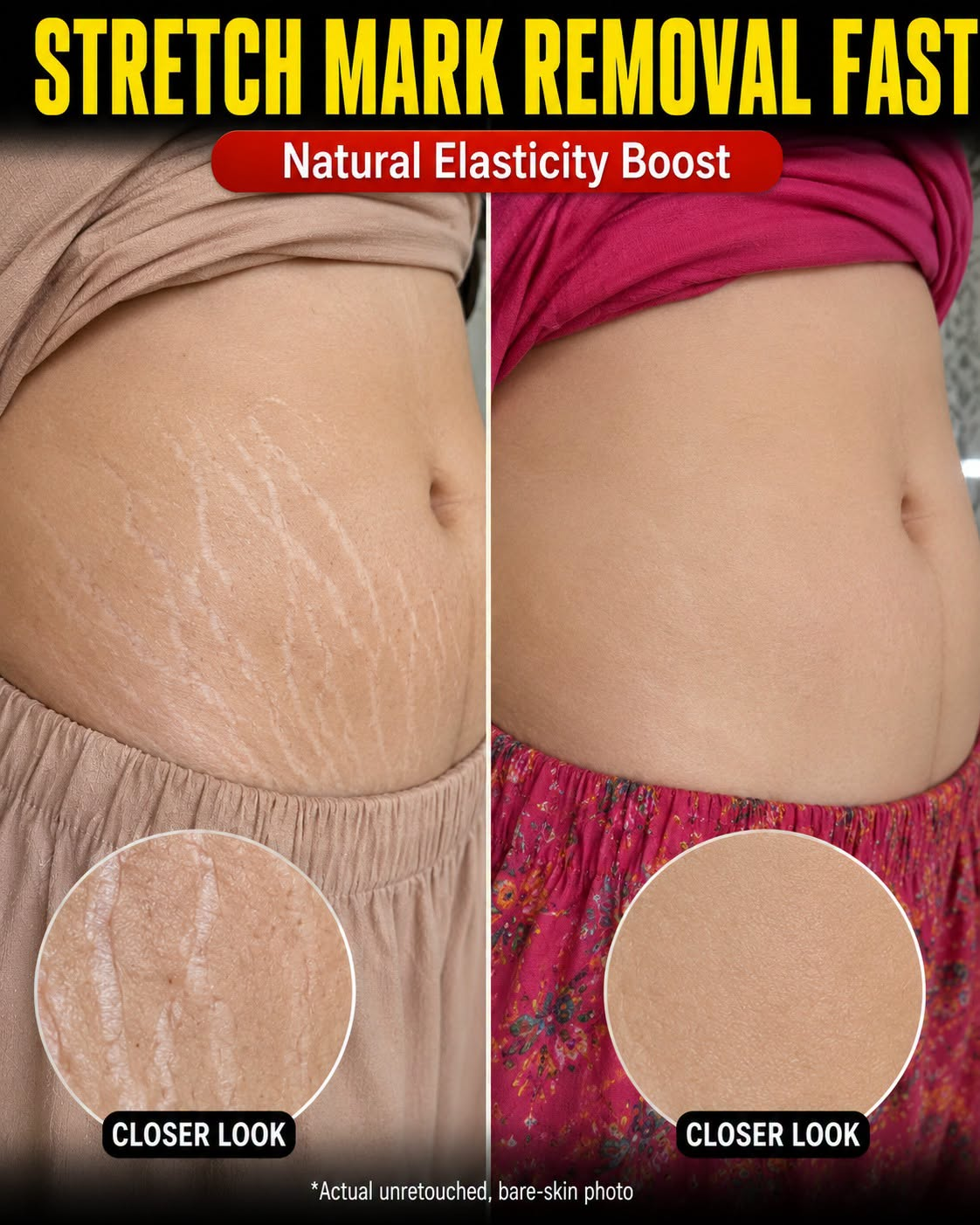
Stretch marks are fine, indented lines that appear when the skin stretches faster than its collagen and elastin network can adjust. They are common after pregnancy, weight change, puberty, bodybuilding, or hormonal changes, and they can affect confidence because they make the skin look uneven, shiny, or lined. A natural routine can help the skin feel smoother, more hydrated, and more elastic, but it is important to be honest: no home remedy can completely erase mature white stretch marks in 2–3 days. Dermatology sources state that stretch marks often fade with time, but they may never disappear fully. Natural remedies work best by improving moisture, barrier repair, massage circulation, collagen support, and the appearance of newer marks. Centella asiatica, hyaluronic-acid-supporting hydration, aloe vera, oatmeal, rice starch, green tea, and massage with almond oil have the most reasonable scientific support for improving skin comfort, elasticity, or stretch-mark appearance. (American Academy of Dermatology)
Remedy 1: For Normal Skin
Ingredients
Centella asiatica powder or gotu kola powder, 1 teaspoon: supports fibroblast activity and collagen organization, which is important because stretch marks form in the dermal collagen-elastin layer.
Fresh aloe vera gel, 2 tablespoons: helps hydrate and may support collagen formation and skin repair.
Sweet almond oil, 1 teaspoon: works mainly as a massage oil to improve softness and flexibility.
Rice flour or fine rice starch, 1 teaspoon: gives a gentle smoothing effect and supports irritated barrier recovery.
Honey, 1 teaspoon: acts as a natural humectant and helps hold moisture on the skin.
Rose water, 1 teaspoon: makes the paste lighter and calming.
Scientific Working of the Ingredients
Centella is the main elasticity-support ingredient because its triterpenes are linked with collagen synthesis and wound-repair pathways. Aloe vera adds polysaccharides and water-binding compounds that help the skin feel plumper. Almond oil does not “erase” stretch marks alone, but massage with oil may reduce tightness and improve skin suppleness. Rice starch gently smooths the surface, while honey improves hydration so the stretch-mark lines look less dry and shiny.
Procedure
Mix centella powder, aloe gel, rice starch, honey, and rose water into a smooth paste. Apply a thin layer on the stretch-mark area. Massage very gently with almond oil for 5 minutes first, then apply the paste for 20 minutes. Rinse with lukewarm water and pat dry.
How Often to Apply
Use once daily for 5 days, then continue 3–4 times weekly for 8–12 weeks.
Initial Results
Within 1–3 days, the skin may feel softer, less tight, and more moisturized. Lines may look slightly smoother because dryness is reduced.
Remedy 2: For Combination Skin
Ingredients
Brewed green tea, 2 tablespoons, cooled: provides catechins that help reduce oxidative stress and support skin repair.
Aloe vera gel, 1 tablespoon: hydrates without making skin greasy.
Centella powder, 1 teaspoon: supports collagen and elasticity pathways.
Sweet almond oil, ½ teaspoon: used only for massage on dry areas.
Rice starch, 1 teaspoon: helps absorb excess oil while keeping the mask gentle.
Plain yogurt, 1 teaspoon: adds mild lactic acid for softening rough surface texture.
Scientific Working of the Ingredients
Combination skin needs balance. Green tea is antioxidant-rich and suitable for areas that become oily or inflamed. Rice starch reduces a greasy feel without harsh scrubbing. Aloe gives water-based hydration. Centella supports the deeper repair environment. Yogurt gives very mild exfoliation, which may make the stretch-mark area look smoother, but it should not burn or sting.
Procedure
Mix green tea, aloe gel, centella powder, rice starch, and yogurt. Before applying, massage the stretch marks with a very small amount of almond oil for 3–5 minutes. Apply the mask for 15 minutes. Rinse and dry gently.
How Often to Apply
Apply on alternate days for 5 days. After that, use 3 times per week.
Initial Results
In 2–3 days, skin may look calmer and feel more even. Newer pink or purple marks may appear less irritated, but old white marks need longer care.
Remedy 3: For Oily Skin
Ingredients
Fresh aloe vera gel, 2 tablespoons: hydrates without clogging or heaviness.
Strong cooled green tea, 1 tablespoon: antioxidant and calming support.
Centella powder, ½ teaspoon: collagen-supporting herb.
Rice starch, 1½ teaspoons: absorbs extra oil and gives a soft finish.
Cucumber juice, 1 teaspoon: adds light hydration and cooling comfort.
Ground oats, 1 teaspoon: soothes friction and dryness around stretch marks.
Scientific Working of the Ingredients
Oily skin still needs hydration. If the area becomes dehydrated, stretch marks look sharper. Aloe and cucumber give lightweight water-based moisture. Green tea helps calm oxidative stress, while centella supports collagen-related repair. Rice starch keeps the mixture non-greasy. Oats help reduce irritation and support the skin barrier.
Procedure
Blend all ingredients into a thin paste. Apply on clean skin and leave for 12–15 minutes. Do not scrub. Rinse with cool water and pat dry. After rinsing, apply a very thin layer of aloe gel only.
How Often to Apply
Use once daily for 3 days, then every other day for 2 weeks.
Initial Results
Within 1–3 days, the skin may feel less sticky, smoother, and calmer. Stretch marks may look less dry around the edges.
Remedy 4: For Dry Skin
Ingredients
Colloidal oatmeal or very finely ground oats, 1 tablespoon: supports the skin barrier and soothes dryness.
Aloe vera gel, 1 tablespoon: hydrates and supports repair.
Sunflower seed oil, 1 teaspoon: rich in linoleic acid, useful for barrier support.
Honey, 1 teaspoon: draws water into the outer skin layer.
Centella powder, ½ teaspoon: supports elasticity and collagen pathways.
Shea butter, ½ teaspoon, softened: seals moisture and reduces roughness.
Scientific Working of the Ingredients
Dry skin makes stretch marks more visible because the surface becomes rough and light-reflective. Oatmeal contains soothing compounds that help calm dryness and irritation. Sunflower seed oil supports the lipid barrier, which helps reduce water loss. Honey and aloe increase hydration. Shea butter seals moisture, while centella supports long-term elasticity.
Procedure
Mix oatmeal, aloe gel, honey, and centella into a creamy paste. Apply for 20 minutes. Rinse gently. While the skin is still slightly damp, massage sunflower oil and softened shea butter over the area for 5 minutes.
How Often to Apply
Use daily for 5 days. Continue the oil-and-butter massage nightly for at least 6–8 weeks.
Initial Results
In 1–3 days, dryness, tightness, and rough texture may reduce. Stretch marks may look less chalky because the skin surface is better moisturized.
Remedy 5: For Sensitive Skin
Ingredients
Colloidal oatmeal, 1 tablespoon: clinically used for soothing and barrier protection.
Rice starch, 1 teaspoon: gentle barrier-supporting ingredient.
Aloe vera gel, 1 tablespoon: cooling hydration.
Centella tea, 1 tablespoon, cooled: milder than direct powder for sensitive skin.
Sunflower seed oil, ½ teaspoon: lightweight barrier support.
Plain water, as needed: keeps the mask thin and non-irritating.
Scientific Working of the Ingredients
Sensitive skin should avoid strong acids, lemon, baking soda, harsh scrubs, and essential oils. Oatmeal helps reduce irritation and supports the barrier. Rice starch is mild and may help damaged skin recover. Aloe hydrates and cools. Centella tea provides a gentler elasticity-support option. Sunflower seed oil helps seal moisture without the heaviness of many oils.
Procedure
Mix oatmeal, rice starch, aloe gel, and centella tea. Add a little water if needed. Apply a very thin layer for 10 minutes only. Rinse gently. Apply sunflower oil lightly afterward.
How Often to Apply
Use once every other day for 5 days. If there is no redness or itching, continue 3 times weekly.
Initial Results
Within 2–3 days, sensitive skin may feel calmer, less itchy, and less dry. Visible stretch-mark fading will take longer, usually several weeks to months.
Final Tips
Always do a patch test on the inner arm for 24 hours before applying any remedy to a larger area. Avoid lemon juice, baking soda, salt scrubs, toothpaste, and strong essential oils because they can irritate the skin and make marks look worse. Massage should be gentle; hard rubbing can inflame the skin. Keep towels, bowls, and applicators clean. Drink enough water, sleep 7–8 hours, and avoid rapid weight changes when possible. Visible improvement usually begins as better softness and glow within 2–3 days, while stretch-mark softening and wrinkle-like texture improvement need consistent care for 8–12 weeks.
Diet Plan for Skin Elasticity Support
Continue this diet plan for at least 6–8 weeks along with the home remedy routine.
Morning: Drink water after waking. Take a vitamin C-rich fruit such as orange, guava, kiwi, strawberries, or amla because vitamin C supports collagen formation.
Breakfast: Eat eggs, yogurt, oats, lentils, or chickpeas for protein. Protein provides amino acids needed for skin repair.
Lunch: Include vegetables, especially spinach, carrots, bell peppers, tomatoes, and broccoli. Add beans, fish, chicken, paneer, tofu, or lentils for protein.
Evening: Take green tea or plain water with nuts or seeds. Almonds, walnuts, sunflower seeds, pumpkin seeds, and sesame seeds provide healthy fats, zinc, and vitamin E.
Dinner: Keep it balanced with protein, vegetables, and whole grains. Avoid very sugary foods because excess sugar may affect collagen quality over time.
Before bed: Apply the suitable remedy or moisturizer massage. Sleep on time because repair hormones work better during deep sleep.
If stretch marks are painful, very red, swollen, rapidly spreading, caused by steroid creams, linked with sudden unexplained weight gain, or do not improve after 3 months of consistent care, see a dermatologist or doctor. Pregnant or breastfeeding women should consult a doctor before using herbal powders or concentrated extracts.
References for the above remedy
- American Academy of Dermatology Association. “Stretch marks: Why they appear and how to get rid of them.” Supports the statement that centella and hyaluronic acid may help prevent stretch marks, while many common oils have weak evidence. URL: https://www.aad.org/public/cosmetic/scars-stretch-marks/stretch-marks-why-appear (American Academy of Dermatology)
- Mayo Clinic. “Stretch marks: Symptoms and causes.” Explains that stretch marks are common, not harmful, and may fade but may not disappear completely. URL: https://www.mayoclinic.org/diseases-conditions/stretch-marks/symptoms-causes/syc-20351139 (Mayo Clinic)
- Korgavkar, K., & Wang, F. “Stretch marks during pregnancy: a review of topical prevention.” PubMed. Discusses limited evidence for centella and massage with bitter almond oil. URL: https://pubmed.ncbi.nlm.nih.gov/25255817/ (PubMed)
- Taşhan, S. T., & Kafkasli, A. “The effect of bitter almond oil and massaging on striae gravidarum.” PubMed. Reports that massage with almond oil reduced development of pregnancy stretch marks, while oil alone was not effective. URL: https://pubmed.ncbi.nlm.nih.gov/22594386/ (PubMed)
- Bylka, W., Znajdek-Awiżeń, P., Studzińska-Sroka, E., et al. “Centella asiatica in cosmetology.” PMC. Reviews centella’s role in fibroblast activity, collagen synthesis, and skin repair. URL: https://pmc.ncbi.nlm.nih.gov/articles/PMC3834700/ (PMC)
- Hekmatpou, D., Mehrabi, F., Rahzani, K., & Aminiyan, A. “The Effect of Aloe Vera Clinical Trials on Prevention and Healing of Skin Wound.” PMC. Reviews aloe vera’s effects on collagen and wound healing. URL: https://pmc.ncbi.nlm.nih.gov/articles/PMC6330525/ (PMC)
- Sobhan, M., et al. “The Efficacy of Colloidal Oatmeal Cream 1%…” PMC. Supports colloidal oatmeal’s anti-inflammatory and barrier-soothing role. URL: https://pmc.ncbi.nlm.nih.gov/articles/PMC7103792/ (PMC)
- De Paepe, K., et al. “Effect of rice starch as a bath additive on the barrier function of healthy but SLS-damaged skin.” PubMed. Shows rice starch improved healing capacity of irritated skin. URL: https://pubmed.ncbi.nlm.nih.gov/12353708/ (PubMed)
- Koch, W., Zagórska, J., Marzec, Z., & Kukula-Koch, W. “Applications of Tea and Its Active Constituents in Cosmetics.” PMC. Reviews green tea’s antioxidant, anti-inflammatory, and skin-protective actions. URL: https://pmc.ncbi.nlm.nih.gov/articles/PMC6930595/ (PMC)
- Pullar, J. M., Carr, A. C., & Vissers, M. C. M. “The Roles of Vitamin C in Skin Health.” PMC. Explains vitamin C’s role in collagen synthesis and skin repair. URL: https://pmc.ncbi.nlm.nih.gov/articles/PMC5579659/ (PMC)