White or gray hair is a natural part of aging, but premature graying can happen because of genetics, oxidative stress, nutritional deficiencies, smoking, stress, autoimmune conditions, or reduced production of melanin (the pigment responsible for hair color). Many people search for natural ways to restore darker-looking hair, but it is important to understand that once a hair strand has completely lost its pigment, natural remedies usually cannot permanently turn it black again.
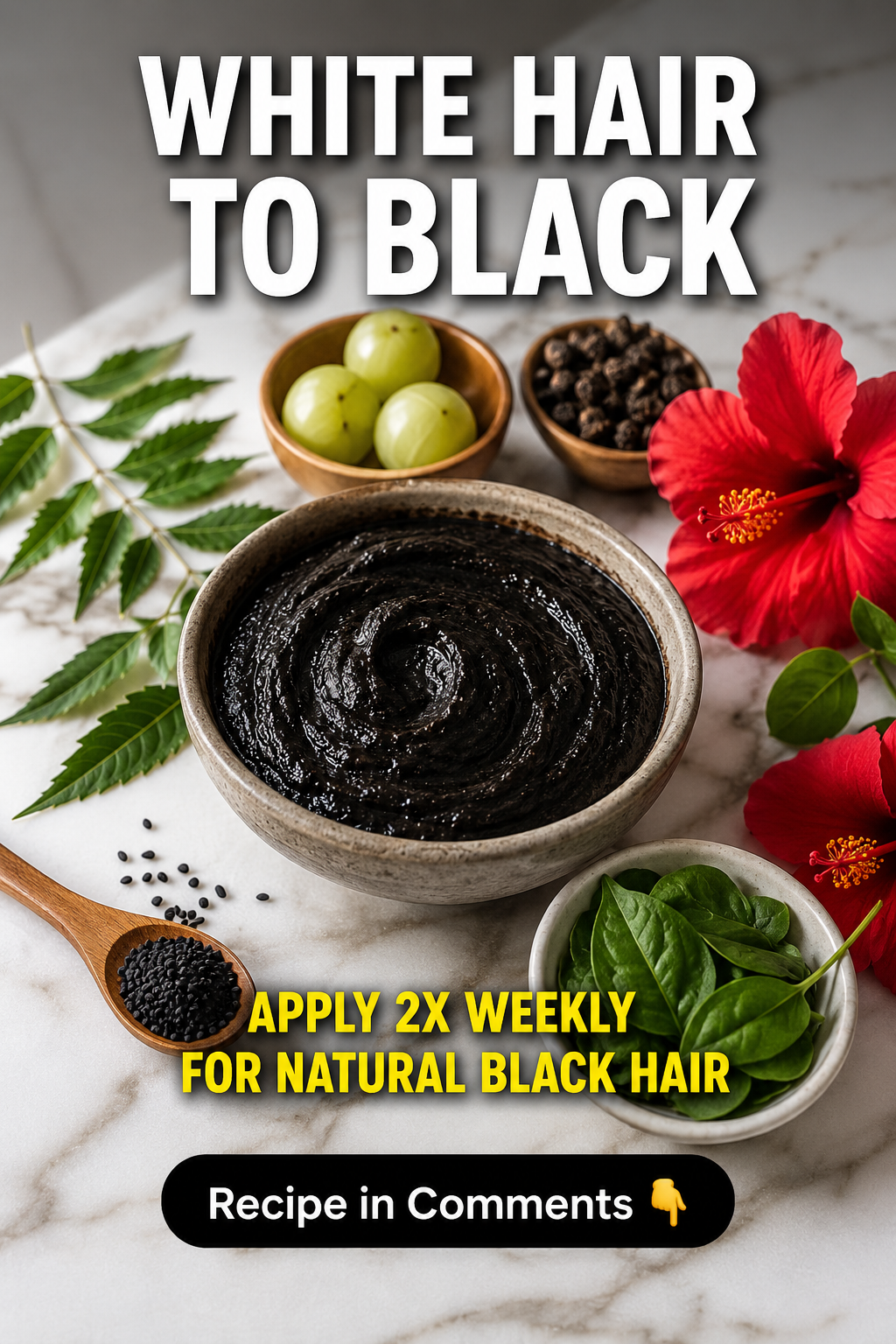
However, natural ingredients can support healthy scalp conditions, reduce oxidative stress, improve hair strength, and support the environment needed for normal melanin production. The black hair mask shown in the image contains ingredients commonly used in traditional hair care, such as amla, black seeds, hibiscus, and plant-based powders.
Consistent scalp care combined with proper nutrition may help improve hair quality and make hair appear healthier and more vibrant.

Remedy 1: For Normal Hair
Amla & Black Seed Strengthening Hair Mask
Ingredients
2 tablespoons amla powder – rich in vitamin C and antioxidants.
1 teaspoon black seed (Nigella sativa) powder – contains antioxidant compounds.
2 tablespoons aloe vera gel – hydrates scalp.
1 tablespoon coconut oil – reduces protein loss from hair.
1 tablespoon hibiscus powder – supports hair conditioning.
2 tablespoons water – creates smooth consistency.
Scientific Working of Each Ingredient
Amla: Antioxidant Support for Hair Pigment
Amla contains vitamin C and plant polyphenols that help protect cells from oxidative stress. Oxidative damage is one factor associated with premature hair aging.
Black Seed: Supporting Scalp Health
Black seed contains thymoquinone, a compound studied for antioxidant and anti-inflammatory properties that may support scalp health.
Hibiscus: Hair Conditioning Support
Hibiscus contains natural plant compounds that help improve softness and shine.
Procedure
- Mix amla powder, black seed powder, and hibiscus powder.
- Add aloe vera gel and coconut oil.
- Add water until a smooth paste forms.
- Apply to scalp and hair roots.
- Leave for 30–45 minutes.
- Wash with mild shampoo.
How Often to Apply
Apply twice weekly for 6–8 weeks.
Initial Results
Within 1–2 weeks, hair may feel softer, stronger, and shinier. Changes in gray hair appearance usually require longer consistency.
Remedy 2: For Dry and Rough Gray Hair
Coconut Oil & Curry Leaf Nourishing Treatment
Ingredients
3 tablespoons coconut oil – improves hair moisture.
10 curry leaves – contain plant antioxidants.
1 teaspoon amla powder – supports hair conditioning.
1 teaspoon fenugreek powder – improves softness.
1 teaspoon vitamin E oil – supports scalp moisture.
Scientific Working of Each Ingredient
Coconut Oil: Reducing Hair Protein Loss
Research shows coconut oil can penetrate the hair shaft and reduce protein loss, helping improve strength and flexibility.
Curry Leaves: Antioxidant Plant Support
Curry leaves contain plant compounds that may help protect against oxidative stress.
Fenugreek: Conditioning Effect
Fenugreek contains mucilage, which creates a conditioning layer that improves hair texture.
Procedure
- Warm coconut oil gently.
- Add curry leaves and heat lightly.
- Allow the oil to cool.
- Mix with amla and fenugreek powder.
- Massage into scalp.
- Leave for 1 hour.
- Wash thoroughly.
How Often to Apply
Use 2 times weekly.
Initial Results
Dryness and roughness may improve within several applications.
Remedy 3: For Premature Gray Hair Due to Oxidative Stress
Black Tea & Rosemary Scalp Rinse
Ingredients
1 cup black tea – contains polyphenols.
1 tablespoon rosemary leaves – antioxidant support.
1 tablespoon amla juice – vitamin C source.
½ cup water – dilution.
Scientific Working of Each Ingredient
Black Tea: Natural Pigment Support
Black tea contains tannins and plant compounds that can temporarily darken the appearance of hair but does not permanently change natural pigment production.
Rosemary: Scalp Circulation Support
Rosemary contains antioxidant compounds and is traditionally used in scalp care.
Amla: Protecting Against Oxidative Damage
Amla antioxidants may help protect scalp cells from free radical damage.
Procedure
- Boil rosemary leaves in water.
- Add black tea.
- Cool and strain.
- Add amla juice.
- Apply as a scalp rinse.
- Leave for 20 minutes before washing.
How Often to Apply
Use twice weekly.
Initial Results
Hair may appear darker temporarily due to natural staining compounds.
Remedy 4: For Weak Hair With Early Graying
Onion Juice & Aloe Scalp Treatment
Ingredients
2 tablespoons onion juice – sulfur-containing compounds.
2 tablespoons aloe vera gel – scalp hydration.
1 teaspoon coconut oil – moisture protection.
1 teaspoon honey – moisture retention.
Scientific Working of Each Ingredient
Onion Juice: Sulfur Support
Sulfur is a component of keratin, the main structural protein in hair. Onion compounds have been studied mainly for hair growth-related effects.
Aloe Vera: Scalp Comfort
Aloe provides hydration and soothing properties.
Honey: Moisture Balance
Honey helps maintain moisture around the scalp.
Procedure
- Mix onion juice with aloe vera.
- Add coconut oil and honey.
- Apply to scalp.
- Leave for 20 minutes.
- Wash thoroughly.
How Often to Apply
Once weekly.
Initial Results
Scalp may feel healthier and hair may appear smoother.
Remedy 5: For Sensitive Scalp
Aloe & Green Tea Gentle Hair Mask
Ingredients
3 tablespoons aloe vera gel – soothing hydration.
½ cup green tea – antioxidant support.
1 tablespoon oat powder – scalp barrier support.
1 teaspoon coconut oil – conditioning.
1 teaspoon honey – hydration.
Scientific Working of Each Ingredient
Green Tea: Antioxidant Protection
Green tea contains catechins that help protect cells from oxidative stress.
Oat Powder: Scalp Barrier Support
Oats contain beta-glucans that help calm and support sensitive skin.
Aloe Vera: Gentle Hydration
Aloe supports moisture balance without harsh chemicals.
Procedure
- Mix aloe vera gel and cooled green tea.
- Add oat powder and honey.
- Apply gently to scalp.
- Leave for 20 minutes.
- Rinse.
How Often to Apply
Apply once weekly.
Initial Results
Scalp dryness and irritation may reduce.
Final Tips for Managing White Hair Naturally
- Eat enough protein because hair is made mainly of keratin.
- Avoid smoking because oxidative stress can accelerate hair aging.
- Protect hair from excessive heat styling.
- Manage stress through exercise, meditation, or relaxation.
- Sleep 7–9 hours daily.
- Avoid harsh chemical treatments.
- Massage the scalp gently to support circulation.
- Always perform a patch test before applying herbal mixtures.
Natural remedies may improve hair texture, shine, and scalp health, but complete reversal of genetically determined gray hair is not scientifically proven. If gray hair appears suddenly, rapidly increases, or occurs with hair loss, consult a dermatologist.
Diet Plan for Supporting Healthy Hair Pigmentation
Continue for 8–12 weeks.
Morning
- Eggs or yogurt
- Nuts (almonds, walnuts)
- Vitamin C fruit
Lunch
Include:
- Fish/chicken/lentils
- Green leafy vegetables
- Whole grains
Evening
Choose:
- Pumpkin seeds
- Sunflower seeds
- Green tea
- Fresh fruit
Dinner
Include:
- Protein source
- Vegetables
- Healthy fats
Important nutrients:
Vitamin B12: supports normal hair health.
Iron: supports oxygen supply to hair follicles.
Copper: involved in melanin production.
Protein: builds keratin structure.
Antioxidants: help protect cells from oxidative stress.
If premature white hair continues despite healthy lifestyle changes, consult a doctor to check possible nutritional deficiencies or underlying causes.
References for the above remedy
- American Academy of Dermatology. Gray Hair: Causes and Treatment Information.
URL: https://www.aad.org/public/everyday-care/hair-scalp-care/hair/gray-hair - Trüeb RM. Oxidative stress in ageing of hair.
URL: https://pubmed.ncbi.nlm.nih.gov/17728940/ - Rele AS, Mohile RB. Effect of mineral oil, sunflower oil, and coconut oil on prevention of hair damage.
URL: https://pubmed.ncbi.nlm.nih.gov/12715094/ - Surjushe A, Vasani R, Saple DG. Aloe vera: A short review.
URL: https://pmc.ncbi.nlm.nih.gov/articles/PMC2763764/ - Zaid AN, et al. Ethnopharmacological survey of home remedies used for hair and scalp care.
URL: https://pubmed.ncbi.nlm.nih.gov/24656583/ - Panahi Y, et al. Nigella sativa and antioxidant properties.
URL: https://pubmed.ncbi.nlm.nih.gov/24476140/ - Pullar JM, Carr AC, Vissers MCM. Vitamin C and skin/hair antioxidant functions.
URL: https://pmc.ncbi.nlm.nih.gov/articles/PMC5579659/ - Rossi A, et al. Hair loss and nutritional factors.
URL: https://pubmed.ncbi.nlm.nih.gov/20528782/