Hormonal acne is one of the most common forms of acne, often appearing around the jawline, chin, cheeks, and lower face. It is usually linked with fluctuations in hormones that increase oil production, trigger inflammation, and contribute to clogged pores. Many people experience breakouts during menstrual cycles, stress periods, or times of hormonal imbalance.
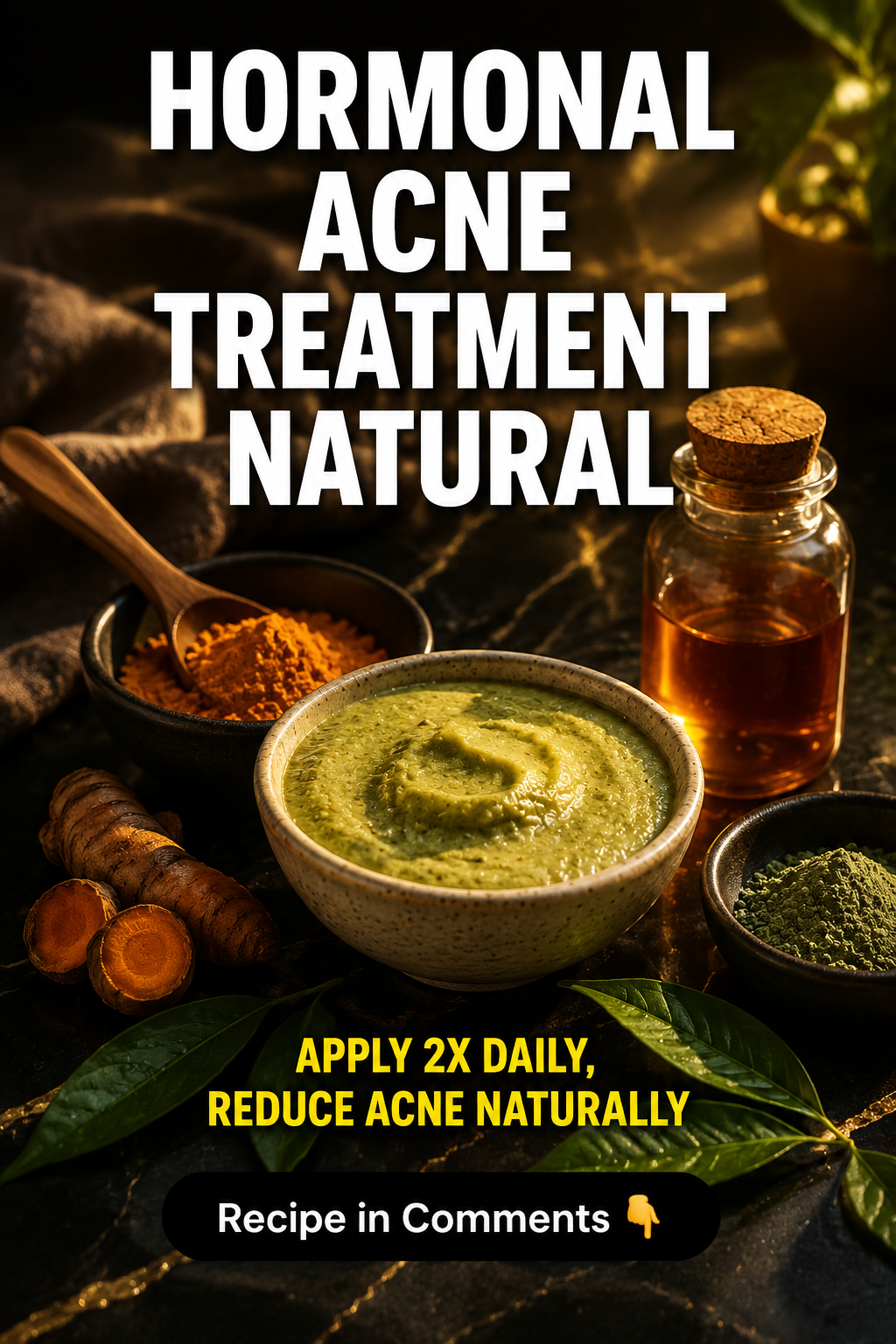
The natural acne mask shown in the image contains ingredients such as turmeric, green tea, honey, and plant-based extracts. These ingredients are traditionally used because of their antioxidant, soothing, and antimicrobial properties. However, natural remedies should be viewed as supportive skincare methods rather than guaranteed cures. Hormonal acne often requires consistent lifestyle changes and, in moderate to severe cases, medical treatment.
A good acne routine focuses on reducing inflammation, maintaining the skin barrier, controlling excess oil, and preventing new clogged pores.
Remedy 1: For Oily Hormonal Acne-Prone Skin
Turmeric & Green Tea Anti-Inflammatory Mask
Ingredients
1 teaspoon turmeric powder – contains curcumin with antioxidant properties.
2 tablespoons green tea – provides catechins that support skin protection.
1 tablespoon aloe vera gel – hydrates without heaviness.
1 teaspoon honey – supports moisture balance.
1 teaspoon oat powder – calms skin barrier.
2 drops tea tree oil (optional) – antimicrobial support.
Scientific Working of Each Ingredient
Turmeric: Inflammation Support
Turmeric contains curcumin, a compound studied for antioxidant and anti-inflammatory effects. These properties may help calm the appearance of irritated skin.
Green Tea: Oil and Oxidative Stress Support
Green tea contains polyphenols, especially EGCG, which have been researched for their effects on skin inflammation and oil-related concerns.
Tea Tree Oil: Bacterial Balance
Tea tree oil contains terpinen-4-ol, which has antimicrobial activity. It must always be diluted because concentrated essential oils may irritate skin.
Procedure
- Brew green tea and allow it to cool.
- Mix turmeric, aloe vera, honey, and oat powder.
- Add green tea slowly until a smooth paste forms.
- Add diluted tea tree oil if using.
- Apply a thin layer for 10 minutes.
- Rinse gently.
How Often to Apply
Use 2 times weekly.
Initial Results
Within 3–7 days, skin may feel calmer and less oily. Acne improvement usually requires several weeks.
Remedy 2: For Dry Hormonal Acne Skin
Aloe Vera & Honey Barrier Repair Treatment
Ingredients
2 tablespoons aloe vera gel – hydration support.
1 teaspoon honey – natural humectant.
1 teaspoon jojoba oil – lightweight moisturizing.
1 teaspoon oat powder – barrier support.
1 teaspoon cucumber juice – cooling hydration.
Scientific Working of Each Ingredient
Aloe Vera: Skin Comfort Support
Aloe vera contains polysaccharides that help maintain moisture and provide soothing effects.
Honey: Hydration Balance
Honey attracts water molecules and helps prevent excessive dryness, which is important because damaged skin barriers can worsen irritation.
Jojoba Oil: Lightweight Moisture
Jojoba oil resembles natural skin oils and may support softness without feeling heavy.
Procedure
- Mix all ingredients.
- Apply a thin layer on clean skin.
- Leave for 15 minutes.
- Rinse with cool water.
How Often to Apply
Use 3 times weekly.
Initial Results
Dryness and tightness may improve within a few applications.
Remedy 3: For Combination Skin With Hormonal Breakouts
Green Tea & Rice Water Balancing Toner
Ingredients
3 tablespoons green tea – antioxidant support.
2 tablespoons rice water – skin conditioning.
1 teaspoon aloe vera juice – hydration.
1 teaspoon rosewater – refreshing support.
2 drops glycerin – moisture retention.
Scientific Working of Each Ingredient
Rice Water: Texture Support
Rice water contains starches and amino acids that may help improve skin smoothness.
Glycerin: Moisture Retention
Glycerin is a well-studied humectant that attracts water into the outer skin layer.
Rosewater: Soothing Support
Rosewater provides lightweight hydration and a calming sensation.
Procedure
- Mix all ingredients.
- Store in a clean container.
- Apply after cleansing.
- Leave on skin.
How Often to Apply
Use daily.
Initial Results
Skin may appear more balanced within 1–2 weeks.
Remedy 4: For Acne With Redness and Irritation
Oat & Chamomile Calming Mask
Ingredients
1 tablespoon oat powder – supports skin barrier.
2 tablespoons chamomile tea – calming compounds.
1 tablespoon aloe vera gel – hydration.
1 teaspoon honey – moisture support.
1 teaspoon yogurt – gentle exfoliation.
Scientific Working of Each Ingredient
Oats: Barrier Protection
Oat compounds such as beta-glucans support the protective skin barrier and help calm irritation.
Chamomile: Soothing Plant Compounds
Chamomile contains flavonoids that have antioxidant properties.
Yogurt: Gentle Surface Renewal
Yogurt contains lactic acid, which can gently remove dead surface cells.
Procedure
- Mix oat powder with cooled chamomile tea.
- Add aloe vera, honey, and yogurt.
- Apply for 10–15 minutes.
- Wash gently.
How Often to Apply
Use 2 times weekly.
Initial Results
Redness and discomfort may reduce gradually.
Remedy 5: For Hormonal Acne Related to Lifestyle Stress
Spearmint Wellness Drink & Skin Support Routine
Ingredients
1 cup spearmint tea – herbal beverage traditionally used for hormonal wellness.
1 teaspoon honey – optional.
Fresh lemon slice – flavor and vitamin C.
Scientific Working of Ingredients
Spearmint Tea: Hormonal Research Support
Some small studies have investigated spearmint tea’s potential effects on androgen-related symptoms, though more research is needed before considering it a proven acne treatment.
Lemon: Vitamin C Source
Vitamin C supports antioxidant protection and collagen formation.
Procedure
- Steep spearmint leaves in hot water for 5–10 minutes.
- Add lemon if desired.
- Drink warm.
How Often to Consume
Once daily for 4–6 weeks.
Initial Results
May support overall wellness, but acne changes vary between individuals.
Final Tips for Hormonal Acne Control
- Avoid squeezing pimples because it increases inflammation and scarring risk.
- Clean your face gently twice daily.
- Change pillowcases regularly.
- Reduce high-sugar foods if they trigger breakouts.
- Maintain consistent sleep.
- Manage stress through exercise or relaxation techniques.
- Avoid applying harsh ingredients such as lemon juice or baking soda directly on acne.
- Always patch test new remedies.
Visible improvement usually takes 6–12 weeks because acne cycles develop slowly.
If acne is painful, cystic, causing scars, suddenly worsening, or affecting confidence, consult a dermatologist. Hormonal acne may require treatments such as prescription creams, hormonal therapy, or other medical options.
Diet Plan for Hormonal Acne Support
Continue for 8–12 weeks.
Morning
- Protein-rich breakfast (eggs, yogurt, oats)
- Fruit rich in antioxidants
- Water
Lunch
Include:
- Vegetables
- Lentils, fish, chicken, or tofu
- Whole grains
Evening
Choose:
- Nuts
- Seeds
- Green tea or spearmint tea
- Fresh fruit
Dinner
Include:
- Protein source
- Vegetables
- Healthy fats
Important Nutrients
Zinc: supports skin repair.
Omega-3 fatty acids: support healthy inflammation balance.
Protein: supports skin renewal.
Antioxidants: protect skin cells.
If hormonal acne continues after 3 months of consistent lifestyle and skincare changes, consult a dermatologist.
References for the above remedy
- American Academy of Dermatology. Acne: Diagnosis and Treatment.
URL: https://www.aad.org/public/diseases/acne/derm-treat/treat - Mayo Clinic. Acne: Symptoms and Causes.
URL: https://www.mayoclinic.org/diseases-conditions/acne/symptoms-causes/syc-20368047 - Bassino E, et al. Effects of green tea polyphenols on skin health.
URL: https://pubmed.ncbi.nlm.nih.gov/27027687/ - Enshaieh S, et al. The efficacy of topical tea tree oil for acne.
URL: https://pubmed.ncbi.nlm.nih.gov/17314442/ - Surjushe A, Vasani R, Saple DG. Aloe vera: A short review.
URL: https://pmc.ncbi.nlm.nih.gov/articles/PMC2763764/ - Lin TK, Zhong L, Santiago JL. Plant oils and skin barrier repair.
URL: https://pmc.ncbi.nlm.nih.gov/articles/PMC5796020/ - Burlando B, Cornara L. Honey in dermatology and skin care.
URL: https://pubmed.ncbi.nlm.nih.gov/24305429/ - Panahi Y, et al. Curcumin and inflammatory skin conditions.
URL: https://pubmed.ncbi.nlm.nih.gov/27038799/ - Grant P, et al. Spearmint tea and androgen-related symptoms.
URL: https://pubmed.ncbi.nlm.nih.gov/19585478/