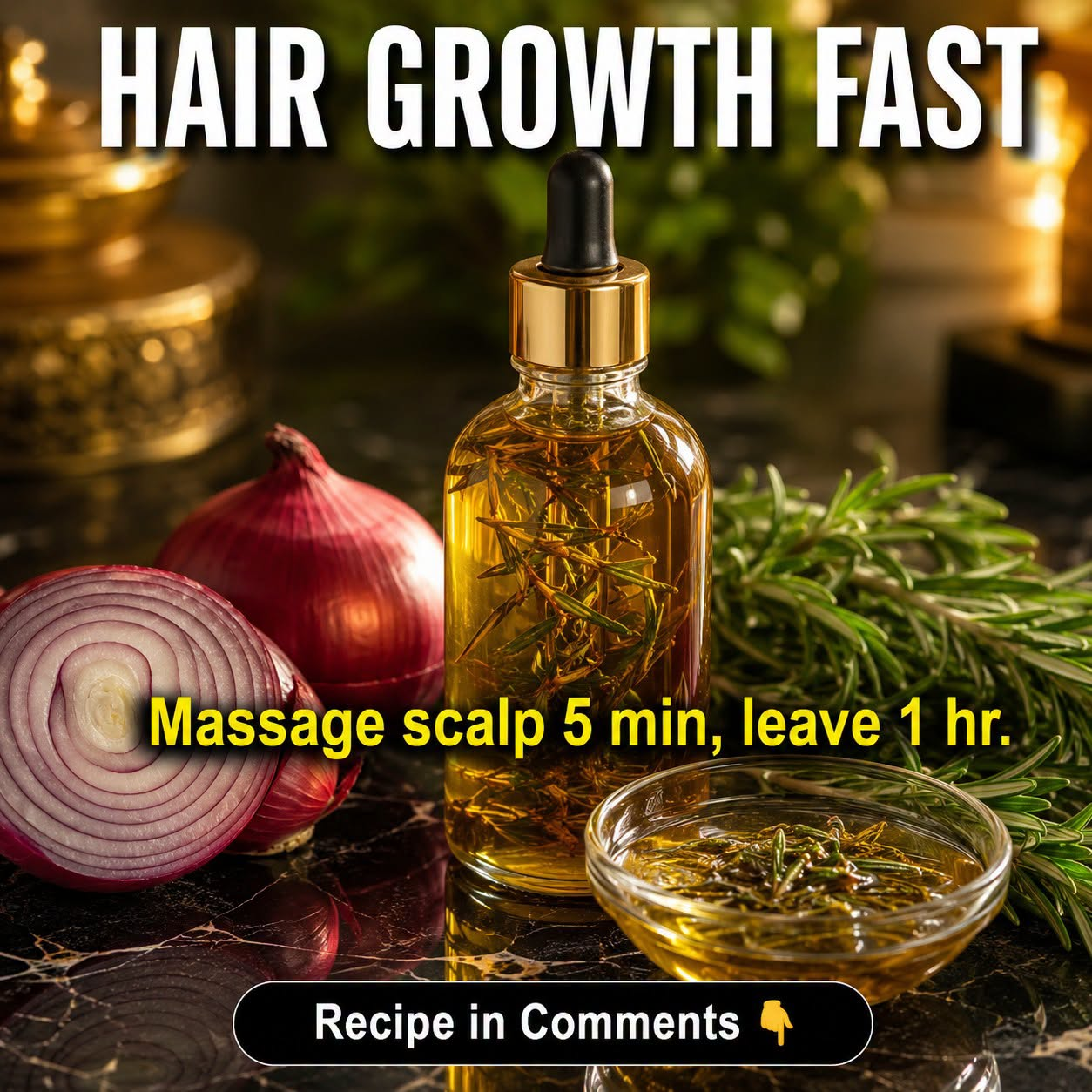
Hair thinning, excessive shedding and slow growth can make the scalp more visible and may affect confidence. Onion juice and rosemary oil are popular natural hair remedies, but realistic expectations are important. In a clinical study involving people with pattern hair loss, rosemary oil was associated with improved hair count after six months, not after a few days. Onion juice also showed encouraging results in a small study, but that research involved patchy alopecia areata, not ordinary thinning or inherited pattern hair loss. (PubMed)
Natural treatments may support the scalp, reduce hair breakage and help existing strands appear healthier, but no homemade oil can create long, thick hair overnight. The remedies below use evidence-supported ingredients while adapting the texture to normal, combination, oily, dry and sensitive scalps. The complete homemade mixtures have not been clinically tested as finished formulas, so always patch-test first and use only one routine at a time.
Remedy 1: For Normal Scalp and Hair
Rosemary and Pumpkin Seed Root-Support Oil
Ingredients
- Pumpkin seed oil: ¼ teaspoon or approximately 1 ml
Pumpkin seed oil contains plant sterols and fatty acids. A clinical study found promising results with topical pumpkin seed oil in women with pattern hair loss. - Jojoba oil: 1 teaspoon
Acts as a lightweight carrier that spreads rosemary oil evenly and reduces direct irritation. - Rosemary essential oil: 1 drop
Rosemary oil has limited but promising clinical evidence for supporting hair count when used consistently for several months. - Pure aloe vera gel: 1 teaspoon
Provides lightweight moisture and helps reduce a dry or tight feeling. - Strong green tea, cooled: 1 teaspoon
Supplies antioxidant polyphenols and creates a refreshing scalp base. - Virgin coconut oil: ½ teaspoon
Helps reduce protein loss from the hair shaft and protects fragile lengths.
Scientific Working of the Ingredients
Rosemary oil is the main growth-focused ingredient. In a six-month study, both rosemary oil and 2% minoxidil groups experienced increased hair count, although improvement was not significant at three months. Pumpkin seed oil also showed promising results during a three-month topical study involving women with pattern hair loss. (PubMed)
Coconut oil works differently. It does not directly stimulate follicles but can penetrate the hair fiber and reduce protein loss, potentially lowering breakage. (PubMed)
Procedure
Mix the aloe gel and green tea. Apply to the scalp for five minutes, then rinse and pat dry.
In a separate clean bowl, combine pumpkin seed oil, jojoba oil and one drop of rosemary essential oil. Massage a thin amount over thinning areas for three to four minutes.
Apply coconut oil only to dry mid-lengths and ends. Leave the oils for 45–60 minutes, then wash with a gentle shampoo.
How Often to Apply
Use twice during the first five days. When there is no itching or redness, continue three times weekly for at least three months.
Initial Results
Hair may feel smoother, shinier and easier to manage within one to three days. New growth should not be expected during this period.
Remedy 2: For Combination Scalp
Diluted Onion, Aloe and Oat Root Mask
Ingredients
- Fresh onion juice: 1 teaspoon
Onion contains sulfur-containing compounds and was studied as a topical treatment for patchy alopecia areata. - Boiled and cooled water: 1 teaspoon
Dilutes the onion juice to reduce its strength. - Pure aloe vera gel: 1 teaspoon
Adds moisture and creates a smoother texture. - Finely powdered colloidal oatmeal: ½ teaspoon
Supports dry or easily irritated areas of the scalp. - Cooled green tea: 1 teaspoon
Provides antioxidant plant compounds. - Jojoba oil: ¼ teaspoon
Softens dry lengths without placing heavy oil over oily roots.
Scientific Working of the Ingredients
A small controlled study reported greater hair regrowth with crude onion juice than with tap water in people who had patchy alopecia areata. However, this finding should not be generalized to every form of hair loss. Sudden smooth bald patches require professional diagnosis because alopecia areata is an immune-related condition. (PubMed)
Aloe and oatmeal mainly improve comfort and moisture. They are not proven follicle stimulants.
Procedure
Strain freshly prepared onion juice through a clean cloth.
Mix one teaspoon of the juice with water, aloe, oatmeal and green tea.
Patch-test behind the ear before scalp use. Apply a thin amount only to the roots, avoiding scratched or inflamed areas.
Leave for ten minutes during the first application. When well tolerated, future applications may remain for up to twenty minutes.
Rinse thoroughly and shampoo. Apply jojoba oil only to dry ends.
How Often to Apply
Use once during the first five days. Increase to twice weekly only when there is no burning, rash or persistent itching.
Initial Results
The scalp may feel cleaner within one or two uses. Existing hair may look fresher, but new growth will not appear within three days.
Remedy 3: For Oily Scalp
Lightweight Pumpkin Seed and Green Tea Routine
Ingredients
- Pure pumpkin seed oil: approximately 1 ml
Has promising clinical evidence as a topical option for female pattern hair loss. - Pure aloe vera gel: 1 tablespoon
Hydrates without creating a heavy greasy layer. - Strong green tea, cooled: 1 tablespoon
Provides antioxidant polyphenols. - Colloidal oatmeal: ½ teaspoon
Helps protect the scalp from excessive dryness caused by frequent washing. - Boiled and cooled water: 1 tablespoon
Creates a lightweight scalp gel. - Fresh cucumber juice: 1 teaspoon
Adds water and a cooling texture but is not a proven hair-growth ingredient.
Scientific Working of the Ingredients
In a randomized study involving women with pattern hair loss, topical pumpkin seed oil was used for three months and was associated with improvements in several hair measurements. The exact tested preparation may differ from ordinary culinary oil, so results from a homemade routine cannot be guaranteed. (PubMed)
Aloe, oatmeal, cucumber and green tea are included mainly to maintain scalp comfort and reduce the heavy feeling that can occur with oil-based treatments.
Procedure
Mix aloe, green tea, oatmeal, water and cucumber juice. Apply a thin layer to the scalp for five minutes and rinse thoroughly.
After the scalp dries, measure approximately 1 ml of pumpkin seed oil. Apply only to thinning areas rather than coating the entire head.
Massage gently for two minutes. Leave for one hour, then shampoo when the scalp feels oily.
How Often to Apply
Use every other evening during the first five days. When well tolerated, continue regularly for at least three months.
Initial Results
The scalp may feel hydrated without excessive heaviness within one to three days. A reduction in visible thinning requires months, not days.
Remedy 4: For Dry Scalp and Brittle Hair
Coconut, Rosemary and Aloe Repair Treatment
Ingredients
- Virgin coconut oil: 2 teaspoons
Reduces protein loss and protects damaged hair fibers. - Jojoba oil: 1 teaspoon
Improves softness and helps dilute rosemary essential oil. - Pumpkin seed oil: 1 teaspoon
Provides plant fatty acids and a growth-supportive botanical oil. - Rosemary essential oil: 1 drop
Provides the evidence-supported scalp-focused botanical component. - Pure aloe vera gel: 1 tablespoon
Adds water-based hydration. - Colloidal oatmeal: 1 teaspoon
Helps calm dry, rough scalp skin.
Scientific Working of the Ingredients
Dry, damaged hair may appear thinner because strands break before reaching their potential length. Coconut oil has demonstrated an ability to reduce protein loss from both damaged and undamaged hair. (PubMed)
Rosemary may support hair count over several months, while the carrier oils improve flexibility and reduce friction. The hydrating aloe-and-oat step supports scalp comfort but does not create new follicles.
Procedure
Mix aloe and oatmeal and apply to the scalp for eight to ten minutes. Rinse gently.
Blend coconut, jojoba and pumpkin seed oils. Add one drop of rosemary essential oil and mix thoroughly.
Massage the oil into the scalp for three minutes, then spread the remaining oil through dry lengths.
Leave for one hour and wash with a gentle shampoo.
How Often to Apply
Use twice weekly for the first five to seven days. Continue twice weekly for at least twelve weeks.
Initial Results
Hair may feel softer and less tangled after the first treatment. Reduced roughness and breakage may become noticeable within several uses.
Remedy 5: For Sensitive Scalp
Fragrance-Free Oat and Aloe Scalp-Massage Treatment
Ingredients
- Colloidal oatmeal: 1 tablespoon
Supports the scalp barrier and helps reduce dryness. - Pure aloe vera gel: 1 tablespoon
Provides lightweight hydration. - Boiled and cooled water: 1 tablespoon
Creates a mild, fragrance-free scalp paste. - Sunflower seed oil: ½ teaspoon
Adds light emollient fatty acids. - Vegetable glycerin: 2 drops
Helps retain water in the outer skin layer.
Scientific Working of the Ingredients
Sensitive scalps may react poorly to onion juice and essential oils, so this remedy focuses on reducing irritation and breakage. The growth-supportive step is gentle scalp massage. A small study found increased hair thickness after participants performed standardized scalp massage for four minutes daily over twenty-four weeks. The evidence is preliminary and does not prove that massage reverses significant hair loss. (PubMed)
Procedure
Mix oatmeal, aloe, water and glycerin.
Apply gently for five minutes without scratching. Rinse completely.
Rub the sunflower oil between the fingertips and apply a very small quantity to dry areas.
Massage the scalp with the finger pads for four minutes. Use gentle circular movements and avoid pulling the hair.
How Often to Apply
Use the mask twice weekly. Perform gentle massage daily when comfortable.
Initial Results
Dryness or tightness may feel calmer within one to three days. Increased thickness cannot be judged until several months have passed.
Final Tips for Faster, Healthier-Looking Hair
Never apply undiluted rosemary essential oil directly to the scalp. Essential oils and other natural fragrances can cause irritation or allergic contact dermatitis. Patch-test every new ingredient for 24–48 hours and stop when burning, swelling, rash or persistent itching occurs. (U.S. Food and Drug Administration)
Do not combine concentrated onion juice and rosemary essential oil in the same bottle. Using several strong ingredients together may increase irritation without proving better results.
Prepare onion, aloe, tea and oatmeal mixtures fresh. Do not store water-based homemade treatments because they do not contain a professionally tested preservative system.
Massage gently with the fingertips rather than scratching with the nails. Avoid tight ponytails, tight braids, repeated heat styling and aggressive brushing. Dermatologists recommend gentle shampoo, conditioner after washing and reduced tension on fragile hair. (American Academy of Dermatology)
Softness, shine and easier detangling may improve within two or three days. Reduced breakage may become noticeable after several weeks. Natural growth-focused treatments generally require three to six months before meaningful changes can be assessed. (PubMed)
Diet Plan for Stronger Hair Growth
Breakfast
Eat two eggs with whole-grain bread, or choose plain yogurt with oats.
Add guava, orange, kiwi or another vitamin-C-rich fruit. Protein provides amino acids needed for normal hair production, while vitamin C supports dietary iron absorption.
Mid-Morning
Choose a small handful of almonds, walnuts, pumpkin seeds or roasted chickpeas.
Drink water according to thirst.
Lunch
Include protein from lentils, beans, chicken, fish, eggs or lean meat.
Add leafy vegetables with tomatoes, bell peppers or another vitamin-C-rich food.
Include whole-grain roti, brown rice or another balanced source of carbohydrates.
Evening Snack
Choose plain yogurt, seasonal fruit, nuts or roasted chickpeas instead of relying mainly on sugary drinks and highly processed snacks.
Dinner
Eat vegetables with fish, chicken, eggs, beans or lentils.
Include healthy fats from nuts, seeds or suitable plant oils.
Iron, vitamin D, zinc and several B vitamins are involved in normal hair biology, but supplements are most appropriate when a deficiency is identified. Taking excessive amounts of some nutrients can worsen hair loss or cause other health problems. (PubMed)
How Long Should You Continue?
Continue the rosemary-based routine for at least three to six months before judging hair-growth results. Give a pumpkin seed oil routine approximately three months when it remains comfortable. Onion juice should be treated as a limited, condition-specific option rather than a universal cure.
See a doctor or dermatologist when hair loss is sudden, severe, patchy or continuing for more than two to three months. Medical advice is also important when there is scalp pain, intense itching, heavy scaling, pus, smooth bald patches, eyebrow loss, severe tiredness, weight changes or menstrual irregularities. Hair loss has many possible causes, and successful treatment begins by identifying the correct cause. (American Academy of Dermatology)
References for the above remedy
- Panahi Y, et al. “Rosemary Oil vs Minoxidil 2% for the Treatment of Androgenetic Alopecia.”
https://pubmed.ncbi.nlm.nih.gov/25842469/ - Sharquie KE, Al-Obaidi HK. “Onion Juice, a New Topical Treatment for Alopecia Areata.”
https://pubmed.ncbi.nlm.nih.gov/12126069/ - Ibrahim IM, et al. “Pumpkin Seed Oil vs Minoxidil 5% Topical Foam for Female Pattern Hair Loss.”
https://pubmed.ncbi.nlm.nih.gov/33544448/ - Cho YH, et al. “Effect of Pumpkin Seed Oil on Hair Growth in Men with Androgenetic Alopecia.”
https://pubmed.ncbi.nlm.nih.gov/24864154/ - Rele AS, Mohile RB. “Effect of Mineral Oil, Sunflower Oil, and Coconut Oil on Prevention of Hair Damage.”
https://pubmed.ncbi.nlm.nih.gov/12715094/ - Koyama T, et al. “Standardized Scalp Massage Results in Increased Hair Thickness.”
https://pubmed.ncbi.nlm.nih.gov/26904154/ - American Academy of Dermatology. “Hair Loss: Tips for Managing.”
https://www.aad.org/public/diseases/hair-loss/treatment/tips - American Academy of Dermatology. “Hair Loss: Diagnosis and Treatment.”
https://www.aad.org/public/diseases/hair-loss/treatment/diagnosis-treat - Almohanna HM, et al. “The Role of Vitamins and Minerals in Hair Loss: A Review.”
https://pubmed.ncbi.nlm.nih.gov/30547302/ - Wang R, et al. “Micronutrients and Androgenetic Alopecia: A Systematic Review.”
https://pubmed.ncbi.nlm.nih.gov/39440586/